-
Mon-Fri: 10AM to 8PM 01722665665
-
My Account
-
-
0
Total :
₹ 0.00

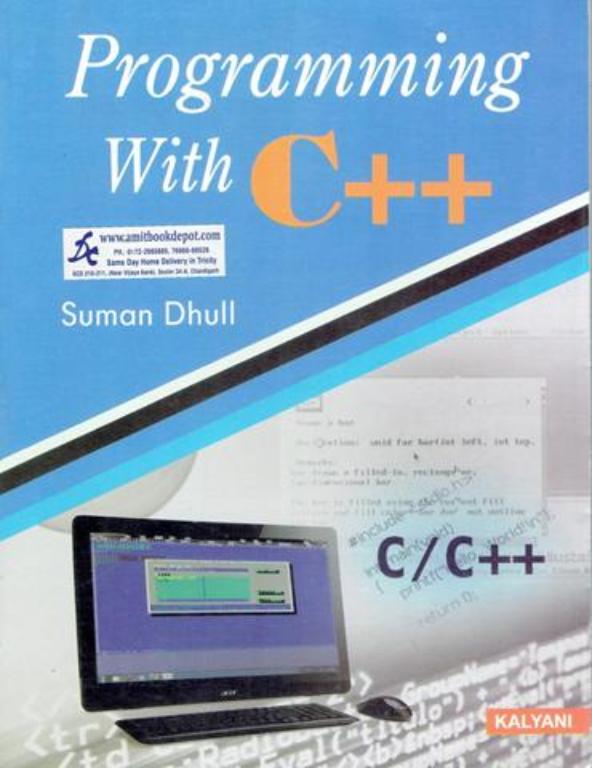





OOP uses objects and classes; procedural uses functions. OOP supports encapsulation, inheritance, and polymorphism for better data security.
A class is a user-defined data type that bundles data members and member functions together under private, public, or protected access.
It defines member functions outside the class declaration and accesses global variables hidden by local variables.
A derived class inherits properties of a base class, allowing reuse of existing code without rewriting it.
Virtual function has a definition in base class; pure virtual function has "=0" and makes the class abstract.
It uses try, throw, and catch blocks to detect, throw, and handle runtime errors gracefully without crashing.
Pass by value copies data; pass by reference passes address, allowing direct modification of original object.
Use fstream object with ios::binary flag, e.g., file.open("data.dat", ios::out | ios::binary).
A derived class inheriting from more than one base class, which may cause ambiguity solved by virtual base classes.
Encapsulation wraps data and methods into a single unit; data hiding restricts direct access using private members.
No Description Added
OOP uses objects and classes; procedural uses functions. OOP supports encapsulation, inheritance, and polymorphism for better data security.
A class is a user-defined data type that bundles data members and member functions together under private, public, or protected access.
It defines member functions outside the class declaration and accesses global variables hidden by local variables.
A derived class inherits properties of a base class, allowing reuse of existing code without rewriting it.
Virtual function has a definition in base class; pure virtual function has "=0" and makes the class abstract.
It uses try, throw, and catch blocks to detect, throw, and handle runtime errors gracefully without crashing.
Pass by value copies data; pass by reference passes address, allowing direct modification of original object.
Use fstream object with ios::binary flag, e.g., file.open("data.dat", ios::out | ios::binary).
A derived class inheriting from more than one base class, which may cause ambiguity solved by virtual base classes.
Encapsulation wraps data and methods into a single unit; data hiding restricts direct access using private members.