-
Mon-Fri: 10AM to 8PM 01722665665
-
My Account
-
-
0
Total :
₹ 0.00

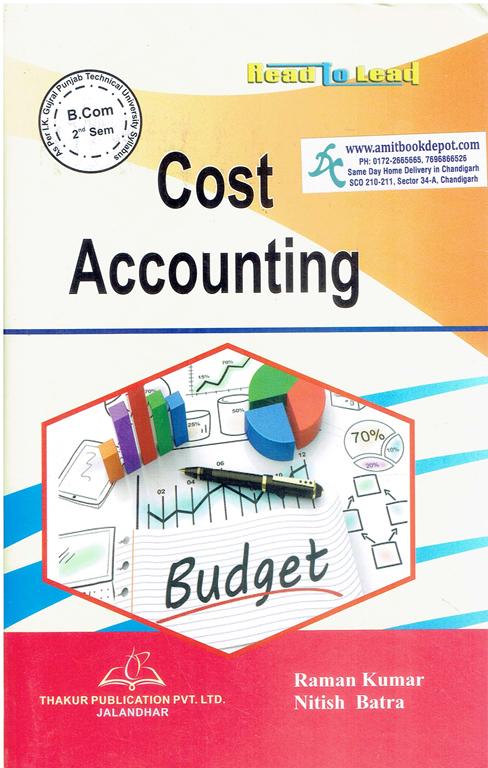
Thakur Cost Accounting for B.Com 2nd Semester PTU by Raman Kumar and Nitish Batra is the prescribed book for the BCOM 201-18 syllabus. This comprehensive guide covers all essential cost accounting topics, from basic concepts, cost sheet preparation, and material cost control to advanced areas like marginal costing, budgetary control, and contemporary developments in costing, including activity-based costing (ABC) and target costing. Perfectly aligned with the PTU curriculum, it features chapter-end exercises for practice, making it an indispensable resource for students to master the subject and excel in their semester examinations.
Yes, this book is meticulously crafted to cover 100% of the BCOM 201-18 syllabus for Cost Accounting, including all units and topics as prescribed by PTU.
Absolutely. Unit IV is entirely dedicated to contemporary developments, including detailed chapters on Activity-Based Costing (ABC), Target Costing, Just-In-Time (JIT), Life Cycle Costing, and Kaizen Costing.
The book takes a practical, problem-solving approach. It provides step-by-step explanations in chapters like Cost Sheet, Marginal Costing, and Process Costing, and includes a "Formulas at a Glance" section in the Marginal Costing chapter for quick revision.
Yes, Chapter 6 provides a clear explanation of the need for reconciliation, reasons for profit differences, and includes practical problems on preparing reconciliation statements.
The book covers various methods of wage payment and incentive plans, which are crucial for understanding labor cost control, as per the PTU syllabus requirements.
Yes, Zero-Based Budgeting (ZBB) is covered alongside other budgetary control concepts like Cash Budget and Flexible Budget in the Budgetary Control chapter.
While it is specifically designed for PTU B.Com students, the comprehensive coverage of fundamental and advanced cost accounting topics makes it a valuable resource for any university student pursuing a Bachelor of Commerce degree.
Chapter 8 is dedicated to Marginal Costing and Cost-Volume-Profit Analysis, covering the basics, key concepts, and includes a dedicated "Formulas at a Glance" section to aid in problem-solving.
Yes, both Process Costing and Contract Costing are explained in detail under the "Methods of Costing" chapter (Chapter 7) in Unit III.
Yes, the book is written in clear and lucid language, specifically designed to make complex cost accounting concepts accessible to students who are new to the subject.
Yes, this book is meticulously crafted to cover 100% of the BCOM 201-18 syllabus for Cost Accounting, including all units and topics as prescribed by PTU.
Absolutely. Unit IV is entirely dedicated to contemporary developments, including detailed chapters on Activity-Based Costing (ABC), Target Costing, Just-In-Time (JIT), Life Cycle Costing, and Kaizen Costing.
The book takes a practical, problem-solving approach. It provides step-by-step explanations in chapters like Cost Sheet, Marginal Costing, and Process Costing, and includes a "Formulas at a Glance" section in the Marginal Costing chapter for quick revision.
Yes, Chapter 6 provides a clear explanation of the need for reconciliation, reasons for profit differences, and includes practical problems on preparing reconciliation statements.
The book covers various methods of wage payment and incentive plans, which are crucial for understanding labor cost control, as per the PTU syllabus requirements.
Yes, Zero-Based Budgeting (ZBB) is covered alongside other budgetary control concepts like Cash Budget and Flexible Budget in the Budgetary Control chapter.
While it is specifically designed for PTU B.Com students, the comprehensive coverage of fundamental and advanced cost accounting topics makes it a valuable resource for any university student pursuing a Bachelor of Commerce degree.
Chapter 8 is dedicated to Marginal Costing and Cost-Volume-Profit Analysis, covering the basics, key concepts, and includes a dedicated "Formulas at a Glance" section to aid in problem-solving.
Yes, both Process Costing and Contract Costing are explained in detail under the "Methods of Costing" chapter (Chapter 7) in Unit III.
Yes, the book is written in clear and lucid language, specifically designed to make complex cost accounting concepts accessible to students who are new to the subject.