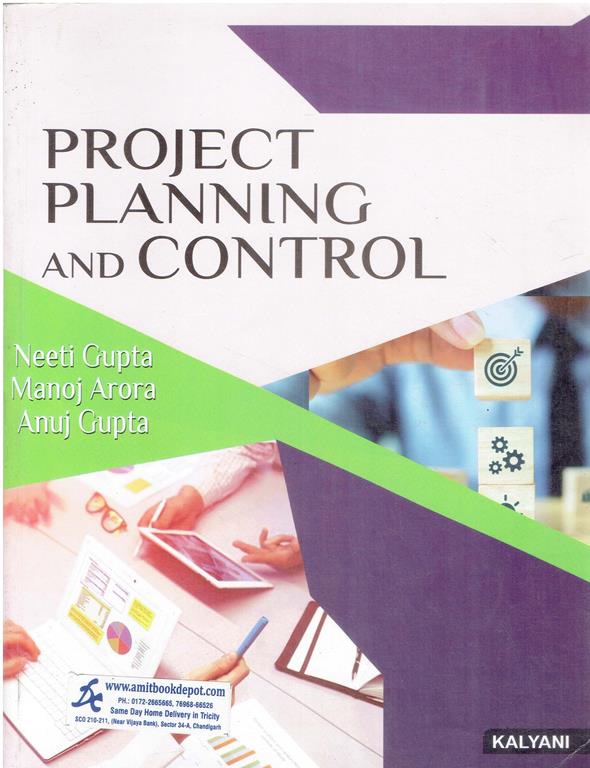
Yes, this book is meticulously crafted to cover 100% of the prescribed syllabus for Panjab University's MCom 4th Semester paper MC.401 – Project Planning and Control, as per the latest curriculum.
Yes, the chapter on Network Analysis (Chapter 22) provides explanations and methodologies for solving problems related to PERT (Program Evaluation and Review Technique) and CPM (Critical Path Method), which are essential for the exam.

Absolutely. Chapter 7, "Feasibility Report," is dedicated to explaining the standard format, key components, and contents required to prepare a comprehensive feasibility report for a new enterprise, as per the syllabus.
Yes, Chapter 6 on Social Cost-Benefit Analysis explains the broader concept, differentiating it from commercial profitability and highlighting its importance in project appraisal from a societal perspective.
Yes, while covering theoretical concepts, the book consistently links them to practical application, especially in units on market surveys, sales plan preparation, project implementation, and control, which are crucial for real-world enterprise management.
While it is specifically tailored for Panjab University, students of other universities with similar syllabi in Project Management, Entrepreneurship, or Project Planning may find the content highly relevant and beneficial.
Yes, Project (Venture) Appraisal is covered in Chapter 4, which includes the technical, financial, economic, and social facets of evaluating a new project idea, as required by the syllabus.
Yes, this critical practical challenge is addressed within the chapters on Project Control and Network Analysis (Chapter 22), discussing its causes and implications.
Chapter 10, "Forecasting Future Demand," is dedicated to this topic, providing students with an understanding of the methodologies and importance of predicting market demand for a new product or service.
Indirectly, yes. The comprehensive coverage of project formulation, market appraisal, financial estimation, and viability studies provides all the core components needed to build a robust business plan for a new venture.
No Description Added
Yes, this book is meticulously crafted to cover 100% of the prescribed syllabus for Panjab University's MCom 4th Semester paper MC.401 – Project Planning and Control, as per the latest curriculum.
Yes, the chapter on Network Analysis (Chapter 22) provides explanations and methodologies for solving problems related to PERT (Program Evaluation and Review Technique) and CPM (Critical Path Method), which are essential for the exam.
Absolutely. Chapter 7, "Feasibility Report," is dedicated to explaining the standard format, key components, and contents required to prepare a comprehensive feasibility report for a new enterprise, as per the syllabus.
Yes, Chapter 6 on Social Cost-Benefit Analysis explains the broader concept, differentiating it from commercial profitability and highlighting its importance in project appraisal from a societal perspective.
Yes, while covering theoretical concepts, the book consistently links them to practical application, especially in units on market surveys, sales plan preparation, project implementation, and control, which are crucial for real-world enterprise management.
While it is specifically tailored for Panjab University, students of other universities with similar syllabi in Project Management, Entrepreneurship, or Project Planning may find the content highly relevant and beneficial.
Yes, Project (Venture) Appraisal is covered in Chapter 4, which includes the technical, financial, economic, and social facets of evaluating a new project idea, as required by the syllabus.
Yes, this critical practical challenge is addressed within the chapters on Project Control and Network Analysis (Chapter 22), discussing its causes and implications.
Chapter 10, "Forecasting Future Demand," is dedicated to this topic, providing students with an understanding of the methodologies and importance of predicting market demand for a new product or service.
Indirectly, yes. The comprehensive coverage of project formulation, market appraisal, financial estimation, and viability studies provides all the core components needed to build a robust business plan for a new venture.