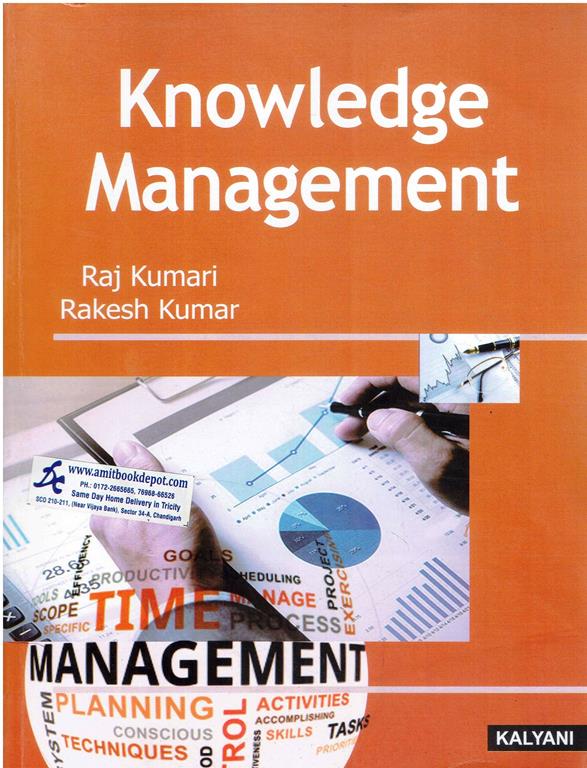
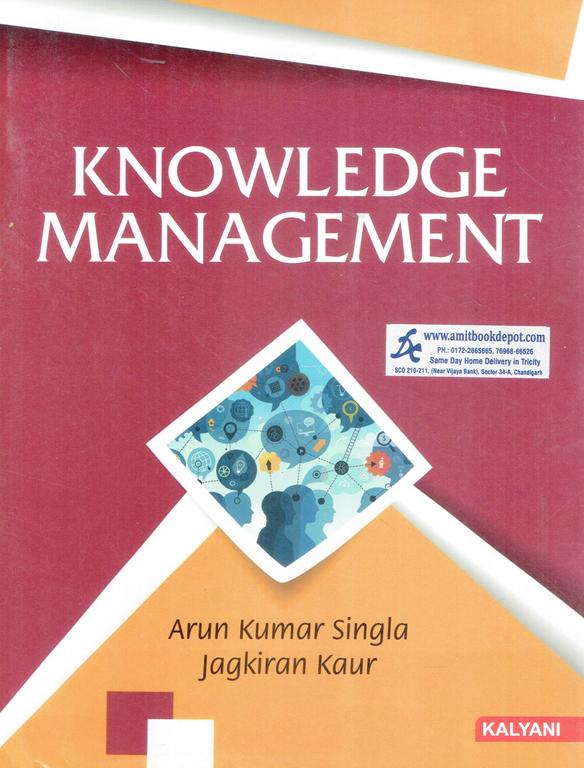
Yes, this book is meticulously crafted to cover 100% of the syllabus for Paper MC.402 - Knowledge Management, as prescribed by Panjab University, Chandigarh. The table of contents is structured to match the unit-wise breakdown of the syllabus.
The book dedicates a section in the opening chapter, "Concept of Knowledge and Knowledge Management," to clearly delineate the hierarchies and differences between data, information, and knowledge, providing a strong conceptual foundation.
The book focuses on building theoretical concepts as required by the university syllabus. It explains principles with clarity, which can be applied to understand real-world scenarios, though it may not contain extended, dedicated case studies.
Complex topics are broken down into step-by-step explanations with clear definitions, components, and often graphical or textual models to aid visual learning and better understanding, making them accessible for students.
Yes, chapters such as "Knowledge Management System" and "Expert Systems" are dedicated to explaining the technological infrastructure and tools that enable effective knowledge capture, storage, and dissemination in organizations.
Absolutely. The book addresses the human, cultural, and structural barriers that hinder knowledge sharing within organizations and discusses potential strategies to overcome these challenges.
The book covers the fundamental and established principles of Knowledge Management that form the core of the academic syllabus. It provides a timeless foundation for understanding the subject.
The fundamental principles of Knowledge Management covered in this book are universal. Students preparing for other university exams, UGC NET, or those interested in the subject may find it a valuable foundational text.
Yes, topics like "Knowledge Sharing," "Reward System," and "Role of Top and Middle Level Management" collectively provide a blueprint for understanding and fostering a culture that encourages knowledge sharing and collaboration.
The language is academic and formal, as required for a university-level textbook, but it is presented in a clear and straightforward manner to ensure comprehension for all students.
No Description Added
Yes, this book is meticulously crafted to cover 100% of the syllabus for Paper MC.402 - Knowledge Management, as prescribed by Panjab University, Chandigarh. The table of contents is structured to match the unit-wise breakdown of the syllabus.
The book dedicates a section in the opening chapter, "Concept of Knowledge and Knowledge Management," to clearly delineate the hierarchies and differences between data, information, and knowledge, providing a strong conceptual foundation.
The book focuses on building theoretical concepts as required by the university syllabus. It explains principles with clarity, which can be applied to understand real-world scenarios, though it may not contain extended, dedicated case studies.
Complex topics are broken down into step-by-step explanations with clear definitions, components, and often graphical or textual models to aid visual learning and better understanding, making them accessible for students.
Yes, chapters such as "Knowledge Management System" and "Expert Systems" are dedicated to explaining the technological infrastructure and tools that enable effective knowledge capture, storage, and dissemination in organizations.
Absolutely. The book addresses the human, cultural, and structural barriers that hinder knowledge sharing within organizations and discusses potential strategies to overcome these challenges.
The book covers the fundamental and established principles of Knowledge Management that form the core of the academic syllabus. It provides a timeless foundation for understanding the subject.
The fundamental principles of Knowledge Management covered in this book are universal. Students preparing for other university exams, UGC NET, or those interested in the subject may find it a valuable foundational text.
Yes, topics like "Knowledge Sharing," "Reward System," and "Role of Top and Middle Level Management" collectively provide a blueprint for understanding and fostering a culture that encourages knowledge sharing and collaboration.
The language is academic and formal, as required for a university-level textbook, but it is presented in a clear and straightforward manner to ensure comprehension for all students.