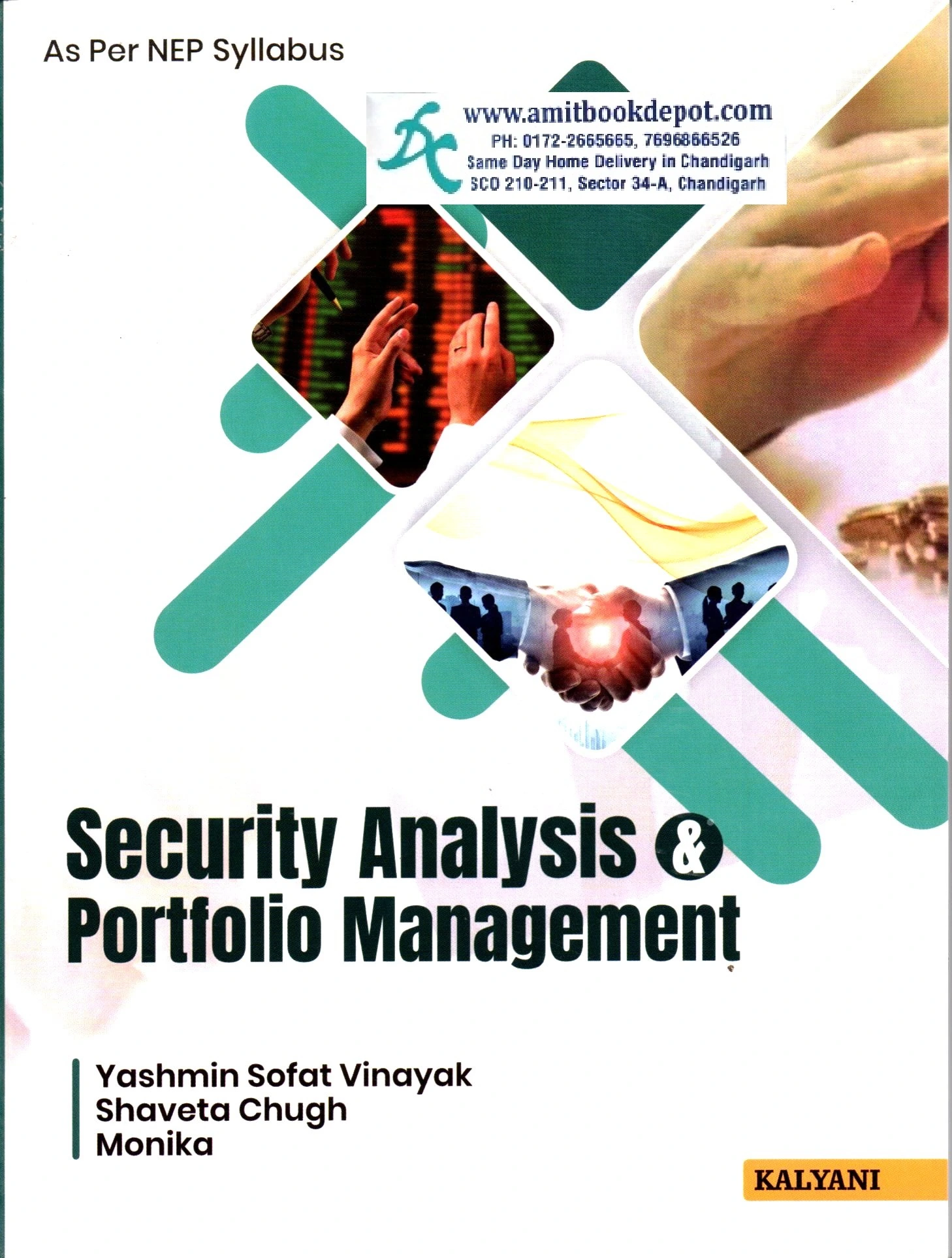
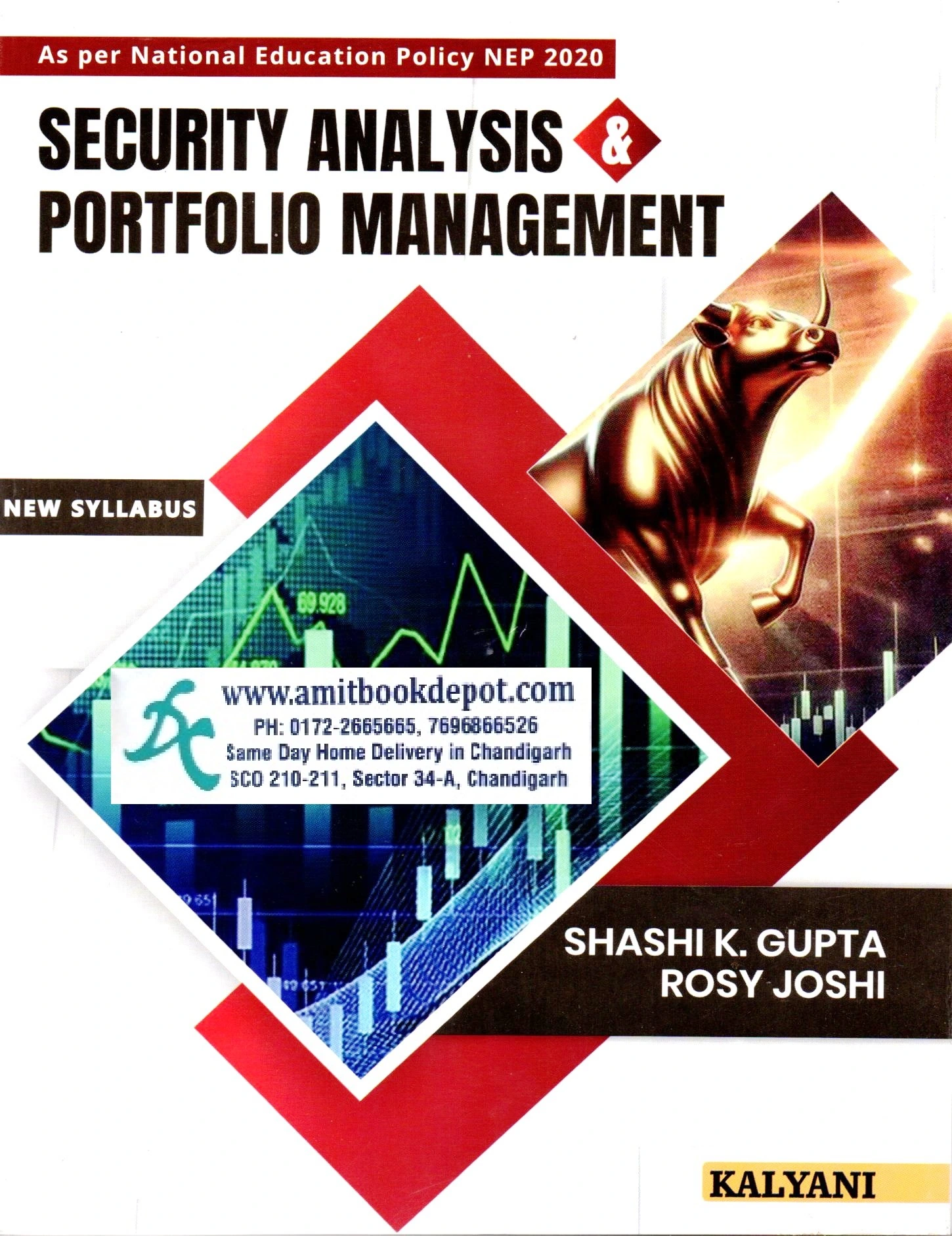
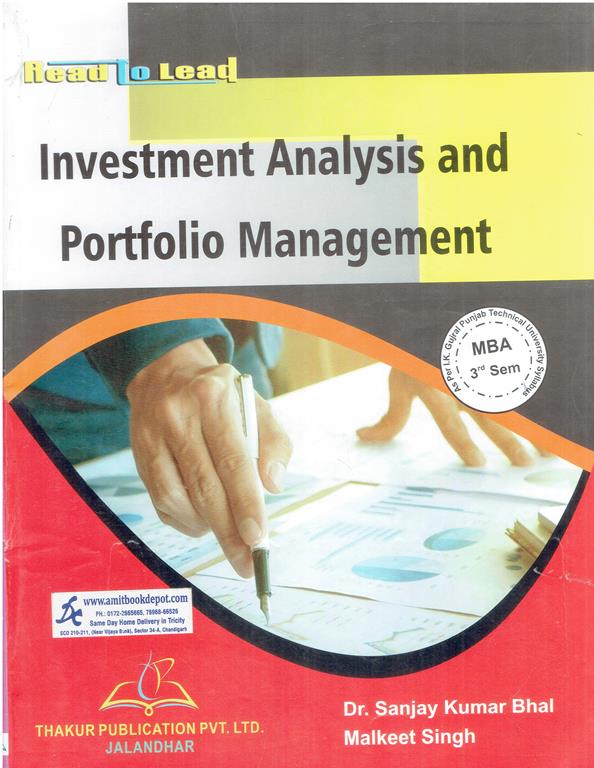
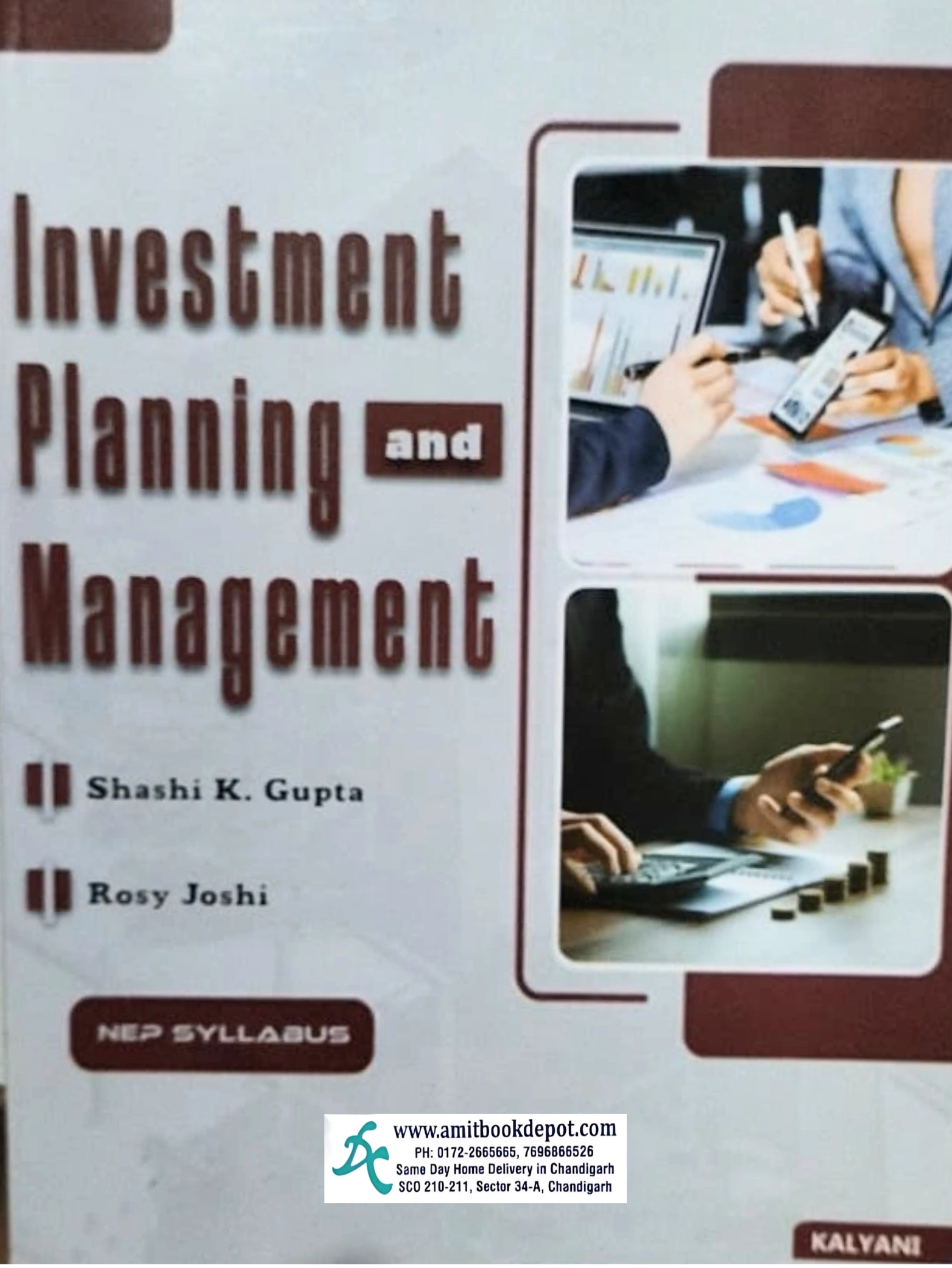
Yes, it is meticulously crafted as per the latest NEP syllabus for Panjab University Chandigarh's BBA 4th Semester, Course Code NBBA 402.
Absolutely. Unit I provides dedicated chapters on Economic, Industry, and Company Analysis for fundamental analysis, and detailed coverage of charts, indicators, and theories for technical analysis.
Yes, the book comprehensively covers the Sharpe, Treynor, and Jensen models for portfolio performance evaluation in Unit II.
Yes, Portfolio Theory is covered in detail, including the Traditional and Modern approaches, with specific focus on the Markowitz Model and Sharpe’s Single Index Model.
Yes, Unit II includes dedicated coverage of the Capital Asset Pricing Model (CAPM), CML, SML, and Arbitrage Pricing Theory (APT).
Yes, the risk and return analysis chapter explains and provides utility for calculating absolute return, holding period return, expected return, portfolio return, and risk-adjusted return.
Yes, its clear structure, alignment with syllabus units, and detailed explanation of concepts make it an excellent resource for both classroom learning and self-study.
Yes, it details the causes, sources, and types of risk, with a clear explanation of systematic (market) risk and unsystematic (specific) risk.

Yes, the technical analysis chapter explains overlays like support, resistance, and trend lines, and indicators including the Relative Strength Index (RSI) and On Balance Volume (OBV).
Yes, a chapter on the valuation of securities specifically covers bond fundamentals, types of bonds, and bond valuation techniques.
No Description Added
Yes, it is meticulously crafted as per the latest NEP syllabus for Panjab University Chandigarh's BBA 4th Semester, Course Code NBBA 402.
Absolutely. Unit I provides dedicated chapters on Economic, Industry, and Company Analysis for fundamental analysis, and detailed coverage of charts, indicators, and theories for technical analysis.
Yes, the book comprehensively covers the Sharpe, Treynor, and Jensen models for portfolio performance evaluation in Unit II.
Yes, Portfolio Theory is covered in detail, including the Traditional and Modern approaches, with specific focus on the Markowitz Model and Sharpe’s Single Index Model.
Yes, Unit II includes dedicated coverage of the Capital Asset Pricing Model (CAPM), CML, SML, and Arbitrage Pricing Theory (APT).
Yes, the risk and return analysis chapter explains and provides utility for calculating absolute return, holding period return, expected return, portfolio return, and risk-adjusted return.
Yes, its clear structure, alignment with syllabus units, and detailed explanation of concepts make it an excellent resource for both classroom learning and self-study.
Yes, it details the causes, sources, and types of risk, with a clear explanation of systematic (market) risk and unsystematic (specific) risk.
Yes, the technical analysis chapter explains overlays like support, resistance, and trend lines, and indicators including the Relative Strength Index (RSI) and On Balance Volume (OBV).
Yes, a chapter on the valuation of securities specifically covers bond fundamentals, types of bonds, and bond valuation techniques.