-
Mon-Fri: 10AM to 8PM 01722665665
-
My Account
-
-
0
Total :
₹ 0.00

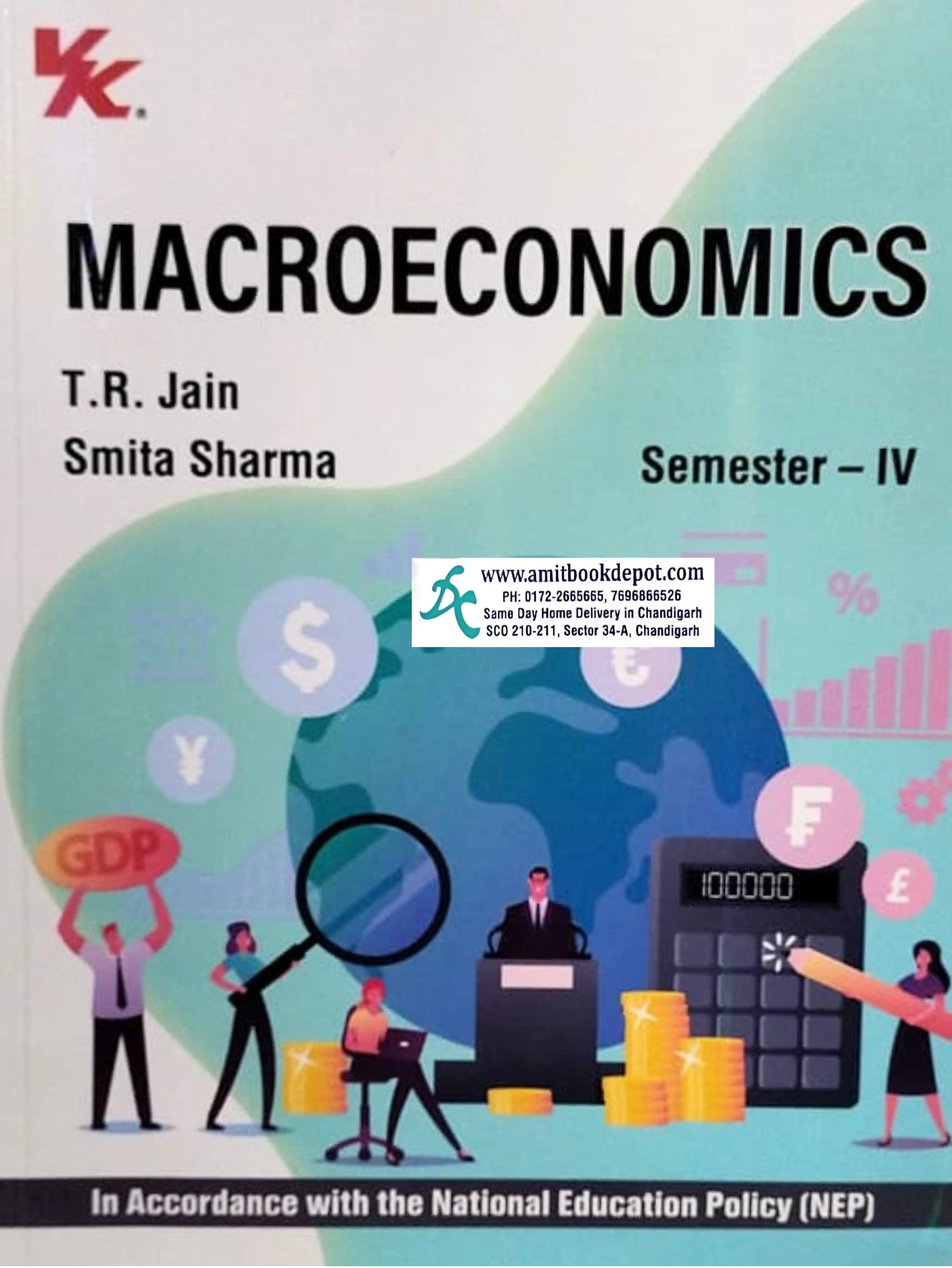
Yes, this book by T.R. Jain and Smita Sharma is meticulously crafted to cover 100% of the prescribed syllabus for Macroeconomics (ECO-DSC-5 (MAJ-4/MIN-4) 401), ensuring all units and topics are comprehensively addressed.
Absolutely. Unit III of the book provides a detailed comparative analysis of the Classical Theory of Employment, Say’s Law, and the Keynesian Theory of Employment, including the Principle of Effective Demand.
Yes, the book includes clear explanations and methodologies for the measurement of National Income (GDP) and covers both Static and Dynamic Multiplier concepts with appropriate illustrations.
The content is structured to match the paper pattern, with clear explanations of concepts that are frequently asked. The logical flow aids in answering both short-answer and 18-mark descriptive questions effectively.
Yes, Chapter 12 on Inflation covers its meaning, various types, effects, and specifically explains both Cost-Push and Demand-Pull theories of inflation.
Yes, in the chapter on Consumption and Saving Function, Keynes’ Psychological Law of Consumption is covered in detail, along with the concepts of APC, MPC, APS, and MPS.
Certainly. Written in a clear and student-friendly manner with a structured approach, it is an excellent resource for self-study, helping students grasp complex macroeconomic concepts independently.
Yes, the book incorporates relevant diagrams, schedules, and tables to visually reinforce theoretical concepts, aiding in better comprehension and retention.
Yes, the section on Inflation includes measures to control it, specifically discussing the role of monetary and fiscal policies for economic stabilization.
Yes, the introductory chapter clearly explains the meaning, nature, and scope of macroeconomics and distinguishes it from microeconomics.
No Description Added
Yes, this book by T.R. Jain and Smita Sharma is meticulously crafted to cover 100% of the prescribed syllabus for Macroeconomics (ECO-DSC-5 (MAJ-4/MIN-4) 401), ensuring all units and topics are comprehensively addressed.
Absolutely. Unit III of the book provides a detailed comparative analysis of the Classical Theory of Employment, Say’s Law, and the Keynesian Theory of Employment, including the Principle of Effective Demand.
Yes, the book includes clear explanations and methodologies for the measurement of National Income (GDP) and covers both Static and Dynamic Multiplier concepts with appropriate illustrations.
The content is structured to match the paper pattern, with clear explanations of concepts that are frequently asked. The logical flow aids in answering both short-answer and 18-mark descriptive questions effectively.
Yes, Chapter 12 on Inflation covers its meaning, various types, effects, and specifically explains both Cost-Push and Demand-Pull theories of inflation.
Yes, in the chapter on Consumption and Saving Function, Keynes’ Psychological Law of Consumption is covered in detail, along with the concepts of APC, MPC, APS, and MPS.
Certainly. Written in a clear and student-friendly manner with a structured approach, it is an excellent resource for self-study, helping students grasp complex macroeconomic concepts independently.
Yes, the book incorporates relevant diagrams, schedules, and tables to visually reinforce theoretical concepts, aiding in better comprehension and retention.
Yes, the section on Inflation includes measures to control it, specifically discussing the role of monetary and fiscal policies for economic stabilization.
Yes, the introductory chapter clearly explains the meaning, nature, and scope of macroeconomics and distinguishes it from microeconomics.