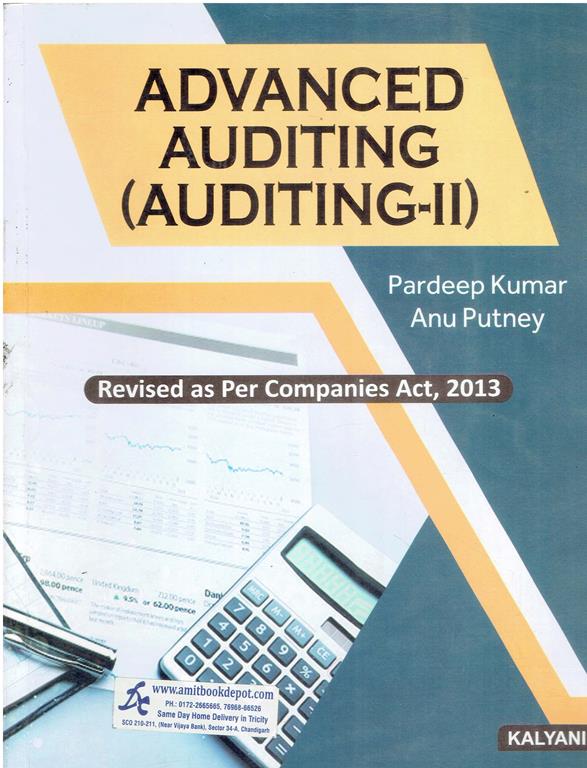
Yes, the book is specifically structured to cover the complete and updated syllabi for Panjab University's MCom 4th Semester (MC. 415) and Jammu University's BCom 6th Semester (UBCTE651) for the 2024-2026 examinations.
Absolutely. Chapter 6 on 'Audit Report' provides a comprehensive definition and distinction between reports and certificates, and details all types of audit opinions, including Clean, Qualified, Disclaimer, Adverse, and Piecemeal.
Yes, Chapter 15 on 'Emerging Concepts in Auditing' and the syllabus-specific units cover these thrust areas, including Forensic Audit, Social Audit, Environmental Audit, Energy Audit, and Systems Audit.
Yes, Chapter 7 on 'Audit of Banking Companies' covers relevant legislation, the audit approach, internal control evaluation, Non-Performing Assets (NPAs), and the Long Form Audit Report.
Yes, this fundamental concept, along with 'Materiality,' is explored in depth within the context of the audit report, as per the Companies Act and Standards on Auditing.
Definitely. The book contains dedicated chapters on 'Ethics in Auditing—Professional Ethics' (Chapter 16) and 'Auditor’s Independence' (Chapter 18), highlighting their critical importance.
Yes, Chapter 8 on 'Audit of Insurance Companies' details the legislation and specific audit report matters as mandated by the Insurance Regulatory and Development Authority (IRDA).
Yes, the role and significance of the C&AG in Government Audit are discussed in Chapter 10, 'Government Audit.'
Yes, Chapter 4 on 'Divisible Profits and Dividend' integrates the provisions of the Companies Act, relevant accounting standards, legal decisions, and the auditor's responsibilities regarding them.
While this book is specifically tailored for Panjab and Jammu University syllabi, its comprehensive coverage of advanced auditing topics can serve as a valuable supplementary resource for foundational knowledge in professional courses like CA.
No Description Added
Yes, the book is specifically structured to cover the complete and updated syllabi for Panjab University's MCom 4th Semester (MC. 415) and Jammu University's BCom 6th Semester (UBCTE651) for the 2024-2026 examinations.
Absolutely. Chapter 6 on 'Audit Report' provides a comprehensive definition and distinction between reports and certificates, and details all types of audit opinions, including Clean, Qualified, Disclaimer, Adverse, and Piecemeal.
Yes, Chapter 15 on 'Emerging Concepts in Auditing' and the syllabus-specific units cover these thrust areas, including Forensic Audit, Social Audit, Environmental Audit, Energy Audit, and Systems Audit.
Yes, Chapter 7 on 'Audit of Banking Companies' covers relevant legislation, the audit approach, internal control evaluation, Non-Performing Assets (NPAs), and the Long Form Audit Report.
Yes, this fundamental concept, along with 'Materiality,' is explored in depth within the context of the audit report, as per the Companies Act and Standards on Auditing.
Definitely. The book contains dedicated chapters on 'Ethics in Auditing—Professional Ethics' (Chapter 16) and 'Auditor’s Independence' (Chapter 18), highlighting their critical importance.
Yes, Chapter 8 on 'Audit of Insurance Companies' details the legislation and specific audit report matters as mandated by the Insurance Regulatory and Development Authority (IRDA).
Yes, the role and significance of the C&AG in Government Audit are discussed in Chapter 10, 'Government Audit.'
Yes, Chapter 4 on 'Divisible Profits and Dividend' integrates the provisions of the Companies Act, relevant accounting standards, legal decisions, and the auditor's responsibilities regarding them.
While this book is specifically tailored for Panjab and Jammu University syllabi, its comprehensive coverage of advanced auditing topics can serve as a valuable supplementary resource for foundational knowledge in professional courses like CA.