-
Mon-Fri: 10AM to 8PM 01722665665
-
My Account
-
-
0
Total :
₹ 0.00

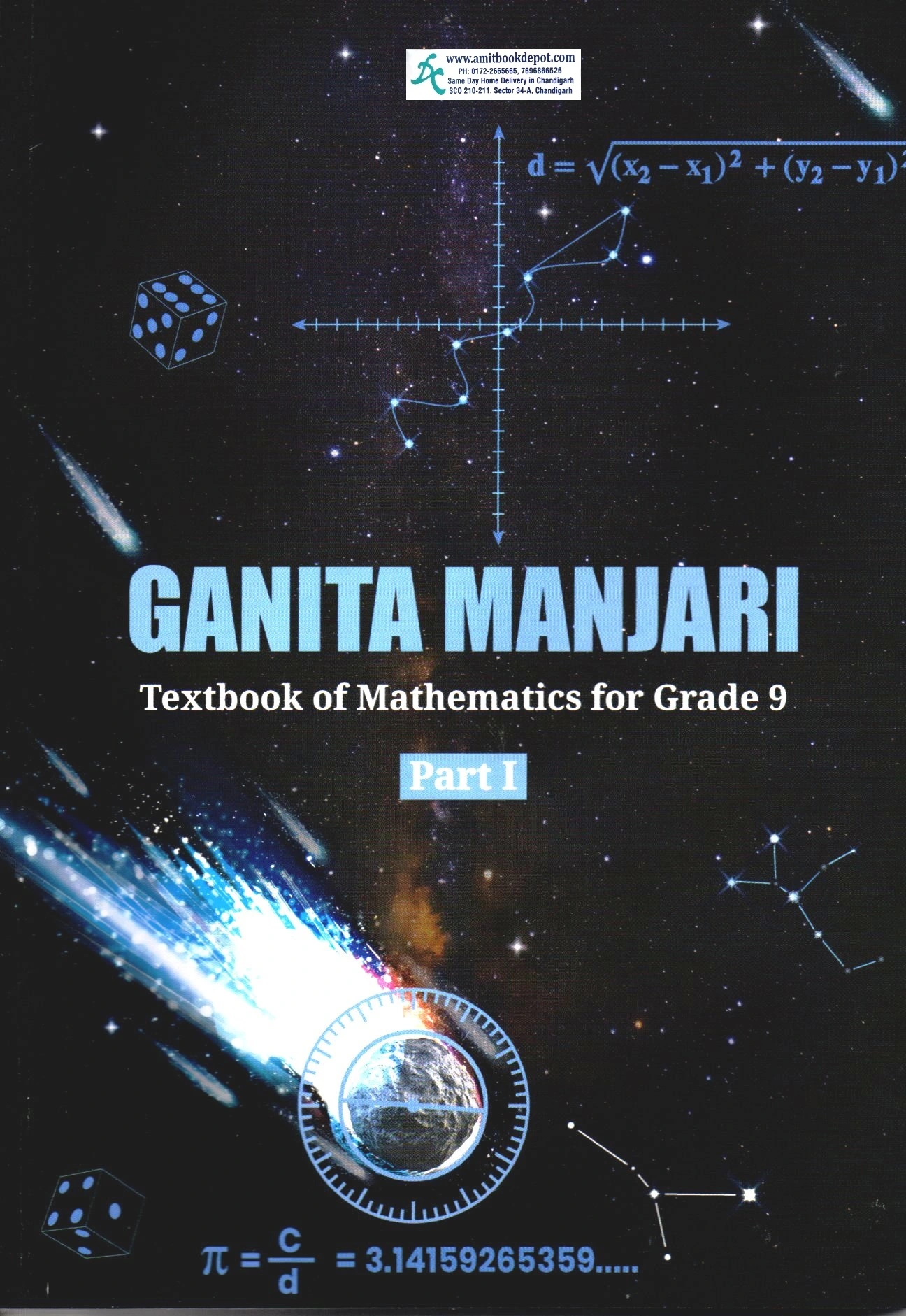


Chapter 1, “Orienting Yourself”, teaches coordinate geometry basics – plotting points, reading coordinates, and using Cartesian planes for real-world location mapping.
It introduces linear polynomials as first-degree expressions (ax+b), using real-life examples like cost vs. quantity, and covers zero-finding through simple equations.
The chapter explains natural, whole, integers, rational, irrational, and real numbers, including their properties and representation on a number line.
It refers to rotational and translational symmetry – objects moving up/down (translation) or round (rotation) – explored through patterns and shapes.
It introduces composite figures, missing side problems, and real-life irregular shapes (e.g., leaf outline) using a grid method, not just formulas.
Examples include weather prediction, dice games, spinner outcomes, and survey data to explain experimental probability as “mathematics of maybe”.
Yes, a detachable graph paper sheet is included – essential for coordinate plotting, symmetry activities, and area estimation exercises in multiple chapters.
Chapter 8 introduces AP as a sequence with constant difference, covering nth term formula and basic problems, but detailed AP is in Class 10.
Linear polynomials (Ch2) form building blocks; identities (Ch4) help factorize quadratic expressions derived from products of two linear polynomials.
Basic understanding of shapes (circles, squares, triangles) from Class 6-7; no advanced geometry is required before starting this chapter.
No Description Added
Chapter 1, “Orienting Yourself”, teaches coordinate geometry basics – plotting points, reading coordinates, and using Cartesian planes for real-world location mapping.
It introduces linear polynomials as first-degree expressions (ax+b), using real-life examples like cost vs. quantity, and covers zero-finding through simple equations.
The chapter explains natural, whole, integers, rational, irrational, and real numbers, including their properties and representation on a number line.
It refers to rotational and translational symmetry – objects moving up/down (translation) or round (rotation) – explored through patterns and shapes.
It introduces composite figures, missing side problems, and real-life irregular shapes (e.g., leaf outline) using a grid method, not just formulas.
Examples include weather prediction, dice games, spinner outcomes, and survey data to explain experimental probability as “mathematics of maybe”.
Yes, a detachable graph paper sheet is included – essential for coordinate plotting, symmetry activities, and area estimation exercises in multiple chapters.
Chapter 8 introduces AP as a sequence with constant difference, covering nth term formula and basic problems, but detailed AP is in Class 10.
Linear polynomials (Ch2) form building blocks; identities (Ch4) help factorize quadratic expressions derived from products of two linear polynomials.
Basic understanding of shapes (circles, squares, triangles) from Class 6-7; no advanced geometry is required before starting this chapter.