Categories
College Bookssss >
BA PU Chandigarh
BSC PU Chandigarh
MSC PU Chandigarh
BBA PU Chandigarh
MA PU Chandigarh
Medical Books
Engineering Books
Management Books
PGDCA Books
BCOM PU Chandigarh
MCOM PU Chandigarh
BCA PU Chandigarh
MCA PU Chandigarh
animate-books

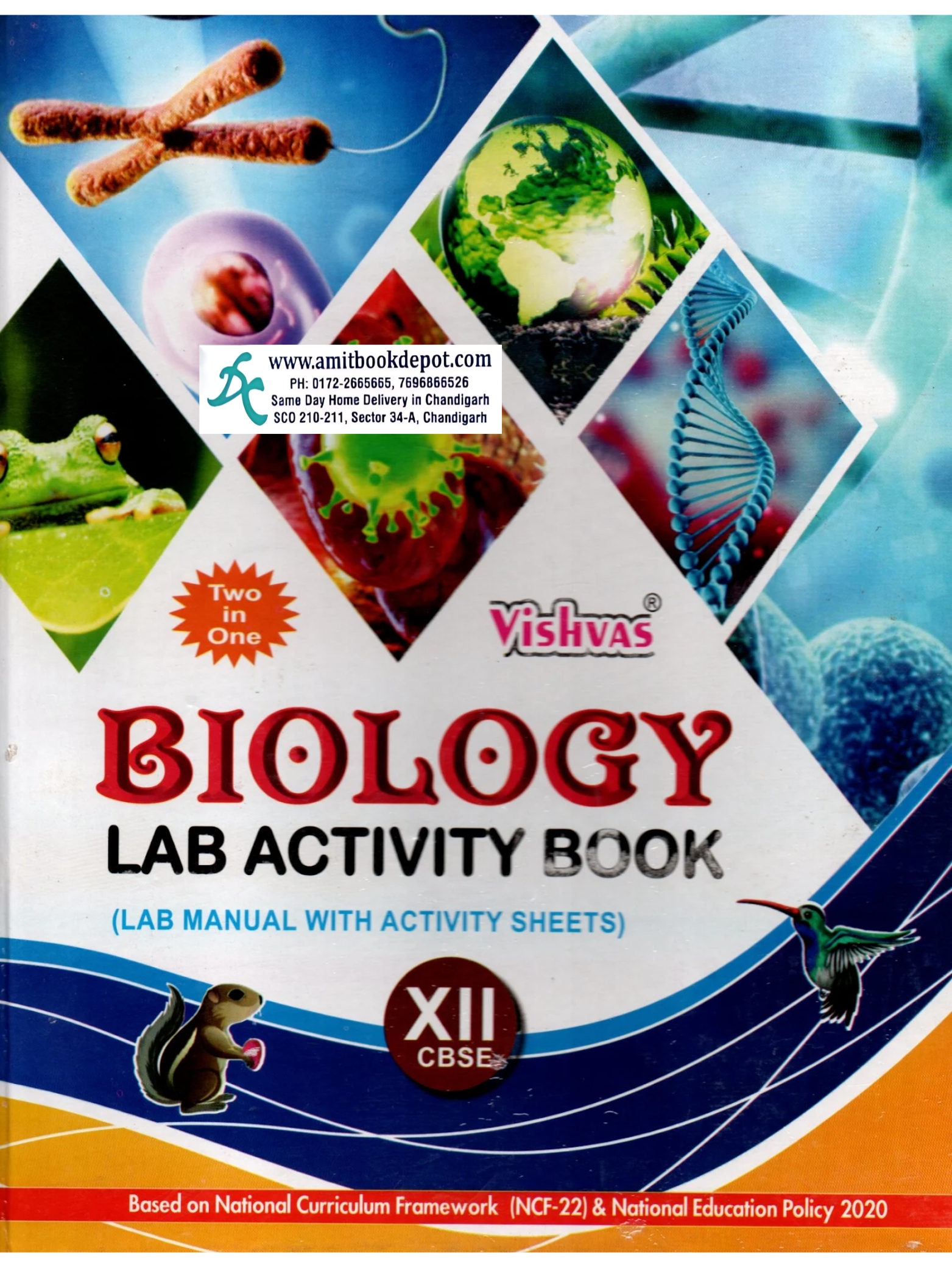
Vishvas Biology Lab Activity Book for Class 12th

by Madhurima
₹425 ₹425.00(-/ off)

Rating & Reviews

23 Customer Review

The Vishvas Biology Lab Activity Book for Class 12th by Dr. Sushma Gupta and Dr. Sanjay Kumar Jha (published by Vishvas Publications Pvt Ltd) is a complete practical guide for CBSE students. This lab manual covers all essential experiments, including pollen germination; mitosis in onion root tips; DNA isolation from plant material (spinach, pea seeds); and ecological studies using the quadrat method for population density and frequency. The spotting section provides detailed observation guides for permanent slides (T.S. testis/ovary, meiosis, mammalian blastula), Mendelian inheritance using seeds, pedigree charts for genetic traits, pollination adaptations, controlled pollination (emasculation, bagging), disease-causing organisms (Plasmodium, Ascaris), symbiotic associations (lichens, Cuscuta), and homologous/analogous organs. Perfect for practical exams and viva preparation.

Have Doubts Regarding This Product ? Ask Your Question

  • Q1
    Why is 10% HCl used while preparing onion root tip for mitosis study?
    A1

    10% HCl macerates the tissue, separates cells, and breaks down middle lamella, allowing clear visualization of individual mitotic chromosomes.

  • Q2
    How does pollen germination on stigma differ from in vitro pollen germination?
    A2

    On stigma, germination requires compatible recognition proteins and nutrients. In vitro, it needs sucrose, boron, and calcium in culture medium.

  • Q3
    Why is the quadrat method preferred for density study of sunhemp but not for trees?
    A3

    Quadrats suit sessile, small plants like sunhemp. Trees require larger plot methods due to low density and wider spatial distribution.

  • Q4
    What indicates a successful DNA isolation from green pea seeds?
    A4

    White, thread-like, viscous precipitate appearing after chilled ethanol addition indicates successful DNA isolation without degradation.

  • Q5
    Why is onion root tip used to study mitosis instead of leaf tip?
    A5

    Onion root tip has actively dividing meristematic cells in the zone of cell division, while leaf tips have fewer mitotic divisions.

  • Q6
    How does T.S. testis of grasshopper differ from mouse testis in gamete development stages?
    A6

    Grasshopper testis shows cysts with synchronous spermatogenesis stages. Mouse testis shows seminiferous tubules with nonsynchronous, scattered stages.

  • Q7
    Why is 70% alcohol used to store permanent slides of meiosis in onion buds?
    A7

    70% alcohol fixes and preserves cell structure, prevents autolysis, and acts as a storage medium without causing excessive brittleness.

  • Q8
    In Mendelian seed study, why does F2 generation show 3:1 ratio of yellow to green seeds?
    A8

    Due to segregation of alleles during gamete formation. Yellow (dominant) masks green (recessive) in heterozygotes, producing 3:1 ratio.

  • Q9
    What symptom differentiates Plasmodium (malaria) from Entamoeba (amoebiasis) infection?
    A9

    Plasmodium causes cyclical high fever with chills. Entamoeba causes abdominal pain, loose stools with mucus and blood.

  • Q10
    What distinguishes homologous organs from analogous organs using flash cards?
    A10

    Homologous organs have same structural plan but different functions (e.g., human arm & whale flipper). Analogous organs have different plans but similar functions (e.g., bird & insect wing).

0.00

0 Overall Rating
  • 5
    0
  • 4
    0
  • 3
    0
  • 2
    0
  • 1
    0

Try this product & share your review & thoughts

SECTION - A (LIST OF EXPERIMENTS)

1. Prepare a temporary mount to observe pollen germination.
2. Study the plant population density by the quadrat method.
3. Study the plant population frequency by the quadrat method.
4. Prepare a temporary mount of onion root tip to study mitosis.
5. Isolate DNA from available plant material such as spinach, green pea seeds, etc.

SECTION - B. STUDY / OBSERVATION OF THE FOLLOWING (SPOTTING)

1. Study of flowers adapted to pollination by different agencies (wind, insects, birds)
2. Study of pollen germination on stigma through a permanent slide or scanning electron micrograph.
3. Study and identify stages of gamete development, i.e., T.S. testis and T.S. ovary through permanent slides from grasshoppers/mice.
4. Study meiosis in onion bud cells or grasshopper testes through permanent slides.
5. Study of T.S. of blastula through permanent slide (mammalian).
6. Study Mendelian inheritance using seeds of different colors/sizes of any plant.
7. Study prepared pedigree charts of naturally occurring genetic traits such as rolling of tongue, blood groups, earlobes, widow’s peak, and color blindness.
8. Study of controlled pollination, emasculation, tagging, and bagging.
9. To Study Common disease-causing organisms like Ascaris, Entamoeba, Plasmodium, and any fungus causing ringworm through permanent slides, models, virtual images, or specimens. Comment on symptoms of diseases that they cause.
10. Model specimens showing symbolic association in root modules of leguminous plants, Cuscuta on host, and lichens.
11. (a) To study homologous organs with the help of flash cards/models.
(b) To study analogous organs using flash cards or models.

The Vishvas Biology Lab Activity Book for Class 12th is a meticulously designed practical companion tailored for students following the Class 12 CBSE Biology curriculum. Authored by distinguished educators Dr. Sushma Gupta and Dr. Sanjay Kumar Jha and published by Vishvas Publications Pvt. Ltd., this lab manual bridges the gap between theoretical concepts and hands-on scientific inquiry. It is an indispensable resource for mastering practical biology, ensuring students are thoroughly prepared for their board examinations and internal assessments.

This comprehensive activity book is systematically divided into two sections: Section A (List of Experiments) and Section B (Study/Observation/Spotting). Each experiment and observation follows a standardized format, including aim, apparatus, procedure, observations, precautions, and viva-voce questions, promoting methodical learning.

Section A: Core Experiments
Students will engage in essential hands-on activities that form the backbone of Class 12 practical biology. Key experiments include the following:

- Prepare a temporary mount to observe pollen germination – understanding viability and outgrowth of pollen tubes.
- Study plant population density and frequency by the quadrat method—ecological techniques for field studies.
- Prepare a temporary mount of an onion root tip to study mitosis—visualizing cell division stages under a microscope.
- Isolate DNA from available plant material such as spinach, green pea seeds, etc. – a foundational biotechnology technique demonstration.

Section B: Observation and Spotting
This section sharpens observational skills through permanent slides, models, and specimens. Students will learn to identify and comment on:

- Flowers adapted to pollination by different agencies (wind, insects, birds).
- Stages of gamete development via T.S. testis and T.S. ovary slides (grasshopper/mouse).
- Meiosis in onion bud cells or grasshopper testes through permanent slides.
- T.S. of blastula (mammalian) for embryology understanding.
- Mendelian inheritance using seeds of different colors/sizes.
- Pedigree charts for genetic traits (tongue rolling, blood groups, widow’s peak, color blindness).
- Controlled pollination techniques – emasculation, tagging, and bagging.
- Common disease-causing organisms – Ascaris, Entamoeba, Plasmodium, ringworm fungus – with symptoms.
- Symbiotic associations – root nodules of legumes, Cuscuta on host, lichens.
- Homologous and analogous organs via flash cards/models.

Why Choose This Lab Activity Book?

- 100% Curriculum Alignment: Strictly follows the latest Class 12th syllabus.
- High-Quality Diagrams & Illustrations: Accurate, labeled diagrams assist in easy identification during spotting.
- Exam-Oriented Approach: Includes previous years’ practical exam questions and viva preparation tips.
- Durable & Student-Friendly Paper: Designed for lab use, with clear, jargon-free language.

SECTION - A (LIST OF EXPERIMENTS)
1. Prepare a temporary mount to observe pollen germination.
2. Study the plant population density by the quadrat method.
3. Study the plant population frequency by the quadrat method.
4. Prepare a temporary mount of onion root tip to study mitosis.
5. Isolate DNA from available plant material such as spinach, green pea seeds, etc.

SECTION - B. STUDY / OBSERVATION OF THE FOLLOWING (SPOTTING)

1. Study of flowers adapted to pollination by different agencies (wind, insects, birds)
2. Study of pollen germination on stigma through a permanent slide or scanning electron micrograph.
3. Study and identify stages of gamete development, i.e., T.S. testis and T.S. ovary through permanent slides from grasshoppers/mice.
4. Study meiosis in onion bud cells or grasshopper testes through permanent slides.
5. Study of T.S. of blastula through permanent slide (mammalian).
6. Study Mendelian inheritance using seeds of different colors/sizes of any plant.
7. Study prepared pedigree charts of naturally occurring genetic traits such as rolling of tongue, blood groups, earlobes, widow’s peak, and color blindness.
8. Study of controlled pollination, emasculation, tagging, and bagging.
9. To Study Common disease-causing organisms like Ascaris, Entamoeba, Plasmodium, and any fungus causing ringworm through permanent slides, models, virtual images, or specimens. Comment on symptoms of diseases that they cause.
10. Model specimens showing symbolic association in root modules of leguminous plants, Cuscuta on host, and lichens.
11. (a) To study homologous organs with the help of flash cards/models.
(b) To study analogous organs using flash cards or models.

Have Doubts Regarding This Product ? Ask Your Question

  • Q1
    Why is 10% HCl used while preparing onion root tip for mitosis study?
    A1

    10% HCl macerates the tissue, separates cells, and breaks down middle lamella, allowing clear visualization of individual mitotic chromosomes.

  • Q2
    How does pollen germination on stigma differ from in vitro pollen germination?
    A2

    On stigma, germination requires compatible recognition proteins and nutrients. In vitro, it needs sucrose, boron, and calcium in culture medium.

  • Q3
    Why is the quadrat method preferred for density study of sunhemp but not for trees?
    A3

    Quadrats suit sessile, small plants like sunhemp. Trees require larger plot methods due to low density and wider spatial distribution.

  • Q4
    What indicates a successful DNA isolation from green pea seeds?
    A4

    White, thread-like, viscous precipitate appearing after chilled ethanol addition indicates successful DNA isolation without degradation.

  • Q5
    Why is onion root tip used to study mitosis instead of leaf tip?
    A5

    Onion root tip has actively dividing meristematic cells in the zone of cell division, while leaf tips have fewer mitotic divisions.

  • Q6
    How does T.S. testis of grasshopper differ from mouse testis in gamete development stages?
    A6

    Grasshopper testis shows cysts with synchronous spermatogenesis stages. Mouse testis shows seminiferous tubules with nonsynchronous, scattered stages.

  • Q7
    Why is 70% alcohol used to store permanent slides of meiosis in onion buds?
    A7

    70% alcohol fixes and preserves cell structure, prevents autolysis, and acts as a storage medium without causing excessive brittleness.

  • Q8
    In Mendelian seed study, why does F2 generation show 3:1 ratio of yellow to green seeds?
    A8

    Due to segregation of alleles during gamete formation. Yellow (dominant) masks green (recessive) in heterozygotes, producing 3:1 ratio.

  • Q9
    What symptom differentiates Plasmodium (malaria) from Entamoeba (amoebiasis) infection?
    A9

    Plasmodium causes cyclical high fever with chills. Entamoeba causes abdominal pain, loose stools with mucus and blood.

  • Q10
    What distinguishes homologous organs from analogous organs using flash cards?
    A10

    Homologous organs have same structural plan but different functions (e.g., human arm & whale flipper). Analogous organs have different plans but similar functions (e.g., bird & insect wing).

No Syllabus Added

0.00

0 Overall Rating
  • 5
    0
  • 4
    0
  • 3
    0
  • 2
    0
  • 1
    0

Try this product & share your review & thoughts

Top Trending Product

Related Product

Related Product

Related Blog Posts

Latest Blogs

Latest Blogs

blog-img
Classic Literature Reimagined: Discuss modern twists on classic novels.
Lorem ipsum dolor sit amet, consectetur adipiscing elit, sed do eiusmod tempor incididunt ut labore et dolore magna aliqua. Ut enim ad minim veniam, quis nostrud exercitation ullamco Lorem ipsum dolor sit amet, consectetur adipiscing elit, sed do eiusmod tempor incididunt ut labore et dolore magna aliqua. Utenim ad minim veniam, quis nostrud exercitation ullamco Lorem ipsum dolor sit amet, consecte...
Read more
Author name | 10 jan, 2025
blog-img
Classic Literature Reimagined: Discuss modern twists on classic novels.
Lorem ipsum dolor sit amet, consectetur adipiscing elit, sed do eiusmod tempor incididunt ut labore et dolore magna aliqua. Ut enim ad minim veniam, quis nostrud exercitation ullamco Lorem ipsum dolor sit amet, consectetur adipiscing elit, sed do eiusmod tempor incididunt ut labore et dolore magna aliqua. Utenim ad minim veniam, quis nostrud exercitation ullamco Lorem ipsum dolor sit amet, consecte...
Read more
Author name | 10 jan, 2025
blog-img
Classic Literature Reimagined: Discuss modern twists on classic novels.
Lorem ipsum dolor sit amet, consectetur adipiscing elit, sed do eiusmod tempor incididunt ut labore et dolore magna aliqua. Ut enim ad minim veniam, quis nostrud exercitation ullamco Lorem ipsum dolor sit amet, consectetur adipiscing elit, sed do eiusmod tempor incididunt ut labore et dolore magna aliqua. Utenim ad minim veniam, quis nostrud exercitation ullamco Lorem ipsum dolor sit amet, consecte...
Read more
Author name | 10 jan, 2025
blog-img
Classic Literature Reimagined: Discuss modern twists on classic novels.
Lorem ipsum dolor sit amet, consectetur adipiscing elit...
Read more
Author Name | 10 Jan, 2025
blog-img
Classic Literature Reimagined: Discuss modern twists on classic novels.
Lorem ipsum dolor sit amet, consectetur adipiscing elit...
Read more
Author Name | 10 Jan, 2025
blog-img
Classic Literature Reimagined: Discuss modern twists on classic novels.
Lorem ipsum dolor sit amet, consectetur adipiscing elit...
Read more
Author Name | 10 Jan, 2025
blog-img
Classic Literature Reimagined: Discuss modern twists on classic novels.
Lorem ipsum dolor sit amet, consectetur adipiscing elit...
Read more
Author Name | 10 Jan, 2025
blog-img
Classic Literature Reimagined: Discuss modern twists on classic novels.
Lorem ipsum dolor sit amet, consectetur adipiscing elit...
Read more
Author Name | 10 Jan, 2025
blog-img
Classic Literature Reimagined: Discuss modern twists on classic novels.
Lorem ipsum dolor sit amet, consectetur adipiscing elit...
Read more
Author Name | 10 Jan, 2025
blog-img
Classic Literature Reimagined: Discuss modern twists on classic novels.
Lorem ipsum dolor sit amet, consectetur adipiscing elit...
Read more
Author Name | 10 Jan, 2025
blog-img
Classic Literature Reimagined: Discuss modern twists on classic novels.
Lorem ipsum dolor sit amet, consectetur adipiscing elit...
Read more
Author Name | 10 Jan, 2025
blog-img
Classic Literature Reimagined: Discuss modern twists on classic novels.
Lorem ipsum dolor sit amet, consectetur adipiscing elit...
Read more
Author Name | 10 Jan, 2025