Yes, this book is meticulously designed for the M.Sc. IT 2nd Semester syllabus of Panjab University, Chandigarh, ensuring complete coverage of the prescribed curriculum.
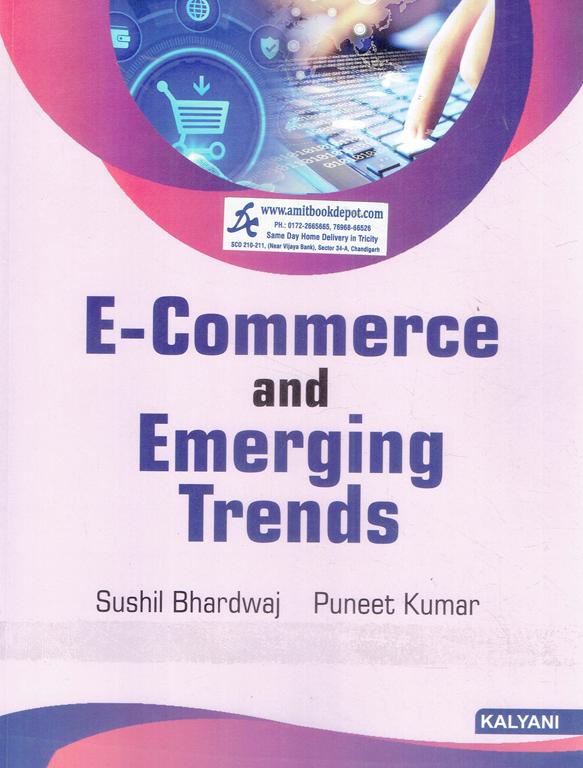
It covers e-commerce fundamentals, types, infrastructure, EDI, electronic payment systems, and critical issues like network security, intellectual property, and digital signatures.
Yes, it provides a comprehensive introduction to BI, covering OLTP, OLAP architectures (MOLAP, ROLAP, HOLAP), and the BI component framework.
The book explains Flynn's Taxonomy (SISD, SIMD, MISD, MIMD), parallel memory architectures, programming models, and introduces PVM and MPI.
Absolutely. It covers mobile computing architecture, networks like GSM and CDMA, mobile databases, and operating systems such as Android and Symbian.
The book delves into the legal and policy environment, including Copyright Law, Patent Law, consumer protection, and intellectual property rights.
Yes, the first chapter provides a detailed comparison between traditional commerce and electronic commerce, highlighting their key differences.
Yes, it offers an in-depth look at various payment methods, including digital tokens, smart cards, and credit card-based systems, along with their risks.
The book distinguishes these technologies by explaining grid architecture, virtual organizations, and its relationship to other distributed technologies like cloud computing.
Yes, it specifically addresses client-server network security threats, data and message security, encrypted documents, and the role of firewalls.
No Description Added
Yes, this book is meticulously designed for the M.Sc. IT 2nd Semester syllabus of Panjab University, Chandigarh, ensuring complete coverage of the prescribed curriculum.
It covers e-commerce fundamentals, types, infrastructure, EDI, electronic payment systems, and critical issues like network security, intellectual property, and digital signatures.
Yes, it provides a comprehensive introduction to BI, covering OLTP, OLAP architectures (MOLAP, ROLAP, HOLAP), and the BI component framework.
The book explains Flynn's Taxonomy (SISD, SIMD, MISD, MIMD), parallel memory architectures, programming models, and introduces PVM and MPI.
Absolutely. It covers mobile computing architecture, networks like GSM and CDMA, mobile databases, and operating systems such as Android and Symbian.
The book delves into the legal and policy environment, including Copyright Law, Patent Law, consumer protection, and intellectual property rights.
Yes, the first chapter provides a detailed comparison between traditional commerce and electronic commerce, highlighting their key differences.
Yes, it offers an in-depth look at various payment methods, including digital tokens, smart cards, and credit card-based systems, along with their risks.
The book distinguishes these technologies by explaining grid architecture, virtual organizations, and its relationship to other distributed technologies like cloud computing.
Yes, it specifically addresses client-server network security threats, data and message security, encrypted documents, and the role of firewalls.