-
Mon-Fri: 10AM to 8PM 01722665665
-
My Account
-
-
0
Total :
₹ 0.00

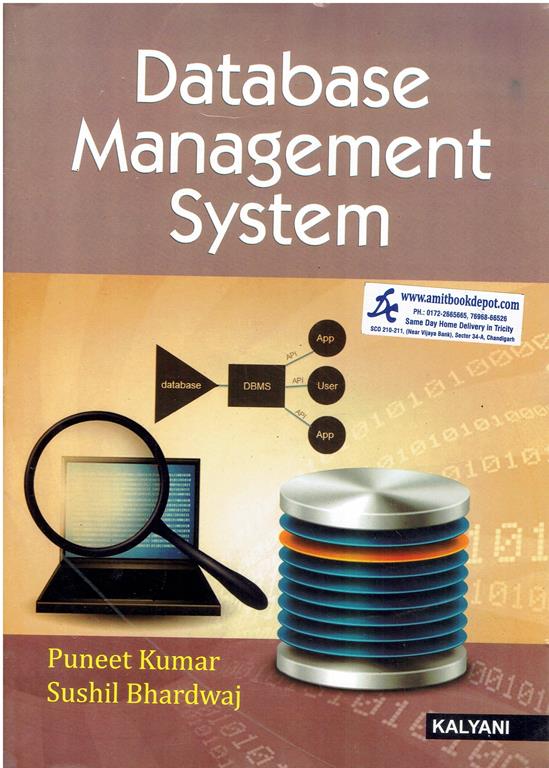



Yes, it is specifically written for the PGD-1103 paper and covers the entire Panjab University syllabus in detail.
It covers Data Models, the Entity Relationship Model, Entities, Attributes, and creating E-R Diagrams for conceptual design.
Yes, the first chapter provides a detailed comparison between the Database Approach and the File-Oriented Approach, highlighting the advantages of DBMS.
The book thoroughly explains 1NF, 2NF, and 3NF, along with partial and transitive dependencies.
Absolutely. It covers data security risks, password threats, and how to grant and revoke system and object privileges.
It covers various functions including Character Functions, Date Functions, and Group Functions for data analysis.
Yes, it includes a dedicated section on Transaction Control Language (TCL) explaining COMMIT and ROLLBACK.
The book clearly distinguishes DDL (CREATE, ALTER, DROP) for defining structure and DML (INSERT, UPDATE) for manipulating data.
Yes, the Database Security chapter includes locking techniques for concurrency and log-based recovery from failures.
Yes, the Relational Model chapter includes dedicated sections on relational algebra and relational calculus.
No Description Added
Yes, it is specifically written for the PGD-1103 paper and covers the entire Panjab University syllabus in detail.
It covers Data Models, the Entity Relationship Model, Entities, Attributes, and creating E-R Diagrams for conceptual design.
Yes, the first chapter provides a detailed comparison between the Database Approach and the File-Oriented Approach, highlighting the advantages of DBMS.
The book thoroughly explains 1NF, 2NF, and 3NF, along with partial and transitive dependencies.
Absolutely. It covers data security risks, password threats, and how to grant and revoke system and object privileges.
It covers various functions including Character Functions, Date Functions, and Group Functions for data analysis.
Yes, it includes a dedicated section on Transaction Control Language (TCL) explaining COMMIT and ROLLBACK.
The book clearly distinguishes DDL (CREATE, ALTER, DROP) for defining structure and DML (INSERT, UPDATE) for manipulating data.
Yes, the Database Security chapter includes locking techniques for concurrency and log-based recovery from failures.
Yes, the Relational Model chapter includes dedicated sections on relational algebra and relational calculus.