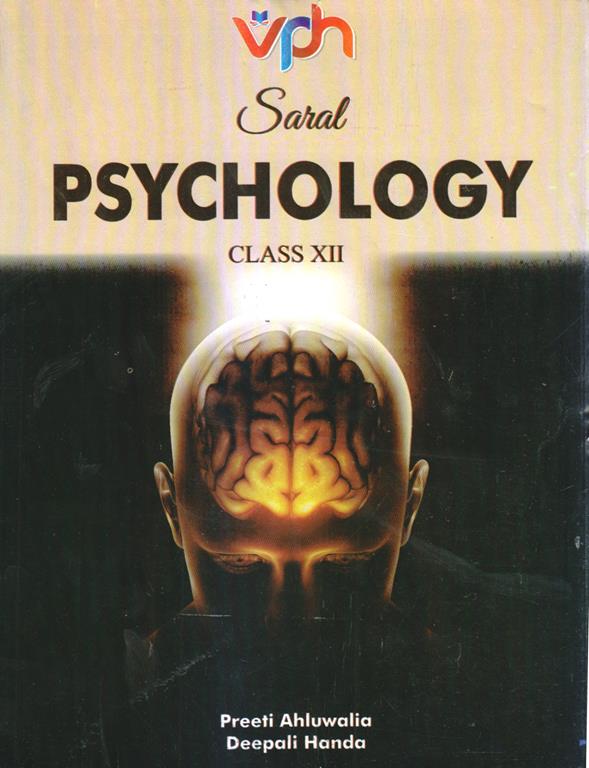
Vohra Saral Psychology for Class 12 is a comprehensive, strictly NCERT-aligned book designed to facilitate conceptual clarity and exam readiness for CBSE and other State Board students. Authored by renowned educators Preeti Ahluwalia and Deepali Handa, this book simplifies complex psychological principles into an easy-to-grasp format, making it an indispensable resource for both academic success and competitive exams like CUET. The "Saral" series lives up to its name by presenting the subject matter in a lucid, structured, and student-friendly manner.
Key Features & Keywords
1. Complete Syllabus Coverage: Mapped exactly to the latest CBSE Class 12 Psychology curriculum, covering all 7 chapters: Variations in Psychological Attributes, Self and Personality, Meeting Life Challenges, Psychological Disorders, Therapeutic Approaches, Attitude and Social Cognition, and Social Influence and Group Processes.
2. Exam-Oriented Approach: Includes a dedicated section on CBSE board exam pattern questions, including multiple-choice questions (MCQs), case-based questions, passage-based questions, and long-answer-type questions.
3. Pedagogical Tools: Each chapter begins with learning objectives and ends with a chapter summary (mind map), key terms glossary, and NCERT in-text question solutions.
4. Theoretical & Applied Clarity: Special focus on psychological disorders and therapeutic approaches with DSM-5/ICD-11 updates, plus real-life examples for attitude and social cognition and social influence topics (e.g., conformity, obedience, and groupthink).
5. Assessment Resources: Contains unsolved practice papers, previous years’ board exam questions (2020-2025), and a separate question bank for revision.
Why Choose Vohra Saral Psychology for Class 12?
1. Exam-Ready Revision: Quick chapter-wise “Points to Remember” and flowchart summaries.
2. High-Order Thinking Skills (HOTS): Dedicated questions to develop analytical ability for case-study-based board questions.
3. Visual Learning: Diagrams, tables, and infographics for therapeutic approaches and psychological disorders to aid memory retention.
4. Self-Assessment: Solved and unsolved model test papers as per the CBSE marking scheme.
Target Audience
1. Class 12 Humanities (Arts) students with psychology as an elective.
2. CUET (UG) Psychology section aspirants.
3. CBSE, ISC, and other state board candidates.
Specifications
1. Binding: Paperback
2. Pages: Approx. 280-320
3. Language: English
4. Publisher: Vohra Publishing House



.jpg)