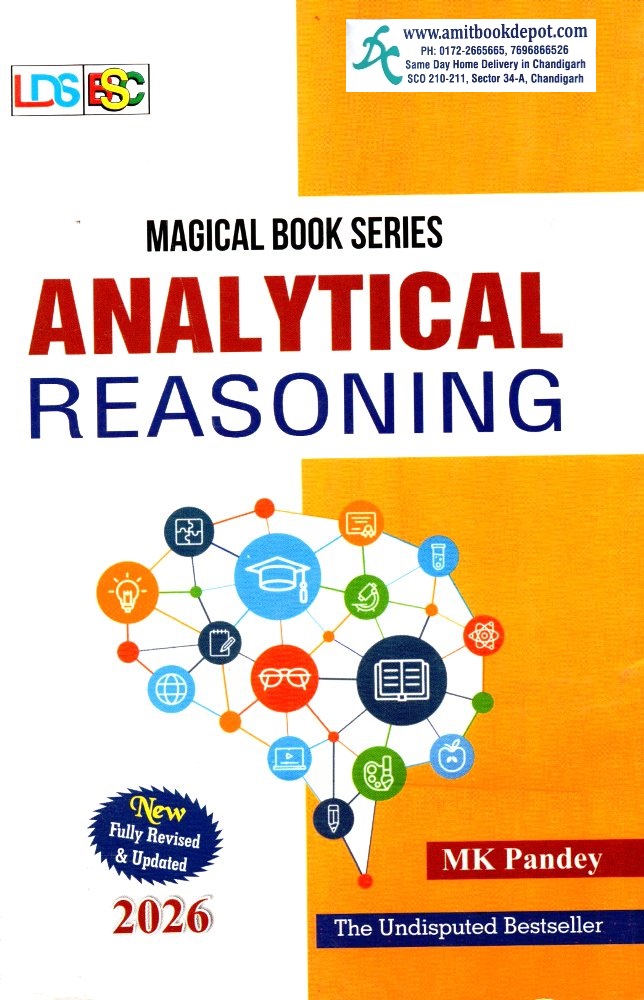
Master Analytical Reasoning with BSC’s Definitive Guide
BSC Analytical Reasoning by renowned author M.K. Pandey, published by BSC Publishing Co. Pvt. Ltd., is a comprehensive preparatory resource designed for aspirants of competitive examinations that rigorously test logical and analytical aptitude. This edition from BSC Publishing consolidates foundational logic with advanced rule-based problem-solving techniques, making it an essential tool for cracking the reasoning sections of banking, insurance, SSC, railway, management, and civil services examinations.
The book is strategically divided into two distinct parts. Part I: Reasoning Based on Logic delves into the subtle art of critical thinking. It begins with The Basics of Logic and Some Informal Tips, ensuring that even novice candidates build a strong conceptual base. Subsequent chapters systematically address assumptions, forcefulness of arguments, and evaluating inferences, which are crucial for solving statement-based questions. Candidates will learn to assess given courses of action, master data sufficiency—a high-weightage topic in exams like IBPS and SBI—and determine the punchline of arguments. The section concludes with advanced logical operations like strengthening and weakening arguments and identifying cause and effect relationships, which are frequently tested in high-level managerial aptitude papers.
Part II: Reasoning Based on Rules transitions into structured, mechanical problem types that require methodical application. The section opens with Syllogism, including its coded and reverse forms, followed by analytical decision-making. A significant portion is dedicated to input-output, divided across four chapters—Introduction to the basics, Shifting, Arrangement, and Miscellaneous—providing layered exposure to patterns and operations. The coding-decoding sequence is equally exhaustive: starting with Introduction to Coding and Decoding, it moves through Coded Relationships, Coded Binary Numbers, Coded Inequalities (a perennial feature in PO exams), Conditional Coding & Artificial Language, and finally Problem-Solving, which integrates multiple rule sets into comprehensive practice sets.
Key Features & Specifications:
- Author: M.K. Pandey
- Publisher: BSC Publishing Co. Pvt. Ltd.
- Target Audience: Competitive exam aspirants (Bank PO/Clerk, SSC CGL/CHSL, RRB, CAT, CMAT, UPSC CSAT, State PSCs)
- Pedagogy: A concept-based theory followed by graded-difficulty exercises. Includes high-order thinking (HOT) problems for data sufficiency, syllogisms, and inequalities.
- Key Focus Areas: Logical decision-making, assumption-inference distinction, forcefulness of arguments, input-output shifting and arrangement, coded inequalities, artificial language problems.
Why choose this book? Unlike general reasoning books, BSC Analytical Reasoning provides a clear separation of logic-driven questions from rule-driven ones, enabling aspirants to identify the right solving approach instantly. The detailed coverage of evaluating inferences and punchlines is rarely found in competing titles, giving BSC an edge in teaching verbal reasoning. The publisher, BSC Publishing Co. Pvt. Ltd., is known for high-quality academic and competitive exam content, ensuring error-free, updated practice material.
Ideal for: weekly mock test analysis, last-mile revision of coded inequalities and input-output patterns, and building a step-by-step logical framework from basics to expert level.






.jpg)