-
Mon-Fri: 10AM to 8PM 01722665665
-
My Account
-
-
0
Total :
₹ 0.00

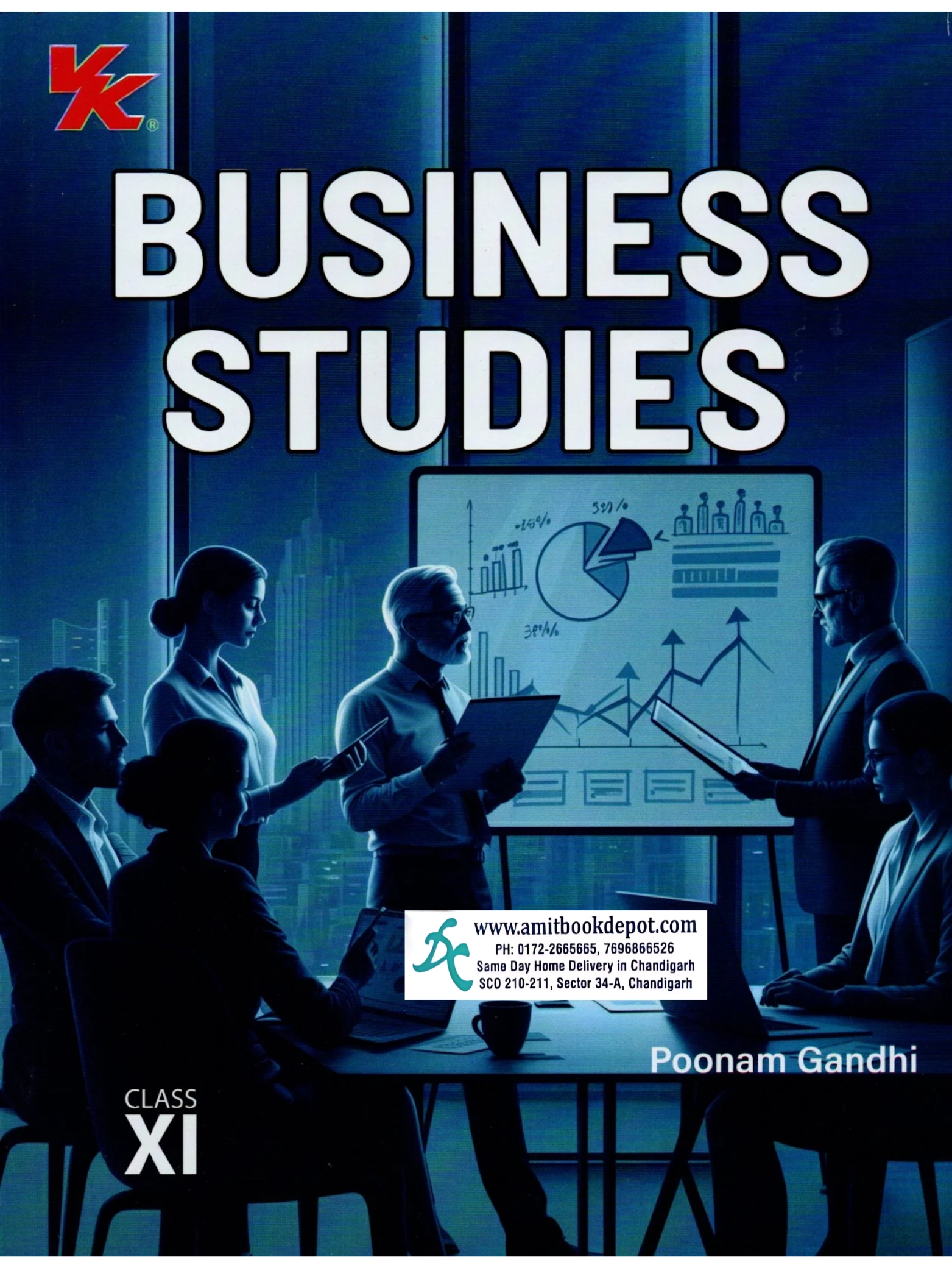
VK Business Studies for Class 11 by Poonam Gandhi, published by VK Global Publications Pvt Ltd, is a complete CBSE-aligned book covering Foundations of Business and Finance & Trade. The book explains key concepts including forms of business organisations, public and global enterprises, emerging e-business modes, social responsibility, business ethics, internal trade, GST, and international business. It features clear classifications of industry and commerce, sources of business finance, entrepreneurship development, and essential export-import documents. Designed for exam success, this resource includes chapter-wise explanations, project work guidance, and practice material. Ideal for students seeking conceptual clarity and high scores in Class 11 Business Studies.
It aims to encourage domestic and foreign companies to manufacture products in India, boosting economic growth.
It is the possibility of inadequate profits or losses due to uncertainties like changing demand, competition, or natural causes.
Primary (extracting natural resources) and Secondary (manufacturing and construction) industries.
E-business uses online networks for transactions, offering global reach and lower costs, unlike physical stores.
Outsourcing of core, knowledge-based activities like research and data analytics, requiring specialised skills.
Adopting green manufacturing processes and proper waste disposal to control pollution.
To unify indirect taxes nationwide, removing cascading tax effects and creating a single market.
Bill of Lading, which serves as a receipt and contract for transported goods.
Domestic business operates within one country, while international business crosses borders with different currencies and laws.
Statutory Corporation, such as the Life Insurance Corporation of India (LIC).
It aims to encourage domestic and foreign companies to manufacture products in India, boosting economic growth.
It is the possibility of inadequate profits or losses due to uncertainties like changing demand, competition, or natural causes.
Primary (extracting natural resources) and Secondary (manufacturing and construction) industries.
E-business uses online networks for transactions, offering global reach and lower costs, unlike physical stores.
Outsourcing of core, knowledge-based activities like research and data analytics, requiring specialised skills.
Adopting green manufacturing processes and proper waste disposal to control pollution.
To unify indirect taxes nationwide, removing cascading tax effects and creating a single market.
Bill of Lading, which serves as a receipt and contract for transported goods.
Domestic business operates within one country, while international business crosses borders with different currencies and laws.
Statutory Corporation, such as the Life Insurance Corporation of India (LIC).