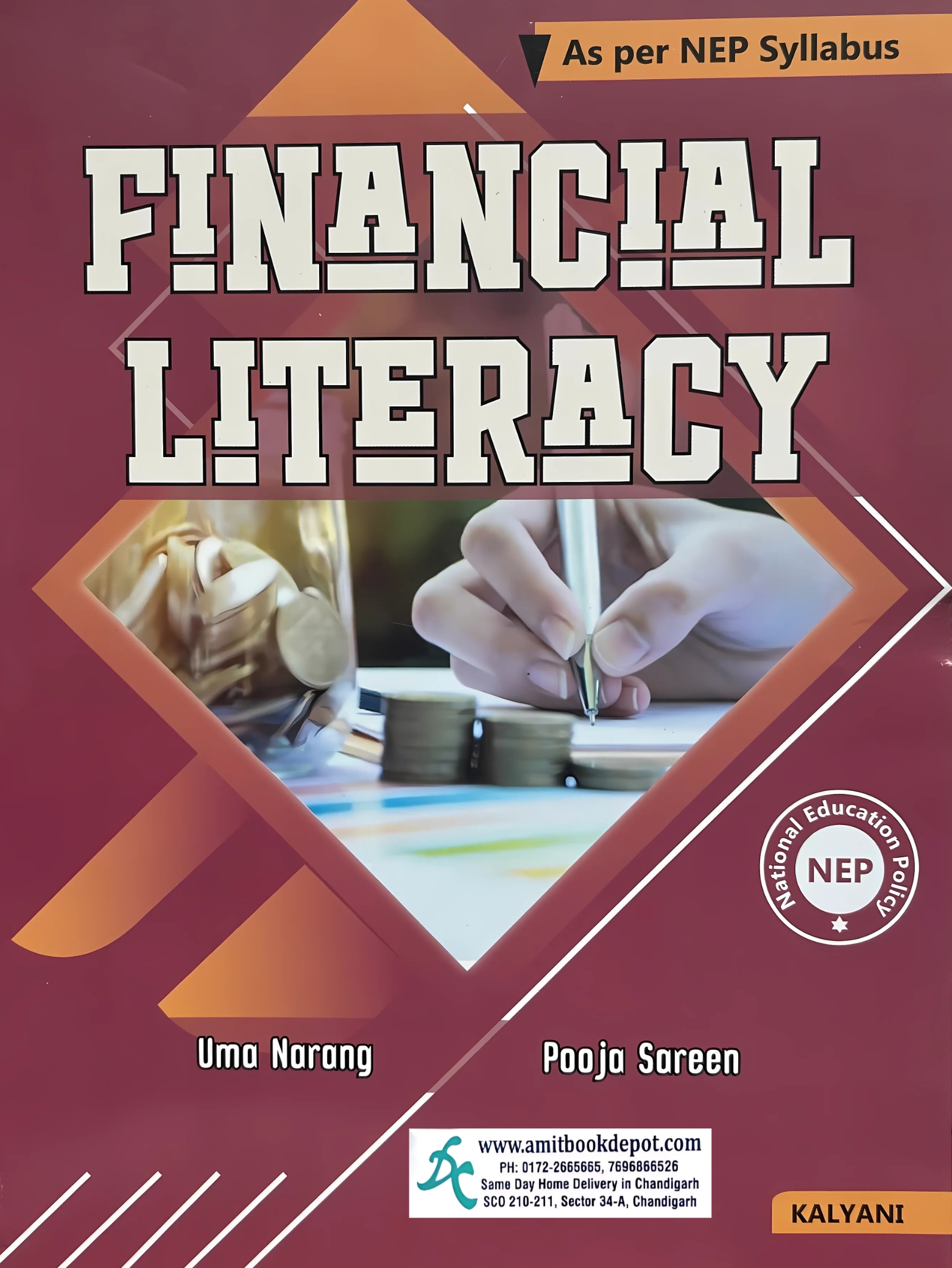
Yes, this book is meticulously crafted to align 100% with the prescribed syllabus for Course Code B.Com./BBA (VAC)-101 for the current academic year.
The book is designed for a theory-based Value Added Course (2 credits). It focuses on theoretical concepts but includes practical topics like creating budgets and understanding real-world banking services, supporting the NEP's holistic approach.
Absolutely. The language is clear and the concepts are explained in a structured, easy-to-follow manner, making it an excellent resource for students who are not attending regular classes.
This Financial Literacy VAC focuses on personal finance management—budgeting, savings, banking, loans, and insurance for individuals. Financial Accounting typically deals with accounting principles for businesses. They are complementary but distinct subjects.
While the core syllabus focuses on fundamental concepts, the book covers essential modern services offered by banks. For the very latest digital trends, students are encouraged to supplement reading with current financial news.
Yes, Chapter 8, "Bank Deposits (Including KYC)," and related chapters in Unit II provide a detailed explanation of these crucial banking formalities.
Yes, the book has dedicated chapters on Life Insurance, General Insurance, Health Insurance, and Property Insurance, which cover the fundamental types of policies available in these categories.
Certainly. Unit I explicitly covers Business Budgeting along with Personal and Family Budgets, making it highly relevant for BBA students understanding financial planning in an organizational context.
The primary focus is on providing clear, syllabus-specific content. Its structure is designed to help students grasp concepts for university exams, which may include chapter-end summaries or key points for revision.
Yes, the topics covered are fundamental to financial literacy and are applicable to anyone seeking to manage their personal finances better, regardless of their academic affiliation.
No Description Added
Yes, this book is meticulously crafted to align 100% with the prescribed syllabus for Course Code B.Com./BBA (VAC)-101 for the current academic year.
The book is designed for a theory-based Value Added Course (2 credits). It focuses on theoretical concepts but includes practical topics like creating budgets and understanding real-world banking services, supporting the NEP's holistic approach.
Absolutely. The language is clear and the concepts are explained in a structured, easy-to-follow manner, making it an excellent resource for students who are not attending regular classes.
This Financial Literacy VAC focuses on personal finance management—budgeting, savings, banking, loans, and insurance for individuals. Financial Accounting typically deals with accounting principles for businesses. They are complementary but distinct subjects.
While the core syllabus focuses on fundamental concepts, the book covers essential modern services offered by banks. For the very latest digital trends, students are encouraged to supplement reading with current financial news.
Yes, Chapter 8, "Bank Deposits (Including KYC)," and related chapters in Unit II provide a detailed explanation of these crucial banking formalities.
Yes, the book has dedicated chapters on Life Insurance, General Insurance, Health Insurance, and Property Insurance, which cover the fundamental types of policies available in these categories.
Certainly. Unit I explicitly covers Business Budgeting along with Personal and Family Budgets, making it highly relevant for BBA students understanding financial planning in an organizational context.
The primary focus is on providing clear, syllabus-specific content. Its structure is designed to help students grasp concepts for university exams, which may include chapter-end summaries or key points for revision.
Yes, the topics covered are fundamental to financial literacy and are applicable to anyone seeking to manage their personal finances better, regardless of their academic affiliation.