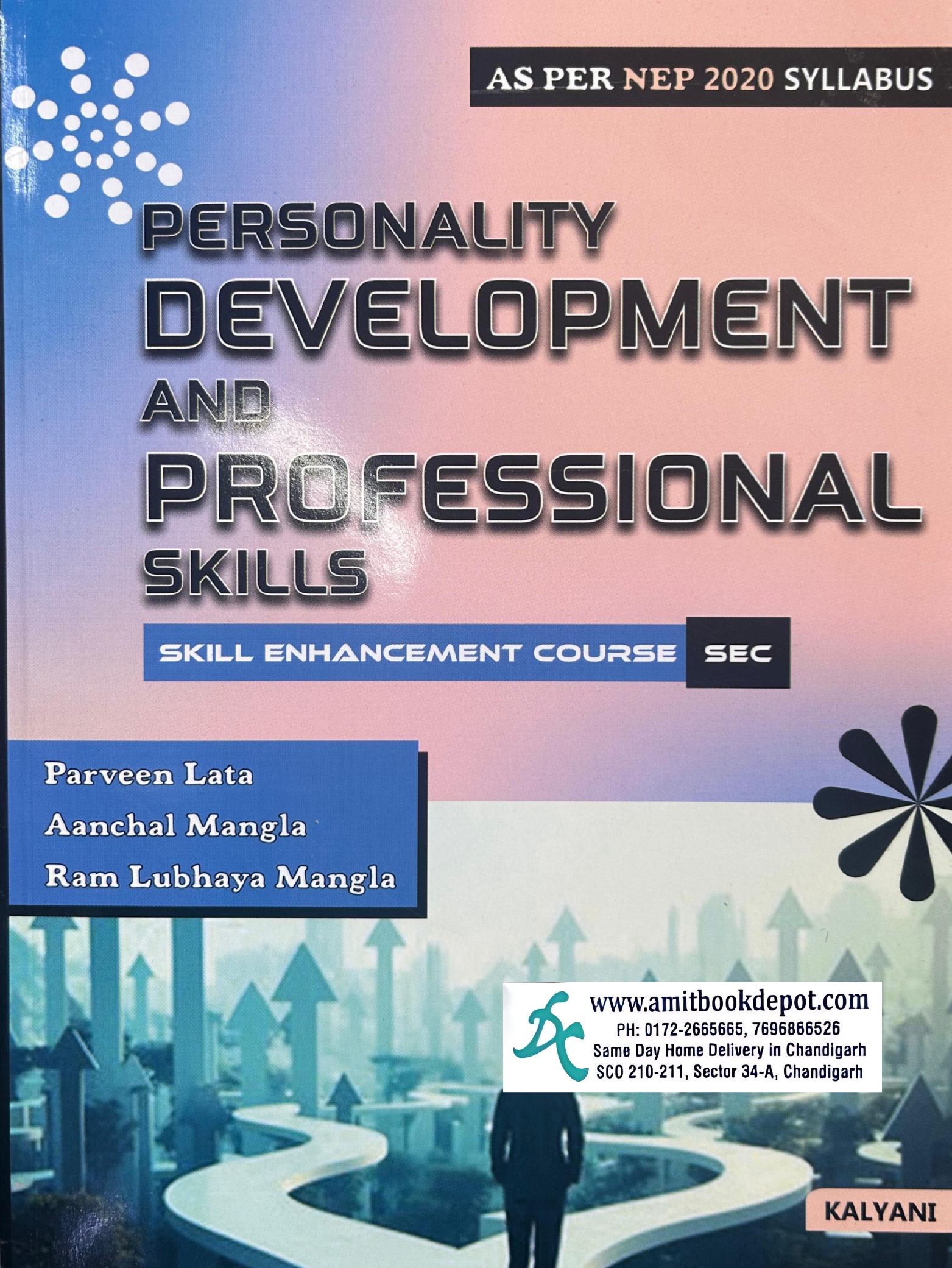
Yes, this textbook is meticulously crafted to provide 100% coverage of the prescribed syllabus for the Skill Enhancement Course (SEC) on Personality Development and Professional Skills.
Chapter 9 provides a detailed breakdown of different types of Group Discussions and Job Interviews, including preparation strategies, common questions, and essential do’s and don'ts for successful participation.
Yes, Chapter 13 on "Stress Management" specifically addresses various sources of stress and offers practical, actionable ways to cope with and manage it effectively.
Certainly. Chapter 8, "Public Speaking and Presentation Skills," is designed to help students overcome stage fear and learn the techniques to deliver confident and compelling presentations.
Yes, Chapter 14, "Nonverbal Communication," and Chapter 15, "Workplace Etiquette," cover critical aspects like personal appearance, posture, gestures, and facial expressions and their impact in the workplace.
Chapters 11 and 12 provide a clear understanding of organizational culture, work environment, and professional ethics, often using relatable scenarios to illustrate key points.
Chapter 6, "Creativity," is dedicated to breaking down creativity into learnable skills. It provides techniques and exercises to enhance innovative thinking and problem-solving abilities.
Yes, Chapter 16, "Email and Telephone Etiquette," provides comprehensive guidelines for professional communication in both traditional and modern remote work environments.
Definitely. The first three chapters focus on understanding the self-concept, self-management, and building strong interpersonal skills, which are fundamental for personal and professional relationships.
The book is structured to explain concepts clearly and may include points for self-reflection and practical application, making the learning interactive.
No Description Added
Yes, this textbook is meticulously crafted to provide 100% coverage of the prescribed syllabus for the Skill Enhancement Course (SEC) on Personality Development and Professional Skills.
Chapter 9 provides a detailed breakdown of different types of Group Discussions and Job Interviews, including preparation strategies, common questions, and essential do’s and don'ts for successful participation.
Yes, Chapter 13 on "Stress Management" specifically addresses various sources of stress and offers practical, actionable ways to cope with and manage it effectively.
Certainly. Chapter 8, "Public Speaking and Presentation Skills," is designed to help students overcome stage fear and learn the techniques to deliver confident and compelling presentations.
Yes, Chapter 14, "Nonverbal Communication," and Chapter 15, "Workplace Etiquette," cover critical aspects like personal appearance, posture, gestures, and facial expressions and their impact in the workplace.
Chapters 11 and 12 provide a clear understanding of organizational culture, work environment, and professional ethics, often using relatable scenarios to illustrate key points.
Chapter 6, "Creativity," is dedicated to breaking down creativity into learnable skills. It provides techniques and exercises to enhance innovative thinking and problem-solving abilities.
Yes, Chapter 16, "Email and Telephone Etiquette," provides comprehensive guidelines for professional communication in both traditional and modern remote work environments.
Definitely. The first three chapters focus on understanding the self-concept, self-management, and building strong interpersonal skills, which are fundamental for personal and professional relationships.
The book is structured to explain concepts clearly and may include points for self-reflection and practical application, making the learning interactive.