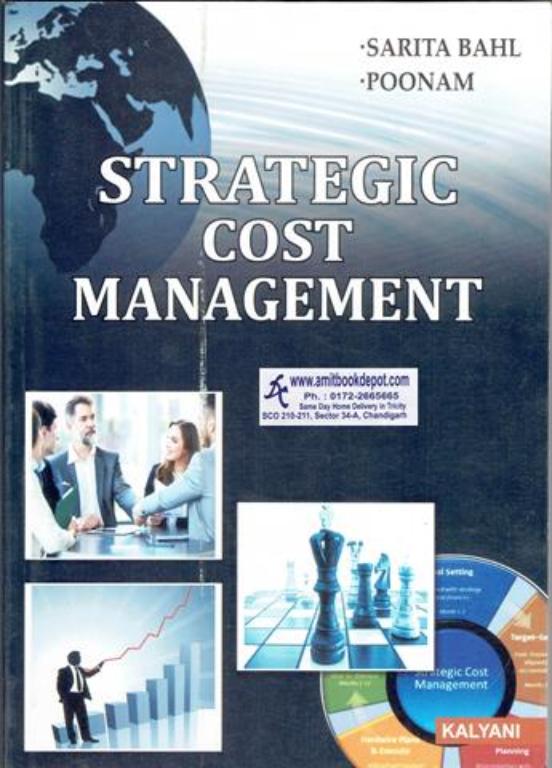
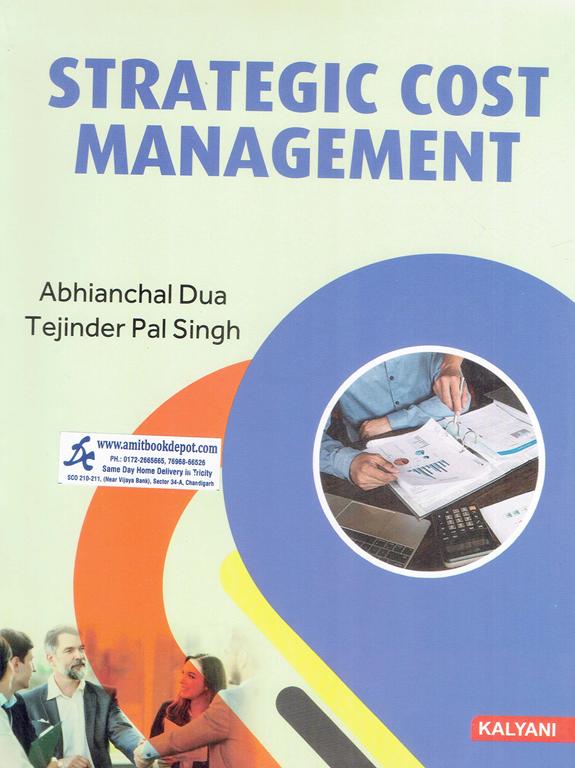
Yes, this book is meticulously crafted to be 100% aligned with the latest syllabus for MC.309 - Strategic Cost Management for MCom 3rd Semester at Panjab University, Chandigarh.
The book provides conceptual clarity and illustrative examples to explain complex topics. However, for a extensive set of solved numerical problems, students might need to refer to a dedicated problems and solutions book alongside this text.
While the core concepts may overlap, this book is specifically tailored for the Panjab University MCom syllabus. CA, CMA, and CS students should refer to study material provided by their respective institutes for exam-specific content.
The book clearly distinguishes between ABC as a costing system and ABM as its managerial extension, demonstrating how the information from ABC is used in ABM for process improvement and customer profitability analysis.
Yes, Unit-III comprehensively covers the nature of traditional budgeting as well as dedicated sections on modern approaches like Activity-Based Budgeting, the Kaizen approach to budgeting, and Zero-Based Budgeting (ZBB).
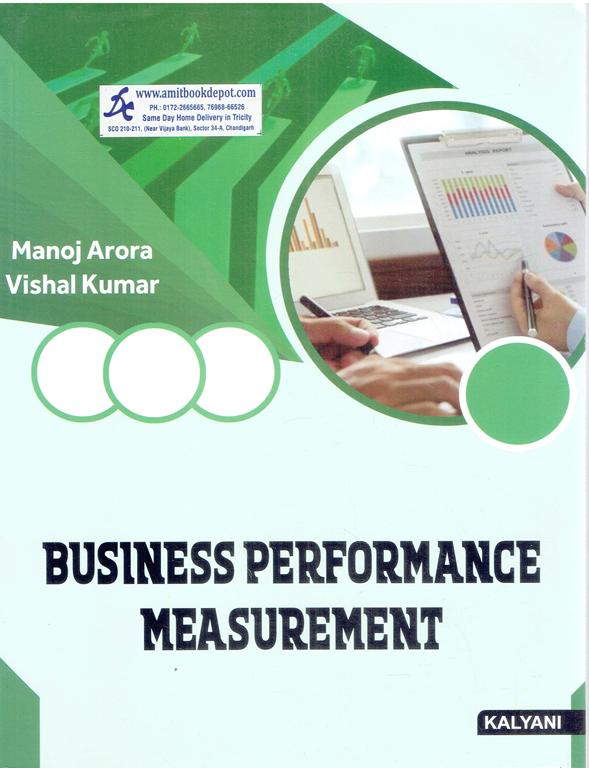
Absolutely. Unit-IV details the Balanced Scorecard, which is a strategic performance measurement framework that integrates financial perspectives with customer, internal process, and learning & growth perspectives.
The book covers the nature of value-chain analysis, including activity analysis and linkage analysis, and explains its practical application in cost reduction and adding value to products and services.
This information is product-specific. Please check the product details section on the website for the exact page count and binding type for the specific listing you are viewing.
The book is written in a structured, student-friendly manner, making it suitable for both classroom learning and self-study for Panjab University MCom students.
The book covers the measurement of performance for investment centers, including the formulas and conceptual understanding of Return on Investment (ROI), Residual Income (RI), and Economic Value Added (EVA).
No Description Added
Yes, this book is meticulously crafted to be 100% aligned with the latest syllabus for MC.309 - Strategic Cost Management for MCom 3rd Semester at Panjab University, Chandigarh.
The book provides conceptual clarity and illustrative examples to explain complex topics. However, for a extensive set of solved numerical problems, students might need to refer to a dedicated problems and solutions book alongside this text.
While the core concepts may overlap, this book is specifically tailored for the Panjab University MCom syllabus. CA, CMA, and CS students should refer to study material provided by their respective institutes for exam-specific content.
The book clearly distinguishes between ABC as a costing system and ABM as its managerial extension, demonstrating how the information from ABC is used in ABM for process improvement and customer profitability analysis.
Yes, Unit-III comprehensively covers the nature of traditional budgeting as well as dedicated sections on modern approaches like Activity-Based Budgeting, the Kaizen approach to budgeting, and Zero-Based Budgeting (ZBB).
Absolutely. Unit-IV details the Balanced Scorecard, which is a strategic performance measurement framework that integrates financial perspectives with customer, internal process, and learning & growth perspectives.
The book covers the nature of value-chain analysis, including activity analysis and linkage analysis, and explains its practical application in cost reduction and adding value to products and services.
This information is product-specific. Please check the product details section on the website for the exact page count and binding type for the specific listing you are viewing.
The book is written in a structured, student-friendly manner, making it suitable for both classroom learning and self-study for Panjab University MCom students.
The book covers the measurement of performance for investment centers, including the formulas and conceptual understanding of Return on Investment (ROI), Residual Income (RI), and Economic Value Added (EVA).