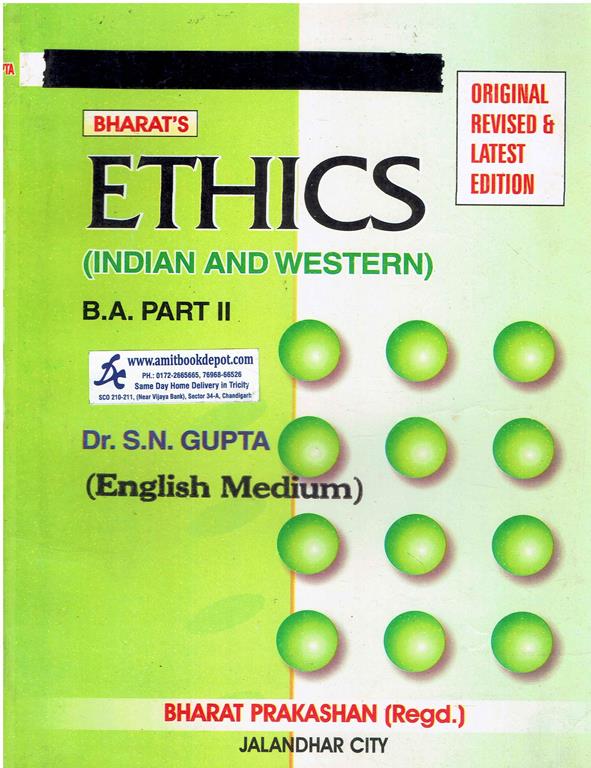
Yes, this book is specifically authored and prescribed to cover the complete and updated syllabus for the Indian and Western Ethics paper for BA 3rd and 4th Semesters at Panjab University, Chandigarh.
Absolutely. It comprehensively covers classical theories from Indian and Western traditions, as well as dedicated chapters on applied ethics like euthanasia, abortion, environmental ethics, gender justice, and sexual harassment.
While the core chapters directly map to the main syllabus, the "Some Additional Topics" section covers important complementary themes often discussed in class or in question papers, providing students with a broader perspective and competitive edge.
The book is structured in two main parts: Indian Ethics and Western Ethics. The comparison is facilitated by the sequential presentation, allowing students to draw contrasts and understand unique features like the salient points of Indian ethics versus Western virtue theory or deontology.
The main chapter covers the "Yoga of Patanjali" as a philosophical system. An additional chapter, "Yoga and Stress Management," discusses its practical, application-based relevance in contemporary life.
The book addresses highly relevant issues like Environmental Ethics, Land Degradation, Organic Farming, and Global Warming, making the ethical discussion current and urgent.
Yes, Chapter 13 details Hedonism and Utilitarianism (Bentham, Mill, Sidgwick), and Chapter 12 is dedicated to Kant's Deontology (Categorical Imperative), providing thorough coverage as per syllabus requirements.
Yes, its detailed chapter-wise explanations, coverage of both theoretical and applied aspects, and comparative analysis provide substantial content for crafting well-informed long answers and critical essays.
The book is structured for academic study, focusing on comprehensive content delivery as per the syllabus. Students should consult it alongside their lecture notes and university-recommended question banks.
While tailored for Panjab University, any undergraduate student or reader interested in a comparative introduction to Indian and Western ethics, along with modern dilemmas, will find this book highly informative.
No Description Added
Yes, this book is specifically authored and prescribed to cover the complete and updated syllabus for the Indian and Western Ethics paper for BA 3rd and 4th Semesters at Panjab University, Chandigarh.
Absolutely. It comprehensively covers classical theories from Indian and Western traditions, as well as dedicated chapters on applied ethics like euthanasia, abortion, environmental ethics, gender justice, and sexual harassment.
While the core chapters directly map to the main syllabus, the "Some Additional Topics" section covers important complementary themes often discussed in class or in question papers, providing students with a broader perspective and competitive edge.
The book is structured in two main parts: Indian Ethics and Western Ethics. The comparison is facilitated by the sequential presentation, allowing students to draw contrasts and understand unique features like the salient points of Indian ethics versus Western virtue theory or deontology.
The main chapter covers the "Yoga of Patanjali" as a philosophical system. An additional chapter, "Yoga and Stress Management," discusses its practical, application-based relevance in contemporary life.
The book addresses highly relevant issues like Environmental Ethics, Land Degradation, Organic Farming, and Global Warming, making the ethical discussion current and urgent.
Yes, Chapter 13 details Hedonism and Utilitarianism (Bentham, Mill, Sidgwick), and Chapter 12 is dedicated to Kant's Deontology (Categorical Imperative), providing thorough coverage as per syllabus requirements.
Yes, its detailed chapter-wise explanations, coverage of both theoretical and applied aspects, and comparative analysis provide substantial content for crafting well-informed long answers and critical essays.
The book is structured for academic study, focusing on comprehensive content delivery as per the syllabus. Students should consult it alongside their lecture notes and university-recommended question banks.
While tailored for Panjab University, any undergraduate student or reader interested in a comparative introduction to Indian and Western ethics, along with modern dilemmas, will find this book highly informative.