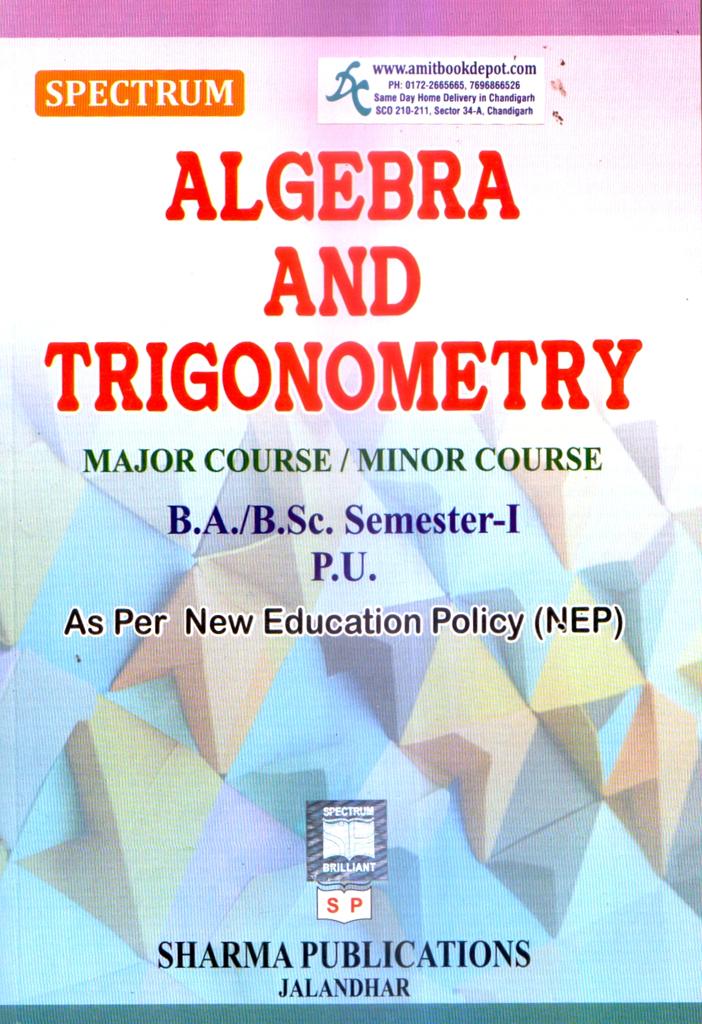
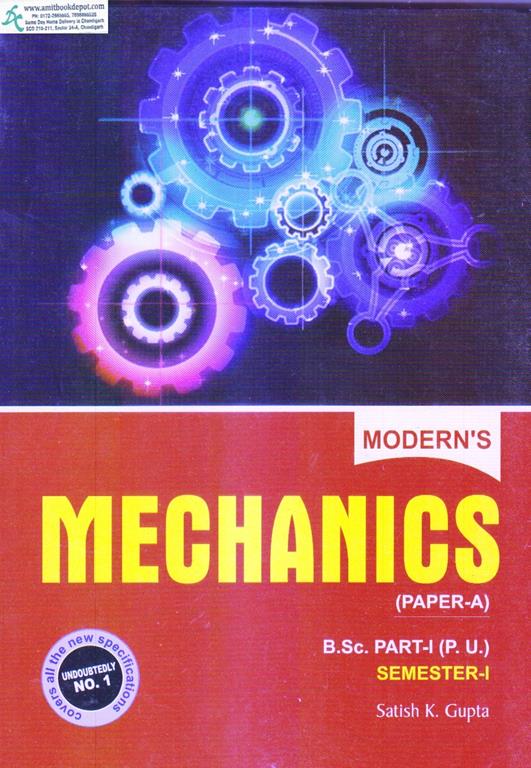
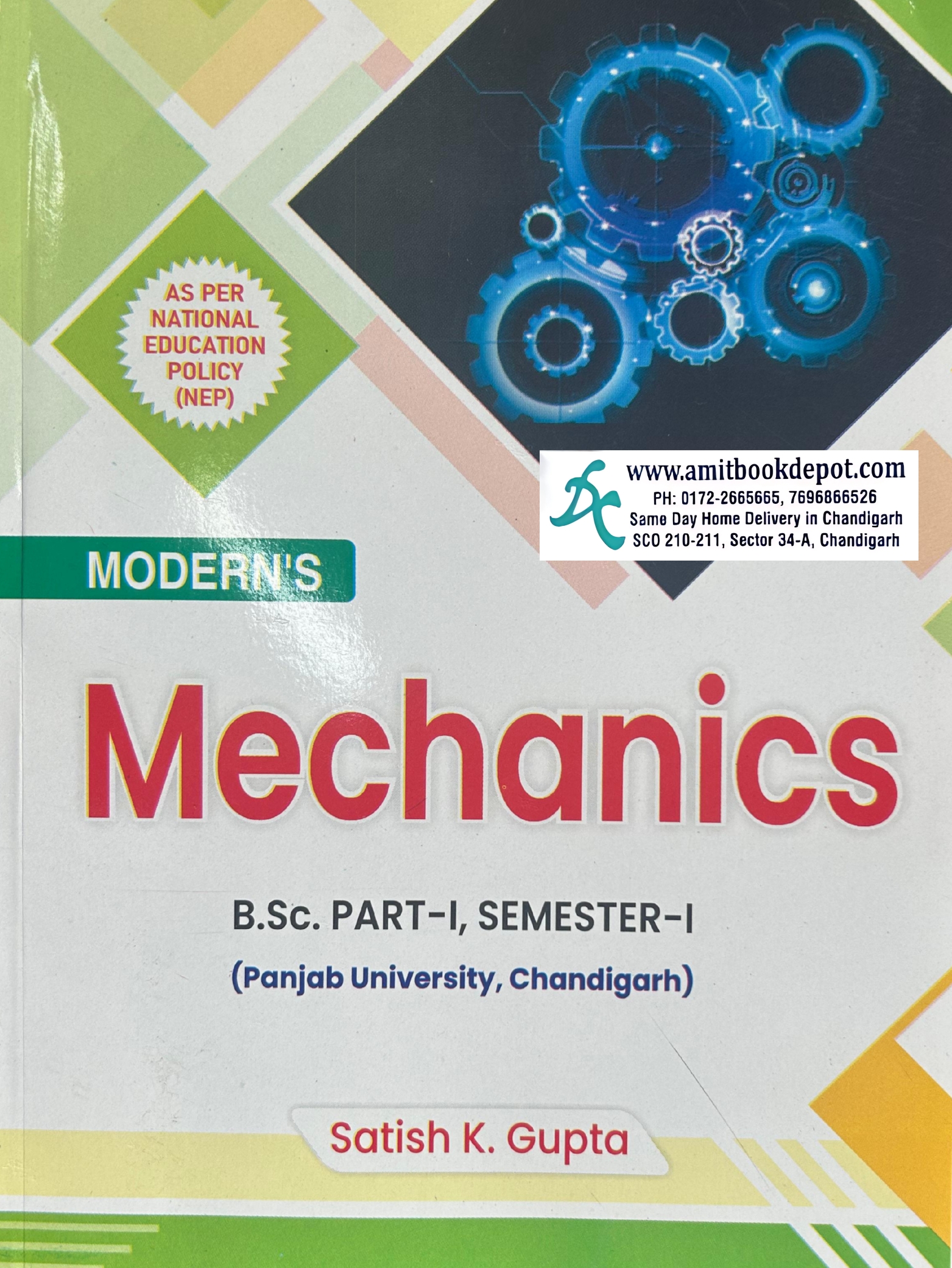
Yes, the book is meticulously crafted to cover 100% of the syllabus for the Mechanics paper (PHY - DSC - 1 Maj/Min - 101).
Absolutely. The book explains theoretical concepts in detail and places a strong emphasis on problem-solving, which is crucial as 25-30% of the exam marks are allocated to problems.
The content is divided into the exact units (Unit I and Unit II) as specified in the syllabus. This aligns directly with the exam structure, where you must attempt questions from these specific units.
Yes, topics like Lorentz transformations, time dilation, and the twin paradox are broken down into logical steps with clear explanations to build a solid conceptual understanding.
Yes, the book provides a dedicated section on fictitious forces arising in rotating frames of reference, specifically discussing their effects due to the Earth's rotation.
Yes, it offers a comprehensive analysis of elastic collisions, deriving the relationships between velocities, angles, and kinetic energies in both Laboratory and Centre-of-Mass reference frames.
Yes, the book begins with foundational explanations of Cartesian, Plane Polar, and Spherical Polar coordinate systems, including how to express displacement, velocity, and acceleration in these systems.
Yes, the book covers the concept of the ether, the Michelson-Morley experiment, and its null result, providing the necessary historical context for the Special Theory of Relativity.
Yes, it establishes a clear relationship between the conservation laws of linear momentum, angular momentum, energy, and the symmetries of space and time.
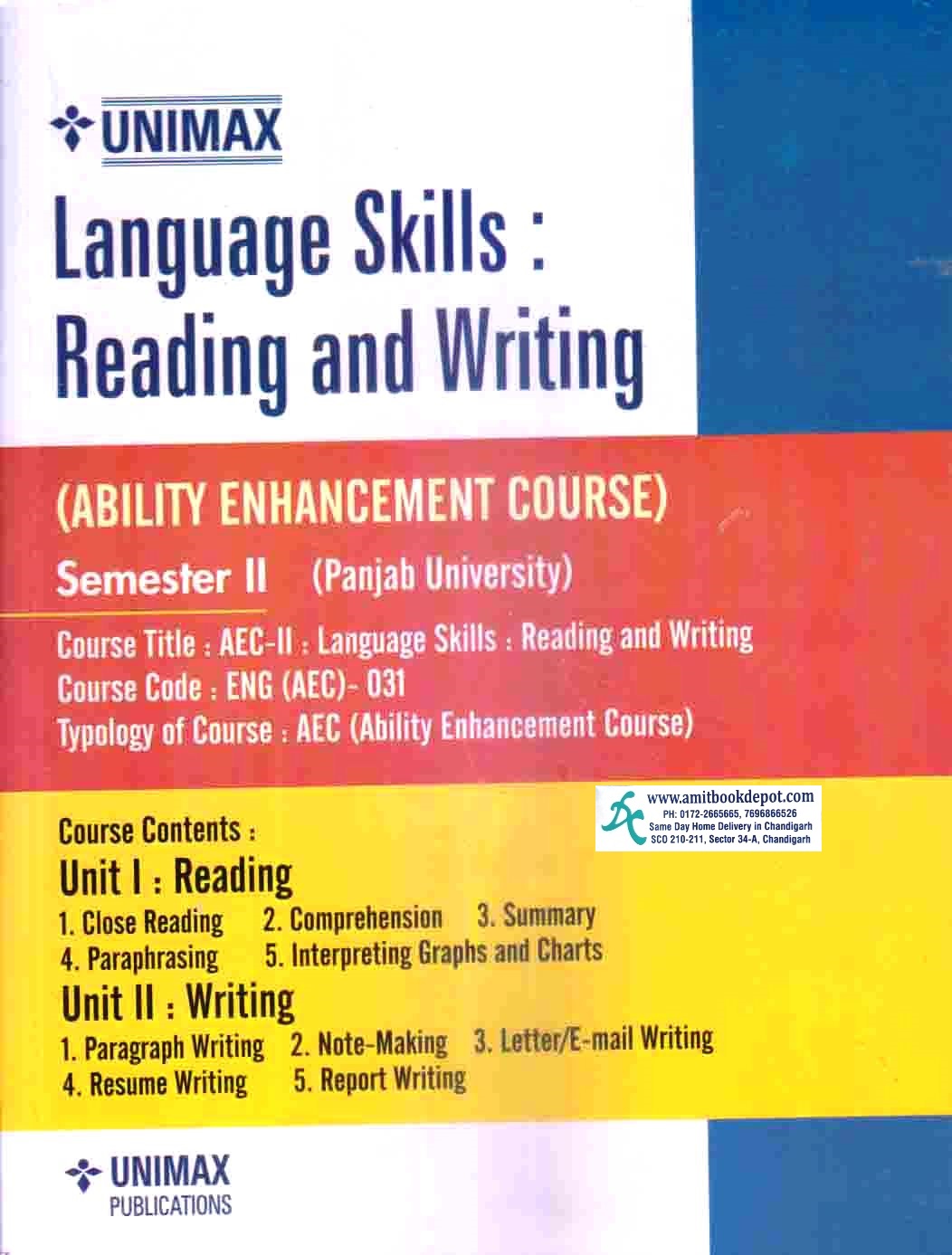
Yes, it is designed for both Physics majors and minors (PHY - DSC - 1 Maj/Min - 101) of Panjab University's BSc program.
No Description Added
Yes, the book is meticulously crafted to cover 100% of the syllabus for the Mechanics paper (PHY - DSC - 1 Maj/Min - 101).
Absolutely. The book explains theoretical concepts in detail and places a strong emphasis on problem-solving, which is crucial as 25-30% of the exam marks are allocated to problems.
The content is divided into the exact units (Unit I and Unit II) as specified in the syllabus. This aligns directly with the exam structure, where you must attempt questions from these specific units.
Yes, topics like Lorentz transformations, time dilation, and the twin paradox are broken down into logical steps with clear explanations to build a solid conceptual understanding.
Yes, the book provides a dedicated section on fictitious forces arising in rotating frames of reference, specifically discussing their effects due to the Earth's rotation.
Yes, it offers a comprehensive analysis of elastic collisions, deriving the relationships between velocities, angles, and kinetic energies in both Laboratory and Centre-of-Mass reference frames.
Yes, the book begins with foundational explanations of Cartesian, Plane Polar, and Spherical Polar coordinate systems, including how to express displacement, velocity, and acceleration in these systems.
Yes, the book covers the concept of the ether, the Michelson-Morley experiment, and its null result, providing the necessary historical context for the Special Theory of Relativity.
Yes, it establishes a clear relationship between the conservation laws of linear momentum, angular momentum, energy, and the symmetries of space and time.
Yes, it is designed for both Physics majors and minors (PHY - DSC - 1 Maj/Min - 101) of Panjab University's BSc program.