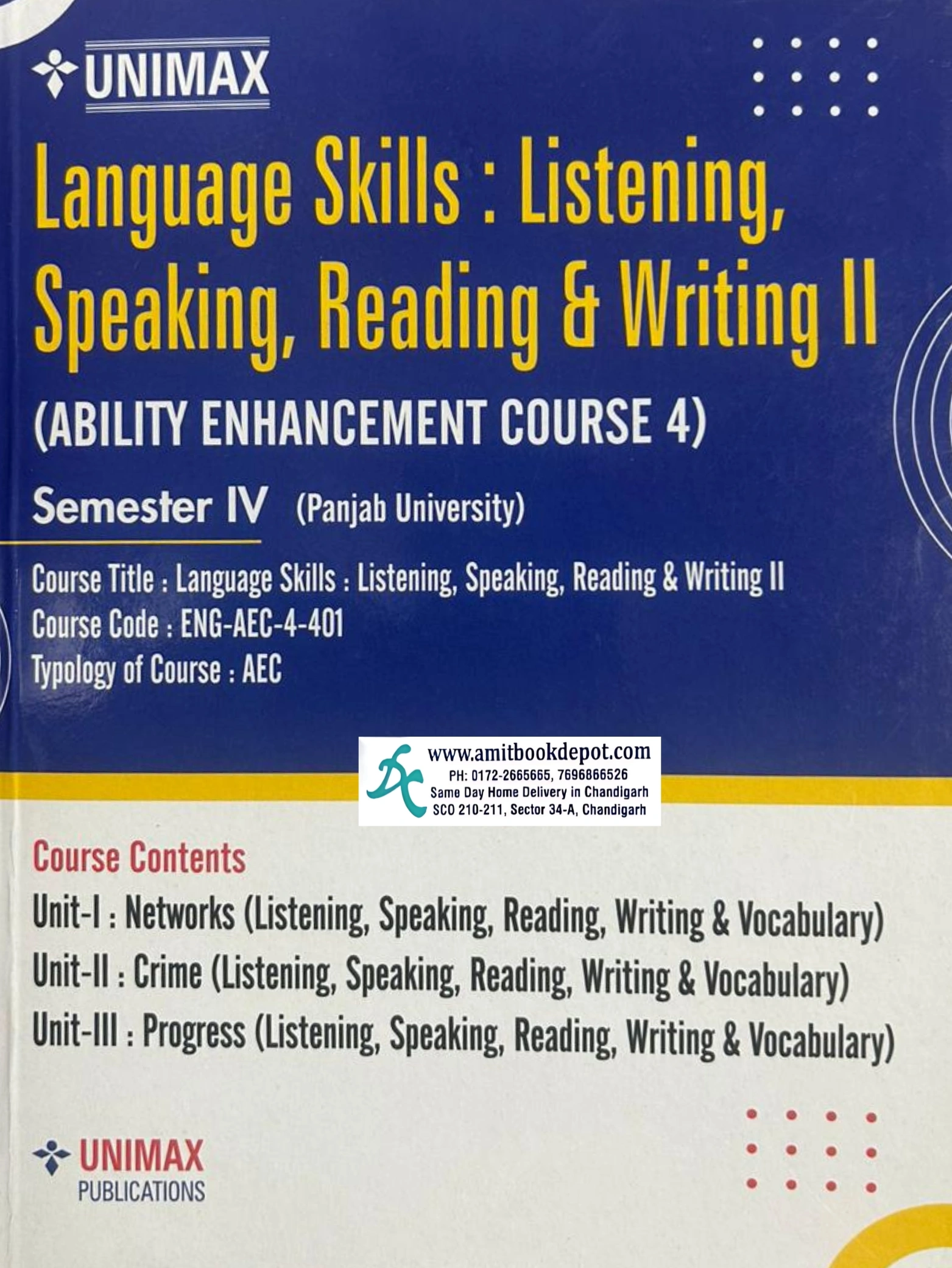
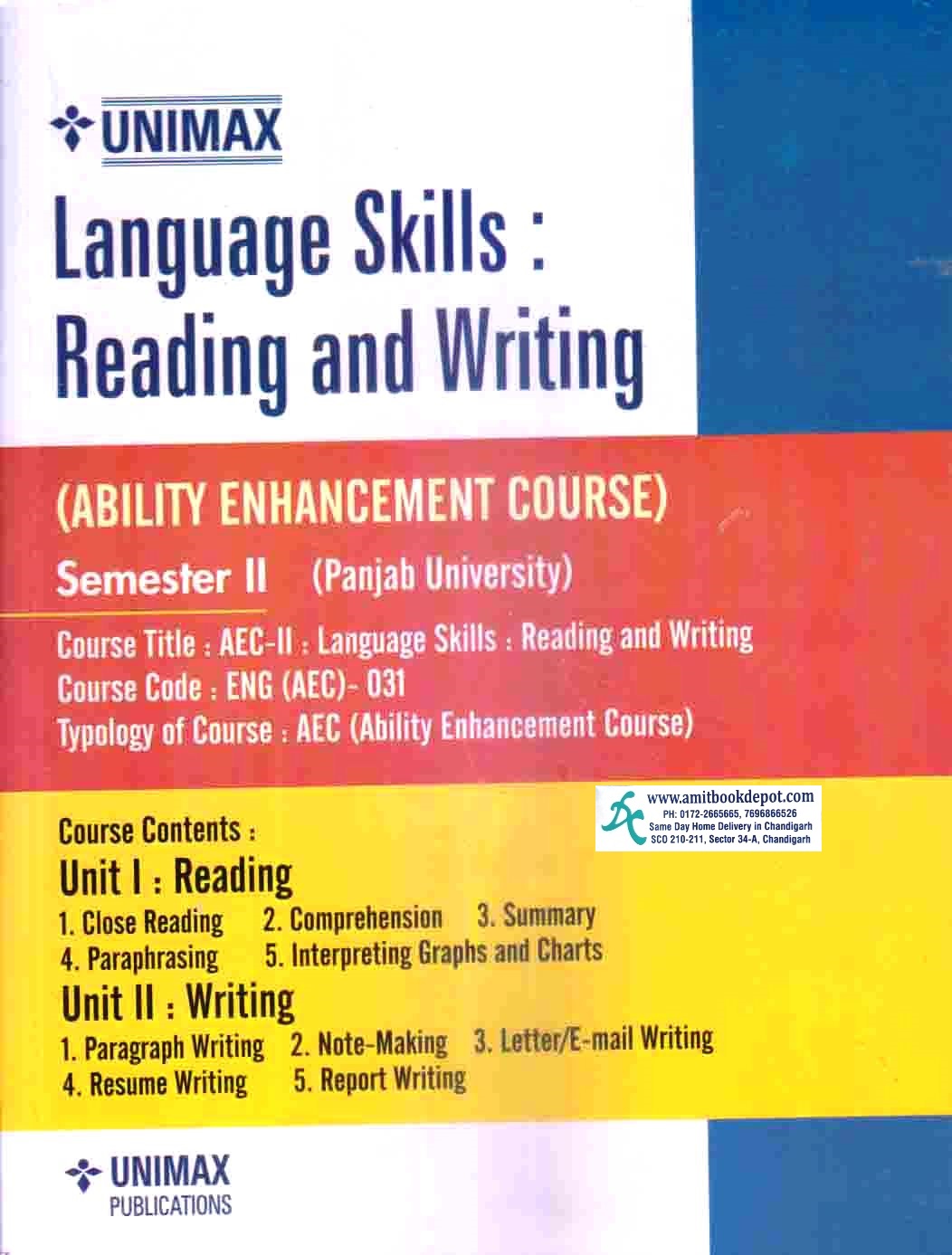
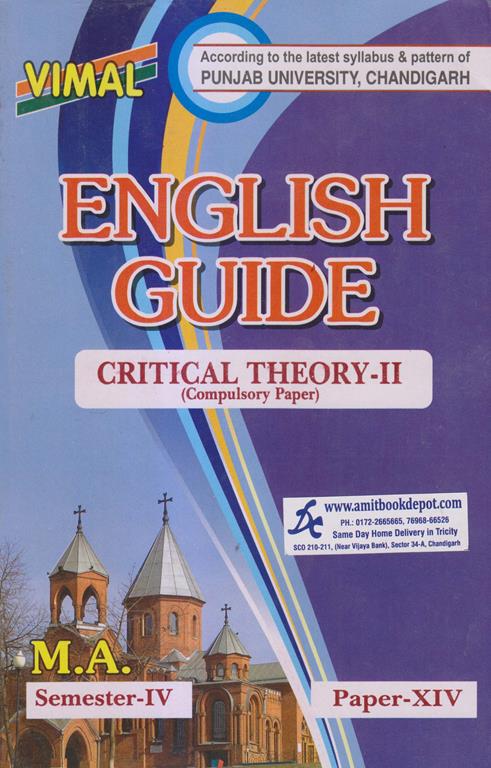
While it is designed to cover a common AEC syllabus, it is best to check your university's specific curriculum. It is aligned with the general pattern followed by many Indian universities.
The product description does not mention online components. The listening exercises are likely designed for the teacher to conduct in class during the practical hours. You should check with your institution for audio materials.
The book's pedagogy includes practical training for debates and discussions, which are the core components of honing public speaking skills. Unit activities are designed to build confidence in articulation and presentation.
Typically, textbooks like these do not include answer keys within the student edition. Answers are often provided in a separate teacher's handbook or conducted in class.
This unit focuses on academic writing integrity, which is a crucial part of overall communication. Properly using sources reflects ethical communication, and the research involved often requires advanced listening and reading skills.
While it builds general proficiency in academic English, it is not specifically designed as a guide for IELTS or TOEFL. Its focus is on fulfilling the university's AEC syllabus.
This depends on the individual student's proficiency level. To thoroughly master the exercises and vocabulary, a few hours of dedicated self-study per week is recommended.
The syllabus focuses on integrated language skills and communication. Grammar is likely taught contextually within the units rather than in isolated, dedicated chapters.
Yes, a self-learner looking to improve their academic English and communication skills in an structured way can find this book beneficial, though the lack of a teacher or audio resources might be a limitation.
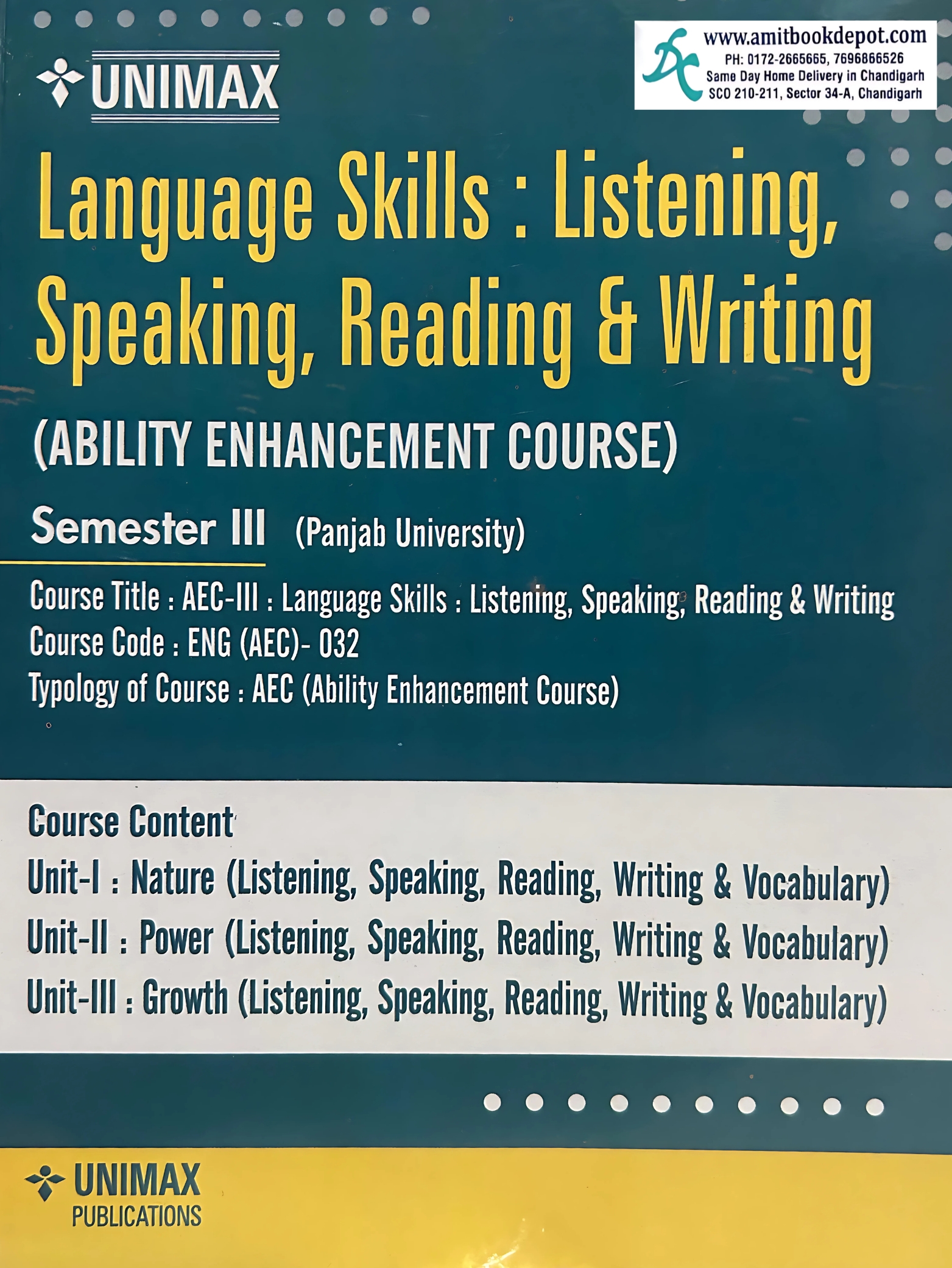
Each semester's book covers a different set of themes and progressively complex language skills as per the university's phased syllabus. The SEM-III version deals with themes like Nature, Power, and Growth.
No Description Added
While it is designed to cover a common AEC syllabus, it is best to check your university's specific curriculum. It is aligned with the general pattern followed by many Indian universities.
The product description does not mention online components. The listening exercises are likely designed for the teacher to conduct in class during the practical hours. You should check with your institution for audio materials.
The book's pedagogy includes practical training for debates and discussions, which are the core components of honing public speaking skills. Unit activities are designed to build confidence in articulation and presentation.
Typically, textbooks like these do not include answer keys within the student edition. Answers are often provided in a separate teacher's handbook or conducted in class.
This unit focuses on academic writing integrity, which is a crucial part of overall communication. Properly using sources reflects ethical communication, and the research involved often requires advanced listening and reading skills.
While it builds general proficiency in academic English, it is not specifically designed as a guide for IELTS or TOEFL. Its focus is on fulfilling the university's AEC syllabus.
This depends on the individual student's proficiency level. To thoroughly master the exercises and vocabulary, a few hours of dedicated self-study per week is recommended.
The syllabus focuses on integrated language skills and communication. Grammar is likely taught contextually within the units rather than in isolated, dedicated chapters.
Yes, a self-learner looking to improve their academic English and communication skills in an structured way can find this book beneficial, though the lack of a teacher or audio resources might be a limitation.
Each semester's book covers a different set of themes and progressively complex language skills as per the university's phased syllabus. The SEM-III version deals with themes like Nature, Power, and Growth.