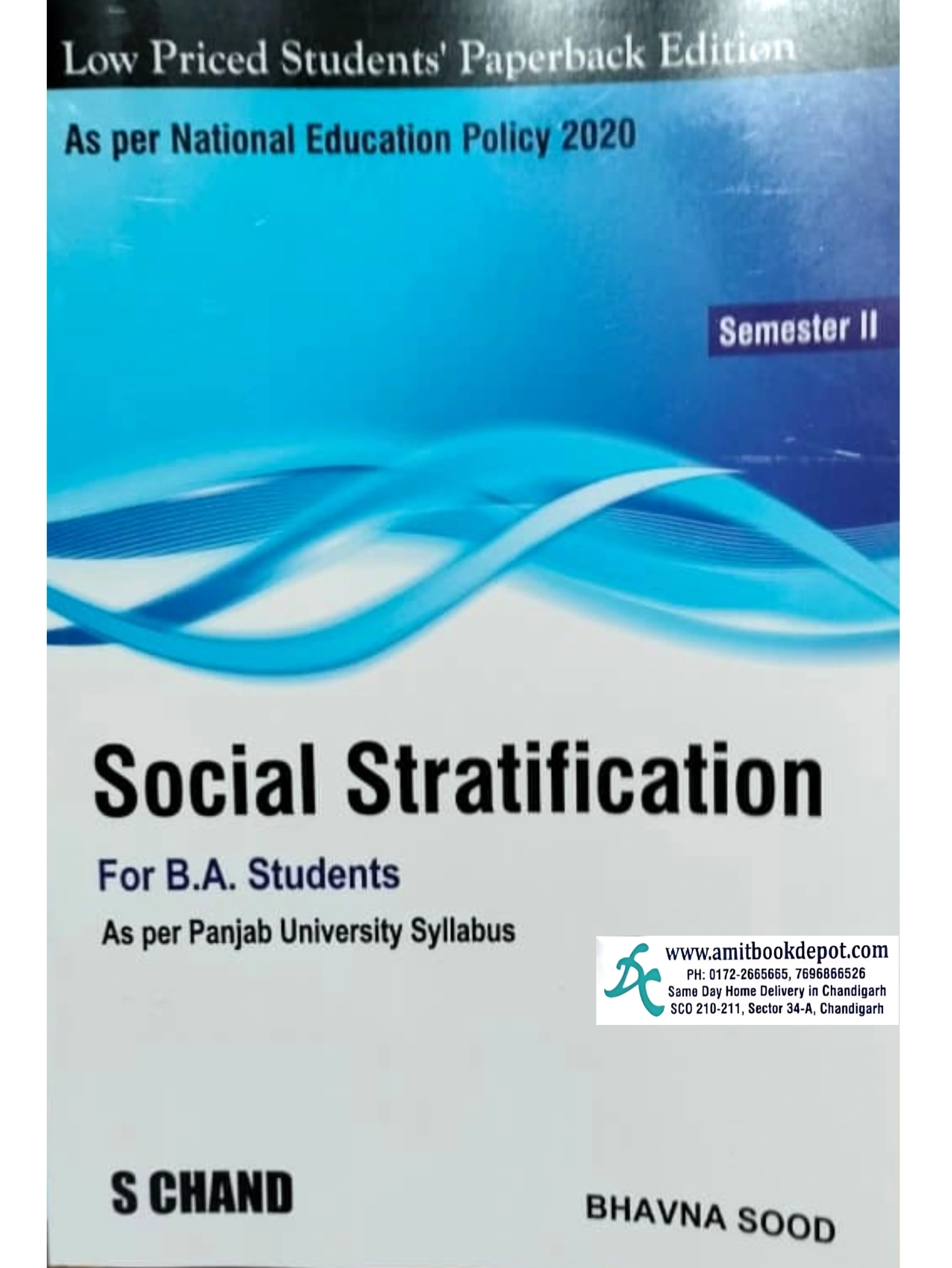
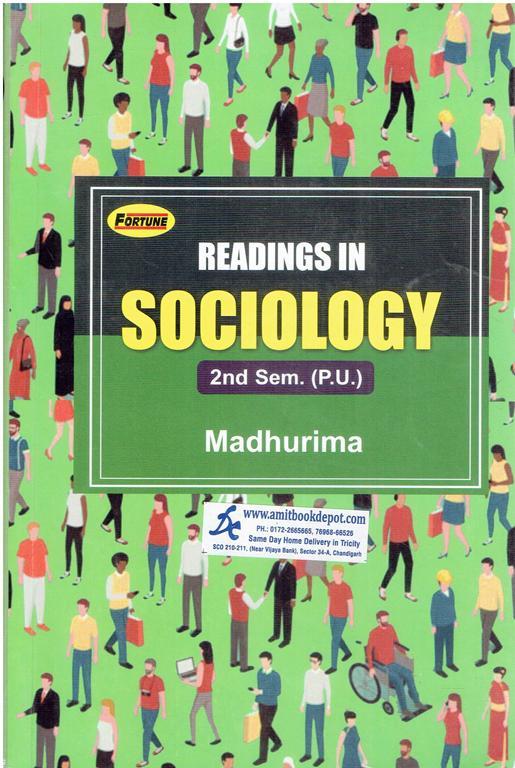
Yes, it is precisely tailored for the B.A. 2nd Semester course HSS-SOC-DSC2-201: Social Stratification as per the latest Panjab University NEP syllabus.
Absolutely. It provides dedicated chapters on the Functionalist Theory of Davis and Moore and the Conflict Theory of Karl Marx, along with Max Weber's multidimensional approach.
Yes, it does, particularly in the units discussing caste as a form of stratification and the interface between caste and class, making it highly relevant for Indian students.
Comprehensively. Unit IV is entirely dedicated to Social Mobility, covering its meaning, types, responsible factors, and indicators like education, occupation, and income.
The book details key elements including Differentiation, Hierarchy, Ranking, Reward, and Evaluation as per the syllabus of Unit I.
Yes, gender is covered in detail under Unit III: Forms of Social Stratification, alongside caste, class, and race.
The pedagogical approach, including discussions and conceptual foundations, supports activities like assignments, presentations, and term papers that form the internal assessment (20 marks).
Each major concept, like Social Stratification, Social Mobility, and Social Inequality, is introduced with clear definitions and listed characteristics for easy understanding and memorization.
Yes, the chapter on Social Mobility concludes with a "Suggested Readings" list to guide students who wish to explore the topic in greater depth.
While specifically designed for Panjab University's syllabus, its comprehensive coverage of core sociology topics makes it a valuable resource for students of social stratification across other universities as well.
No Description Added
Yes, it is precisely tailored for the B.A. 2nd Semester course HSS-SOC-DSC2-201: Social Stratification as per the latest Panjab University NEP syllabus.
Absolutely. It provides dedicated chapters on the Functionalist Theory of Davis and Moore and the Conflict Theory of Karl Marx, along with Max Weber's multidimensional approach.
Yes, it does, particularly in the units discussing caste as a form of stratification and the interface between caste and class, making it highly relevant for Indian students.
Comprehensively. Unit IV is entirely dedicated to Social Mobility, covering its meaning, types, responsible factors, and indicators like education, occupation, and income.
The book details key elements including Differentiation, Hierarchy, Ranking, Reward, and Evaluation as per the syllabus of Unit I.
Yes, gender is covered in detail under Unit III: Forms of Social Stratification, alongside caste, class, and race.
The pedagogical approach, including discussions and conceptual foundations, supports activities like assignments, presentations, and term papers that form the internal assessment (20 marks).
Each major concept, like Social Stratification, Social Mobility, and Social Inequality, is introduced with clear definitions and listed characteristics for easy understanding and memorization.
Yes, the chapter on Social Mobility concludes with a "Suggested Readings" list to guide students who wish to explore the topic in greater depth.
While specifically designed for Panjab University's syllabus, its comprehensive coverage of core sociology topics makes it a valuable resource for students of social stratification across other universities as well.