-
Mon-Fri: 10AM to 8PM 01722665665
-
My Account
-
-
0
Total :
₹ 0.00

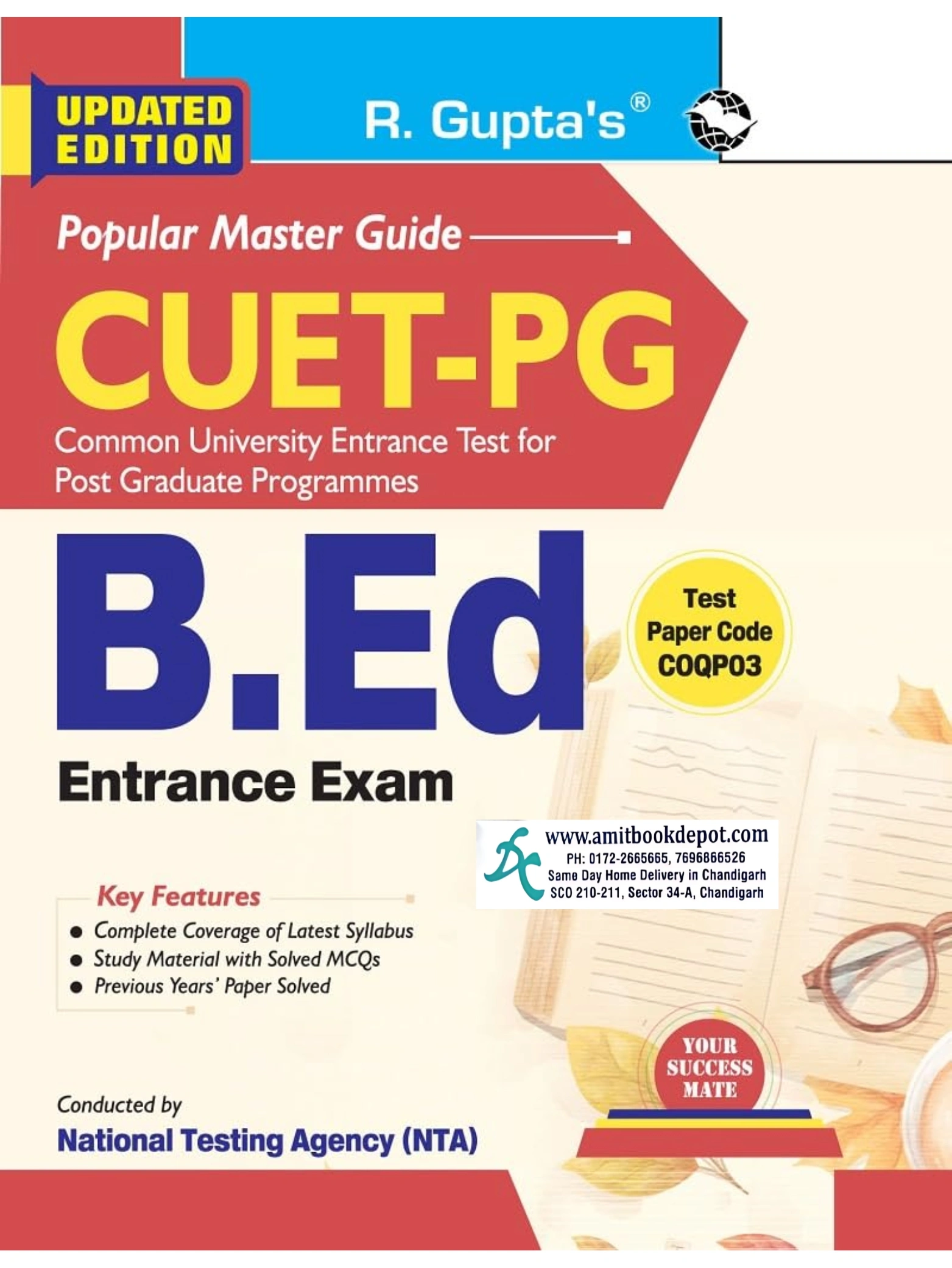
The guide includes the complete previous years' papers from 2021, 2022, and 2023. However, only the 2023 paper is provided with detailed, step-by-step explanatory answers for each question. The 2022 and 2021 papers are included as solved papers (with answer keys) for practice and pattern analysis, allowing you to test yourself under timed conditions.
This guide treats Teaching Aptitude not as a general reasoning section but as a specialized pedagogical domain. It delves deep into theories of learning (e.g., PASS model), child development, inclusive education strategies for CWSN, classroom management techniques, and modern assessment forms like open-book exams—all directly aligned with the B.Ed. program's focus and the CUET-PG syllabus.
Yes. Unlike many general guides, this book has a dedicated sub-section for Environment within the "Science & Environment" unit. It comes with its own set of Multiple Choice Questions (MCQs), ensuring focused preparation for this increasingly important part of the syllabus.
This section is a unique strength of this guide. It goes beyond simple facts to cover terminology, heritage, and important concepts. You'll find specifics on Indian classical music forms, types of puppetry, dances of India, yoga principles, sports terminology, and the conceptual understanding of performing arts—topics often asked in the B.Ed. entrance to assess a candidate's holistic educational awareness.
The GK section is meticulously curated for the B.Ed. context. Instead of random current affairs, it focuses on the Education System in India, types and functions of schools, important Indian and foreign authors (relevant for teaching), awards & honors (especially in education and literature), and prominent national/international institutions. This focused approach targets the exact GK areas the exam prioritizes.
The guide uses a strategic mixed approach. Major sections like Teaching Aptitude, Social Sciences, Science, and GK conclude with a dedicated MCQ bank for comprehensive revision. However, within the Teaching Aptitude chapter, pedagogical concepts are immediately reinforced with MCQs, enabling you to test your understanding as you learn.
Yes. All the Multiple Choice Question banks provided at the end of major sections (Teaching Aptitude, Social Sciences, Science, Environment, Arts, GK) come with answers to facilitate self-evaluation and learning.
Yes, there is a dedicated section explaining assessment principles, types of evaluation, and modern testing methods like online and open-book exams.
The book combines theory, solved papers, and topic-wise MCQs, making it easy for students to study systematically, assess their progress, and identify weak areas.
Yes, it discusses inclusive education, identification, and special needs education, which are vital topics for modern teaching practices.
No Description Added
The guide includes the complete previous years' papers from 2021, 2022, and 2023. However, only the 2023 paper is provided with detailed, step-by-step explanatory answers for each question. The 2022 and 2021 papers are included as solved papers (with answer keys) for practice and pattern analysis, allowing you to test yourself under timed conditions.
This guide treats Teaching Aptitude not as a general reasoning section but as a specialized pedagogical domain. It delves deep into theories of learning (e.g., PASS model), child development, inclusive education strategies for CWSN, classroom management techniques, and modern assessment forms like open-book exams—all directly aligned with the B.Ed. program's focus and the CUET-PG syllabus.
Yes. Unlike many general guides, this book has a dedicated sub-section for Environment within the "Science & Environment" unit. It comes with its own set of Multiple Choice Questions (MCQs), ensuring focused preparation for this increasingly important part of the syllabus.
This section is a unique strength of this guide. It goes beyond simple facts to cover terminology, heritage, and important concepts. You'll find specifics on Indian classical music forms, types of puppetry, dances of India, yoga principles, sports terminology, and the conceptual understanding of performing arts—topics often asked in the B.Ed. entrance to assess a candidate's holistic educational awareness.
The GK section is meticulously curated for the B.Ed. context. Instead of random current affairs, it focuses on the Education System in India, types and functions of schools, important Indian and foreign authors (relevant for teaching), awards & honors (especially in education and literature), and prominent national/international institutions. This focused approach targets the exact GK areas the exam prioritizes.
The guide uses a strategic mixed approach. Major sections like Teaching Aptitude, Social Sciences, Science, and GK conclude with a dedicated MCQ bank for comprehensive revision. However, within the Teaching Aptitude chapter, pedagogical concepts are immediately reinforced with MCQs, enabling you to test your understanding as you learn.
Yes. All the Multiple Choice Question banks provided at the end of major sections (Teaching Aptitude, Social Sciences, Science, Environment, Arts, GK) come with answers to facilitate self-evaluation and learning.
Yes, there is a dedicated section explaining assessment principles, types of evaluation, and modern testing methods like online and open-book exams.
The book combines theory, solved papers, and topic-wise MCQs, making it easy for students to study systematically, assess their progress, and identify weak areas.
Yes, it discusses inclusive education, identification, and special needs education, which are vital topics for modern teaching practices.