-
Mon-Fri: 10AM to 8PM 01722665665
-
My Account
-
-
0
Total :
₹ 0.00



.jpg)
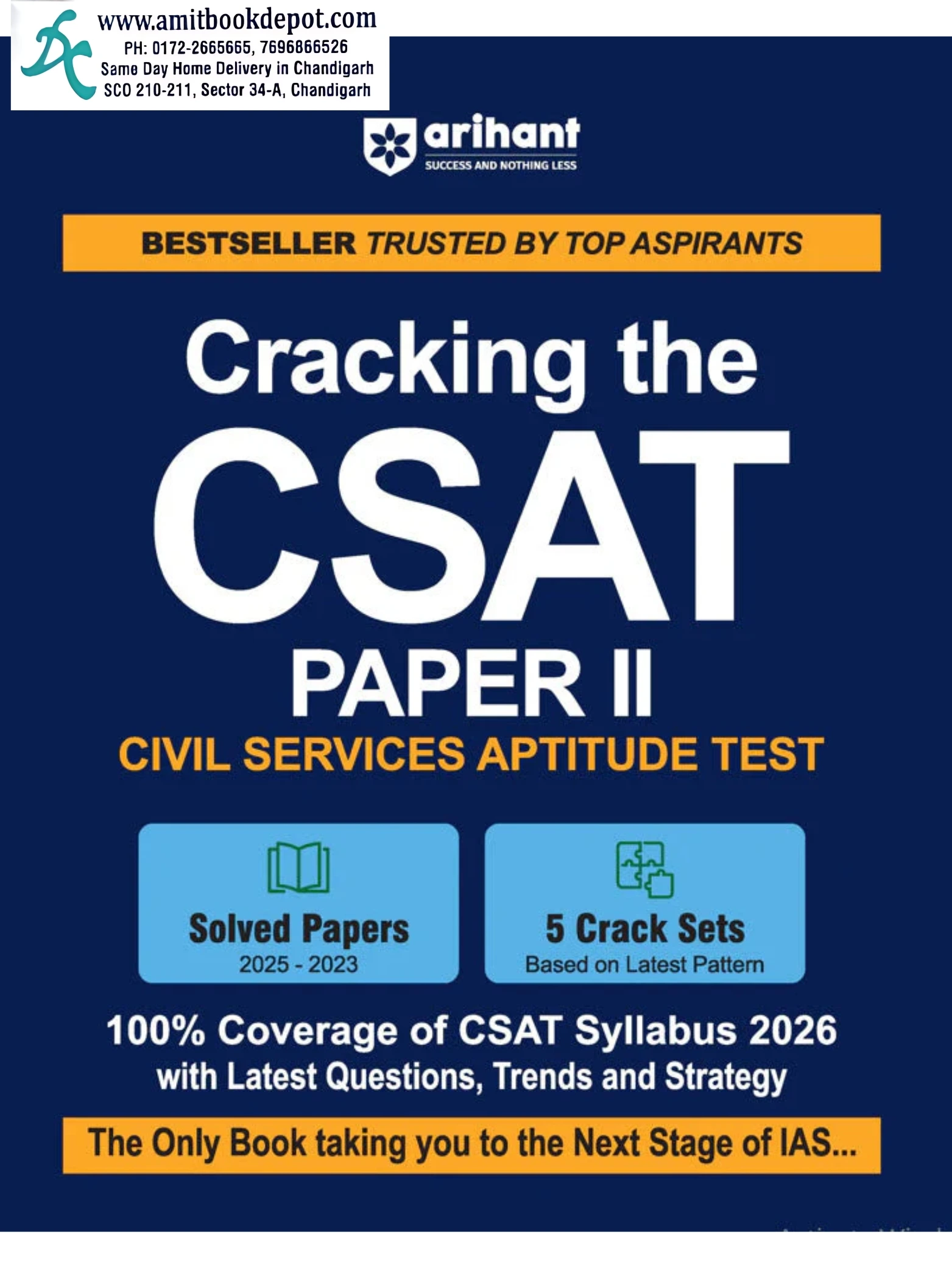
Yes, absolutely. The Basic Numeracy and Data Interpretation sections start with fundamental concepts and build up gradually with solved examples, making it accessible for students from arts and humanities backgrounds.
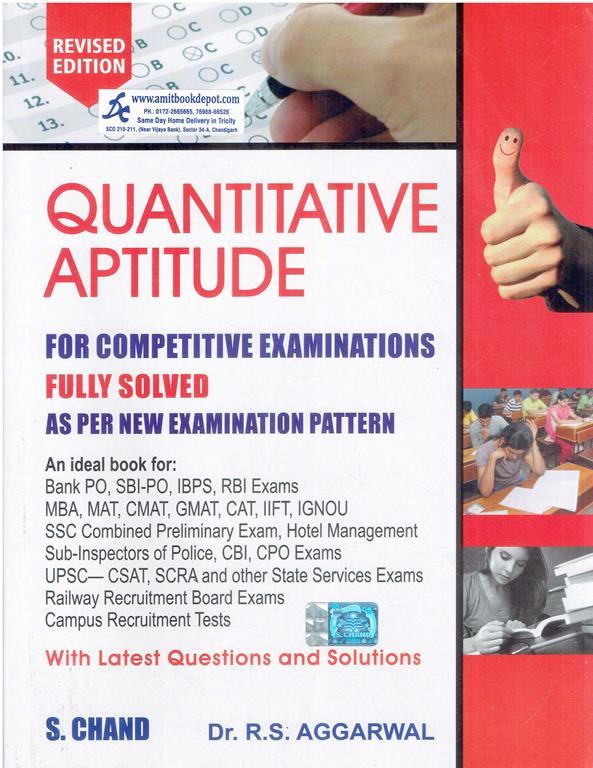
While it is not solely a question bank, the book incorporates numerous solved examples and practice problems that are reflective of, and often directly sourced from, previous years' UPSC CSAT papers to provide relevant practice.
Yes, the Decision Making & Problem Solving section is carefully crafted to reflect the probity and ethical dilemmas expected in public service, helping you develop the right approach for such questions.
The Comprehension chapter provides strategies for quick reading, identifying key ideas, understanding tone, and inferring meanings, along with a variety of practice passages to enhance your skills.
Yes, it comprehensively covers all eight sections mentioned in the UPSC syllabus, including the often-overlooked topic of Interpersonal Skills and Communication Skills.
It covers a wide array of topics, including Verbal and Non-Verbal Reasoning, Analytical Reasoning, Puzzles, Syllogisms, and Critical Reasoning, with a focus on questions commonly asked in the CSAT.
For most aspirants, yes. It is a self-contained guide with theory, examples, and practice sets. However, supplementing it with previous years' papers is always recommended for extensive practice.
Data Sufficiency is covered as a sub-topic within the "Data Interpretation & Data Sufficiency" chapter, explaining the different types of questions and the logical approach required to solve them without performing full calculations.
The practice sets are designed to be solved within the exam's time constraints, and the solved examples often suggest quick-solving techniques, indirectly coaching you on time management.
While tailored for UPSC CSAT, the sections on Quantitative Aptitude, Reasoning, and Comprehension are also highly beneficial for other state PCS exams, SSC, and other government recruitment tests with a similar aptitude section.
Yes, absolutely. The Basic Numeracy and Data Interpretation sections start with fundamental concepts and build up gradually with solved examples, making it accessible for students from arts and humanities backgrounds.
While it is not solely a question bank, the book incorporates numerous solved examples and practice problems that are reflective of, and often directly sourced from, previous years' UPSC CSAT papers to provide relevant practice.
Yes, the Decision Making & Problem Solving section is carefully crafted to reflect the probity and ethical dilemmas expected in public service, helping you develop the right approach for such questions.
The Comprehension chapter provides strategies for quick reading, identifying key ideas, understanding tone, and inferring meanings, along with a variety of practice passages to enhance your skills.
Yes, it comprehensively covers all eight sections mentioned in the UPSC syllabus, including the often-overlooked topic of Interpersonal Skills and Communication Skills.
It covers a wide array of topics, including Verbal and Non-Verbal Reasoning, Analytical Reasoning, Puzzles, Syllogisms, and Critical Reasoning, with a focus on questions commonly asked in the CSAT.
For most aspirants, yes. It is a self-contained guide with theory, examples, and practice sets. However, supplementing it with previous years' papers is always recommended for extensive practice.
Data Sufficiency is covered as a sub-topic within the "Data Interpretation & Data Sufficiency" chapter, explaining the different types of questions and the logical approach required to solve them without performing full calculations.
The practice sets are designed to be solved within the exam's time constraints, and the solved examples often suggest quick-solving techniques, indirectly coaching you on time management.
While tailored for UPSC CSAT, the sections on Quantitative Aptitude, Reasoning, and Comprehension are also highly beneficial for other state PCS exams, SSC, and other government recruitment tests with a similar aptitude section.