-
Mon-Fri: 10AM to 8PM 01722665665
-
My Account
-
-
0
Total :
₹ 0.00

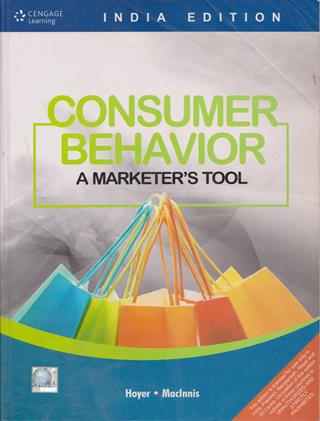
Consumer Behaviour: A Marketer’s Tool by Hoyer, MacInnis, and Cengage Learning delivers a research-driven framework to decode consumer psychology. Covering motivation, perception, attitudes, memory, and decision-making under high and low effort, this text bridges theory and practice. Explore consumer diversity, social class, psychographics, and social influences to master segmentation. Learn about post-decision processes, innovation adoption, and the dark side of consumption. Includes real case studies and an enrichment chapter on marketing research. Essential for understanding how consumers search for information, form attitudes, and behave ethically. Ideal for marketing students and professionals aiming to apply behavioural insights to strategy.





They determine effort level. High motivation, ability, and opportunity lead to detailed information search; low levels trigger shortcuts like habit or brand familiarity.
Exposure is encountering a stimulus; attention is allocating mental focus; perception is interpreting meaning. All three must align for effective marketing communication.
They rely on simple cues like brand familiarity, attractive packaging, or celebrity endorsements rather than deep attribute analysis or counterargument generation.
Consumers recall previously stored brand information from long-term memory. Accessible, salient brands are more likely considered during problem recognition and search.
It occurs when a perceived gap between actual and desired states emerges, activating information search to resolve the discrepancy.
Age, gender, ethnicity, and regional differences shape needs and responses. Marketers must tailor messaging and distribution to subcultures respectfully.
Psychographics measure values, personality, and lifestyles, revealing why consumers buy; demographics describe who they are by age or income.
Reference groups, family, peer pressure, social norms, and word-of-mouth shape brand attitudes and adoption intentions significantly.
Using products as symbols to express self-identity, status, group belonging, or values—consuming meanings beyond functional utility.
By ensuring transparency, avoiding manipulative tactics, protecting vulnerable groups, and practicing social responsibility while building trust.
They determine effort level. High motivation, ability, and opportunity lead to detailed information search; low levels trigger shortcuts like habit or brand familiarity.
Exposure is encountering a stimulus; attention is allocating mental focus; perception is interpreting meaning. All three must align for effective marketing communication.
They rely on simple cues like brand familiarity, attractive packaging, or celebrity endorsements rather than deep attribute analysis or counterargument generation.
Consumers recall previously stored brand information from long-term memory. Accessible, salient brands are more likely considered during problem recognition and search.
It occurs when a perceived gap between actual and desired states emerges, activating information search to resolve the discrepancy.
Age, gender, ethnicity, and regional differences shape needs and responses. Marketers must tailor messaging and distribution to subcultures respectfully.
Psychographics measure values, personality, and lifestyles, revealing why consumers buy; demographics describe who they are by age or income.
Reference groups, family, peer pressure, social norms, and word-of-mouth shape brand attitudes and adoption intentions significantly.
Using products as symbols to express self-identity, status, group belonging, or values—consuming meanings beyond functional utility.
By ensuring transparency, avoiding manipulative tactics, protecting vulnerable groups, and practicing social responsibility while building trust.