-
Mon-Fri: 10AM to 8PM 01722665665
-
My Account
-
-
0
Total :
₹ 0.00

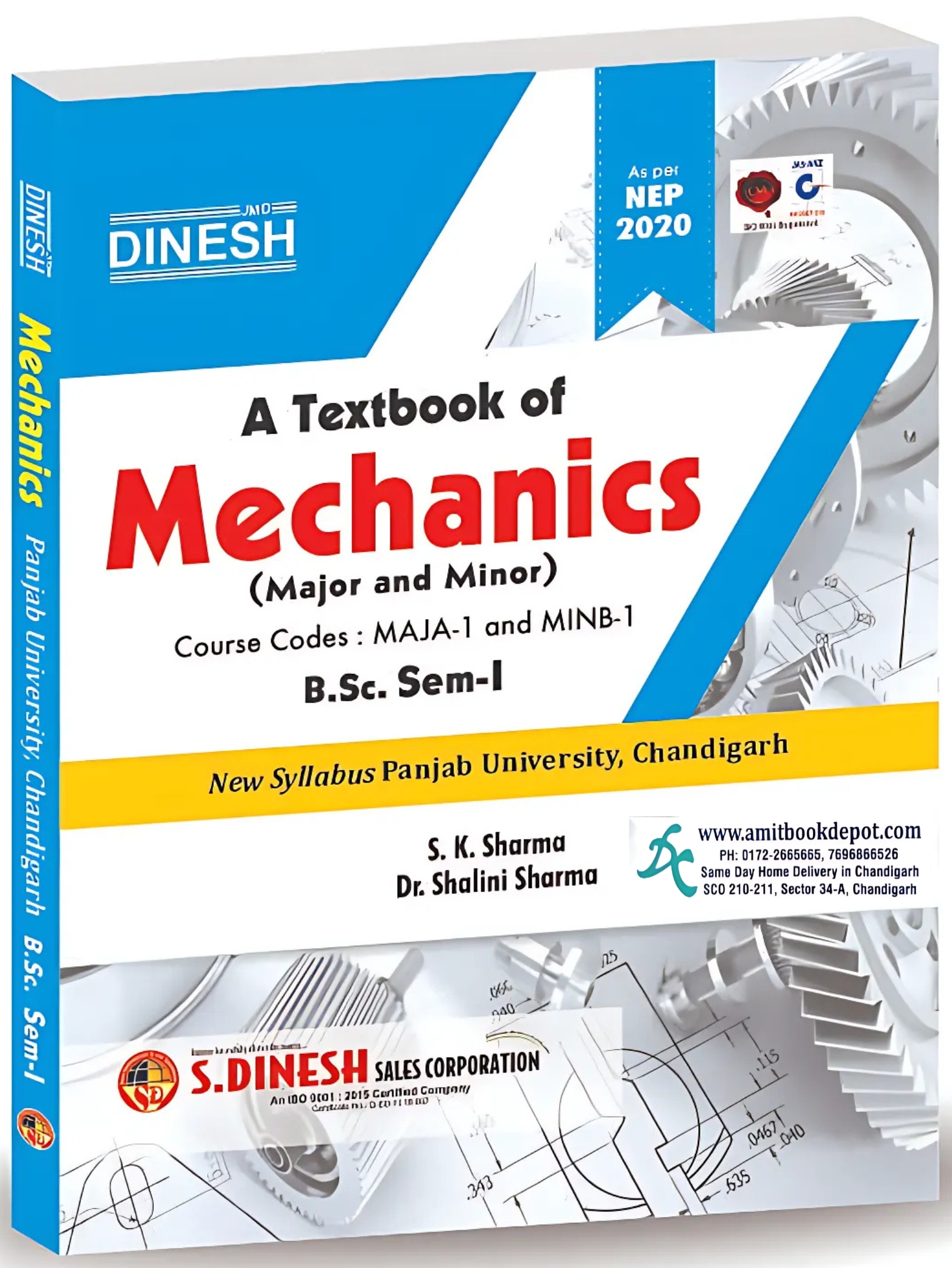

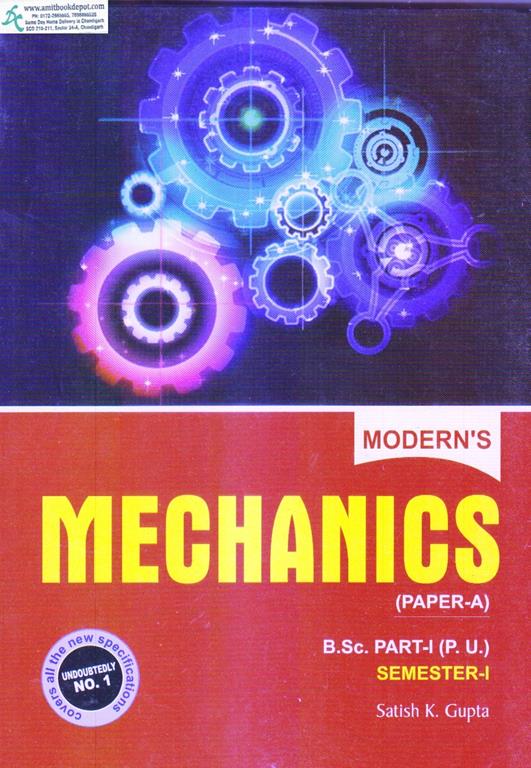
Yes, this textbook has been specifically updated and revised to provide complete coverage of the upgraded B.Sc. Semester I Mechanics syllabus as per the provisions of the NEP-2020.
Yes, the syllabus for both MAJA-1 (for students opting for Multi-/Interdisciplinary B.Sc., B.Sc. Honours, etc.) and MINB1 (for students opting for Physics as a Minor) is identical, and this single book comprehensively caters to both student groups.
The book is divided into units that directly correspond to the exam structure. It prepares students for the compulsory question with short answers and emphasizes problem-solving, which carries a 25-30% weightage in the final paper.
Yes, the book includes a significant number of solved examples and practice problems to help students build the problem-solving skills required to tackle the numerical-heavy sections of the exam.
Absolutely. Chapter 3, "Inverse Square Law and Motion of Particle under Central Forces," is dedicated to these topics, providing a step-by-step derivation of the equation of orbit and a clear explanation of Kepler's Laws.
Yes, it introduces the subject logically, starting from the Michelson-Morley experiment and moving through postulates, Lorentz transformations, and their consequences like time dilation, all the way to mass-energy equivalence, in a manner designed for B.Sc. beginners.
The book covers Rigid Body Dynamics in Chapter 5, which includes a treatment of Euler's Equations, presenting them as a fundamental part of rotational motion with the aim of making them understandable at the undergraduate level.
Chapter 2, "Space-Time Symmetry and Conservation Laws," is specifically dedicated to explaining this profound and often challenging connection, linking homogeneities and symmetries to the conservation of momentum, energy, and angular momentum.
Yes, Chapter 4 provides a thorough analysis of elastic collisions, deriving the relationships between velocities, angles, and kinetic energies in both laboratory and center-of-mass systems, which is crucial for solving related problems.
The book is written in a structured and explanatory manner, making it suitable for self-study. However, like any advanced physics text, complex topics may benefit from classroom guidance.
No Description Added
Yes, this textbook has been specifically updated and revised to provide complete coverage of the upgraded B.Sc. Semester I Mechanics syllabus as per the provisions of the NEP-2020.
Yes, the syllabus for both MAJA-1 (for students opting for Multi-/Interdisciplinary B.Sc., B.Sc. Honours, etc.) and MINB1 (for students opting for Physics as a Minor) is identical, and this single book comprehensively caters to both student groups.
The book is divided into units that directly correspond to the exam structure. It prepares students for the compulsory question with short answers and emphasizes problem-solving, which carries a 25-30% weightage in the final paper.
Yes, the book includes a significant number of solved examples and practice problems to help students build the problem-solving skills required to tackle the numerical-heavy sections of the exam.
Absolutely. Chapter 3, "Inverse Square Law and Motion of Particle under Central Forces," is dedicated to these topics, providing a step-by-step derivation of the equation of orbit and a clear explanation of Kepler's Laws.
Yes, it introduces the subject logically, starting from the Michelson-Morley experiment and moving through postulates, Lorentz transformations, and their consequences like time dilation, all the way to mass-energy equivalence, in a manner designed for B.Sc. beginners.
The book covers Rigid Body Dynamics in Chapter 5, which includes a treatment of Euler's Equations, presenting them as a fundamental part of rotational motion with the aim of making them understandable at the undergraduate level.
Chapter 2, "Space-Time Symmetry and Conservation Laws," is specifically dedicated to explaining this profound and often challenging connection, linking homogeneities and symmetries to the conservation of momentum, energy, and angular momentum.
Yes, Chapter 4 provides a thorough analysis of elastic collisions, deriving the relationships between velocities, angles, and kinetic energies in both laboratory and center-of-mass systems, which is crucial for solving related problems.
The book is written in a structured and explanatory manner, making it suitable for self-study. However, like any advanced physics text, complex topics may benefit from classroom guidance.