Categories
College Bookssss >
BA PU Chandigarh
BSC PU Chandigarh
MSC PU Chandigarh
BBA PU Chandigarh
MA PU Chandigarh
Medical Books
Engineering Books
Management Books
PGDCA Books
BCOM PU Chandigarh
MCOM PU Chandigarh
BCA PU Chandigarh
MCA PU Chandigarh
animate-books

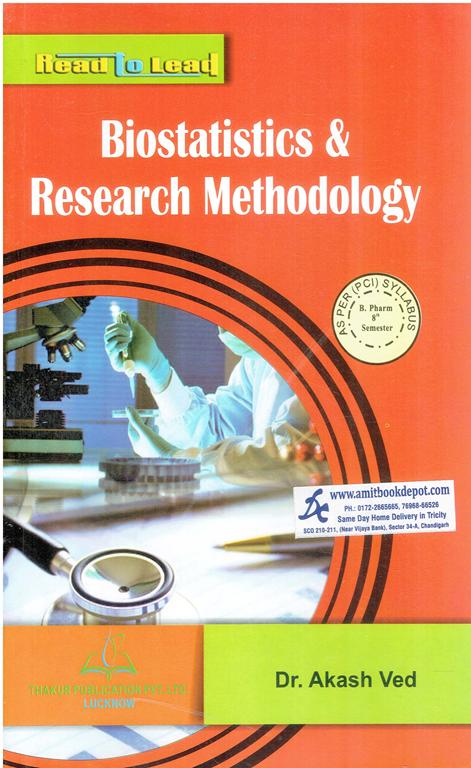
Biostatistics and Research Methodology B Pharma 8th Sem PTU

by Madhurima
₹265 ₹265.00(-/ off)

Rating & Reviews

23 Customer Review

"Biostatistics and Research Methodology for B. Pharma 8th Sem PTU" by Dr. Akash Ved (Thakur Publishers) is the essential, syllabus-aligned book for Punjab Technical University students. This comprehensive guide covers the entire BP801T curriculum, from descriptive statistics, probability distributions, and hypothesis testing (t-test, ANOVA) to research methodology, clinical trial design, and non-parametric tests. It uniquely integrates practical training for statistical software like MS Excel, SPSS, and Minitab. With dedicated sections on pharmaceutical examples, Design of Experiments (DoE), and Response Surface Methodology, it is the perfect resource for mastering biostatistics in pharmacy and excelling in academics and future research.

Have Doubts Regarding This Product ? Ask Your Question

  • Q1
    Is this book strictly aligned with the current PTU B. Pharma 8th Semester syllabus?
    A1

    Yes. This textbook is meticulously crafted to cover 100% of the latest prescribed syllabus for BP801T: Biostatistics and Research Methodology for Punjab Technical University, ensuring all theory and practical topics are addressed.

  • Q2
    Are there solved pharmaceutical examples to help apply statistical concepts?
    A2

    Yes. Each core statistical concept, such as measures of central tendency, dispersion, correlation, and regression, is illustrated with relevant pharmaceutical examples and numerical problems to bridge theory and practice.

  • Q3
    Does it cover both parametric and non-parametric tests in detail?
    A3

    Yes. The book provides comprehensive chapters on parametric tests (like t-tests and ANOVA) and non-parametric tests (like the Mann-Whitney U test and Kruskal-Wallis test), including their applications and calculations.

  • Q4
    Is the topic of 'Design of Experiments' (DoE) included, which is crucial for formulation development?
    A4

    Yes. The book covers essential DoE concepts, including factorial designs (2² and 2³), Response Surface Methodology (RSM), and optimization techniques, which are vital for pharmaceutical research and development.

  • Q5
    How does this book help in understanding clinical trial design and research methodology?
    A5

    It includes full modules on research methodology, covering protocol writing, sample size determination, phases of clinical trials, and different study designs (cohort, observational, experimental), providing a solid foundation for clinical research.

  • Q6
    Are there chapters or exercises to help with graphical representation of data?
    A6

    Yes. A dedicated chapter on graphs covers histograms, pie charts, response surface plots, and contour plots, which are essential for effective data presentation in reports and projects.

  • Q7
    Is optimization in pharmaceutical processes discussed in this text?
    A7

    Yes. The final module covers optimization techniques using factorial designs and sequential methods, which are directly applicable to process optimization in pharmaceutical manufacturing and development.

  • Q8
    Does the book cover both simple and multiple regression modeling?
    A8

    Yes. It provides detailed explanations and methods for both simple linear regression and multiple regression modeling, including hypothesis testing within these models.

  • Q9
    Is this book useful only for exams, or can it be a reference for project work?
    A9

    It serves a dual purpose. While perfectly tailored for exam preparation, its comprehensive coverage of research methodology, statistical software, and data analysis makes it an excellent reference guide for final-year projects and research endeavors.

  • Q10
    Does it explain complex topics like blocking and confounding in factorial designs?
    A10

    Yes. Module 4 includes a detailed chapter on blocking and confounding systems for two-level factorial designs, a topic specified in the PTU syllabus.

0.00

0 Overall Rating
  • 5
    0
  • 4
    0
  • 3
    0
  • 2
    0
  • 1
    0

Try this product & share your review & thoughts

Module 1
Chapter 1: Introduction to Biostatistics

1.1. Statistics and Biostatistics
1.1.1. Meaning and Definition
1.1.1.1. Statistics as Statistical Data
1.1.1.2. Statistics as Statistical Methods
1.1.2. Types of Statistics
1.1.3. Characteristics of Statistics
1.1.4. Scope/Applications of Statistics
1.1.5. Uses of Biostatistics

1.2. Frequency
1.2.1. Introduction
1.2.2. Frequency Distribution
1.2.3. Types of Frequency Distribution
1.2.3.1. Discrete or Ungrouped Frequency Distribution
1.2.3.2. Continuous or Grouped Frequency Distribution
1.2.3.3. Cumulative Frequency Distribution
1.3. Exercise

Chapter 2: Measure of Central Tendency

2.1. Measures of Central Tendency
2.1.1. Meaning and Definition
2.1.2. Importance of Central Tendency
2.1.3. Properties of Good Measures of Central Tendency
2.1.4. Types of Average
2.1.4.1. Mathematical Average
2.1.4.2. Positional Average

2.2. Mean
2.2.1. Introduction
2.2.2. Advantages of Mean
2.2.3. Disadvantages of Mean
2.2.4. Application of Arithmetic Mean
2.2.5. Types of Arithmetic Mean
2.2.6. Method of Calculation of Mean
2.2.6.1. Calculation of Arithmetic Mean—Individual Series
2.2.6.2. Calculation of Arithmetic Mean—Discrete Series (Ungrouped Data)
2.2.6.3. Calculation of Arithmetic Mean—Continuous Series (Grouped Data)
2.2.7. Weighted Arithmetic Mean
2.2.8. Combined Mean/Grouped Mean

2.3. Median
2.3.1. Introduction
2.3.2. Advantages of Median
2.3.3. Disadvantages of Median
2.3.4. Applications of Median
2.3.5. Method of Calculation of Median
2.3.5.1. Calculation of Median—Individual Series
2.3.5.2. Calculation of Median—Discrete Series (Ungrouped Data)
2.3.5.3. Calculation of Median—Continuous Series (Grouped Data)

2.4. Mode
2.4.1. Introduction
2.4.2. Advantages of Mode
2.4.3. Disadvantages of Mode
2.4.4. Methods of Calculation of Mode
2.4.4.1. Calculation of Mode—Individual Series
2.4.4.2. Calculation of Mode-Discrete Series (Ungrouped Data) 
2.4.4.3. Calculation of Mode Continuous Series (Grouped Data) 
2.5. Relation between Mean, Median, and Mode 
2.6. Comparison of Mean, Median, and Mode
2.7. Pharmaceutical Examples
2.8. Exercise

Chapter 3: Measures of Dispersion

3.1. Measures of Dispersion
3.1.1. Meaning and Definition
3.1.2. Methods of Measuring Dispersion

3.2. Range
3.2.1. Introduction
3.2.2. Advantages of Range
3.2.3. Disadvantages of Range
3.2.4. Applications of Range
3.2.5. Coefficient of Range
3.2.6. Methods of Calculation of Range
3.2.6.1. Calculation of Range—Individual Series
3.2.6.2. Calculation of Range—Discrete Series (Ungrouped Data)
3.2.6.3. Calculation of Range—Grouped Series (Grouped Data)

3.3. Standard Deviation (S.D.)
3.3.1. Introduction
3.3.2. Properties of Standard Deviation
3.3.3. Advantages of Standard Deviation
3.3.4. Disadvantages of Standard Deviation
3.3.5. Methods of Calculation of Standard Deviation
3.3.5.1. Calculation of Standard Deviation—Individual Series
3.3.5.2. Calculation of Standard Deviation—Discrete Series (Ungrouped Data)
3.3.5.3. Calculation of Standard Deviation—Continuous Series (Grouped Data)
3.4. Pharmaceutical Problems
3.5. Exercise

Chapter 4: Correlation

4.1. Correlation 
4.1.1. Meaning and Definition 
4.1.2. Types of Correlation
4.1.2.1. Positive Correlation and Negative Correlation
4.1.2.2. Linear Correlation & Non-Linear (Curvilinear) Correlation
4.1.2.3. Simple, Partial, and Multiple Correlation
4.1.3. Degree of Correlation

4.2. Methods of Computing Correlation
4.1.4. Correlation Coefficient
4.2.1. Introduction
4.2.2. Scatter or Dot Diagram
4.2.2.1. Advantages of Scatter Diagram
4.2.2.2. Disadvantages of Scatter Diagram
4.2.3. Karl Pearson's Coefficient of Correlation
4.2.3.1. Properties of Karl Pearson's Coefficient of Correlation
4.2.3.2. Advantages of Karl Pearson's Coefficient of Correlation
4.2.3.3. Disadvantages of Karl Pearson's Coefficient of Correlation
4.2.3.4. Calculation of Karl Pearson Coefficient of Correlation
4.2.3.5. When Deviations Are Taken from Arithmetic Mean
4.2.3.6. When Deviations Are Taken from Assumed Mean
4.2.3.7. When Step Deviations Are Taken
4.2.3.8. When Actual Data Is Used (Direct Method)
4.2.3.9. Variance-Covariance Method

4.3. Multiple Correlation
4.3.1. Introduction
4.3.2. Properties of Multiple Correlation
4.3.3. Methods of Calculation
4.3.4. Advantages of Multiple Correlation
4.3.5. Disadvantages of Multiple Correlation
4.4. Pharmaceutical Examples
4.5. Exercise

Module 2: Chapter 5: Regression

5.1. Regression
5.1.1. Meaning and Definition
5.1.2. Application of Regression Analysis
5.1.3. Difference between Correlation and Regression Analysis
5.1.4. Regression Lines
5.1.5. Regression Equations
5.1.6. Regression Coefficient
5.1.7. Determination of Linear Regression Equation
5.1.7.1. Curve Fitting by the Method of Least Squares (Fitting the Lines y = a + bx and x = a + by)
5.1.7.2. Regression Equations when Deviation Taken from Actual Mean
5.1.7.3. Regression Equations when Deviation Is Taken from the Assumed Mean
5.1.8. Relationship between Correlation & Regression Coefficients
5.1.9. Standard Error in Regression Analysis

5.2. Multiple Regression
5.2.1. Introduction
5.2.2. Assumptions of Multiple Regression Analysis
5.2.3. Steps in Multiple Regression
5.2.4. Difference between Simple and Multiple Regressions
5.2.5. Methods of Calculation
5.3. Pharmaceutical Examples
5.4. Exercise

Chapter 6: Probability

6.1. Probability
6.1.1. Meaning and Definition
6.1.2. Applications of Probability
6.1.3. Characteristics of Probability Function P(A)
6.1.4. Basic Concepts of Probability
6.1.4.1. Experiment
6.1.4.2. Sample Space
6.1.4.3. Events
6.1.5. Theorems of Probability
6.1.5.1. Multiplication Theorem of Probability
6.1.5.2. Addition Theorem of Probability
6.1.6. Conditional Probability
6.1.7. Bayes' Theorem
6.1.8. Problems

6.2. Probability Distribution
6.2.1. Introduction
6.2.2. Applications of Probability Distribution
6.2.3. Types of Probability Distribution
6.2.4. Binomial Distribution
6.2.4.1. Assumptions of Binomial Distribution
6.2.4.2. Properties of Binomial Distribution
6.2.4.3. Applications of Binomial Distribution
6.2.4.4. Fitting a Binomial Distribution
6.2.4.5. Problems
6.2.5. Poisson Distribution
6.2.5.1. Definition and Probability Function
6.2.5.2 Assumptions of Poisson Distribution
6.2.5.3. Properties of Poisson Distribution 6.2.5.4. Applications of Poisson Distribution
6.2.5.5. Fitting a Poisson Distribution
6.2.5.6. Problems

6.2.6. Normal Distribution
6.2.6.1. Definition and Probability Function 6.2.6.2. Properties of Standard Normal Distribution
6.2.6.3. Standard Normal Distribution
6.2.6.4. Normal Curve
6.2.6.5. Probability and the Normal Curve
6.2.6.6. Fitting a Normal Curve
6.2.6.7. Problems
6.3. Exercise

Chapter 7: Sampling and Hypothesis Testing

7.1. Sampling
7.1.1. Introduction
7.1.2. Characteristics of a Good Sample Design
7.1.3. Population
7.1.3.1. Target Population
7.1.3.2. Statistical Population
7.1.4. Sample
7.1.4.1. Sample Frame
7.1.4.2. Sample Unit
7.1.5. Essence of Sampling
7.1.6. Sampling Process
7.1.7. Advantages of Sampling
7.1.8. Disadvantages of Sampling

7.2. Types of Sampling
7.2.1. Introduction
7.2.2. Probability Sampling
7.2.2.1. Simple Random Sampling
7.2.2.2. Systematic Sampling
7.2.2.3. Stratified Random Sampling
7.2.2.4. Cluster Sampling
7.2.2.5. Multi-Stage Sampling
7.2.2.6. Area Sampling
7.2.3. Non-Probability Sampling

7.3. Sampling Distribution
7.3.1. Meaning of Sampling Distribution
7.3.2. Sampling Distribution of Mean (X)
7.3.3. Means Sampling Distribution of the Difference between Two Independent Samples
7.3.4. Sampling Distribution of Sample Proportion (p)
7.3.5. Sampling Distribution of the Difference between Two Independent Sample Proportions

7.4. Pharmaceutical Numericals
7.5. Hypothesis
7.5.1. Introduction
7.5.2. Qualities of a Good Hypothesis

7.6. Hypothesis Testing
7.6.1. Introduction
7.6.2. Purpose of Hypothesis Testing
7.6.3. Types of Hypothesis
7.6.4. Hypothesis Decision Table
7.6.5. Element of Hypothesis Testing
7.6.6. Steps/Procedure of Hypothesis Testing
7.6.7. Advantages of the Tests of Hypothesis
7.6.8. Disadvantages of the Tests of Hypothesis

7.7. Important Terms
7.7.1. Null Hypothesis
7.7.2. Alternative Hypothesis
7.7.3. Errors in Hypothesis Testing
7.7.4. Level of Significance
7.7.5. Degree of Freedom
7.7.6. One-Tailed and Two-Tailed Tests
7.7.7. Power of Statistical Test/Measuring the Power of Hypothesis Test

7.8. Types of Hypothesis Testing
7.8.1. Small Sample Test
7.8.2. Large Sample Test
7.8.3. Parametric Tests
7.8.4. Non-Parametric Tests

7.9. Standard Error of Mean (SEM)
7.9.1. Introduction
7.9.2. Assumptions and Usage
7.10. Exercise

Chapter 8: Parametric Tests

8.1. Parametric Tests
8.1.1. Introduction
8.1.2. Assumptions about Parametric Test
8.1.3. t-Test (Student's 't' Distribution)
8.1.4. Types of T-Test
8.1.4.1. Sample t-Test
8.1.4.2. Pooled t-Test/Unpaired t-Test
8.1.4.3. Paired t-test

8.2. ANOVA (Analysis of Variance)
8.2.1. Introduction
8.2.2. Characteristics of ANOVA
8.2.3. Assumptions of ANOVA
8.2.4. Applications of ANOVA
8.2.5. Basic Principle of ANOVA
8.2.6. ANOVA Techniques
8.2.7. One-Way ANOVA
8.2.8. Two-Way ANOVA
8.3. Fisher's Least Significant Difference (LSD) Tests
8.4. Exercise

Module 3
Chapter 9: Non-Parametric Tests

9.1. Non-Parametric Tests
9.1.1. Introduction
9.1.2. Characteristics of Non-Parametric Tests
9.1.3. Assumptions about Non-Parametric Tests
9.1.4. Difference between Parametric and Non-Parametric Tests

9.2. Types of Non-Parametric Tests
9.2.1. Wilcoxon Signed-Rank Paired Test
9.2.2. Wilcoxon Rank Sum Test/Mann-Whitney Rank-Sum Test (U-test)
9.2.3. Kruskal-Wallis H Test/K-W Test
9.2.4. Friedman Test
9.3. Exercise

Chapter 10: Introduction to Research

10.1. Research
10.1.1. Meaning and Definition of Research
10.1.2. Nature of Research
10.1.3. Objectives of Research
10.1.4. Need for Research
10.1.5. Essential Criteria of Good Research
10.1.6. Types of Research
10.1.7. Significance of Research
10.1.8. Limitations of Research

10.2. Experimental Research Design/Experimentation
10.2.9. Introduction
10.2.10. Need for Design of Experiments
10.2.11. Criteria for Causality in Experimental Research Design
10.2.12. Causal Relationships
10.2.13. Treatment & Control Group in Experimental Research
10.2.14. Benefits of Experimental Research Design
10.2.15. Limitations of Experimental Research Design
10.2.16. Application of Experimental Research Designs

10.3. Experiential Design
10.3.17. Introduction
10.3.18. Categories of Experiential Design
10.3.19. Experiential Design Techniques
10.3.20. How to Choose the Right Experience

10.4. Plagiarism
10.4.21. Meaning
10.4.22. Types of Plagiarism
10.4.23. Plagiarism Detection Methods
10.4.24. Different Plagiarism Detection Software
10.5. Exercise

Chapter 11: Graphs

11.1. Graphs and Charts
11.1.1. Introduction
11.1.2. Histogram
11.1.3. Pie Charts
11.1.4. Cubic Graph
11.1.5. Response Surface Plot
11.1.6. Contour Plot
11.2. Exercise

Chapter 12: Designing the Methodology

12.1. Designing the Methodology
12.1.1. Introduction
12.1.2. Steps in Research Methodology
12.1.3. Sample Size
12.1.4. Power of a Study
12.2. Report Writing
12.2.1. Introduction
12.2.2. Steps in Writing Reports
12.2.3. Importance of Report Writing

12.3. Presentation of Data
12.3.1. Textual Presentation
12.3.2. Tabulation (Tabular Presentation of Data)
12.3.3. Graphical Presentation of Data

12.4. Protocol
12.4.1. Introduction
12.4.2. Key Aims of Protocols
12.4.3. Writing the Protocol
12.4.4. Benefits of Protocol

12.5. Cohort Studies
12.5.1. Introduction
12.5.2. Concept of a Cohort Study
12.5.3. Framework or Design of a Cohort Study
12.5.4. Types of Cohort Study
12.5.4.3. Combination of Prospective and Retrospective Cohort Study
12.5.5. Steps in Planning a Cohort Study
12.5.6. Advantages of a Cohort Study
12.5.7. Disadvantages of a Cohort Study 

12.6. Observational Studies
12.6.1. Introduction
12.6.2. Types of Observation: Observational Methods
12.6.3. Process of Conducting Observation
12.6.4. Significance of Observation
12.6.5. Limitations of Observation

12.7. Experimental Studies
12.7.1. Introduction
12.7.2. Randomized Controlled Trials
12.7.3. Crossover studies
12.7.4. Experimental Study of Populations
12.8. Designing Clinical Trials
12.8.1. Introduction
12.8.2. Some Principles of Experimental Design and Analysis
12.8.3. Various Phases of Clinical Trials
12.9. Exercise

Chapter 13: Blocking and Confounding System

13.1. Blocking and Confounding System for Two-Level Factorials
13.1.1. Introduction
13.1.2. Blocking a Replicated 2k Factorial Design
13.1.3. Confounding in the 2* Factorial Design
13.1.4. Confounding the 2 Factorial Design in Two Blocks
13.1.5. Confounding the 2k Factorial Design in Four Blocks
13.2. Exercise

Module 4
Chapter 14: Regression Modelling

14.1. Hypothesis Testing 
14.1.1. Introduction
14.1.2. Linear Regression 
14.1.3. Hypothesis Testing in Simple Regression Models 
14.1.4. Hypothesis Testing in Multiple Regression Model 
14.2. Practical Components of Industrial and Clinical Trials Problems 
14.3. Statistical Analysis 

14.4. MS Excel
14.4.1. Introduction
14.4.2. Using Excel for Pivot Tables
14.4.3. Using Excel for Descriptive Statistics
14.4.4. Using Excel for ANOVA (Analysis of Variance)
14.4.5. Using Excel for Statistical Analysis: Moving Average
14.4.6. Using Excel for Statistical Analysis: Regression

14.5. Statistical Package for the Social Sciences (SPSS)
14.5.1. Introduction
14.5.2. Starting SPSS
14.5.3. Creating and Entering Data in SPSS
14.5.4. Computation of Descriptive Statistics

14.6. Minitab
14.6.1. Introduction
14.6.2. Entering Data
14.6.3. Viewing Descriptive Statistics
14.6.4. Creating Graphs and Charts
14.6.5. Running a Regression Analysis

14.7. Design of Experiment
14.7.1. Introduction
14.7.2. Components of Experimental Design
14.7.3. Purpose of Experimentation
14.7.4. Experiment Design Process
14.8. Online Statistical Software for Industrial and Clinical Trial Approaches
14.9. Exercise

Module 5
Chapter 15: Design and Analysis of Experiment

15.1. Factorial Design
15.1.1. Introduction
15.1.2. Definition (Vocabulary)
15.1.3. 22 Factorial Design
15.1.4. 2³ Factorial Design
15.1.5. Advantages of Factorial Design
15.1.6. Disadvantages of Factorial Design

15.2. Response Surface Methodology
15.2.1. Introduction
15.2.2. Objectives of Response Surface Methodology (RSM)
15.2.3. Experimental Strategy
15.2.4. Types of Models
15.2.5. Sequential Nature of RSM
15.2.6. Methods of RSM
15.2.7. Applications of RSM

15.3. Response Surface Designs
15.3.1. Introduction
15.3.2. Types of Response Surface Design

15.4. Historical Data Design
15.4.1. Introduction
15.4.2. Design the "Experiment"
15.4.3. A Peculiarity on Pasting Data
15.4.4. Analyze the Results

15.5. Optimization Techniques
15.5.1. Introduction
15.5.2. Optimization Using Factorial Designs
15.5.3. Sequential Optimization
15.5.4. Screen Design
15.6. Exercise

Latest Syllabus of Biostatistics and Research Methodology For B. Pharma 8th Semester PTU


BP801T. BIOSTATISTICS AND RESEARCH METHODOLOGY (Theory) (45 Hours)

Scope: To understand the applications of biostatistics in pharmacy. This subject deals with descriptive statistics, graphics, correlation, regression, logistic regression Probability theory, sampling technique, parametric tests, nonparametric tests, ANOVA, Introduction to Design of Experiments, Phases of Clinical Trials and Observational and Experimental studies, SPSS, R, and MINITAB statistical software, analyzing the statistical data using Excel.

Objectives: Upon completion of the course, the student shall be able to
• Know the operation of MS Excel, SPSS, R, and MINITAB® and DoE (Design of Experiment)
• Know the various statistical techniques to solve statistical problems
• Appreciate statistical techniques in solving the problems. 

Course content:
Unit-I (10 Hours)

- Introduction: Statistics, Biostatistics, Frequency Distribution
- Measures of central tendency: mean, median, mode - Pharmaceutical examples
- Measures of dispersion: Dispersion, range, standard deviation, pharmaceutical problems
- Correlation: Definition, Karl Pearson’s coefficient of correlation, multiple correlation—pharmaceutical examples

Unit II: (10 Hours)

- Regression: Curve fitting by the method of least squares, fitting the lines y= a + bx and x = a + by, Multiple regression, standard error of regression—pharmaceutical examples
- Probability: Definition of probability, binomial distribution, normal distribution, Poisson’s distribution, properties—problems Sample, population, large sample, small sample, Null hypothesis, alternative hypothesis, sampling, essence of sampling, types of sampling, Error-I type, Error-II type, Standard error of mean (SEM)—Pharmaceutical examples
- Parametric test: t-test (sample, pooled, or unpaired and paired), ANOVA (one-way and two-way), least significance difference

Unit-III (10 Hours)

- Non-parametric tests: Wilcoxon Rank Sum Test, Mann-Whitney U Test, Kruskal-Wallis Test, Friedman Test
- Introduction to Research: Need for research, need for design of experiments, experiential design technique, plagiarism
- Graphs: Histogram, Pie Chart, Cubic Graph, Response Surface Plot, Counter Plot Graph
- Designing the methodology: Sample size determination and power of a study, report writing and presentation of data, protocol, cohort studies, observational studies, experimental studies, designing clinical trials, and various phases.

Unit IV: (8 Hours)

Blocking and confounding system for two-level factorials
- Regression modeling: Hypothesis testing in simple and multiple regression models
- Introduction to Practical Components of Industrial and Clinical Trials Problems:
Statistical Analysis Using Excel, SPSS, MINITAB®, DESIGN OF EXPERIMENTS, and R—Online Statistical Software for the Industrial and Clinical Trial Approach

Unit-V (7 Hours)

- Design and Analysis of experiments:
- Factorial Design: Definition, 2/2, 2/3 design. Advantage of factorial design
- Response Surface Methodology: Central Composite Design, Historical Design, Optimization Techniques

Master Biostatistics and Research Methodology with the PTU-endorsed book for B. Pharma 8th Semester.

"Biostatistics and Research Methodology" by Dr. Akash Ved, published by Thakur Publishers, is the definitive and syllabus-specific book meticulously crafted for Bachelor of Pharmacy (B. Pharma) students of Punjab Technical University (PTU) in their eighth semester. This comprehensive guide is designed to demystify the complex principles of biostatistics in pharmacy and equip future pharmacists with the robust research methodology skills essential for academic and professional success. Aligned perfectly with the latest PTU syllabus (Subject Code: BP801T), this book serves as an indispensable resource for mastering the application of statistical techniques to pharmaceutical and clinical data, ensuring students are examination-ready and industry-prepared.

The book is systematically structured into five detailed modules that correspond seamlessly with the five units of the PTU syllabus. It begins by establishing a strong foundation in descriptive statistics, covering frequency distribution, measures of central tendency (mean, median, mode), and measures of dispersion (range, standard deviation) with relevant pharmaceutical examples and problems. This foundational knowledge is crucial for interpreting drug efficacy data, patient responses, and quality control measurements in pharmaceutical sciences. The curriculum then progresses into core analytical concepts, including correlation (Karl Pearson’s coefficient, multiple correlation) and regression analysis (linear and multiple regression). A dedicated section on probability and probability distributions—binomial, normal, and Poisson distributions—provides the theoretical underpinning for statistical inference and hypothesis testing.

A significant portion of the text is devoted to statistical inference, a critical component for evidence-based pharmacy practice. It offers clear explanations of sampling techniques, hypothesis testing, and both parametric tests (including t-tests—sample, pooled, and paired—and ANOVA—one-way and two-way) and non-parametric tests (such as the Wilcoxon Rank Sum Test, Mann-Whitney U test, and Kruskal-Wallis test). These sections are vital for analyzing clinical trial data and conducting robust pharmaceutical research. The research methodology modules are particularly valuable, offering a structured approach from the introduction to research and design of experiments to practical aspects like sample size determination, report writing, protocol development, and the design of clinical trials, cohort studies, and observational studies. It also addresses academic integrity with a necessary discussion on plagiarism.

Unique to this book is its strong emphasis on practical, hands-on learning. It extends beyond theory to include detailed guidance on statistical software applications. Students are introduced to MS Excel for pivot tables and descriptive statistics, SPSS for data computation, and Minitab for advanced graphical and regression analysis. Furthermore, it covers specialized topics like Response Surface Methodology (RSM), factorial designs (2² and 2³), and optimization techniques, which are pivotal in pharmaceutical formulation development and industrial process optimization. Chapters on graphical presentation of data (histograms, pie charts, and contour plots) and blocking and confounding systems complete this all-encompassing educational tool.

Key Features of This Book:

1. PTU Syllabus-Centric: Fully covers the latest BP801T Biostatistics and Research Methodology syllabus for B. Pharma 8th Sem.
2. Structured Learning: Organized into 15 chapters across 5 modules, mirroring the academic unit structure for easy navigation.
3. Pharmaceutical Focus: Concepts are reinforced with real-world pharmaceutical examples, clinical trial problems, and industrial applications.
4. Software Integration: Provides foundational knowledge for statistical analysis using Excel, SPSS, and Minitab.
5. Comprehensive Coverage: From basic biostatistics to advanced Design of Experiments (DoE) and Response Surface Methodology.
6. Examination-Oriented: Includes chapter-end exercises and problems to aid self-assessment and exam preparation.
7. Clear and Accessible: Written by Dr. Akash Ved in a student-friendly manner, simplifying complex statistical concepts.

This book is more than just a book; it is a complete learning package for PTU pharmacy students aiming to excel in their final year, develop critical analytical skills for research projects, and build a strong foundation for careers in pharmaceutical research, clinical research, and healthcare analytics.

Module 1
Chapter 1: Introduction to Biostatistics

1.1. Statistics and Biostatistics
1.1.1. Meaning and Definition
1.1.1.1. Statistics as Statistical Data
1.1.1.2. Statistics as Statistical Methods
1.1.2. Types of Statistics
1.1.3. Characteristics of Statistics
1.1.4. Scope/Applications of Statistics
1.1.5. Uses of Biostatistics

1.2. Frequency
1.2.1. Introduction
1.2.2. Frequency Distribution
1.2.3. Types of Frequency Distribution
1.2.3.1. Discrete or Ungrouped Frequency Distribution
1.2.3.2. Continuous or Grouped Frequency Distribution
1.2.3.3. Cumulative Frequency Distribution
1.3. Exercise

Chapter 2: Measure of Central Tendency

2.1. Measures of Central Tendency
2.1.1. Meaning and Definition
2.1.2. Importance of Central Tendency
2.1.3. Properties of Good Measures of Central Tendency
2.1.4. Types of Average
2.1.4.1. Mathematical Average
2.1.4.2. Positional Average

2.2. Mean
2.2.1. Introduction
2.2.2. Advantages of Mean
2.2.3. Disadvantages of Mean
2.2.4. Application of Arithmetic Mean
2.2.5. Types of Arithmetic Mean
2.2.6. Method of Calculation of Mean
2.2.6.1. Calculation of Arithmetic Mean—Individual Series
2.2.6.2. Calculation of Arithmetic Mean—Discrete Series (Ungrouped Data)
2.2.6.3. Calculation of Arithmetic Mean—Continuous Series (Grouped Data)
2.2.7. Weighted Arithmetic Mean
2.2.8. Combined Mean/Grouped Mean

2.3. Median
2.3.1. Introduction
2.3.2. Advantages of Median
2.3.3. Disadvantages of Median
2.3.4. Applications of Median
2.3.5. Method of Calculation of Median
2.3.5.1. Calculation of Median—Individual Series
2.3.5.2. Calculation of Median—Discrete Series (Ungrouped Data)
2.3.5.3. Calculation of Median—Continuous Series (Grouped Data)

2.4. Mode
2.4.1. Introduction
2.4.2. Advantages of Mode
2.4.3. Disadvantages of Mode
2.4.4. Methods of Calculation of Mode
2.4.4.1. Calculation of Mode—Individual Series
2.4.4.2. Calculation of Mode-Discrete Series (Ungrouped Data) 
2.4.4.3. Calculation of Mode Continuous Series (Grouped Data) 
2.5. Relation between Mean, Median, and Mode 
2.6. Comparison of Mean, Median, and Mode
2.7. Pharmaceutical Examples
2.8. Exercise

Chapter 3: Measures of Dispersion

3.1. Measures of Dispersion
3.1.1. Meaning and Definition
3.1.2. Methods of Measuring Dispersion

3.2. Range
3.2.1. Introduction
3.2.2. Advantages of Range
3.2.3. Disadvantages of Range
3.2.4. Applications of Range
3.2.5. Coefficient of Range
3.2.6. Methods of Calculation of Range
3.2.6.1. Calculation of Range—Individual Series
3.2.6.2. Calculation of Range—Discrete Series (Ungrouped Data)
3.2.6.3. Calculation of Range—Grouped Series (Grouped Data)

3.3. Standard Deviation (S.D.)
3.3.1. Introduction
3.3.2. Properties of Standard Deviation
3.3.3. Advantages of Standard Deviation
3.3.4. Disadvantages of Standard Deviation
3.3.5. Methods of Calculation of Standard Deviation
3.3.5.1. Calculation of Standard Deviation—Individual Series
3.3.5.2. Calculation of Standard Deviation—Discrete Series (Ungrouped Data)
3.3.5.3. Calculation of Standard Deviation—Continuous Series (Grouped Data)
3.4. Pharmaceutical Problems
3.5. Exercise

Chapter 4: Correlation

4.1. Correlation 
4.1.1. Meaning and Definition 
4.1.2. Types of Correlation
4.1.2.1. Positive Correlation and Negative Correlation
4.1.2.2. Linear Correlation & Non-Linear (Curvilinear) Correlation
4.1.2.3. Simple, Partial, and Multiple Correlation
4.1.3. Degree of Correlation

4.2. Methods of Computing Correlation
4.1.4. Correlation Coefficient
4.2.1. Introduction
4.2.2. Scatter or Dot Diagram
4.2.2.1. Advantages of Scatter Diagram
4.2.2.2. Disadvantages of Scatter Diagram
4.2.3. Karl Pearson's Coefficient of Correlation
4.2.3.1. Properties of Karl Pearson's Coefficient of Correlation
4.2.3.2. Advantages of Karl Pearson's Coefficient of Correlation
4.2.3.3. Disadvantages of Karl Pearson's Coefficient of Correlation
4.2.3.4. Calculation of Karl Pearson Coefficient of Correlation
4.2.3.5. When Deviations Are Taken from Arithmetic Mean
4.2.3.6. When Deviations Are Taken from Assumed Mean
4.2.3.7. When Step Deviations Are Taken
4.2.3.8. When Actual Data Is Used (Direct Method)
4.2.3.9. Variance-Covariance Method

4.3. Multiple Correlation
4.3.1. Introduction
4.3.2. Properties of Multiple Correlation
4.3.3. Methods of Calculation
4.3.4. Advantages of Multiple Correlation
4.3.5. Disadvantages of Multiple Correlation
4.4. Pharmaceutical Examples
4.5. Exercise

Module 2: Chapter 5: Regression

5.1. Regression
5.1.1. Meaning and Definition
5.1.2. Application of Regression Analysis
5.1.3. Difference between Correlation and Regression Analysis
5.1.4. Regression Lines
5.1.5. Regression Equations
5.1.6. Regression Coefficient
5.1.7. Determination of Linear Regression Equation
5.1.7.1. Curve Fitting by the Method of Least Squares (Fitting the Lines y = a + bx and x = a + by)
5.1.7.2. Regression Equations when Deviation Taken from Actual Mean
5.1.7.3. Regression Equations when Deviation Is Taken from the Assumed Mean
5.1.8. Relationship between Correlation & Regression Coefficients
5.1.9. Standard Error in Regression Analysis

5.2. Multiple Regression
5.2.1. Introduction
5.2.2. Assumptions of Multiple Regression Analysis
5.2.3. Steps in Multiple Regression
5.2.4. Difference between Simple and Multiple Regressions
5.2.5. Methods of Calculation
5.3. Pharmaceutical Examples
5.4. Exercise

Chapter 6: Probability

6.1. Probability
6.1.1. Meaning and Definition
6.1.2. Applications of Probability
6.1.3. Characteristics of Probability Function P(A)
6.1.4. Basic Concepts of Probability
6.1.4.1. Experiment
6.1.4.2. Sample Space
6.1.4.3. Events
6.1.5. Theorems of Probability
6.1.5.1. Multiplication Theorem of Probability
6.1.5.2. Addition Theorem of Probability
6.1.6. Conditional Probability
6.1.7. Bayes' Theorem
6.1.8. Problems

6.2. Probability Distribution
6.2.1. Introduction
6.2.2. Applications of Probability Distribution
6.2.3. Types of Probability Distribution
6.2.4. Binomial Distribution
6.2.4.1. Assumptions of Binomial Distribution
6.2.4.2. Properties of Binomial Distribution
6.2.4.3. Applications of Binomial Distribution
6.2.4.4. Fitting a Binomial Distribution
6.2.4.5. Problems
6.2.5. Poisson Distribution
6.2.5.1. Definition and Probability Function
6.2.5.2 Assumptions of Poisson Distribution
6.2.5.3. Properties of Poisson Distribution 6.2.5.4. Applications of Poisson Distribution
6.2.5.5. Fitting a Poisson Distribution
6.2.5.6. Problems

6.2.6. Normal Distribution
6.2.6.1. Definition and Probability Function 6.2.6.2. Properties of Standard Normal Distribution
6.2.6.3. Standard Normal Distribution
6.2.6.4. Normal Curve
6.2.6.5. Probability and the Normal Curve
6.2.6.6. Fitting a Normal Curve
6.2.6.7. Problems
6.3. Exercise

Chapter 7: Sampling and Hypothesis Testing

7.1. Sampling
7.1.1. Introduction
7.1.2. Characteristics of a Good Sample Design
7.1.3. Population
7.1.3.1. Target Population
7.1.3.2. Statistical Population
7.1.4. Sample
7.1.4.1. Sample Frame
7.1.4.2. Sample Unit
7.1.5. Essence of Sampling
7.1.6. Sampling Process
7.1.7. Advantages of Sampling
7.1.8. Disadvantages of Sampling

7.2. Types of Sampling
7.2.1. Introduction
7.2.2. Probability Sampling
7.2.2.1. Simple Random Sampling
7.2.2.2. Systematic Sampling
7.2.2.3. Stratified Random Sampling
7.2.2.4. Cluster Sampling
7.2.2.5. Multi-Stage Sampling
7.2.2.6. Area Sampling
7.2.3. Non-Probability Sampling

7.3. Sampling Distribution
7.3.1. Meaning of Sampling Distribution
7.3.2. Sampling Distribution of Mean (X)
7.3.3. Means Sampling Distribution of the Difference between Two Independent Samples
7.3.4. Sampling Distribution of Sample Proportion (p)
7.3.5. Sampling Distribution of the Difference between Two Independent Sample Proportions

7.4. Pharmaceutical Numericals
7.5. Hypothesis
7.5.1. Introduction
7.5.2. Qualities of a Good Hypothesis

7.6. Hypothesis Testing
7.6.1. Introduction
7.6.2. Purpose of Hypothesis Testing
7.6.3. Types of Hypothesis
7.6.4. Hypothesis Decision Table
7.6.5. Element of Hypothesis Testing
7.6.6. Steps/Procedure of Hypothesis Testing
7.6.7. Advantages of the Tests of Hypothesis
7.6.8. Disadvantages of the Tests of Hypothesis

7.7. Important Terms
7.7.1. Null Hypothesis
7.7.2. Alternative Hypothesis
7.7.3. Errors in Hypothesis Testing
7.7.4. Level of Significance
7.7.5. Degree of Freedom
7.7.6. One-Tailed and Two-Tailed Tests
7.7.7. Power of Statistical Test/Measuring the Power of Hypothesis Test

7.8. Types of Hypothesis Testing
7.8.1. Small Sample Test
7.8.2. Large Sample Test
7.8.3. Parametric Tests
7.8.4. Non-Parametric Tests

7.9. Standard Error of Mean (SEM)
7.9.1. Introduction
7.9.2. Assumptions and Usage
7.10. Exercise

Chapter 8: Parametric Tests

8.1. Parametric Tests
8.1.1. Introduction
8.1.2. Assumptions about Parametric Test
8.1.3. t-Test (Student's 't' Distribution)
8.1.4. Types of T-Test
8.1.4.1. Sample t-Test
8.1.4.2. Pooled t-Test/Unpaired t-Test
8.1.4.3. Paired t-test

8.2. ANOVA (Analysis of Variance)
8.2.1. Introduction
8.2.2. Characteristics of ANOVA
8.2.3. Assumptions of ANOVA
8.2.4. Applications of ANOVA
8.2.5. Basic Principle of ANOVA
8.2.6. ANOVA Techniques
8.2.7. One-Way ANOVA
8.2.8. Two-Way ANOVA
8.3. Fisher's Least Significant Difference (LSD) Tests
8.4. Exercise

Module 3
Chapter 9: Non-Parametric Tests

9.1. Non-Parametric Tests
9.1.1. Introduction
9.1.2. Characteristics of Non-Parametric Tests
9.1.3. Assumptions about Non-Parametric Tests
9.1.4. Difference between Parametric and Non-Parametric Tests

9.2. Types of Non-Parametric Tests
9.2.1. Wilcoxon Signed-Rank Paired Test
9.2.2. Wilcoxon Rank Sum Test/Mann-Whitney Rank-Sum Test (U-test)
9.2.3. Kruskal-Wallis H Test/K-W Test
9.2.4. Friedman Test
9.3. Exercise

Chapter 10: Introduction to Research

10.1. Research
10.1.1. Meaning and Definition of Research
10.1.2. Nature of Research
10.1.3. Objectives of Research
10.1.4. Need for Research
10.1.5. Essential Criteria of Good Research
10.1.6. Types of Research
10.1.7. Significance of Research
10.1.8. Limitations of Research

10.2. Experimental Research Design/Experimentation
10.2.9. Introduction
10.2.10. Need for Design of Experiments
10.2.11. Criteria for Causality in Experimental Research Design
10.2.12. Causal Relationships
10.2.13. Treatment & Control Group in Experimental Research
10.2.14. Benefits of Experimental Research Design
10.2.15. Limitations of Experimental Research Design
10.2.16. Application of Experimental Research Designs

10.3. Experiential Design
10.3.17. Introduction
10.3.18. Categories of Experiential Design
10.3.19. Experiential Design Techniques
10.3.20. How to Choose the Right Experience

10.4. Plagiarism
10.4.21. Meaning
10.4.22. Types of Plagiarism
10.4.23. Plagiarism Detection Methods
10.4.24. Different Plagiarism Detection Software
10.5. Exercise

Chapter 11: Graphs

11.1. Graphs and Charts
11.1.1. Introduction
11.1.2. Histogram
11.1.3. Pie Charts
11.1.4. Cubic Graph
11.1.5. Response Surface Plot
11.1.6. Contour Plot
11.2. Exercise

Chapter 12: Designing the Methodology

12.1. Designing the Methodology
12.1.1. Introduction
12.1.2. Steps in Research Methodology
12.1.3. Sample Size
12.1.4. Power of a Study
12.2. Report Writing
12.2.1. Introduction
12.2.2. Steps in Writing Reports
12.2.3. Importance of Report Writing

12.3. Presentation of Data
12.3.1. Textual Presentation
12.3.2. Tabulation (Tabular Presentation of Data)
12.3.3. Graphical Presentation of Data

12.4. Protocol
12.4.1. Introduction
12.4.2. Key Aims of Protocols
12.4.3. Writing the Protocol
12.4.4. Benefits of Protocol

12.5. Cohort Studies
12.5.1. Introduction
12.5.2. Concept of a Cohort Study
12.5.3. Framework or Design of a Cohort Study
12.5.4. Types of Cohort Study
12.5.4.3. Combination of Prospective and Retrospective Cohort Study
12.5.5. Steps in Planning a Cohort Study
12.5.6. Advantages of a Cohort Study
12.5.7. Disadvantages of a Cohort Study 

12.6. Observational Studies
12.6.1. Introduction
12.6.2. Types of Observation: Observational Methods
12.6.3. Process of Conducting Observation
12.6.4. Significance of Observation
12.6.5. Limitations of Observation

12.7. Experimental Studies
12.7.1. Introduction
12.7.2. Randomized Controlled Trials
12.7.3. Crossover studies
12.7.4. Experimental Study of Populations
12.8. Designing Clinical Trials
12.8.1. Introduction
12.8.2. Some Principles of Experimental Design and Analysis
12.8.3. Various Phases of Clinical Trials
12.9. Exercise

Chapter 13: Blocking and Confounding System

13.1. Blocking and Confounding System for Two-Level Factorials
13.1.1. Introduction
13.1.2. Blocking a Replicated 2k Factorial Design
13.1.3. Confounding in the 2* Factorial Design
13.1.4. Confounding the 2 Factorial Design in Two Blocks
13.1.5. Confounding the 2k Factorial Design in Four Blocks
13.2. Exercise

Module 4
Chapter 14: Regression Modelling

14.1. Hypothesis Testing 
14.1.1. Introduction
14.1.2. Linear Regression 
14.1.3. Hypothesis Testing in Simple Regression Models 
14.1.4. Hypothesis Testing in Multiple Regression Model 
14.2. Practical Components of Industrial and Clinical Trials Problems 
14.3. Statistical Analysis 

14.4. MS Excel
14.4.1. Introduction
14.4.2. Using Excel for Pivot Tables
14.4.3. Using Excel for Descriptive Statistics
14.4.4. Using Excel for ANOVA (Analysis of Variance)
14.4.5. Using Excel for Statistical Analysis: Moving Average
14.4.6. Using Excel for Statistical Analysis: Regression

14.5. Statistical Package for the Social Sciences (SPSS)
14.5.1. Introduction
14.5.2. Starting SPSS
14.5.3. Creating and Entering Data in SPSS
14.5.4. Computation of Descriptive Statistics

14.6. Minitab
14.6.1. Introduction
14.6.2. Entering Data
14.6.3. Viewing Descriptive Statistics
14.6.4. Creating Graphs and Charts
14.6.5. Running a Regression Analysis

14.7. Design of Experiment
14.7.1. Introduction
14.7.2. Components of Experimental Design
14.7.3. Purpose of Experimentation
14.7.4. Experiment Design Process
14.8. Online Statistical Software for Industrial and Clinical Trial Approaches
14.9. Exercise

Module 5
Chapter 15: Design and Analysis of Experiment

15.1. Factorial Design
15.1.1. Introduction
15.1.2. Definition (Vocabulary)
15.1.3. 22 Factorial Design
15.1.4. 2³ Factorial Design
15.1.5. Advantages of Factorial Design
15.1.6. Disadvantages of Factorial Design

15.2. Response Surface Methodology
15.2.1. Introduction
15.2.2. Objectives of Response Surface Methodology (RSM)
15.2.3. Experimental Strategy
15.2.4. Types of Models
15.2.5. Sequential Nature of RSM
15.2.6. Methods of RSM
15.2.7. Applications of RSM

15.3. Response Surface Designs
15.3.1. Introduction
15.3.2. Types of Response Surface Design

15.4. Historical Data Design
15.4.1. Introduction
15.4.2. Design the "Experiment"
15.4.3. A Peculiarity on Pasting Data
15.4.4. Analyze the Results

15.5. Optimization Techniques
15.5.1. Introduction
15.5.2. Optimization Using Factorial Designs
15.5.3. Sequential Optimization
15.5.4. Screen Design
15.6. Exercise

Have Doubts Regarding This Product ? Ask Your Question

  • Q1
    Is this book strictly aligned with the current PTU B. Pharma 8th Semester syllabus?
    A1

    Yes. This textbook is meticulously crafted to cover 100% of the latest prescribed syllabus for BP801T: Biostatistics and Research Methodology for Punjab Technical University, ensuring all theory and practical topics are addressed.

  • Q2
    Are there solved pharmaceutical examples to help apply statistical concepts?
    A2

    Yes. Each core statistical concept, such as measures of central tendency, dispersion, correlation, and regression, is illustrated with relevant pharmaceutical examples and numerical problems to bridge theory and practice.

  • Q3
    Does it cover both parametric and non-parametric tests in detail?
    A3

    Yes. The book provides comprehensive chapters on parametric tests (like t-tests and ANOVA) and non-parametric tests (like the Mann-Whitney U test and Kruskal-Wallis test), including their applications and calculations.

  • Q4
    Is the topic of 'Design of Experiments' (DoE) included, which is crucial for formulation development?
    A4

    Yes. The book covers essential DoE concepts, including factorial designs (2² and 2³), Response Surface Methodology (RSM), and optimization techniques, which are vital for pharmaceutical research and development.

  • Q5
    How does this book help in understanding clinical trial design and research methodology?
    A5

    It includes full modules on research methodology, covering protocol writing, sample size determination, phases of clinical trials, and different study designs (cohort, observational, experimental), providing a solid foundation for clinical research.

  • Q6
    Are there chapters or exercises to help with graphical representation of data?
    A6

    Yes. A dedicated chapter on graphs covers histograms, pie charts, response surface plots, and contour plots, which are essential for effective data presentation in reports and projects.

  • Q7
    Is optimization in pharmaceutical processes discussed in this text?
    A7

    Yes. The final module covers optimization techniques using factorial designs and sequential methods, which are directly applicable to process optimization in pharmaceutical manufacturing and development.

  • Q8
    Does the book cover both simple and multiple regression modeling?
    A8

    Yes. It provides detailed explanations and methods for both simple linear regression and multiple regression modeling, including hypothesis testing within these models.

  • Q9
    Is this book useful only for exams, or can it be a reference for project work?
    A9

    It serves a dual purpose. While perfectly tailored for exam preparation, its comprehensive coverage of research methodology, statistical software, and data analysis makes it an excellent reference guide for final-year projects and research endeavors.

  • Q10
    Does it explain complex topics like blocking and confounding in factorial designs?
    A10

    Yes. Module 4 includes a detailed chapter on blocking and confounding systems for two-level factorial designs, a topic specified in the PTU syllabus.

Latest Syllabus of Biostatistics and Research Methodology For B. Pharma 8th Semester PTU


BP801T. BIOSTATISTICS AND RESEARCH METHODOLOGY (Theory) (45 Hours)

Scope: To understand the applications of biostatistics in pharmacy. This subject deals with descriptive statistics, graphics, correlation, regression, logistic regression Probability theory, sampling technique, parametric tests, nonparametric tests, ANOVA, Introduction to Design of Experiments, Phases of Clinical Trials and Observational and Experimental studies, SPSS, R, and MINITAB statistical software, analyzing the statistical data using Excel.

Objectives: Upon completion of the course, the student shall be able to
• Know the operation of MS Excel, SPSS, R, and MINITAB® and DoE (Design of Experiment)
• Know the various statistical techniques to solve statistical problems
• Appreciate statistical techniques in solving the problems. 

Course content:
Unit-I (10 Hours)

- Introduction: Statistics, Biostatistics, Frequency Distribution
- Measures of central tendency: mean, median, mode - Pharmaceutical examples
- Measures of dispersion: Dispersion, range, standard deviation, pharmaceutical problems
- Correlation: Definition, Karl Pearson’s coefficient of correlation, multiple correlation—pharmaceutical examples

Unit II: (10 Hours)

- Regression: Curve fitting by the method of least squares, fitting the lines y= a + bx and x = a + by, Multiple regression, standard error of regression—pharmaceutical examples
- Probability: Definition of probability, binomial distribution, normal distribution, Poisson’s distribution, properties—problems Sample, population, large sample, small sample, Null hypothesis, alternative hypothesis, sampling, essence of sampling, types of sampling, Error-I type, Error-II type, Standard error of mean (SEM)—Pharmaceutical examples
- Parametric test: t-test (sample, pooled, or unpaired and paired), ANOVA (one-way and two-way), least significance difference

Unit-III (10 Hours)

- Non-parametric tests: Wilcoxon Rank Sum Test, Mann-Whitney U Test, Kruskal-Wallis Test, Friedman Test
- Introduction to Research: Need for research, need for design of experiments, experiential design technique, plagiarism
- Graphs: Histogram, Pie Chart, Cubic Graph, Response Surface Plot, Counter Plot Graph
- Designing the methodology: Sample size determination and power of a study, report writing and presentation of data, protocol, cohort studies, observational studies, experimental studies, designing clinical trials, and various phases.

Unit IV: (8 Hours)

Blocking and confounding system for two-level factorials
- Regression modeling: Hypothesis testing in simple and multiple regression models
- Introduction to Practical Components of Industrial and Clinical Trials Problems:
Statistical Analysis Using Excel, SPSS, MINITAB®, DESIGN OF EXPERIMENTS, and R—Online Statistical Software for the Industrial and Clinical Trial Approach

Unit-V (7 Hours)

- Design and Analysis of experiments:
- Factorial Design: Definition, 2/2, 2/3 design. Advantage of factorial design
- Response Surface Methodology: Central Composite Design, Historical Design, Optimization Techniques

0.00

0 Overall Rating
  • 5
    0
  • 4
    0
  • 3
    0
  • 2
    0
  • 1
    0

Try this product & share your review & thoughts

Top Trending Product

Related Product

Related Product

Related Blog Posts

Latest Blogs

Latest Blogs

blog-img
Classic Literature Reimagined: Discuss modern twists on classic novels.
Lorem ipsum dolor sit amet, consectetur adipiscing elit, sed do eiusmod tempor incididunt ut labore et dolore magna aliqua. Ut enim ad minim veniam, quis nostrud exercitation ullamco Lorem ipsum dolor sit amet, consectetur adipiscing elit, sed do eiusmod tempor incididunt ut labore et dolore magna aliqua. Utenim ad minim veniam, quis nostrud exercitation ullamco Lorem ipsum dolor sit amet, consecte...
Read more
Author name | 10 jan, 2025
blog-img
Classic Literature Reimagined: Discuss modern twists on classic novels.
Lorem ipsum dolor sit amet, consectetur adipiscing elit, sed do eiusmod tempor incididunt ut labore et dolore magna aliqua. Ut enim ad minim veniam, quis nostrud exercitation ullamco Lorem ipsum dolor sit amet, consectetur adipiscing elit, sed do eiusmod tempor incididunt ut labore et dolore magna aliqua. Utenim ad minim veniam, quis nostrud exercitation ullamco Lorem ipsum dolor sit amet, consecte...
Read more
Author name | 10 jan, 2025
blog-img
Classic Literature Reimagined: Discuss modern twists on classic novels.
Lorem ipsum dolor sit amet, consectetur adipiscing elit, sed do eiusmod tempor incididunt ut labore et dolore magna aliqua. Ut enim ad minim veniam, quis nostrud exercitation ullamco Lorem ipsum dolor sit amet, consectetur adipiscing elit, sed do eiusmod tempor incididunt ut labore et dolore magna aliqua. Utenim ad minim veniam, quis nostrud exercitation ullamco Lorem ipsum dolor sit amet, consecte...
Read more
Author name | 10 jan, 2025
blog-img
Classic Literature Reimagined: Discuss modern twists on classic novels.
Lorem ipsum dolor sit amet, consectetur adipiscing elit...
Read more
Author Name | 10 Jan, 2025
blog-img
Classic Literature Reimagined: Discuss modern twists on classic novels.
Lorem ipsum dolor sit amet, consectetur adipiscing elit...
Read more
Author Name | 10 Jan, 2025
blog-img
Classic Literature Reimagined: Discuss modern twists on classic novels.
Lorem ipsum dolor sit amet, consectetur adipiscing elit...
Read more
Author Name | 10 Jan, 2025
blog-img
Classic Literature Reimagined: Discuss modern twists on classic novels.
Lorem ipsum dolor sit amet, consectetur adipiscing elit...
Read more
Author Name | 10 Jan, 2025
blog-img
Classic Literature Reimagined: Discuss modern twists on classic novels.
Lorem ipsum dolor sit amet, consectetur adipiscing elit...
Read more
Author Name | 10 Jan, 2025
blog-img
Classic Literature Reimagined: Discuss modern twists on classic novels.
Lorem ipsum dolor sit amet, consectetur adipiscing elit...
Read more
Author Name | 10 Jan, 2025
blog-img
Classic Literature Reimagined: Discuss modern twists on classic novels.
Lorem ipsum dolor sit amet, consectetur adipiscing elit...
Read more
Author Name | 10 Jan, 2025
blog-img
Classic Literature Reimagined: Discuss modern twists on classic novels.
Lorem ipsum dolor sit amet, consectetur adipiscing elit...
Read more
Author Name | 10 Jan, 2025
blog-img
Classic Literature Reimagined: Discuss modern twists on classic novels.
Lorem ipsum dolor sit amet, consectetur adipiscing elit...
Read more
Author Name | 10 Jan, 2025