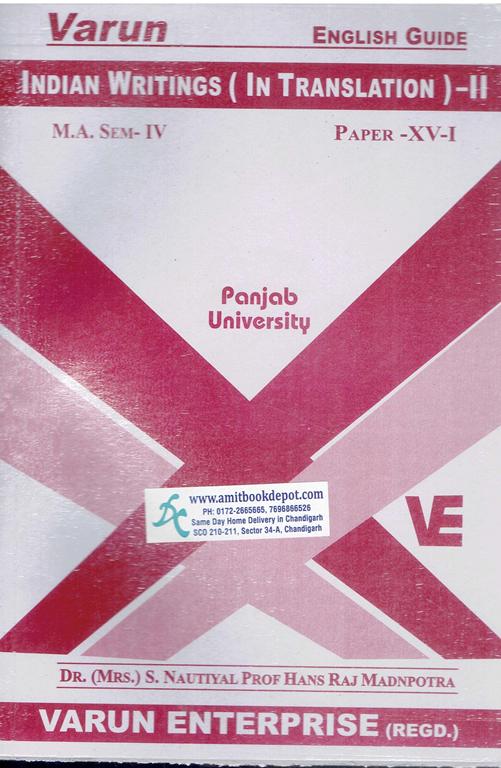
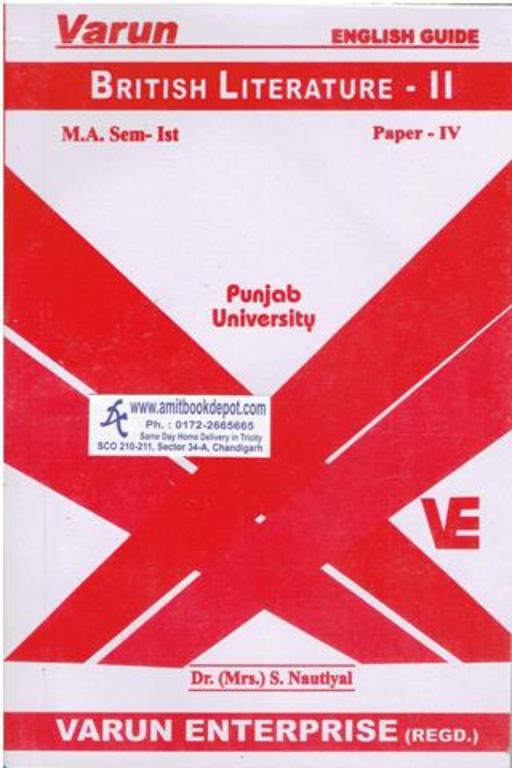
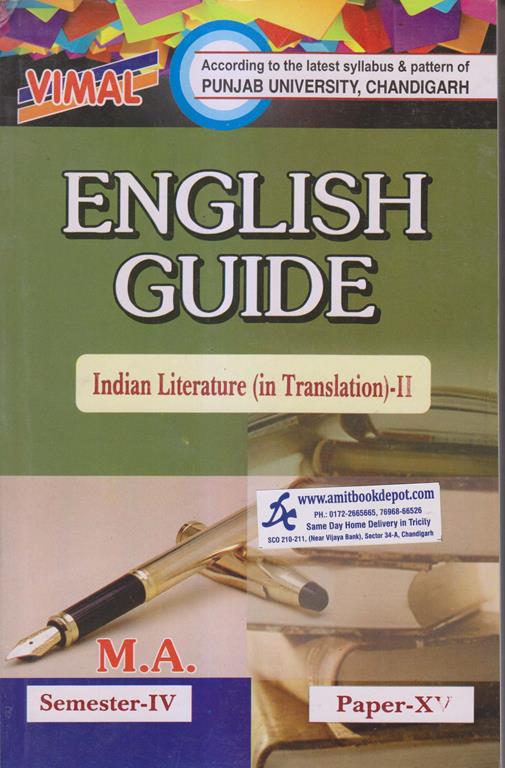
Varun English Guide: Indian Writings (In Translation - II) for MA 4th Semester, Paper 15 (1) - Panjab University, Chandigarh
Master the prescribed syllabus for your Master of Arts final year with the definitive academic resource: the Varun English Guide for Indian Writings (In Translation - II). This comprehensive guide, meticulously crafted by Dr. S. Nautiyal and published by Varun Enterprises, is an indispensable tool for students of Panjab University, Chandigarh, enrolled in the MA 4th Semester, Paper 15 (1). It is specifically designed to provide an in-depth, critical, and analytical understanding of the diverse literary texts from across India, all presented in English translation.
This guide directly aligns with the university's objective to bridge the gap between India's multifaceted linguistic landscapes. It offers students a structured pathway to explore the rich tapestry of Indian literature in translation, from powerful novels and poignant memoirs to sharp short stories, evocative poetry, and significant dramatic works. The guide serves as a critical companion, helping you navigate the complex themes and contexts of these translated texts, ensuring you are thoroughly prepared for examinations.
Comprehensive Unit-wise Analysis and Critical Insights
The guide is systematically organized into five distinct units, each focusing on a key genre of Indian writing:
1. Unit 1: Fiction—Delve into a critical analysis of Gurdial Singh's seminal Punjabi novel, Marhi da Deeva (The Last Flicker). The guide provides a detailed exploration of its themes of social oppression, the plight of the marginalized, and the stark realities of rural Punjab, offering a profound understanding of this classic of modern Indian fiction.
2. Unit 2: Life Writing—Engage with Urmila Pawar's powerful memoir, The Weave of My Life. This section offers a nuanced examination of the narrative from a Dalit woman’s perspective, dissecting the intersections of caste, gender, and identity. The guide helps unpack the socio-political significance of this vital work in Dalit literature.
3. Unit 3: Short Story/Short Fiction—This unit provides a thorough critical commentary on a curated selection of masterpieces. Analyze the social realism of Prem Chand's "Kafan" and "The Thakur’s Well"; unpack the fierce feminist and political protest in Mahashweta Devi's "Draupadi" and "The Breast Giver"; and explore the unique humanism and narrative style of Vaikom Muhammad Basheer in "Walls" and "The Card Sharper's Daughter."
4. Unit 4: Poetry—Decode the profound imagery and themes in poetry from diverse Indian languages. The guide includes a line-by-line explanation and critical analysis of Surya Kant Tripathi Nirala's "Beggar" and "Breaking Stones"; the revolutionary romance and political resistance in Faiz Ahmed Faiz's "A Letter from Prison," "Don’t Ask Me for that Love Again," and "A Prison Daybreak"; and the raw, visceral power of Namdeo Dhasal's Dalit poetry in "Hunger."
5. Unit 5: Play—Gain a deep understanding of Girish Karnad's historical-political allegory, Tughlaq. The guide breaks down the play's central themes of idealism, governance, political power, and the complexities of leadership, connecting its historical narrative to contemporary socio-political realities.
Key Features for Academic Excellence:
1. Syllabus-Centric Approach: Fully aligned with the official syllabus for Panjab University MA English Semester IV, Paper 15 (1).
2. Detailed Summaries & Paraphrasing: Each text is broken down with clear chapter summaries, scene-by-scene explanations, and simplified paraphrasing of complex passages.
3. Critical Analysis & Thematic Exploration: Go beyond summaries with in-depth discussions of major and minor themes, character sketches, and literary devices.
4. Examination-Oriented Content: Includes important questions and answers, potential essay topics, and model answers tailored to the university's examination pattern.
5. Author Background & Context: Provides essential background information on each author and the socio-cultural context of their work, crucial for higher-level answers.
The Varun English Guide for Indian Writings (In Translation - II) is more than just a guide; it is your key to unlocking the complexities and appreciating the brilliance of India's multilingual literary heritage. It is the essential MA English guidebook for achieving academic success.



.jpg)