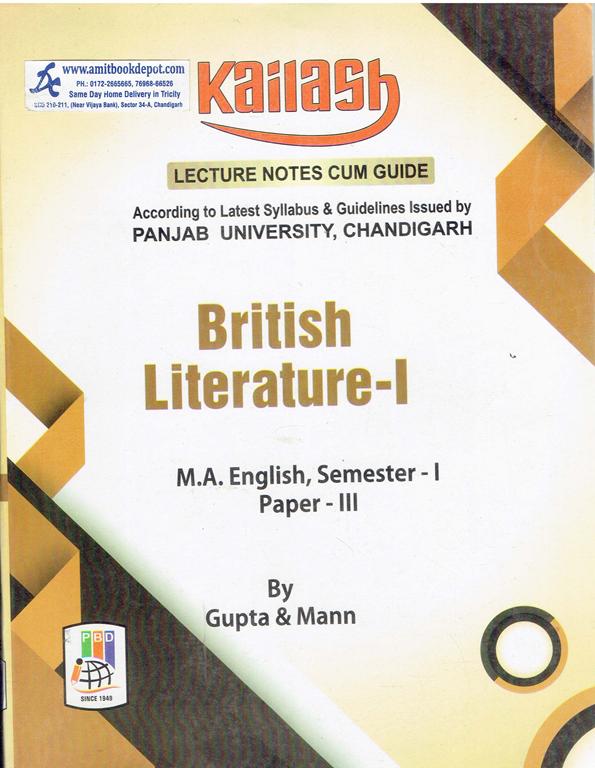
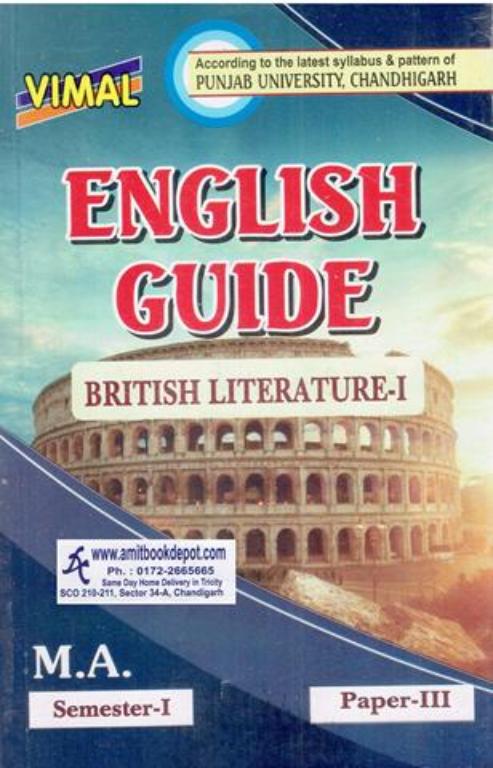
Yes, this is the prescribed textbook authored by Gupta and Mann for Panjab University's MA English 1st Semester, Paper 3. We recommend confirming the syllabus code (British Literature-I) with your department, but this is the standard and recommended edition.
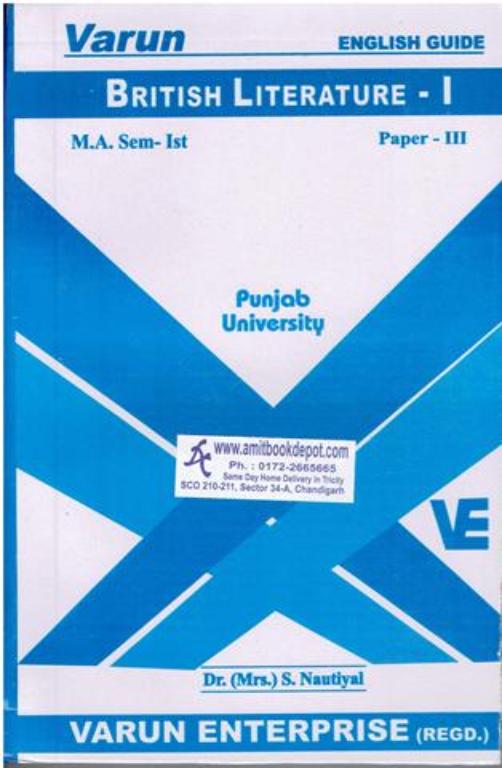
This textbook provides both the essential excerpts or guidance on the prescribed texts and comprehensive critical commentary, thematic analysis, historical context, and explanatory notes tailored to the Panjab University syllabus.
Absolutely. The book is structured into five units that meticulously cover all prescribed authors: Luther & Bacon (Unit I), Marlowe (Unit II), Chaucer & Milton (Unit III), Shakespeare (Unit IV), and Dryden (Unit V), each with detailed analysis.
Yes, it is designed as a core self-study resource. Its syllabus-aligned structure, clear explanations, and critical insights make it highly suitable for distance education students preparing for Panjab University exams.
Yes, a key strength of this textbook is its focus on providing the historical, political, and intellectual context, helping students critically understand the continuities and shifts between these turbulent periods in British history and literature.
The authors, Gupta and Mann, have presented the material in clear, academic yet accessible English, making complex literary and historical concepts understandable for first-semester postgraduate students.
It provides focused analysis on the prescribed sections (Book I for Milton), breaking down the epic conventions, themes, and political allegories in a way that is directly relevant to the syllabus requirements.
While it is specifically tailored for Panjab University, the comprehensive coverage of major authors and works from 1500-1700 makes it a valuable reference for any student studying Renaissance, Reformation, and Restoration literature.
The book provides a robust general overview suitable for the syllabus, touching upon major themes, characters, and tragic elements, while often incorporating key critical perspectives to enrich the student's understanding.
Yes, the introduction and relevant unit discussions explicitly address the concept of Humanism and its profound shaping influence on the literature, science, and thought of the Renaissance period.
No Description Added
Yes, this is the prescribed textbook authored by Gupta and Mann for Panjab University's MA English 1st Semester, Paper 3. We recommend confirming the syllabus code (British Literature-I) with your department, but this is the standard and recommended edition.
This textbook provides both the essential excerpts or guidance on the prescribed texts and comprehensive critical commentary, thematic analysis, historical context, and explanatory notes tailored to the Panjab University syllabus.
Absolutely. The book is structured into five units that meticulously cover all prescribed authors: Luther & Bacon (Unit I), Marlowe (Unit II), Chaucer & Milton (Unit III), Shakespeare (Unit IV), and Dryden (Unit V), each with detailed analysis.
Yes, it is designed as a core self-study resource. Its syllabus-aligned structure, clear explanations, and critical insights make it highly suitable for distance education students preparing for Panjab University exams.
Yes, a key strength of this textbook is its focus on providing the historical, political, and intellectual context, helping students critically understand the continuities and shifts between these turbulent periods in British history and literature.
The authors, Gupta and Mann, have presented the material in clear, academic yet accessible English, making complex literary and historical concepts understandable for first-semester postgraduate students.
It provides focused analysis on the prescribed sections (Book I for Milton), breaking down the epic conventions, themes, and political allegories in a way that is directly relevant to the syllabus requirements.
While it is specifically tailored for Panjab University, the comprehensive coverage of major authors and works from 1500-1700 makes it a valuable reference for any student studying Renaissance, Reformation, and Restoration literature.
The book provides a robust general overview suitable for the syllabus, touching upon major themes, characters, and tragic elements, while often incorporating key critical perspectives to enrich the student's understanding.
Yes, the introduction and relevant unit discussions explicitly address the concept of Humanism and its profound shaping influence on the literature, science, and thought of the Renaissance period.