-
Mon-Fri: 10AM to 8PM 01722665665
-
My Account
-
-
0
Total :
₹ 0.00

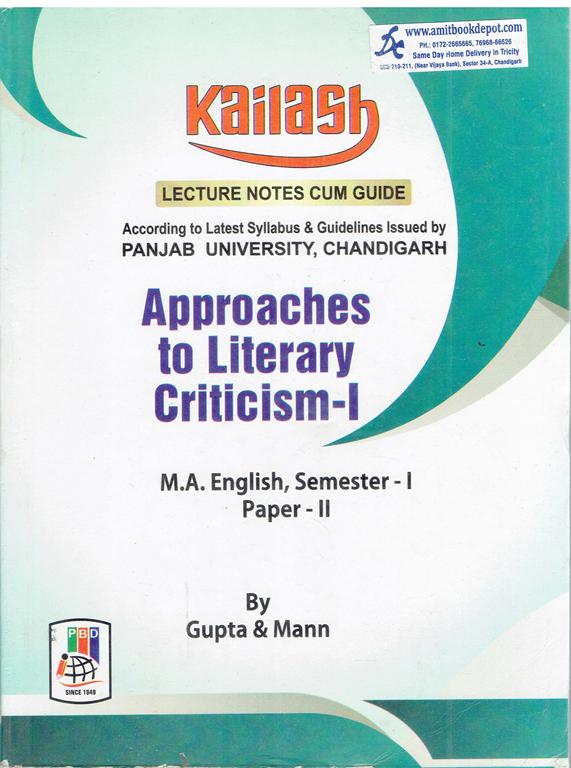

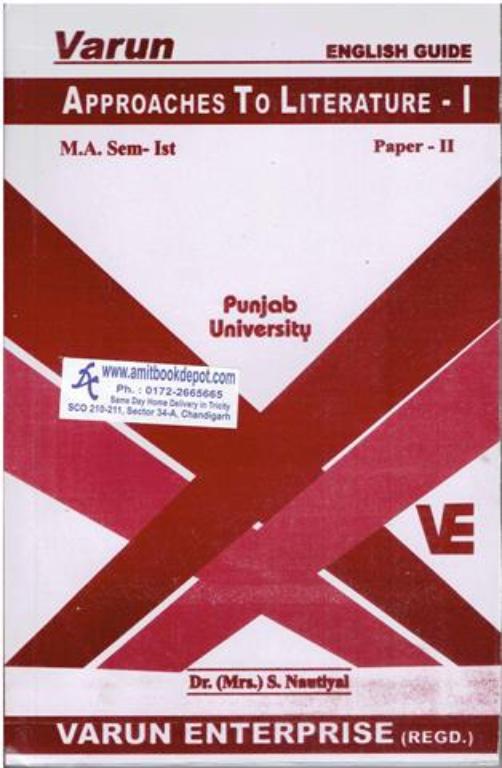
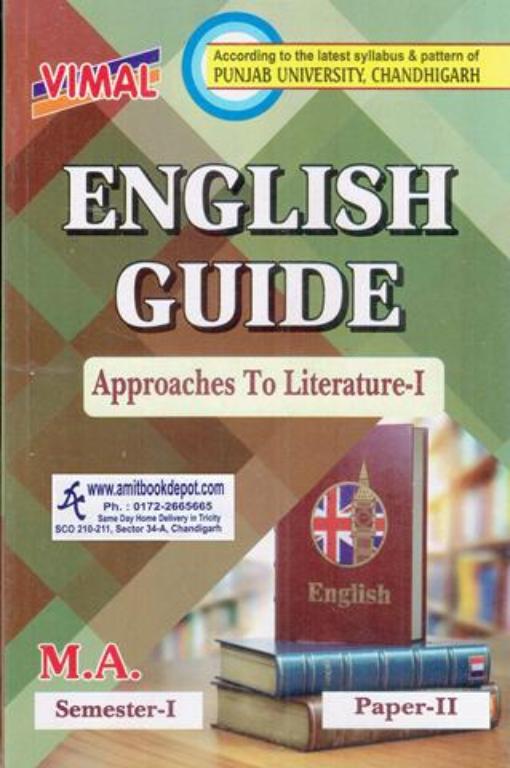
Yes, this is the prescribed textbook for M.A. English (First Semester), Paper II: Approaches to Literary Criticism—I, as per the current syllabus of Panjab University, Chandigarh.
No, it does not contain the full original texts. It provides detailed explanations, summaries, and critical commentary on the excerpts and chapters specified in the university syllabus, making the complex original material more accessible.
The book is structured to explain the "worldview, tools, and methodology" behind each approach. It clarifies concepts and includes Model Test Papers that mimic the exam's essay-based, application-oriented questions, training you to analyze texts critically rather than just recall facts.
Unit V is specifically dedicated to simplifying Frye's archetypal theory and the mythological approach as outlined in Guerin's Handbook. It breaks down complex ideas like archetypes, seasons, and genres into student-friendly explanations.
Yes, Unit IV comprehensively covers the Psychological Approach. It explains the core Freudian concepts from Guerin's Handbook and also provides analysis and context for Lionel Trilling's "Freud and Literature," as required by the syllabus.
Absolutely. Unit III first builds the foundation using Guerin's Handbook on Formalism and then provides a detailed exposition of Brooks' key essay, explaining concepts like paradox, irony, and the central argument against paraphrasing a poem's meaning.
The book explains Taine's deterministic theory of race, milieu, and moment from his "Introduction to History of English Literature" and contextualizes it within the broader Historical-Biographical approach, showing its significance and evolution in literary studies.
The book's content is organized precisely as per the syllabus document. It covers the specific sections of Guerin's Handbook (e.g., for Formalism: I, II, III, IV, VA, VD) within the respective units, ensuring you study exactly what is required.
The very structure of the book, presenting multiple competing approaches side-by-side, demonstrates critical pluralism. Its introduction and unit discussions reinforce the idea that no single approach holds a monopoly on meaning.
The authors have aimed to present the material in a clear, explanatory style that simplifies original theoretical prose, making it suitable for postgraduate students at the introductory level of literary theory.
No Description Added
Yes, this is the prescribed textbook for M.A. English (First Semester), Paper II: Approaches to Literary Criticism—I, as per the current syllabus of Panjab University, Chandigarh.
No, it does not contain the full original texts. It provides detailed explanations, summaries, and critical commentary on the excerpts and chapters specified in the university syllabus, making the complex original material more accessible.
The book is structured to explain the "worldview, tools, and methodology" behind each approach. It clarifies concepts and includes Model Test Papers that mimic the exam's essay-based, application-oriented questions, training you to analyze texts critically rather than just recall facts.
Unit V is specifically dedicated to simplifying Frye's archetypal theory and the mythological approach as outlined in Guerin's Handbook. It breaks down complex ideas like archetypes, seasons, and genres into student-friendly explanations.
Yes, Unit IV comprehensively covers the Psychological Approach. It explains the core Freudian concepts from Guerin's Handbook and also provides analysis and context for Lionel Trilling's "Freud and Literature," as required by the syllabus.
Absolutely. Unit III first builds the foundation using Guerin's Handbook on Formalism and then provides a detailed exposition of Brooks' key essay, explaining concepts like paradox, irony, and the central argument against paraphrasing a poem's meaning.
The book explains Taine's deterministic theory of race, milieu, and moment from his "Introduction to History of English Literature" and contextualizes it within the broader Historical-Biographical approach, showing its significance and evolution in literary studies.
The book's content is organized precisely as per the syllabus document. It covers the specific sections of Guerin's Handbook (e.g., for Formalism: I, II, III, IV, VA, VD) within the respective units, ensuring you study exactly what is required.
The very structure of the book, presenting multiple competing approaches side-by-side, demonstrates critical pluralism. Its introduction and unit discussions reinforce the idea that no single approach holds a monopoly on meaning.
The authors have aimed to present the material in a clear, explanatory style that simplifies original theoretical prose, making it suitable for postgraduate students at the introductory level of literary theory.