Categories
College Bookssss >
BA PU Chandigarh
BSC PU Chandigarh
MSC PU Chandigarh
BBA PU Chandigarh
MA PU Chandigarh
Medical Books
Engineering Books
Management Books
PGDCA Books
BCOM PU Chandigarh
MCOM PU Chandigarh
BCA PU Chandigarh
MCA PU Chandigarh
animate-books

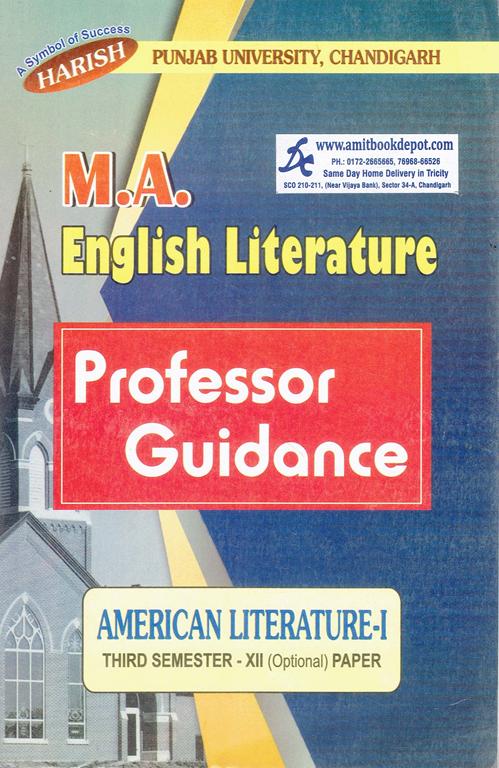
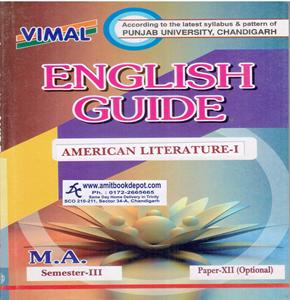
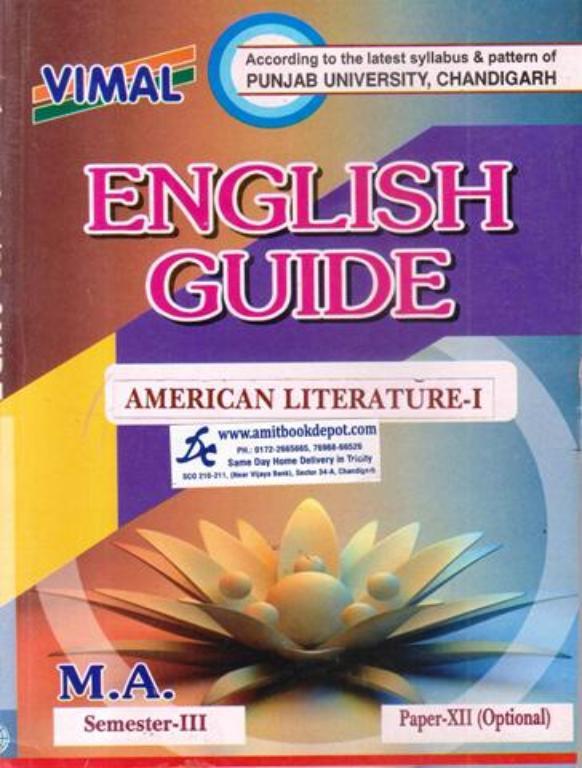
Harish Professor Guidance American Literature 1 For MA 3rd Semester Paper 12 (Optional) Panjab University Chandigarh

by Madhurima
β‚Ή360 β‚Ή360.00(-/ off)

Rating & Reviews

23 Customer Review

Harish Professor Guidance American Literature I is the essential book and study guide for MA 3rd Semester students of Panjab University, Chandigarh, for Paper 12 (Optional). Authored by Dr. Chakreshwari Dixit, this comprehensive resource meticulously covers the prescribed syllabus on 20th-century American poetry and drama. It provides detailed, unit-wise analysis of works by Langston Hughes, Allen Ginsberg, Adrienne Rich, Sam Shepard (Buried Child), and August Wilson (The Piano Lesson), along with a history of American literary tradition. Perfectly aligned with the university testing pattern, it is the definitive guide for exam preparation and critical understanding.

Have Doubts Regarding This Product ? Ask Your Question

  • Q1
    Does this book cover only the textual analysis, or does it also include the broader literary history required for Panjab University's Paper 12?
    A1

    It comprehensively covers both. The book begins with a dedicated chapter on the "History of American Literature," providing essential context on literary movements and historical influences, before delving into detailed unit-wise analysis of the prescribed texts.

  • Q2
    For Langston Hughes' and Allen Ginsberg's poems, which specific published collections are the analyses based on, as mentioned in the syllabus?
    A2

    The analyses are carefully crafted to align with the poems as they appear in the syllabus-specified editions: The Collected Poems of Langston Hughes (Vintage Classics) for Hughes and *Collected Poems 1947-1997* for Ginsberg, ensuring relevance and accuracy.

  • Q3
    How does this guide help in answering questions about broader literary concepts and movements, as outlined in the syllabus?
    A3

    Each unit's analysis connects the specific texts to the larger literary and cultural movements they represent (e.g., Harlem Renaissance, Beat Generation, Feminist poetry, American Gothic drama), equipping you to handle both text-based and concept-based questions effectively.

  • Q4
    Is the play "Buried Child" analyzed based on the specific Revised 2nd Edition mentioned in the Panjab University syllabus?
    A4

    Yes, the analysis of Sam Shepard's Buried Child in Unit IV is prepared with reference to the themes, structure, and critical reception of the play, relevant to the Knopf Doubleday Publishing Group, Revised 2nd Edition specified in the syllabus.

  • Q5
    Does the analysis of August Wilson's "The Piano Lesson" consider its place within his larger Pittsburgh Cycle?
    A5

    Absolutely. Unit V's analysis places The Piano Lesson within the context of August Wilson's monumental Pittsburgh Cycle, exploring how its themes of heritage, history, and African American experience connect to his broader dramatic project.

  • Q6
    Given the syllabus includes transformative works on race and gender, how does this book handle perspectives on African American identity and feminist thought?
    A6

    This is a core strength. The analyses of Langston Hughes and August Wilson deeply engage with African American identity, history, and racial politics. Similarly, the section on Adrienne Rich provides a critical exploration of her feminist ideology, critique of patriarchy, and poetic language.

  • Q7
    How current is the literary criticism and scholarly perspective referenced in this guide?
    A7

    Authored by Dr. Chakreshwari Dixit, the guide incorporates established and respected critical perspectives relevant to the prescribed texts, ensuring academically sound and reliable interpretations suitable for postgraduate examination preparation.

  • Q8
    How does this guide approach the comparative analysis of themes like the "American Dream" across different units (e.g., in Hughes, Ginsberg, and Shepard)?
    A8

    The unit-wise analysis highlights key themes like the American Dream individually. By studying the guide as a whole, students can independently draw insightful comparisons between its critique in Hughes' poetry, Ginsberg's satire, and Shepard's dramatic portrayal of familial decay.

  • Q9
    Is the book's language and critical terminology accessible for students at the MA 3rd Semester level?
    A9

    Yes, the language is academic yet clear, designed to elucidate complex texts and concepts. It introduces and explains relevant critical terminology, making it accessible and enhancing the student's own analytical vocabulary.

  • Q10
    Are there any sample essay questions or previous years' question papers included?
    A10

    This specific volume is a "Professor Guidance" textbook focused on comprehensive textual and conceptual analysis. For model answers or previous papers, you may check other complementary publications from Harish Prakashan Mandir.

0.00

0 Overall Rating
  • 5
    0
  • 4
    0
  • 3
    0
  • 2
    0
  • 1
    0

Try this product & share your review & thoughts

1. HISTORY OF AMERICAN LITERATURE
[Poetry and Drama: 1900 to the Present]

1. Introduction
2. The 17th Century Literature
3. The 18th Century
4. The New Nation
5. The 19th Century
6. American Renaissance
7. The Transcendentalist
8. New England Reformers and Historians
9. Hawthorne, Melville, and Walt Whitman
10. Melville's First-Person Narrative Method
11. Walt Whitman: The Poet of Democracy
12. From the Civil War to 1914
13. Literary Comedians
14. Fiction and Local Colorists
15. The Naturalists
16. Henry James
17. Henry Adams
19. The 20th Century
18. Poets of the Era
Writing From 1914 to 1945
Experiment in Drama
20. The New Poetry
21. Fiction
22. Critics of the Society
23. Hemingway, Faulkner, and Steinbeck
24. Lyrics by Fictionists
25. Literary Criticism
26. Socio-Literary Critics
27. Moral Aesthetic Critics
28. After World War II
29. The Novel and Short Story
30. African-American Litt (New Fictional Modes)

Unit-I
2. LANGSTON HUGHES'S POEMS

1. Let America Be America Againβ€”Text
2. I, Too, Sing Americaβ€”Text
3. The Negro Speaks of Riversβ€”Text
4. A Dream Deferred [Harlem]-Text
5. The Weary Bluesβ€”Text

LANGSTON HUGHES
1. Introduction to the Poet: His Life and Work

SELECTED POEMS OF LANGSTON HUGHES
- 1. The Weary Blues
Summary of the Poem
Structure of the Poem
1. Racial Alienation in the Weary Blues
2. Use of Imagery in Weary Blues
3. Theme of the Poem, The Weary Blues
4. Weary Blues and Harlem Renaissance
5. Narrative Voice of the Poem
6. Character Analysis of the Poem

- 2. A Dream Deferred [Harlem]
Introduction of the Poem
Summary of the Poem
1. Theme of the Poem, the Dream Deferred
2. Title of the Poem
3. Dream Deferred: A Poem Is an Answer to the Question
4. Martin Luther King's speech 4. Comparison between Dream Deferred and
5. Hughes's Style

- 3. Let America Be America Again
Summary of Poem
1. Theme of the Poem: Let America Be America Again
2. Literary Device of Langston Hughes
3. Tone of the Poem
4. Meaning of First Stanza of Poem

- 4. I, Too, Sing America
Introduction to the Poem
1. First line of the poem 'I, Too'
2. Theme of the Poem
3. End-stopped and enjambed lines are used in the poem.
4. Literary and Historical Context of the Poem
5. Form, Meter, and Rhyme of the Poem
6. Speaker and Setting of Poem

- 5. The Negro Speaks of Rivers
Introduction to the Poem
1. Theme of the Poem
2. Symbols of the Poem
3. Verse and Meter of the Poem
4. African-American Lineage in the Poem
5. Rivers' Interpretation
6. Characters of the Poeni

Unit-II

3. ALLEN GINSBERG'S POEMS
1. Howl-Text
2. Kaddish-Text
3. A Supermarket in Californiaβ€”Text
4. America-Text

- ALLEN GINSBERG
Introduction to the Poet
1. Ginsberg's Theme in Poetry
2. Ginsberg as a Psychiatric Patient

- SELECTED POEMS OF ALLAN GINSLIENG

- 1. HOWL

Summary of the Poem
Footnote to Howl
1. Critical Analysis of 'Howl'
2. 'Howl' as Voice of the Beats
3. Role of Maloch

- 2. KADDISH

Summary of the Poem
1. Dream Trapped in Disappearance
2. Character Development of Naomi
3. Kaddish: A Note on Death

- 3. A SUPERMARKET IN CALIFORNIA

Summary of the Poem
1. American Capitalism
2. Themes in Super Market in California
3. Isolation in Society
4. Symbols and Imagery Employed in the Poem

- 4. AMERICA

Summary of the Poem
1. Significance of the Title of the Poem, 'America'
2. Economics as a Theme of the Poem
3. Communism Interpreted in Ginsberg's America
4. War as a Theme
5. Hopelessness and Despair in the Poem

Unit III
4. ADRIENNE RICH'S POEMS

1. Planetarian-Text
2. Cartographies of Silence-Text
3. Stepping Backward-Text

- ADRIENNE RICH
Introduction to the Poet
1. Adrienne Rich as a Feminist Writer and Poet
2. Adrienne Rich's American Poems: Analysis, Themes, and Meaning
3. Adrienne Rich as a Poet and Pioneer

- SELECTED POEMS OF ADRIENNE RICH
- 1. Planetarium
Summary of the Poem
1. Adrienne Rich's Journey
2. Rich's Poetry Parallel to the Development of Her Life 2
3. Female Figure in Planetarium
4. Mistreatment of Women as the Theme of the Poem 3

- 2. Cartographies of Silence
Summary of the Poem
1. Silence as the Blueprint of Life
2. Cartographies of Silence: Polemics of Silence
3. Silence as a Significant Trope in Feminism

- 3. Stepping Backward
Paraphrase of the Poem
1. Introduction to the Poem
2. Summary of the Poem
3. Critical Appreciation of the Poem

Unit IV
5. BURIED CHILDβ€”SAM SHEPARD

- SAM SHEPARD
Introduction to the Author

- BURIED CHILD
Introduction to the Play, 'Buried Child'
1. Family and Its Demise: Theme of the Play
2. Allegory and Symbols in the Play
3. Realism in the Play
4. Quest for Identity as a Part of the Play
5. Incest and Infanticide
6. Character Sketch of 'Dodge'
7. Character Sketch of 'HALIE'
8. Character Sketch of Shelley
9. Character Sketch of Tilden
10. Character Sketch of Vince
11. Character Sketch of Father Dewis
12. Critical Overview of the Play
13. Irony in the Play
14. 'Tilden' Character Analysis
15. The Role of Vince in the Play
16. The Birth of a Child in the Dodge Family
17. The Theme of Existence in the Play

Unit-V
6. THE PIANO LESSON: AUGUST WILSON 

- AUGUST WILSON
Introduction to the Author
1. August Wilson and the Interracial Movement in 1960

- THE PIANO LESSON
Summary of the Play
1. Various Themes in 'The Piano Lesson'
2. Role of the Ghost in the Play
3. Symbols and Allegory Employed in the Play
4. Piano as a Symbol of Alter and Religion
5. The African-American Cultural Integration in the Play
6. Ancestral Communication in the Play
7. Piano as the Grand Theme
8. Character Sketch of Doaker Charles
9. Character Sketch of Boy Willie
10. Character Sketch of Berniece
11. Character Sketch of Martha
12. Character Sketch of Avery Brown
13. Character Sketch of Lymen
14. The Function of Grace's Character
15. Portrayal of Complicated and Authentic Family Relationship
16. Avery sees Berniece as an asset.
17. Conclusion of the Play
18. Thematic Significance of Final Exorcism
19. Music as a Crucial Element in the Play
20. Role of Magic in Berniece and Lymen's Seduction
21. Act of Revenge

Latest Syllabus of Professor Guidance American Literature 1 For MA 3rd Semester Paper 12 (Optional) Panjab University (PU) Chandigarh


American Literature I
(Poetry and Drama: 1900 to the Present)

The course explores the immense vitality of American literature over the course of the 20th century through transformative works of acclaimed writers who have shaped the contours and developments of the American literary tradition. It offers critical insights into the historical and cultural influences, literary movements, and major literary figures of a highly fecund century. The texts that have been selected for detailed study are representative of a dynamic literary tradition that emerges from multiple perspectives, such as those of race, gender, ethnicity, socio-economic class, and historical period. Testing Pattern: The question paper will contain five questions with internal choice, corresponding to the five units of the course. All the questions would carry equal marks. The candidates would be required to answer all five questions. In addition to specific text-based questions, the paper will also focus on various literary and cultural movements/concepts/trends/terms related to American literary history.

Unit I

Langston Hughes: β€œThe Weary Blues,” β€œA Dream Deferred,” β€œLet America Be America Again,” β€œThe Negro Speaks of Rivers,” β€œI, Too, Sing America,” [The Collected Poems of Langston Hughes (Vintage Classics)]

Unit II

Allen Ginsberg: β€œHowl,” β€œKaddish,” β€œSupermarket in California,” β€œAmerica” [Collected Poems 1947-1997 (Harper Perennial Modern Classics)]

Unit III

Adrienne Rich: β€œPlanetarium,” β€œCartographies of Silence,” β€œStepping Backward” [Collected Poems: 1950–2012 (W. W. Norton & Company)]

Unit IV

Sam Shepard, Buried Child (Knopf Doubleday Publishing Group, Revised 2nd Edition)

Unit V

August Wilson: The Piano Lesson (Penguin USA; Reprint edition, 1990)

Harish Professor Guidance: American Literature I (MA 3rd Semester, Paper 12 – Optional) – Your Definitive Academic Companion for Panjab University, Chandigarh

Master the intricate landscape of modern and contemporary American literary thought with "Harish Professor Guidance American Literature I," the meticulously crafted book and study guide designed explicitly for MA 3rd Semester students of Panjab University, Chandigarh, pursuing Paper 12 (Optional). This authoritative volume, authored by the esteemed Dr. Chakreshwari Dixit and published by Harish Prakashan Mandir, serves as an indispensable resource, aligning perfectly with the prescribed university syllabus. It provides a comprehensive, unit-wise exploration of seminal 20th-century American poetry and drama, from the Harlem Renaissance to postmodern reflections, ensuring students are thoroughly prepared for examinations and gain profound critical insights.

This guide is strategically structured to navigate the course "American Literature I (Poetry and Drama: 1900 to the Present)." It begins with an insightful history of American literature, offering crucial context on the historical and cultural influences, major literary movements, and the evolution of the American literary tradition. This foundational overview sets the stage for a deeper understanding of the prescribed texts, illuminating how they reflect and shape the nation's socio-political and artistic consciousness from multiple perspectives of race, gender, ethnicity, and class.

The core of the book is dedicated to a detailed, line-by-line analysis of the prescribed works, organized into five coherent units. Unit I delves into the powerful verse of Langston Hughes, a central figure of the Harlem Renaissance. It provides critical commentary on iconic poems like "The Weary Blues," "A Dream Deferred (Harlem)," "Let America Be America Again," "I, Too, Sing America," and "The Negro Speaks of Rivers," exploring themes of African American identity, the American Dream, racial injustice, and cultural pride.

Unit II transitions to the rebellious voice of the Beat Generation through the works of Allen Ginsberg. This section offers in-depth analysis of the groundbreaking poem "Howl," the deeply personal "Kaddish," the contemplative "A Supermarket in California," and the satirical "America," unpacking their formal experimentation, counter-cultural critique, and raw emotional energy.

Unit III focuses on the feminist and politically charged poetry of Adrienne Rich. It provides expert guidance on deciphering the complex imagery and themes in "Planetarium," "Cartographies of Silence," and "Stepping Backward," examining her critique of patriarchy, her exploration of silence and language, and her evolving poetic consciousness.

Moving from poetry to drama, Unit IV presents a comprehensive study of Sam Shepard's Pulitzer Prize-winning play, "Buried Child." The guide analyzes this quintessential work of American Gothic drama and its themes of family secrets, decay of the American Dream, fragmented identity, and surreal symbolism within the context of 20th-century American theater.

Finally, Unit V is devoted to August Wilson's celebrated play, "The Piano Lesson," part of his epic Pittsburgh Cycle. This section explores the play's profound engagement with African American history, the legacy of slavery, the conflict between heritage and progress, and the spiritual elements woven into the narrative, providing students with the tools to appreciate Wilson's dramatic genius.

Understanding the testing pattern of Panjab University, where the question paper contains five questions corresponding to the five units, this guide is tailored to ensure success. Each unit’s analysis is designed not only to answer text-specific questions but also to equip students to discuss broader literary and cultural movements, concepts, trends, and terms. With its clear explanations, critical perspectives, and syllabus-focused approach, "Harish Professor Guidance American Literature I" is more than a bookβ€”it is an essential study guide for MA English students aiming for academic excellence. Published by Harish Prakashan Mandir, a trusted name in academic publishing, this book is your definitive pathway to mastering the American Literature paper for MA 3rd Semester.

1. HISTORY OF AMERICAN LITERATURE
[Poetry and Drama: 1900 to the Present]

1. Introduction
2. The 17th Century Literature
3. The 18th Century
4. The New Nation
5. The 19th Century
6. American Renaissance
7. The Transcendentalist
8. New England Reformers and Historians
9. Hawthorne, Melville, and Walt Whitman
10. Melville's First-Person Narrative Method
11. Walt Whitman: The Poet of Democracy
12. From the Civil War to 1914
13. Literary Comedians
14. Fiction and Local Colorists
15. The Naturalists
16. Henry James
17. Henry Adams
19. The 20th Century
18. Poets of the Era
Writing From 1914 to 1945
Experiment in Drama
20. The New Poetry
21. Fiction
22. Critics of the Society
23. Hemingway, Faulkner, and Steinbeck
24. Lyrics by Fictionists
25. Literary Criticism
26. Socio-Literary Critics
27. Moral Aesthetic Critics
28. After World War II
29. The Novel and Short Story
30. African-American Litt (New Fictional Modes)

Unit-I
2. LANGSTON HUGHES'S POEMS

1. Let America Be America Againβ€”Text
2. I, Too, Sing Americaβ€”Text
3. The Negro Speaks of Riversβ€”Text
4. A Dream Deferred [Harlem]-Text
5. The Weary Bluesβ€”Text

LANGSTON HUGHES
1. Introduction to the Poet: His Life and Work

SELECTED POEMS OF LANGSTON HUGHES
- 1. The Weary Blues
Summary of the Poem
Structure of the Poem
1. Racial Alienation in the Weary Blues
2. Use of Imagery in Weary Blues
3. Theme of the Poem, The Weary Blues
4. Weary Blues and Harlem Renaissance
5. Narrative Voice of the Poem
6. Character Analysis of the Poem

- 2. A Dream Deferred [Harlem]
Introduction of the Poem
Summary of the Poem
1. Theme of the Poem, the Dream Deferred
2. Title of the Poem
3. Dream Deferred: A Poem Is an Answer to the Question
4. Martin Luther King's speech 4. Comparison between Dream Deferred and
5. Hughes's Style

- 3. Let America Be America Again
Summary of Poem
1. Theme of the Poem: Let America Be America Again
2. Literary Device of Langston Hughes
3. Tone of the Poem
4. Meaning of First Stanza of Poem

- 4. I, Too, Sing America
Introduction to the Poem
1. First line of the poem 'I, Too'
2. Theme of the Poem
3. End-stopped and enjambed lines are used in the poem.
4. Literary and Historical Context of the Poem
5. Form, Meter, and Rhyme of the Poem
6. Speaker and Setting of Poem

- 5. The Negro Speaks of Rivers
Introduction to the Poem
1. Theme of the Poem
2. Symbols of the Poem
3. Verse and Meter of the Poem
4. African-American Lineage in the Poem
5. Rivers' Interpretation
6. Characters of the Poeni

Unit-II

3. ALLEN GINSBERG'S POEMS
1. Howl-Text
2. Kaddish-Text
3. A Supermarket in Californiaβ€”Text
4. America-Text

- ALLEN GINSBERG
Introduction to the Poet
1. Ginsberg's Theme in Poetry
2. Ginsberg as a Psychiatric Patient

- SELECTED POEMS OF ALLAN GINSLIENG

- 1. HOWL

Summary of the Poem
Footnote to Howl
1. Critical Analysis of 'Howl'
2. 'Howl' as Voice of the Beats
3. Role of Maloch

- 2. KADDISH

Summary of the Poem
1. Dream Trapped in Disappearance
2. Character Development of Naomi
3. Kaddish: A Note on Death

- 3. A SUPERMARKET IN CALIFORNIA

Summary of the Poem
1. American Capitalism
2. Themes in Super Market in California
3. Isolation in Society
4. Symbols and Imagery Employed in the Poem

- 4. AMERICA

Summary of the Poem
1. Significance of the Title of the Poem, 'America'
2. Economics as a Theme of the Poem
3. Communism Interpreted in Ginsberg's America
4. War as a Theme
5. Hopelessness and Despair in the Poem

Unit III
4. ADRIENNE RICH'S POEMS

1. Planetarian-Text
2. Cartographies of Silence-Text
3. Stepping Backward-Text

- ADRIENNE RICH
Introduction to the Poet
1. Adrienne Rich as a Feminist Writer and Poet
2. Adrienne Rich's American Poems: Analysis, Themes, and Meaning
3. Adrienne Rich as a Poet and Pioneer

- SELECTED POEMS OF ADRIENNE RICH
- 1. Planetarium
Summary of the Poem
1. Adrienne Rich's Journey
2. Rich's Poetry Parallel to the Development of Her Life 2
3. Female Figure in Planetarium
4. Mistreatment of Women as the Theme of the Poem 3

- 2. Cartographies of Silence
Summary of the Poem
1. Silence as the Blueprint of Life
2. Cartographies of Silence: Polemics of Silence
3. Silence as a Significant Trope in Feminism

- 3. Stepping Backward
Paraphrase of the Poem
1. Introduction to the Poem
2. Summary of the Poem
3. Critical Appreciation of the Poem

Unit IV
5. BURIED CHILDβ€”SAM SHEPARD

- SAM SHEPARD
Introduction to the Author

- BURIED CHILD
Introduction to the Play, 'Buried Child'
1. Family and Its Demise: Theme of the Play
2. Allegory and Symbols in the Play
3. Realism in the Play
4. Quest for Identity as a Part of the Play
5. Incest and Infanticide
6. Character Sketch of 'Dodge'
7. Character Sketch of 'HALIE'
8. Character Sketch of Shelley
9. Character Sketch of Tilden
10. Character Sketch of Vince
11. Character Sketch of Father Dewis
12. Critical Overview of the Play
13. Irony in the Play
14. 'Tilden' Character Analysis
15. The Role of Vince in the Play
16. The Birth of a Child in the Dodge Family
17. The Theme of Existence in the Play

Unit-V
6. THE PIANO LESSON: AUGUST WILSON 

- AUGUST WILSON
Introduction to the Author
1. August Wilson and the Interracial Movement in 1960

- THE PIANO LESSON
Summary of the Play
1. Various Themes in 'The Piano Lesson'
2. Role of the Ghost in the Play
3. Symbols and Allegory Employed in the Play
4. Piano as a Symbol of Alter and Religion
5. The African-American Cultural Integration in the Play
6. Ancestral Communication in the Play
7. Piano as the Grand Theme
8. Character Sketch of Doaker Charles
9. Character Sketch of Boy Willie
10. Character Sketch of Berniece
11. Character Sketch of Martha
12. Character Sketch of Avery Brown
13. Character Sketch of Lymen
14. The Function of Grace's Character
15. Portrayal of Complicated and Authentic Family Relationship
16. Avery sees Berniece as an asset.
17. Conclusion of the Play
18. Thematic Significance of Final Exorcism
19. Music as a Crucial Element in the Play
20. Role of Magic in Berniece and Lymen's Seduction
21. Act of Revenge

Have Doubts Regarding This Product ? Ask Your Question

  • Q1
    Does this book cover only the textual analysis, or does it also include the broader literary history required for Panjab University's Paper 12?
    A1

    It comprehensively covers both. The book begins with a dedicated chapter on the "History of American Literature," providing essential context on literary movements and historical influences, before delving into detailed unit-wise analysis of the prescribed texts.

  • Q2
    For Langston Hughes' and Allen Ginsberg's poems, which specific published collections are the analyses based on, as mentioned in the syllabus?
    A2

    The analyses are carefully crafted to align with the poems as they appear in the syllabus-specified editions: The Collected Poems of Langston Hughes (Vintage Classics) for Hughes and *Collected Poems 1947-1997* for Ginsberg, ensuring relevance and accuracy.
  • Q3
    How does this guide help in answering questions about broader literary concepts and movements, as outlined in the syllabus?
    A3

    Each unit's analysis connects the specific texts to the larger literary and cultural movements they represent (e.g., Harlem Renaissance, Beat Generation, Feminist poetry, American Gothic drama), equipping you to handle both text-based and concept-based questions effectively.

  • Q4
    Is the play "Buried Child" analyzed based on the specific Revised 2nd Edition mentioned in the Panjab University syllabus?
    A4

    Yes, the analysis of Sam Shepard's Buried Child in Unit IV is prepared with reference to the themes, structure, and critical reception of the play, relevant to the Knopf Doubleday Publishing Group, Revised 2nd Edition specified in the syllabus.

  • Q5
    Does the analysis of August Wilson's "The Piano Lesson" consider its place within his larger Pittsburgh Cycle?
    A5

    Absolutely. Unit V's analysis places The Piano Lesson within the context of August Wilson's monumental Pittsburgh Cycle, exploring how its themes of heritage, history, and African American experience connect to his broader dramatic project.

  • Q6
    Given the syllabus includes transformative works on race and gender, how does this book handle perspectives on African American identity and feminist thought?
    A6

    This is a core strength. The analyses of Langston Hughes and August Wilson deeply engage with African American identity, history, and racial politics. Similarly, the section on Adrienne Rich provides a critical exploration of her feminist ideology, critique of patriarchy, and poetic language.

  • Q7
    How current is the literary criticism and scholarly perspective referenced in this guide?
    A7

    Authored by Dr. Chakreshwari Dixit, the guide incorporates established and respected critical perspectives relevant to the prescribed texts, ensuring academically sound and reliable interpretations suitable for postgraduate examination preparation.

  • Q8
    How does this guide approach the comparative analysis of themes like the "American Dream" across different units (e.g., in Hughes, Ginsberg, and Shepard)?
    A8

    The unit-wise analysis highlights key themes like the American Dream individually. By studying the guide as a whole, students can independently draw insightful comparisons between its critique in Hughes' poetry, Ginsberg's satire, and Shepard's dramatic portrayal of familial decay.

  • Q9
    Is the book's language and critical terminology accessible for students at the MA 3rd Semester level?
    A9

    Yes, the language is academic yet clear, designed to elucidate complex texts and concepts. It introduces and explains relevant critical terminology, making it accessible and enhancing the student's own analytical vocabulary.

  • Q10
    Are there any sample essay questions or previous years' question papers included?
    A10

    This specific volume is a "Professor Guidance" textbook focused on comprehensive textual and conceptual analysis. For model answers or previous papers, you may check other complementary publications from Harish Prakashan Mandir.

Latest Syllabus of Professor Guidance American Literature 1 For MA 3rd Semester Paper 12 (Optional) Panjab University (PU) Chandigarh


American Literature I
(Poetry and Drama: 1900 to the Present)

The course explores the immense vitality of American literature over the course of the 20th century through transformative works of acclaimed writers who have shaped the contours and developments of the American literary tradition. It offers critical insights into the historical and cultural influences, literary movements, and major literary figures of a highly fecund century. The texts that have been selected for detailed study are representative of a dynamic literary tradition that emerges from multiple perspectives, such as those of race, gender, ethnicity, socio-economic class, and historical period. Testing Pattern: The question paper will contain five questions with internal choice, corresponding to the five units of the course. All the questions would carry equal marks. The candidates would be required to answer all five questions. In addition to specific text-based questions, the paper will also focus on various literary and cultural movements/concepts/trends/terms related to American literary history.

Unit I

Langston Hughes: β€œThe Weary Blues,” β€œA Dream Deferred,” β€œLet America Be America Again,” β€œThe Negro Speaks of Rivers,” β€œI, Too, Sing America,” [The Collected Poems of Langston Hughes (Vintage Classics)]

Unit II

Allen Ginsberg: β€œHowl,” β€œKaddish,” β€œSupermarket in California,” β€œAmerica” [Collected Poems 1947-1997 (Harper Perennial Modern Classics)]

Unit III

Adrienne Rich: β€œPlanetarium,” β€œCartographies of Silence,” β€œStepping Backward” [Collected Poems: 1950–2012 (W. W. Norton & Company)]

Unit IV

Sam Shepard, Buried Child (Knopf Doubleday Publishing Group, Revised 2nd Edition)

Unit V

August Wilson: The Piano Lesson (Penguin USA; Reprint edition, 1990)

0.00

0 Overall Rating
  • 5
    0
  • 4
    0
  • 3
    0
  • 2
    0
  • 1
    0

Try this product & share your review & thoughts

Top Trending Product

Related Product

Related Product

Related Blog Posts

Latest Blogs

Latest Blogs

blog-img
Classic Literature Reimagined: Discuss modern twists on classic novels.
Lorem ipsum dolor sit amet, consectetur adipiscing elit, sed do eiusmod tempor incididunt ut labore et dolore magna aliqua. Ut enim ad minim veniam, quis nostrud exercitation ullamco Lorem ipsum dolor sit amet, consectetur adipiscing elit, sed do eiusmod tempor incididunt ut labore et dolore magna aliqua. Utenim ad minim veniam, quis nostrud exercitation ullamco Lorem ipsum dolor sit amet, consecte...
Read more
Author name | 10 jan, 2025
blog-img
Classic Literature Reimagined: Discuss modern twists on classic novels.
Lorem ipsum dolor sit amet, consectetur adipiscing elit, sed do eiusmod tempor incididunt ut labore et dolore magna aliqua. Ut enim ad minim veniam, quis nostrud exercitation ullamco Lorem ipsum dolor sit amet, consectetur adipiscing elit, sed do eiusmod tempor incididunt ut labore et dolore magna aliqua. Utenim ad minim veniam, quis nostrud exercitation ullamco Lorem ipsum dolor sit amet, consecte...
Read more
Author name | 10 jan, 2025
blog-img
Classic Literature Reimagined: Discuss modern twists on classic novels.
Lorem ipsum dolor sit amet, consectetur adipiscing elit, sed do eiusmod tempor incididunt ut labore et dolore magna aliqua. Ut enim ad minim veniam, quis nostrud exercitation ullamco Lorem ipsum dolor sit amet, consectetur adipiscing elit, sed do eiusmod tempor incididunt ut labore et dolore magna aliqua. Utenim ad minim veniam, quis nostrud exercitation ullamco Lorem ipsum dolor sit amet, consecte...
Read more
Author name | 10 jan, 2025
blog-img
Classic Literature Reimagined: Discuss modern twists on classic novels.
Lorem ipsum dolor sit amet, consectetur adipiscing elit...
Read more
Author Name | 10 Jan, 2025
blog-img
Classic Literature Reimagined: Discuss modern twists on classic novels.
Lorem ipsum dolor sit amet, consectetur adipiscing elit...
Read more
Author Name | 10 Jan, 2025
blog-img
Classic Literature Reimagined: Discuss modern twists on classic novels.
Lorem ipsum dolor sit amet, consectetur adipiscing elit...
Read more
Author Name | 10 Jan, 2025
blog-img
Classic Literature Reimagined: Discuss modern twists on classic novels.
Lorem ipsum dolor sit amet, consectetur adipiscing elit...
Read more
Author Name | 10 Jan, 2025
blog-img
Classic Literature Reimagined: Discuss modern twists on classic novels.
Lorem ipsum dolor sit amet, consectetur adipiscing elit...
Read more
Author Name | 10 Jan, 2025
blog-img
Classic Literature Reimagined: Discuss modern twists on classic novels.
Lorem ipsum dolor sit amet, consectetur adipiscing elit...
Read more
Author Name | 10 Jan, 2025
blog-img
Classic Literature Reimagined: Discuss modern twists on classic novels.
Lorem ipsum dolor sit amet, consectetur adipiscing elit...
Read more
Author Name | 10 Jan, 2025
blog-img
Classic Literature Reimagined: Discuss modern twists on classic novels.
Lorem ipsum dolor sit amet, consectetur adipiscing elit...
Read more
Author Name | 10 Jan, 2025
blog-img
Classic Literature Reimagined: Discuss modern twists on classic novels.
Lorem ipsum dolor sit amet, consectetur adipiscing elit...
Read more
Author Name | 10 Jan, 2025