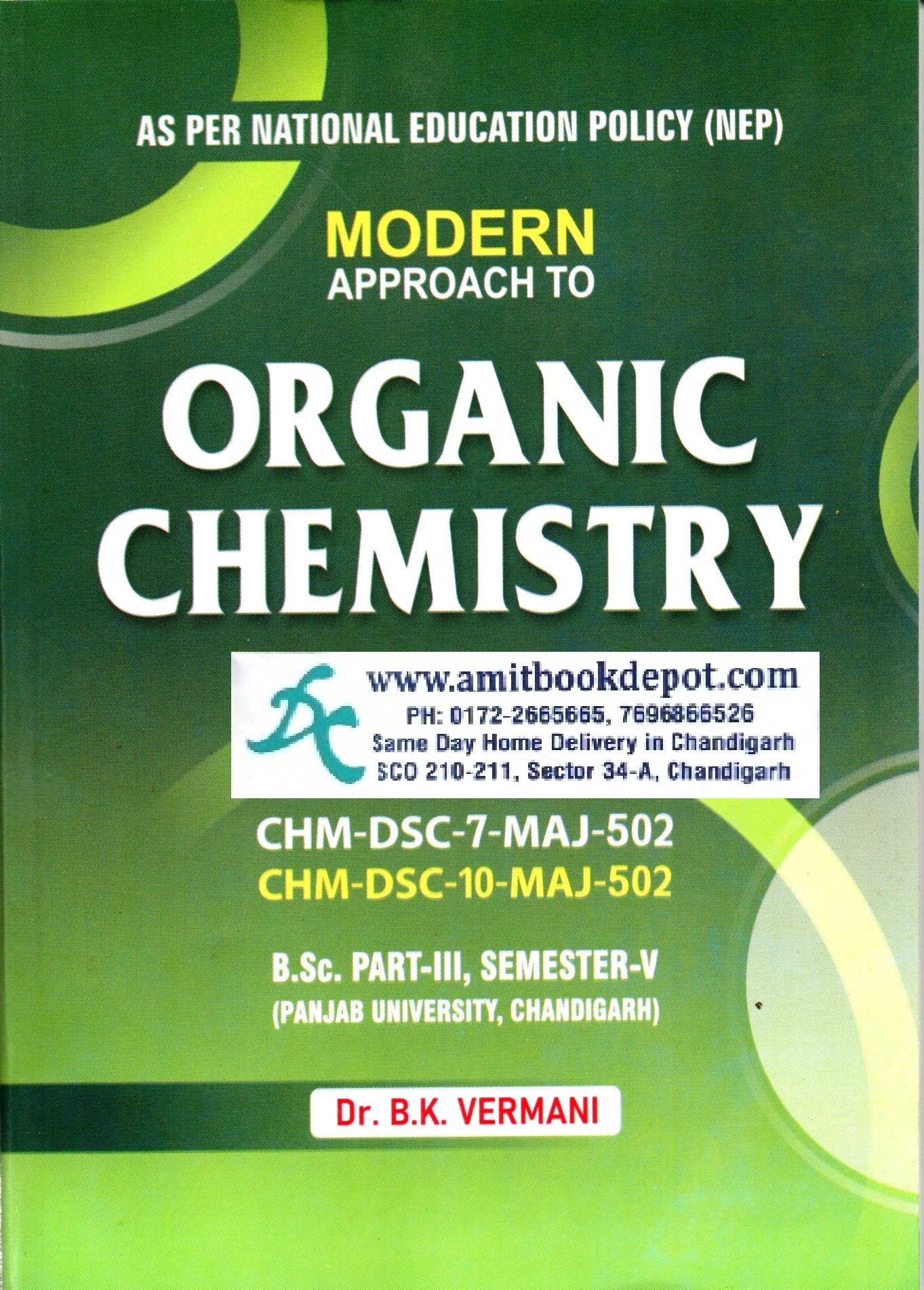
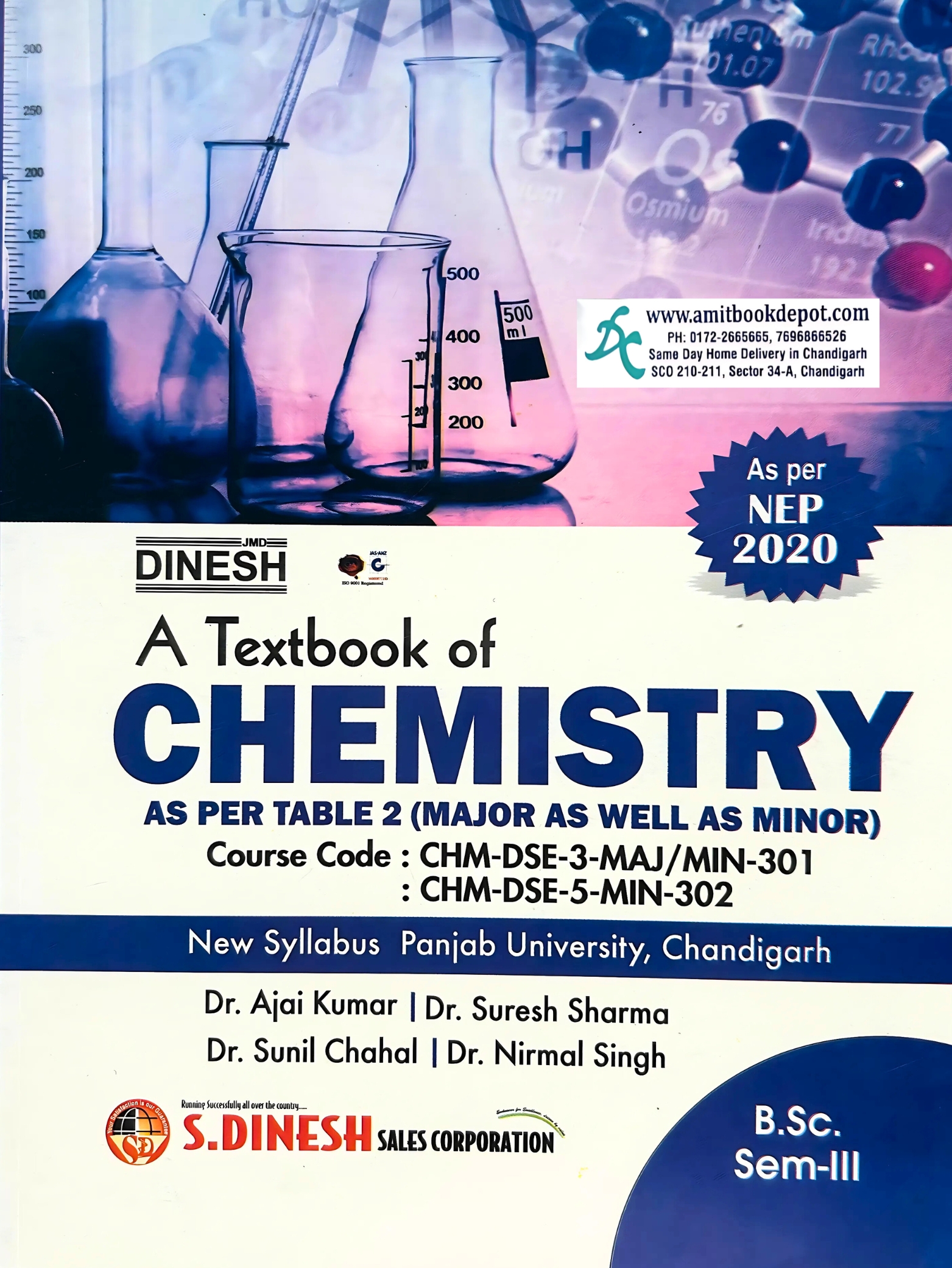
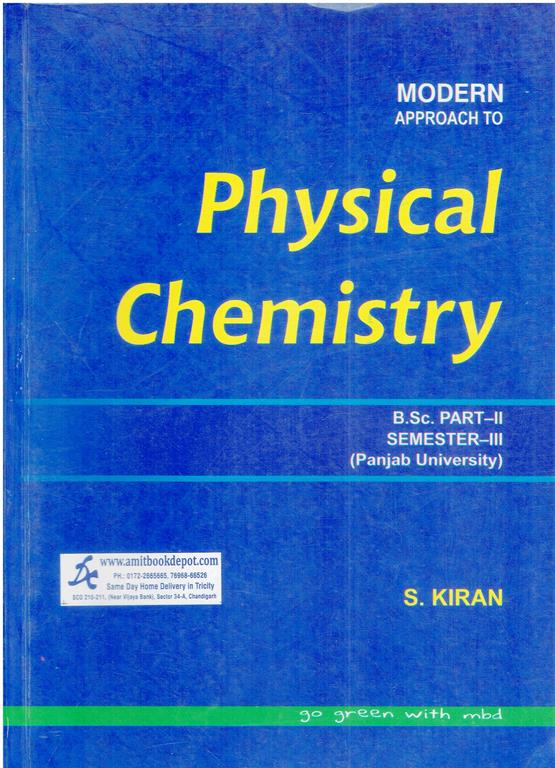
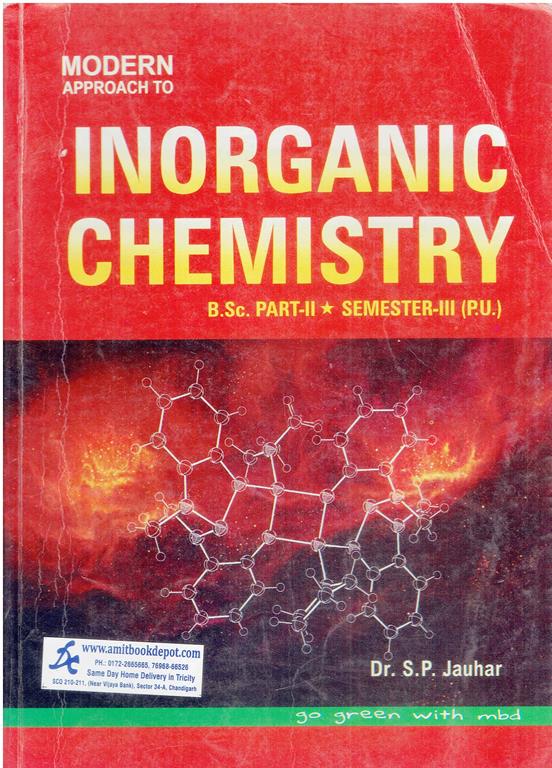
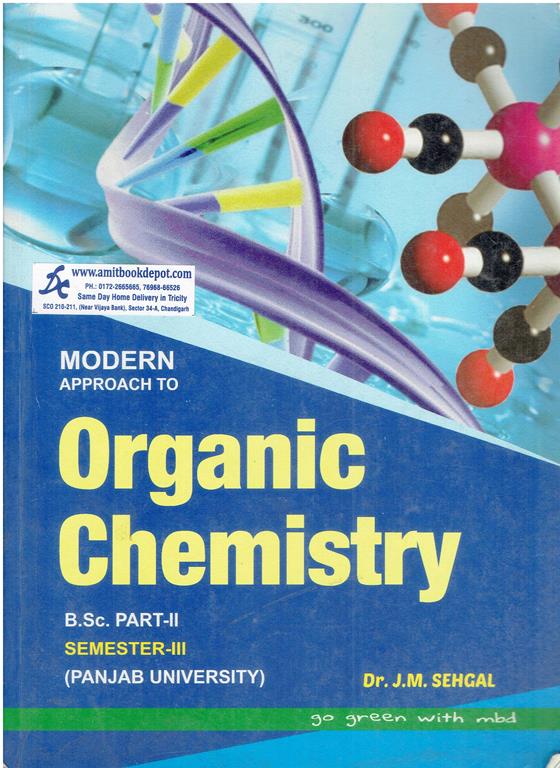
Yes, this book is meticulously crafted to cover 100% of the theory syllabus for Paper CHM-DSC-3-MAJ/MIN-301 as prescribed by Panjab University, Chandigarh, under the National Education Policy (NEP).
Absolutely. The content is designed to be comprehensive for both B.Sc. Chemistry Major and Minor students of Panjab University for the 3rd semester.
Yes, the book places strong emphasis on clarifying key organic reaction mechanisms, such as electrophilic addition, dehydration, and the Diels-Alder reaction, with detailed, step-by-step explanations.
The chapter on Noble Gases includes dedicated sections that break down the Valence Bond and VSEPR theories, providing clear explanations and diagrams to illustrate the molecular shapes of compounds like XeF₂, XeF₄, and XeF₆.
Yes, the Thermochemistry chapter covers the temperature dependence of enthalpy and includes the derivation and application of Kirchhoff's equation as per the syllabus.
Yes, the Thermodynamics-II unit carefully distinguishes between these concepts, explaining entropy as a state function and then elaborating on its role in determining the spontaneity and equilibrium of a process.
The book explains the concepts of Hess's Law and Bond Dissociation Energy with applicable examples and thermochemical data, enabling students to understand and solve related numerical problems.
The authors have taken special care to present physical chemistry concepts, including the laws of thermodynamics and entropy, in a lucid and logical sequence to make them more accessible to all students.
The book includes a modern perspective, covering the salient features and complexation tendencies of s-block elements, including their specific functions in biosystems, as required by the syllabus.
Yes, the textbook includes clear chemical structures, reaction mechanisms, and diagrams where necessary to visually reinforce the textual explanations, particularly for molecular shapes and cyclic processes.
No Description Added
Yes, this book is meticulously crafted to cover 100% of the theory syllabus for Paper CHM-DSC-3-MAJ/MIN-301 as prescribed by Panjab University, Chandigarh, under the National Education Policy (NEP).
Absolutely. The content is designed to be comprehensive for both B.Sc. Chemistry Major and Minor students of Panjab University for the 3rd semester.
Yes, the book places strong emphasis on clarifying key organic reaction mechanisms, such as electrophilic addition, dehydration, and the Diels-Alder reaction, with detailed, step-by-step explanations.
The chapter on Noble Gases includes dedicated sections that break down the Valence Bond and VSEPR theories, providing clear explanations and diagrams to illustrate the molecular shapes of compounds like XeF₂, XeF₄, and XeF₆.
Yes, the Thermochemistry chapter covers the temperature dependence of enthalpy and includes the derivation and application of Kirchhoff's equation as per the syllabus.
Yes, the Thermodynamics-II unit carefully distinguishes between these concepts, explaining entropy as a state function and then elaborating on its role in determining the spontaneity and equilibrium of a process.
The book explains the concepts of Hess's Law and Bond Dissociation Energy with applicable examples and thermochemical data, enabling students to understand and solve related numerical problems.
The authors have taken special care to present physical chemistry concepts, including the laws of thermodynamics and entropy, in a lucid and logical sequence to make them more accessible to all students.
The book includes a modern perspective, covering the salient features and complexation tendencies of s-block elements, including their specific functions in biosystems, as required by the syllabus.
Yes, the textbook includes clear chemical structures, reaction mechanisms, and diagrams where necessary to visually reinforce the textual explanations, particularly for molecular shapes and cyclic processes.