-
Mon-Fri: 10AM to 8PM 01722665665
-
My Account
-
-
0
Total :
₹ 0.00

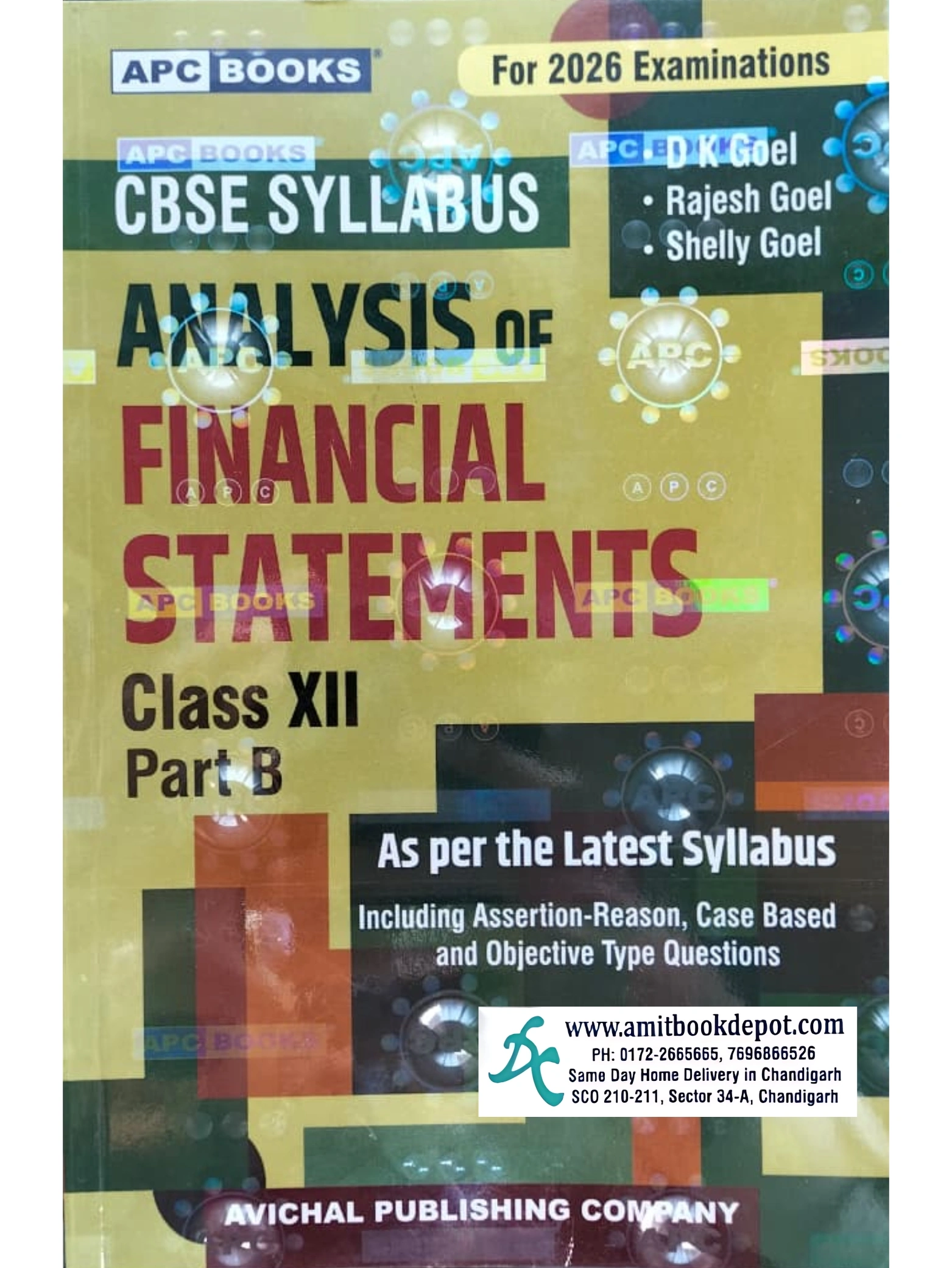





Yes, this book provides exhaustive coverage of the entire CBSE syllabus for Part B, including all recent updates related to Schedule III and Accounting Standards.
Absolutely. Chapter 1 is dedicated exclusively to explaining the financial statement formats in strict compliance with the latest Schedule III requirements.
The book includes dedicated sections for Multiple Choice Questions (MCQs) and Assertion-Reason Questions in relevant chapters, along with answers for self-evaluation.
Yes, the book covers the computation and analysis of every single ratio specified in the syllabus, including Liquidity, Solvency, Activity, and Profitability Ratios.
Yes, the book not only teaches how to prepare these statements but also clearly explains their uses, significance, and the key differences between them.
The Accounting Ratios chapter contains Missing Figure Questions for practice. Detailed solutions are provided for the Missing Figure Questions in the Cash Flow Statement chapter.
As per the CBSE syllabus note, the book demonstrates the computation of the Net Profit Ratio on both bases: profit before tax and profit after tax.
Yes, the book explicitly follows the CBSE note, treating bank overdraft and cash credit as short-term borrowings in the Cash Flow Statement.
Yes, the strong conceptual foundation and detailed coverage of financial analysis make this book an excellent starting point for students targeting careers in CA, CMA, and CS.
The book focuses solely on the Indirect Method for preparing the Cash Flow Statement, as mandated by AS-3 and the CBSE syllabus, with detailed steps and adjustments.
No Description Added
Yes, this book provides exhaustive coverage of the entire CBSE syllabus for Part B, including all recent updates related to Schedule III and Accounting Standards.
Absolutely. Chapter 1 is dedicated exclusively to explaining the financial statement formats in strict compliance with the latest Schedule III requirements.
The book includes dedicated sections for Multiple Choice Questions (MCQs) and Assertion-Reason Questions in relevant chapters, along with answers for self-evaluation.
Yes, the book covers the computation and analysis of every single ratio specified in the syllabus, including Liquidity, Solvency, Activity, and Profitability Ratios.
Yes, the book not only teaches how to prepare these statements but also clearly explains their uses, significance, and the key differences between them.
The Accounting Ratios chapter contains Missing Figure Questions for practice. Detailed solutions are provided for the Missing Figure Questions in the Cash Flow Statement chapter.
As per the CBSE syllabus note, the book demonstrates the computation of the Net Profit Ratio on both bases: profit before tax and profit after tax.
Yes, the book explicitly follows the CBSE note, treating bank overdraft and cash credit as short-term borrowings in the Cash Flow Statement.
Yes, the strong conceptual foundation and detailed coverage of financial analysis make this book an excellent starting point for students targeting careers in CA, CMA, and CS.
The book focuses solely on the Indirect Method for preparing the Cash Flow Statement, as mandated by AS-3 and the CBSE syllabus, with detailed steps and adjustments.