Categories
College Bookssss >
BA PU Chandigarh
BSC PU Chandigarh
MSC PU Chandigarh
BBA PU Chandigarh
MA PU Chandigarh
Medical Books
Engineering Books
Management Books
PGDCA Books
BCOM PU Chandigarh
MCOM PU Chandigarh
BCA PU Chandigarh
MCA PU Chandigarh
animate-books

Indian Sociological Thought

by Madhurima
β‚Ή350 β‚Ή350.00(-/ off)

Rating & Reviews

23 Customer Review

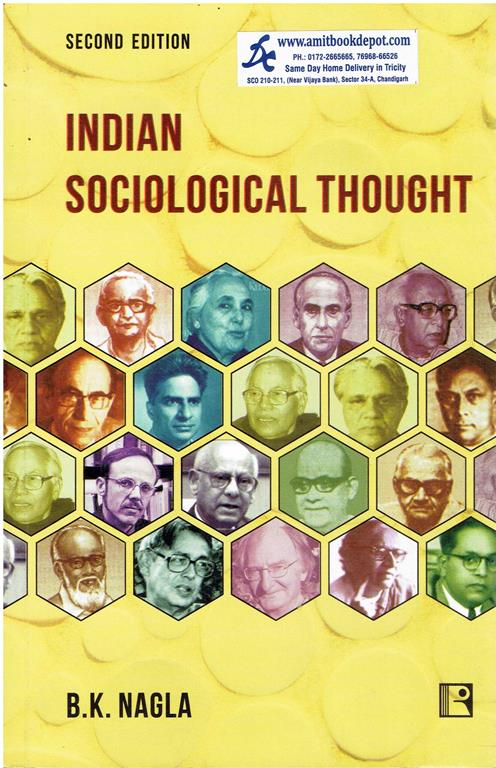
Indian Sociological Thought by B.K. Nagla is a definitive book providing a comprehensive overview of the major paradigms and thinkers in Indian sociology. Published by Rawat Publications, it systematically explores perspectives from Indological and Structural-Functional to Marxist and Subaltern, analyzing key concepts like Sanskritization and caste. Covering seminal figures from G.S. Ghurye and M.N. Srinivas to B.R. Ambedkar and A.R. Desai, this volume is an indispensable resource for students and scholars understanding the development of sociological theory and social thought in the context of Indian society.

Have Doubts Regarding This Product ? Ask Your Question

  • Q1
    Who is the target audience for this book?
    A1

    The book is primarily aimed at undergraduate and postgraduate students of sociology, researchers, academics, and anyone interested in understanding the intellectual development of Indian sociology.

  • Q2
    Does the book cover contemporary debates in Indian sociology?
    A2

    Yes, the concluding chapters delve into current discourses such as indigenization, contextualization, and the quest for a sociology uniquely rooted in Indian society.

  • Q3
    How does the book approach the contributions of early Indian sociologists?
    A3

    It systematically discusses pioneers like G.S. Ghurye, Radhakamal Mukerjee, and Irawati Karve, highlighting their methodological approaches and key ideas in shaping Indian sociological thought.

  • Q4
    Does the book analyze the role of Western influence on Indian sociology?
    A4

    Yes, it explores the impact of Western paradigms and how Indian sociologists adapted or challenged these frameworks within the Indian context.

  • Q5
    Are there comparative discussions between Indian and Western sociological paradigms?
    A5

    The book includes critical evaluations of indigenous perspectives alongside Western theories, emphasizing their relevance and limitations in India.

  • Q6
    How does the book address the subaltern perspective?
    A6

    It highlights the contributions of B.R. Ambedkar and the Subaltern Studies group, focusing on marginalized voices and non-elite histories within Indian society.

  • Q7
    Can this book be used as a reference for research on Indian social stratification?
    A7

    Absolutely. The chapters on caste, class, and inequality by scholars like D.P. Mukerji and Andre Beteille make it a valuable resource for research in social stratification.

  • Q8
    Is this book suitable for preparing for competitive exams?
    A8

    Yes, it covers essential theories, thinkers, and debates that are often part of sociological and general studies syllabi in various competitive exams.

  • Q9
    Will this book help in understanding Indian sociological methodology?
    A9

    Yes, it discusses different methodological approaches used by scholars, emphasizing indigenous and textual methods.

  • Q10
    How does the book handle the theme of social change in India?
    A10

    It examines processes like modernization, Westernization, and civilizational continuity, providing a nuanced view of social transformation.

0.00

0 Overall Rating
  • 5
    0
  • 4
    0
  • 3
    0
  • 2
    0
  • 1
    0

Try this product & share your review & thoughts

Introduction
1. Development of Sociology in India

I. Historical Perspective
2. D.D. Kosambi
3. Romila Thapar

II. Indological/Textual Perspective
4. Radhakamal Mukerjee
5. G.S. Ghurye
6. Louis Dumont
7. Irawati Karve

III. Structural-Functional Perspective
8. M.N. Srinivas
9. S.C. Dube
10. McKim Marriott

IV. Marxist Perspective
11. D.P. Mukerji
12. A.R. Desai
13. Ramkrishna Mukherjee

V. Stratification Perspective
14. Andre Beteille

VI. Cultural Perspective
15. Yogendra Singh

VII. Civilizational Perspective
16. N.K. Bose
17.  Surajit Sinha

VIII. Subaltern Perspective
18. B.R. Ambedkar
19. Ranajit Guha
20. David Hardiman

IX Contemporary Discourses
21. Contextualization
22. Indigenization
23. Use of Native Categories in the Analysis of Indian Society
24. Sociology for India: An Issue for Indian Sociology

Indian Sociological Thought" by B.K. Nagla, published by Rawat Publications, is a comprehensive and systematic book that provides an in-depth exploration of the evolution, key paradigms, and seminal thinkers in Indian sociology. This authoritative volume serves as an essential resource for students, academics, and researchers seeking a structured understanding of the intellectual currents that have shaped the study of Indian society.

The book is meticulously organized into thematic sections, each dedicated to a major theoretical perspective that has defined the discipline. It begins with an analysis of the historical development of sociology in India, setting the context for the diverse schools of thought that follow. The content then delves into the foundational Indological and textual perspective, examining the contributions of seminal figures like G.S. Ghurye, who emphasized the study of Hindu scriptures and institutions, Radhakamal Mukerjee, and the influential works of Irawati Karve and Louis Dumont, whose analyses of caste and kinship remain pivotal.

A significant portion of the text is devoted to the structural-functional perspective, which dominated mid-20th century Indian sociology. Here, the towering contributions of M.N. Srinivasβ€”concepts such as Sanskritization, Westernization, and dominant casteβ€”are elucidated alongside the work of S.C. Dube and McKim Marriott. The Marxist perspective is robustly covered through the critical insights of D.P. Mukerji, A.R. Desai, and Ramkrishna Mukherjee, who applied class analysis to understand Indian social structure, agrarian relations, and development.

The narrative further expands to include other vital lenses. The stratification perspective is explored through the nuanced scholarship of Andre Beteille on caste, class, and inequality. The cultural perspective of Yogendra Singh and the civilizational perspective represented by N.K. Bose and Surajit Sinha offer insights into processes of social change, modernization, and India's civilizational ethos. Crucially, the book incorporates the transformative subaltern perspective, highlighting the voices and analyses of B.R. Ambedkar on caste annihilation, and the foundational work of Ranajit Guha and David Hardiman in Subaltern Studies, which shifted focus to non-elite histories and agency.

The concluding section engages with vital contemporary discourses in Indian sociology, including debates on contextualization, indigenization, and the use of native categories in sociological analysis. It thoughtfully addresses the ongoing conversation about developing a distinct "Sociology for India," examining the necessity and challenges of crafting theoretical frameworks grounded in the specificity of Indian social reality.

B.K. Nagla masterfully synthesizes complex ideas, presenting each scholar's core concepts, methodological approaches, and critical debates within their respective paradigms. The logical progression from historical to textual, functional, critical, and contemporary theories provides readers with a clear map of the discipline's intellectual landscape. This book is indispensable for undergraduate and postgraduate courses in Indian sociology, social thought, and sociological theory. It is equally valuable for competitive examinations and anyone interested in the rich tapestry of sociological thought in India, offering a definitive guide to the ideas and intellectuals that have constructed our understanding of Indian society, its stratification systems, cultural dynamics, and social transformation.

Introduction
1. Development of Sociology in India

I. Historical Perspective
2. D.D. Kosambi
3. Romila Thapar

II. Indological/Textual Perspective
4. Radhakamal Mukerjee
5. G.S. Ghurye
6. Louis Dumont
7. Irawati Karve

III. Structural-Functional Perspective
8. M.N. Srinivas
9. S.C. Dube
10. McKim Marriott

IV. Marxist Perspective
11. D.P. Mukerji
12. A.R. Desai
13. Ramkrishna Mukherjee

V. Stratification Perspective
14. Andre Beteille

VI. Cultural Perspective
15. Yogendra Singh

VII. Civilizational Perspective
16. N.K. Bose
17.  Surajit Sinha

VIII. Subaltern Perspective
18. B.R. Ambedkar
19. Ranajit Guha
20. David Hardiman

IX Contemporary Discourses
21. Contextualization
22. Indigenization
23. Use of Native Categories in the Analysis of Indian Society
24. Sociology for India: An Issue for Indian Sociology

Have Doubts Regarding This Product ? Ask Your Question

  • Q1
    Who is the target audience for this book?
    A1

    The book is primarily aimed at undergraduate and postgraduate students of sociology, researchers, academics, and anyone interested in understanding the intellectual development of Indian sociology.

  • Q2
    Does the book cover contemporary debates in Indian sociology?
    A2

    Yes, the concluding chapters delve into current discourses such as indigenization, contextualization, and the quest for a sociology uniquely rooted in Indian society.

  • Q3
    How does the book approach the contributions of early Indian sociologists?
    A3

    It systematically discusses pioneers like G.S. Ghurye, Radhakamal Mukerjee, and Irawati Karve, highlighting their methodological approaches and key ideas in shaping Indian sociological thought.

  • Q4
    Does the book analyze the role of Western influence on Indian sociology?
    A4

    Yes, it explores the impact of Western paradigms and how Indian sociologists adapted or challenged these frameworks within the Indian context.

  • Q5
    Are there comparative discussions between Indian and Western sociological paradigms?
    A5

    The book includes critical evaluations of indigenous perspectives alongside Western theories, emphasizing their relevance and limitations in India.

  • Q6
    How does the book address the subaltern perspective?
    A6

    It highlights the contributions of B.R. Ambedkar and the Subaltern Studies group, focusing on marginalized voices and non-elite histories within Indian society.

  • Q7
    Can this book be used as a reference for research on Indian social stratification?
    A7

    Absolutely. The chapters on caste, class, and inequality by scholars like D.P. Mukerji and Andre Beteille make it a valuable resource for research in social stratification.

  • Q8
    Is this book suitable for preparing for competitive exams?
    A8

    Yes, it covers essential theories, thinkers, and debates that are often part of sociological and general studies syllabi in various competitive exams.

  • Q9
    Will this book help in understanding Indian sociological methodology?
    A9

    Yes, it discusses different methodological approaches used by scholars, emphasizing indigenous and textual methods.

  • Q10
    How does the book handle the theme of social change in India?
    A10

    It examines processes like modernization, Westernization, and civilizational continuity, providing a nuanced view of social transformation.
No Syllabus Added

0.00

0 Overall Rating
  • 5
    0
  • 4
    0
  • 3
    0
  • 2
    0
  • 1
    0

Try this product & share your review & thoughts

Top Trending Product

Related Product

Related Product

Related Blog Posts

Latest Blogs

Latest Blogs

blog-img
Classic Literature Reimagined: Discuss modern twists on classic novels.
Lorem ipsum dolor sit amet, consectetur adipiscing elit, sed do eiusmod tempor incididunt ut labore et dolore magna aliqua. Ut enim ad minim veniam, quis nostrud exercitation ullamco Lorem ipsum dolor sit amet, consectetur adipiscing elit, sed do eiusmod tempor incididunt ut labore et dolore magna aliqua. Utenim ad minim veniam, quis nostrud exercitation ullamco Lorem ipsum dolor sit amet, consecte...
Read more
Author name | 10 jan, 2025
blog-img
Classic Literature Reimagined: Discuss modern twists on classic novels.
Lorem ipsum dolor sit amet, consectetur adipiscing elit, sed do eiusmod tempor incididunt ut labore et dolore magna aliqua. Ut enim ad minim veniam, quis nostrud exercitation ullamco Lorem ipsum dolor sit amet, consectetur adipiscing elit, sed do eiusmod tempor incididunt ut labore et dolore magna aliqua. Utenim ad minim veniam, quis nostrud exercitation ullamco Lorem ipsum dolor sit amet, consecte...
Read more
Author name | 10 jan, 2025
blog-img
Classic Literature Reimagined: Discuss modern twists on classic novels.
Lorem ipsum dolor sit amet, consectetur adipiscing elit, sed do eiusmod tempor incididunt ut labore et dolore magna aliqua. Ut enim ad minim veniam, quis nostrud exercitation ullamco Lorem ipsum dolor sit amet, consectetur adipiscing elit, sed do eiusmod tempor incididunt ut labore et dolore magna aliqua. Utenim ad minim veniam, quis nostrud exercitation ullamco Lorem ipsum dolor sit amet, consecte...
Read more
Author name | 10 jan, 2025
blog-img
Classic Literature Reimagined: Discuss modern twists on classic novels.
Lorem ipsum dolor sit amet, consectetur adipiscing elit...
Read more
Author Name | 10 Jan, 2025
blog-img
Classic Literature Reimagined: Discuss modern twists on classic novels.
Lorem ipsum dolor sit amet, consectetur adipiscing elit...
Read more
Author Name | 10 Jan, 2025
blog-img
Classic Literature Reimagined: Discuss modern twists on classic novels.
Lorem ipsum dolor sit amet, consectetur adipiscing elit...
Read more
Author Name | 10 Jan, 2025
blog-img
Classic Literature Reimagined: Discuss modern twists on classic novels.
Lorem ipsum dolor sit amet, consectetur adipiscing elit...
Read more
Author Name | 10 Jan, 2025
blog-img
Classic Literature Reimagined: Discuss modern twists on classic novels.
Lorem ipsum dolor sit amet, consectetur adipiscing elit...
Read more
Author Name | 10 Jan, 2025
blog-img
Classic Literature Reimagined: Discuss modern twists on classic novels.
Lorem ipsum dolor sit amet, consectetur adipiscing elit...
Read more
Author Name | 10 Jan, 2025
blog-img
Classic Literature Reimagined: Discuss modern twists on classic novels.
Lorem ipsum dolor sit amet, consectetur adipiscing elit...
Read more
Author Name | 10 Jan, 2025
blog-img
Classic Literature Reimagined: Discuss modern twists on classic novels.
Lorem ipsum dolor sit amet, consectetur adipiscing elit...
Read more
Author Name | 10 Jan, 2025
blog-img
Classic Literature Reimagined: Discuss modern twists on classic novels.
Lorem ipsum dolor sit amet, consectetur adipiscing elit...
Read more
Author Name | 10 Jan, 2025