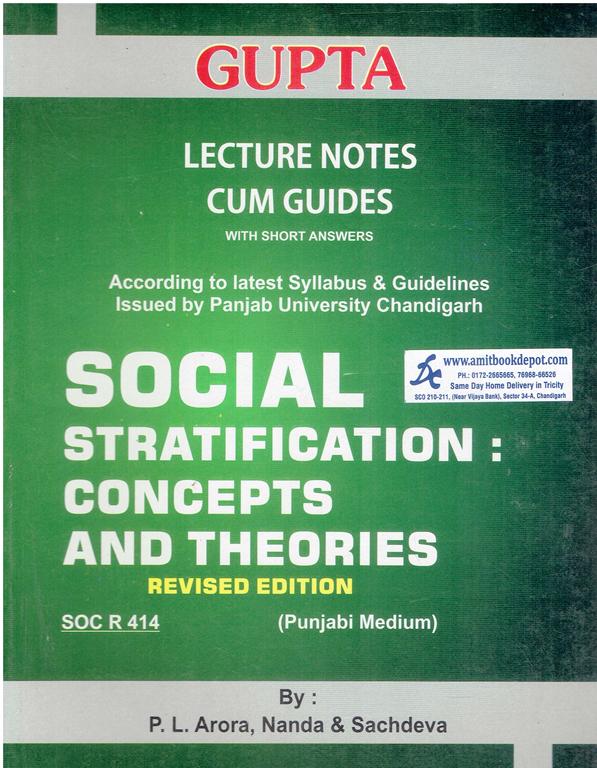
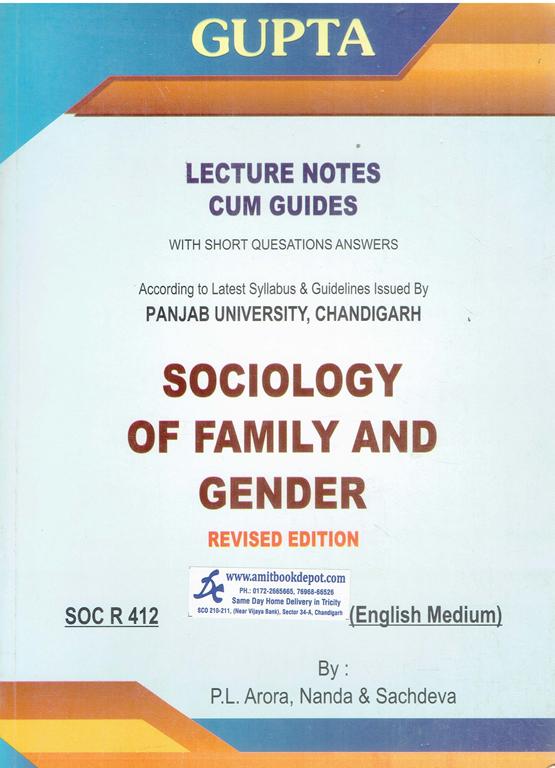
Gupta Social Stratification Concepts and Theories SOC R 414 for MA Sociology 1st Semester Panjab University Chandigarh (Punjabi Medium)
Gupta Social Stratification Concepts and Theories SOC R 414 for MA Sociology 1st Semester Panjab University Chandigarh (Punjabi Medium)
by Madhurima
₹450₹450.00(-/
off)
Rating & Reviews
23 Customer Review
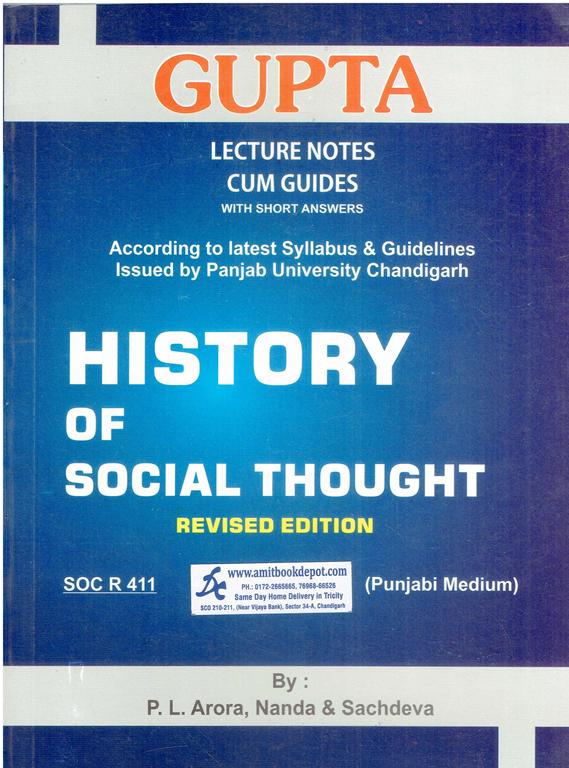
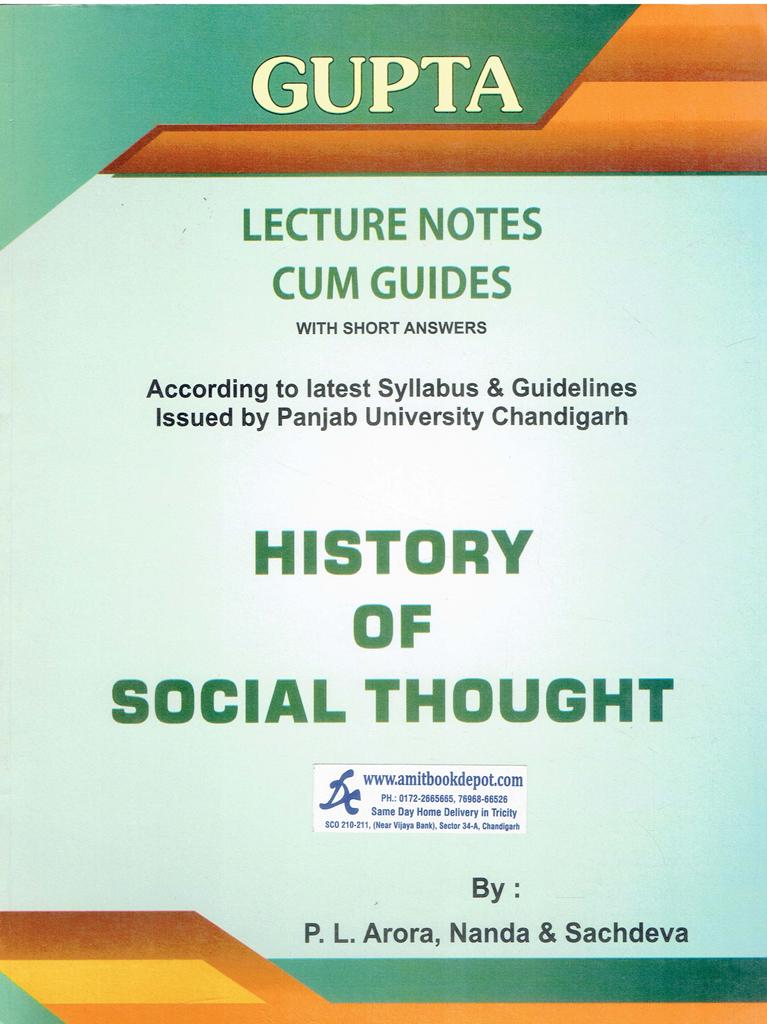
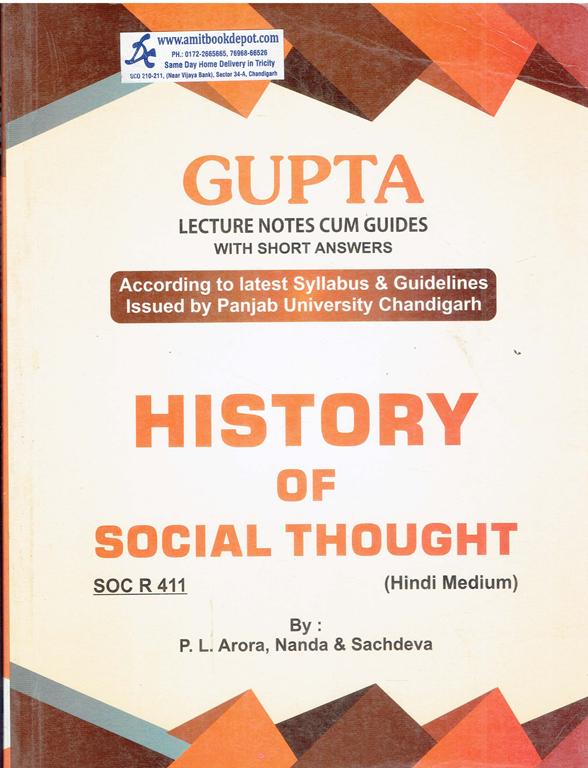
Gupta Social Stratification Concepts and Theories SOC R 414 is the prescribed Punjabi medium book for MA Sociology 1st Semester at Panjab University, Chandigarh. Authored by P. L. Arora, Nanda, and Sachdeva and published by Pepsu Book Depot, it comprehensively covers the latest syllabus. The book provides in-depth analysis of key concepts, theories (functional, conflict, and Weberian), and changing dimensions of caste and class in India. It includes a special section of short answers for questions, making it an indispensable resource for mastering social stratification, inequality, and hierarchy and excelling in university examinations.
Gupta Social Stratification Concepts and Theories SOC R 414 is the prescribed and authoritative book designed explicitly for the MA Sociology 1st Semester program at Panjab University, Chandigarh, following the Punjabi Medium syllabus. Authored by P. L. Arora, Nanda, and Sachdeva, and published by Pepsu Book Depot, this comprehensive volume is an indispensable resource for students navigating the complex landscape of sociological stratification.
This book meticulously aligns with the latest syllabus for paper SOC R 414: Social Stratification: Concepts & Theories. Its primary objective is to sensitize students to the pervasive realities of discrimination, exploitation, inequality, and social hierarchies in everyday life. It provides a robust foundation in essential sociological concepts and delivers in-depth theoretical formulations from seminal thinkers. The content is structured into four coherent units, mirroring the university's course outline, ensuring seamless preparation for both examinations and a nuanced understanding of the subject.
Unit I establishes the conceptual bedrock, delving into the core ideas of social stratification. It clearly distinguishes between differentiation and inequality, explores concepts of ranking and hierarchy, and examines key dimensions of stratification. This unit also provides a concise yet critical introduction to major stratification systems, including caste, class, race, ethnicity, and gender, framing them within the broader discourse of social inequality.
Unit II is dedicated to the pivotal theories of social stratification, offering students a critical lens to analyze societal structures. It presents a balanced examination of the Functional Theory as proposed by Davis and Moore, contrasting it with the Conflict Theory perspectives of Karl Marx and R. Dahrendorf. A significant portion is devoted to Max Weber's Multidimensional Theory, which integrates class, status, and party, providing a more nuanced framework for understanding power and inequality. This unit is crucial for mastering the theoretical component of the Panjab University MA Sociology syllabus.
Moving from classical theory to contemporary reality, Unit III focuses on the changing dimensions of social stratification in modern societies. It analyzes the emergence of the class system, with particular emphasis on the middle class and the new middle class. The unit further explores the key correlates of social class, such as occupation and education, demonstrating how these factors perpetuate and reshape social hierarchies.
Unit IV brings the analysis to the Indian context, offering a deep dive into caste as a system of stratification. It moves beyond classical conceptions to examine change and continuity in the caste system in India. Critical issues like the resurgence of caste in contemporary society—especially in politics and institutions like Khap Panchayats—are addressed. The unit also discusses Affirmative Action policies concerning Scheduled Castes, linking theoretical concepts to pressing social policies and debates.
A distinctive and highly practical feature of this book is the dedicated section containing short answers for questions. This segment is tailored to help students prepare for the compulsory first question in the Panjab University exam paper, which consists of short-answer questions spanning the entire syllabus. This makes it an invaluable tool for targeted revision and exam success.
Published by Pepsu Book Depot, a trusted name in academic publishing for the region, this book is more than just a compilation of notes; it is a structured guide that bridges the gap between complex sociological theories and the specific requirements of the PU Chandigarh MA 1st Semester examination. For any student pursuing an MA in Sociology in the Punjabi medium at Panjab University, this book is an essential companion for building conceptual clarity, achieving academic excellence, and developing a critical understanding of the stratified world around them.
Is this book strictly aligned with the latest syllabus of Panjab University's MA Sociology 1st Semester (Punjabi Medium)?
A1
Yes, this textbook is specifically designed to cover the latest prescribed syllabus for paper SOC R 414 at Panjab University, Chandigarh.
Q2
Which theoretical perspectives of social stratification are covered in detail?
A2
The book provides detailed coverage of the Functional Theory (Davis & Moore), Conflict Theory (Karl Marx & R. Dahrendorf), and the Multidimensional Theory of Max Weber.
Q3
Is the Indian context of social stratification, like caste, adequately covered?
A3
Absolutely. A full unit (Unit IV) is dedicated to the caste system, its changing dimensions, resurgence in politics and Khap Panchayats, and affirmative action for Scheduled Castes.
Q4
Does this book discuss contemporary issues like the New Middle Class?
A4
Yes, Unit III covers the emerging class system, including detailed discussions on the Middle Class and the New Middle Class, as per the syllabus.
Q5
Beyond theory, what key concepts are explained in the initial chapters?
A5
Unit I clearly explains foundational concepts like Social Stratification, Inequality, Differentiation, Ranking, Hierarchy, and dimensions based on Caste, Class, Race, Ethnicity, and Gender.
Q6
Is the content only theoretical, or does it link to real-world examples?
A6
While strong in theory, the book connects concepts to real-world issues, such as the resurgence of caste in Indian society and the emergence of new social classes.
Q7
How many units is the book divided into, and do they match the university's course outline?
A7
The book is divided into four units, which perfectly correspond to the four units outlined in the Panjab University SOC R 414 syllabus.
Q8
Can this book be used as a sole reference for scoring well in the PU MA Sociology exam?
A8
As the prescribed textbook covering the entire syllabus in Punjabi, it is the primary and most crucial reference for thorough preparation and scoring high marks.
Q9
Does the book address the unit on changing dimensions of social stratification?
A9
Yes, Unit III comprehensively covers the changing dimensions of social stratification, including the evolution of class systems and new class formations.
Q10
What is the primary objective of this textbook as stated in the syllabus?
A10
Its objectives are to sensitize students about discrimination and inequality, provide a background of important concepts, and explain theoretical formulations of key thinkers.
0.00
0 Overall Rating
5
0
4
0
3
0
2
0
1
0
Try this product & share your review &
thoughts
UNIT - I
1. Concepts, Differentiation, Inequalities of Social Stratification
2. A Brief Introduction to Caste, Race, Ethnicity and Gender
UNIT - II
3. Functional Theory : Davis and Moore
4. Conflict Theory of Karl Marx and R. Dahrendorff
5. Multi Dimensional Theory of Max Weber
UNIT - III
6. Changing Dimensions of Social Stratification - Emergence of Middle Class System and New Middle Class
7. Correlates of Social Class - Occupation and Education
UNIT - IV
8. Caste Concepts As a System of Stratification
9. Resurgence of Caste in Indian Society
10. Social Stratification of Urban and Rural Society in India
Short Answers for Questions
Latest Syllabus of Social Stratification Concepts and Theories SOC R 414 for MA Sociology 1st Semester Panjab University (PU) Chandigarh (Punjabi Medium)
SOC R 414: SOCIAL STRATIFICATION: CONCEPTS & THEORIES
Objective
1. To sensitize students about elements of discrimination, exploitation, inequality, and the prevalence of hierarchies in everyday life.
2. To give a background of important sociological concepts.
3. To give theoretical formulations of important thinkers like Max Weber, Karl Marx, Talcott Parsons, Davis and Moore, and Ralph Dahrendorf.
4. To sensitize students in terms of understanding contemporary formulations like the emergence of the middle class and changing dimensions of caste and class.
INSTRUCTIONS FOR THE PAPER-SETTER AND THE CANDIDATES
(i) The theory question paper will be of 80 marks, and 20 marks will be for internal assessment. The duration of the paper will be 3 hours.
(ii) For private candidates, who have not been assessed earlier for internal assessment, the marks secured by them in the theory paper will proportionately be increased to the maximum marks of the paper in lieu of internal assessment.
The paper setter must put note (ii) in the question paper.
The syllabus has been divided into four units.
There shall be 9 questions in all. The first question is compulsory and shall be a short answer type containing 10 short questions spread over the whole syllabus to be answered in about 30 to 35 words each, carrying 20 marks, i.e., 2 marks each. The rest of the paper shall contain 4 units. Each unit shall have two long questions and the Candidates shall be given an internal choice of attempting one question from each unit—4 in all. Each question will carry 15 marks.
Course Outline
Unit-I
Concepts
Inequality, Differentiation, Ranking, Hierarchy, and Social Stratification
Dimensions of Social Stratification
Caste, Class, Race, Ethnicity, and Gender
Unit II
Theoretical Formulations:
i) Functional Theory: Parsons, Davis, and Moore;
ii) Conflict Theory: Karl Marx, R. Dahrendorf
iii) Multidimensional Theory: Max Weber
Unit III
Emerging Class System
Class, Middle Class, New Middle Class
Correlates of Social Class: Occupation, Education, and Income
Unit IV
Changing the Caste System
Change and Continuity in Caste in India
Resurgence of Caste (with special reference to Politics and Khap Panchayats)
Affirmative Action with regard to Scheduled Castes.
Gupta Social Stratification Concepts and Theories SOC R 414 is the prescribed and authoritative book designed explicitly for the MA Sociology 1st Semester program at Panjab University, Chandigarh, following the Punjabi Medium syllabus. Authored by P. L. Arora, Nanda, and Sachdeva, and published by Pepsu Book Depot, this comprehensive volume is an indispensable resource for students navigating the complex landscape of sociological stratification.
This book meticulously aligns with the latest syllabus for paper SOC R 414: Social Stratification: Concepts & Theories. Its primary objective is to sensitize students to the pervasive realities of discrimination, exploitation, inequality, and social hierarchies in everyday life. It provides a robust foundation in essential sociological concepts and delivers in-depth theoretical formulations from seminal thinkers. The content is structured into four coherent units, mirroring the university's course outline, ensuring seamless preparation for both examinations and a nuanced understanding of the subject.
Unit I establishes the conceptual bedrock, delving into the core ideas of social stratification. It clearly distinguishes between differentiation and inequality, explores concepts of ranking and hierarchy, and examines key dimensions of stratification. This unit also provides a concise yet critical introduction to major stratification systems, including caste, class, race, ethnicity, and gender, framing them within the broader discourse of social inequality.
Unit II is dedicated to the pivotal theories of social stratification, offering students a critical lens to analyze societal structures. It presents a balanced examination of the Functional Theory as proposed by Davis and Moore, contrasting it with the Conflict Theory perspectives of Karl Marx and R. Dahrendorf. A significant portion is devoted to Max Weber's Multidimensional Theory, which integrates class, status, and party, providing a more nuanced framework for understanding power and inequality. This unit is crucial for mastering the theoretical component of the Panjab University MA Sociology syllabus.
Moving from classical theory to contemporary reality, Unit III focuses on the changing dimensions of social stratification in modern societies. It analyzes the emergence of the class system, with particular emphasis on the middle class and the new middle class. The unit further explores the key correlates of social class, such as occupation and education, demonstrating how these factors perpetuate and reshape social hierarchies.
Unit IV brings the analysis to the Indian context, offering a deep dive into caste as a system of stratification. It moves beyond classical conceptions to examine change and continuity in the caste system in India. Critical issues like the resurgence of caste in contemporary society—especially in politics and institutions like Khap Panchayats—are addressed. The unit also discusses Affirmative Action policies concerning Scheduled Castes, linking theoretical concepts to pressing social policies and debates.
A distinctive and highly practical feature of this book is the dedicated section containing short answers for questions. This segment is tailored to help students prepare for the compulsory first question in the Panjab University exam paper, which consists of short-answer questions spanning the entire syllabus. This makes it an invaluable tool for targeted revision and exam success.
Published by Pepsu Book Depot, a trusted name in academic publishing for the region, this book is more than just a compilation of notes; it is a structured guide that bridges the gap between complex sociological theories and the specific requirements of the PU Chandigarh MA 1st Semester examination. For any student pursuing an MA in Sociology in the Punjabi medium at Panjab University, this book is an essential companion for building conceptual clarity, achieving academic excellence, and developing a critical understanding of the stratified world around them.
UNIT - I
1. Concepts, Differentiation, Inequalities of Social Stratification
2. A Brief Introduction to Caste, Race, Ethnicity and Gender
UNIT - II
3. Functional Theory : Davis and Moore
4. Conflict Theory of Karl Marx and R. Dahrendorff
5. Multi Dimensional Theory of Max Weber
UNIT - III
6. Changing Dimensions of Social Stratification - Emergence of Middle Class System and New Middle Class
7. Correlates of Social Class - Occupation and Education
UNIT - IV
8. Caste Concepts As a System of Stratification
9. Resurgence of Caste in Indian Society
10. Social Stratification of Urban and Rural Society in India
Is this book strictly aligned with the latest syllabus of Panjab University's MA Sociology 1st Semester (Punjabi Medium)?
A1
Yes, this textbook is specifically designed to cover the latest prescribed syllabus for paper SOC R 414 at Panjab University, Chandigarh.
Q2
Which theoretical perspectives of social stratification are covered in detail?
A2
The book provides detailed coverage of the Functional Theory (Davis & Moore), Conflict Theory (Karl Marx & R. Dahrendorf), and the Multidimensional Theory of Max Weber.
Q3
Is the Indian context of social stratification, like caste, adequately covered?
A3
Absolutely. A full unit (Unit IV) is dedicated to the caste system, its changing dimensions, resurgence in politics and Khap Panchayats, and affirmative action for Scheduled Castes.
Q4
Does this book discuss contemporary issues like the New Middle Class?
A4
Yes, Unit III covers the emerging class system, including detailed discussions on the Middle Class and the New Middle Class, as per the syllabus.
Q5
Beyond theory, what key concepts are explained in the initial chapters?
A5
Unit I clearly explains foundational concepts like Social Stratification, Inequality, Differentiation, Ranking, Hierarchy, and dimensions based on Caste, Class, Race, Ethnicity, and Gender.
Q6
Is the content only theoretical, or does it link to real-world examples?
A6
While strong in theory, the book connects concepts to real-world issues, such as the resurgence of caste in Indian society and the emergence of new social classes.
Q7
How many units is the book divided into, and do they match the university's course outline?
A7
The book is divided into four units, which perfectly correspond to the four units outlined in the Panjab University SOC R 414 syllabus.
Q8
Can this book be used as a sole reference for scoring well in the PU MA Sociology exam?
A8
As the prescribed textbook covering the entire syllabus in Punjabi, it is the primary and most crucial reference for thorough preparation and scoring high marks.
Q9
Does the book address the unit on changing dimensions of social stratification?
A9
Yes, Unit III comprehensively covers the changing dimensions of social stratification, including the evolution of class systems and new class formations.
Q10
What is the primary objective of this textbook as stated in the syllabus?
A10
Its objectives are to sensitize students about discrimination and inequality, provide a background of important concepts, and explain theoretical formulations of key thinkers.
Latest Syllabus of Social Stratification Concepts and Theories SOC R 414 for MA Sociology 1st Semester Panjab University (PU) Chandigarh (Punjabi Medium)
SOC R 414: SOCIAL STRATIFICATION: CONCEPTS & THEORIES
Objective
1. To sensitize students about elements of discrimination, exploitation, inequality, and the prevalence of hierarchies in everyday life.
2. To give a background of important sociological concepts.
3. To give theoretical formulations of important thinkers like Max Weber, Karl Marx, Talcott Parsons, Davis and Moore, and Ralph Dahrendorf.
4. To sensitize students in terms of understanding contemporary formulations like the emergence of the middle class and changing dimensions of caste and class.
INSTRUCTIONS FOR THE PAPER-SETTER AND THE CANDIDATES
(i) The theory question paper will be of 80 marks, and 20 marks will be for internal assessment. The duration of the paper will be 3 hours.
(ii) For private candidates, who have not been assessed earlier for internal assessment, the marks secured by them in the theory paper will proportionately be increased to the maximum marks of the paper in lieu of internal assessment.
The paper setter must put note (ii) in the question paper.
The syllabus has been divided into four units.
There shall be 9 questions in all. The first question is compulsory and shall be a short answer type containing 10 short questions spread over the whole syllabus to be answered in about 30 to 35 words each, carrying 20 marks, i.e., 2 marks each. The rest of the paper shall contain 4 units. Each unit shall have two long questions and the Candidates shall be given an internal choice of attempting one question from each unit—4 in all. Each question will carry 15 marks.
Course Outline
Unit-I
Concepts
Inequality, Differentiation, Ranking, Hierarchy, and Social Stratification
Dimensions of Social Stratification
Caste, Class, Race, Ethnicity, and Gender
Unit II
Theoretical Formulations:
i) Functional Theory: Parsons, Davis, and Moore;
ii) Conflict Theory: Karl Marx, R. Dahrendorf
iii) Multidimensional Theory: Max Weber
Unit III
Emerging Class System
Class, Middle Class, New Middle Class
Correlates of Social Class: Occupation, Education, and Income
Unit IV
Changing the Caste System
Change and Continuity in Caste in India
Resurgence of Caste (with special reference to Politics and Khap Panchayats)
Affirmative Action with regard to Scheduled Castes.
0.00
0 Overall Rating
5
0
4
0
3
0
2
0
1
0
Try this product & share your review &
thoughts
Top Trending Product
Related
Product
Related Product
Related Blog Posts
Latest Blogs
Latest Blogs
Classic Literature Reimagined: Discuss modern twists on classic novels.
Lorem ipsum dolor sit amet, consectetur adipiscing elit, sed
do
eiusmod tempor incididunt ut labore et dolore magna aliqua. Ut enim ad minim
veniam, quis nostrud exercitation ullamco Lorem ipsum dolor sit amet,
consectetur adipiscing elit, sed do eiusmod tempor incididunt ut labore et
dolore magna aliqua. Utenim ad minim veniam, quis nostrud exercitation
ullamco
Lorem ipsum dolor sit amet, consecte...
Classic Literature Reimagined: Discuss modern twists on classic novels.
Lorem ipsum dolor sit amet, consectetur adipiscing elit, sed
do
eiusmod tempor incididunt ut labore et dolore magna aliqua. Ut enim ad minim
veniam, quis nostrud exercitation ullamco Lorem ipsum dolor sit amet,
consectetur adipiscing elit, sed do eiusmod tempor incididunt ut labore et
dolore magna aliqua. Utenim ad minim veniam, quis nostrud exercitation
ullamco
Lorem ipsum dolor sit amet, consecte...
Classic Literature Reimagined: Discuss modern twists on classic novels.
Lorem ipsum dolor sit amet, consectetur adipiscing elit, sed
do
eiusmod tempor incididunt ut labore et dolore magna aliqua. Ut enim ad minim
veniam, quis nostrud exercitation ullamco Lorem ipsum dolor sit amet,
consectetur adipiscing elit, sed do eiusmod tempor incididunt ut labore et
dolore magna aliqua. Utenim ad minim veniam, quis nostrud exercitation
ullamco
Lorem ipsum dolor sit amet, consecte...