-
Mon-Fri: 10AM to 8PM 01722665665
-
My Account
-
-
0
Total :
₹ 0.00

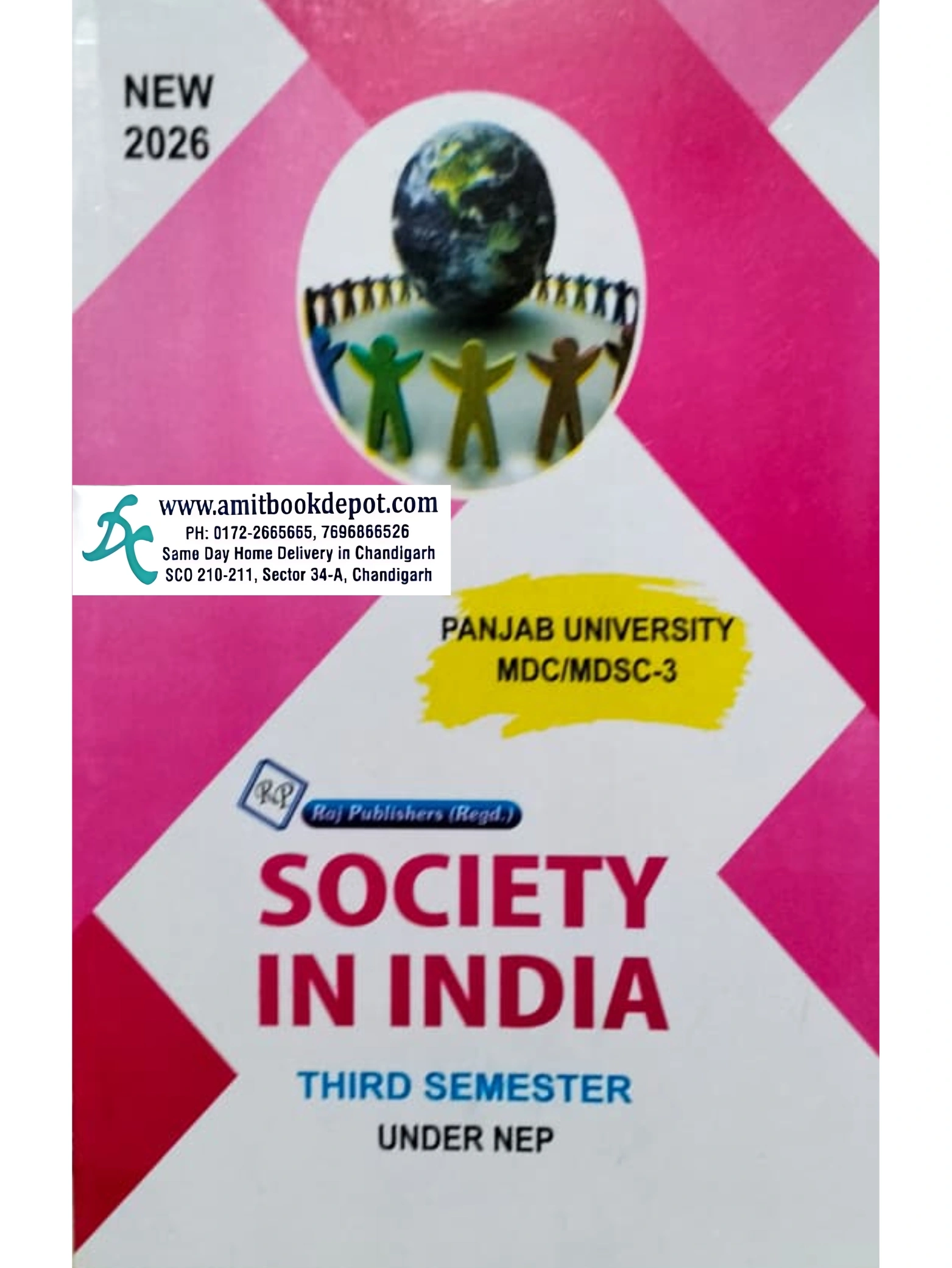
Yes, this book, "RAJ SOCIETY IN INDIA," is meticulously crafted to align 100% with the prescribed syllabus for the "Society in India" paper (MDC/MDSC-3) for BA 3rd Semester at Panjab University, Chandigarh.
Absolutely. The book is divided into three dedicated units that comprehensively cover all the topics specified in the PU syllabus for each unit.
The content is structured to help you answer both the short-answer questions (from the entire syllabus) and the long-essay type questions (from each unit) effectively, mirroring the exam's format.
Yes, Dr. Mona Arora has presented complex topics like Purusharthas, Samskaras, Varna, and Ashrama in a student-friendly and accessible language without compromising on academic depth.
Yes, Unit III specifically covers the features as well as the changes occurring in Tribal, Rural, and Urban societies, as required by the syllabus.
The book covers the foundational and classical concepts as mandated by the PU syllabus. For the most recent statistical data, students may be advised to supplement with current reports and journals.
As per the course objective stated in the syllabus, the book aims to provide knowledge that helps students understand social problems at a ground level and look for viable solutions, linking theory to real-world issues.
The content is perfectly pitched at Level 100, as specified in the syllabus, making it entirely appropriate and accessible for undergraduate BA students.
While it is specifically designed for PU, the core topics on Indian society, social organization, and societal types are universal and could be a helpful reference for students of Sociology elsewhere.
While the primary focus is on delivering syllabus-specific content, the way the material is organized inherently aids in answering the types of questions asked in PU exams. For model papers, it is best to check the publisher's other companion products.
No Description Added
Yes, this book, "RAJ SOCIETY IN INDIA," is meticulously crafted to align 100% with the prescribed syllabus for the "Society in India" paper (MDC/MDSC-3) for BA 3rd Semester at Panjab University, Chandigarh.
Absolutely. The book is divided into three dedicated units that comprehensively cover all the topics specified in the PU syllabus for each unit.
The content is structured to help you answer both the short-answer questions (from the entire syllabus) and the long-essay type questions (from each unit) effectively, mirroring the exam's format.
Yes, Dr. Mona Arora has presented complex topics like Purusharthas, Samskaras, Varna, and Ashrama in a student-friendly and accessible language without compromising on academic depth.
Yes, Unit III specifically covers the features as well as the changes occurring in Tribal, Rural, and Urban societies, as required by the syllabus.
The book covers the foundational and classical concepts as mandated by the PU syllabus. For the most recent statistical data, students may be advised to supplement with current reports and journals.
As per the course objective stated in the syllabus, the book aims to provide knowledge that helps students understand social problems at a ground level and look for viable solutions, linking theory to real-world issues.
The content is perfectly pitched at Level 100, as specified in the syllabus, making it entirely appropriate and accessible for undergraduate BA students.
While it is specifically designed for PU, the core topics on Indian society, social organization, and societal types are universal and could be a helpful reference for students of Sociology elsewhere.
While the primary focus is on delivering syllabus-specific content, the way the material is organized inherently aids in answering the types of questions asked in PU exams. For model papers, it is best to check the publisher's other companion products.