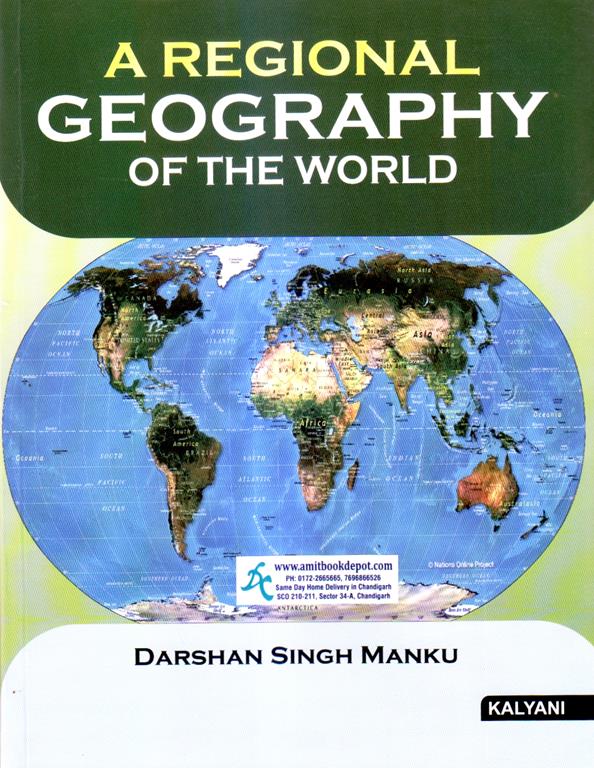
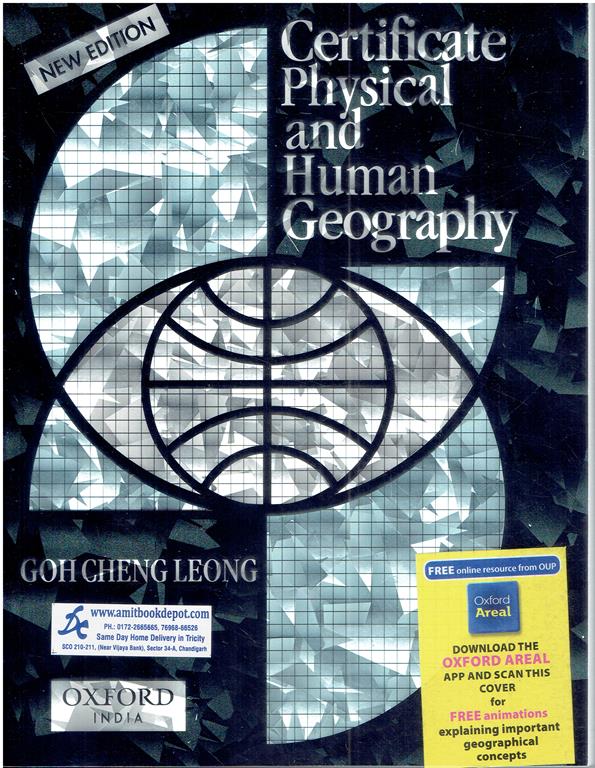
Ten regions including Anglo-America, Latin America, Europe, Former U.S.S.R., East Asia, South East Asia, South Asia, Middle East & North Africa, and Africa South of the Sahara.
Yes, it provides separate lists of maps, diagrams, and tables to illustrate relief, drainage, climate, mineral deposits, and urban patterns across regions.
Absolutely. Its regional approach, economic geography data, and geopolitical analysis directly support UPSC, state PCS, and NET/JRF syllabus requirements.
It analyzes Himalayan foreland, Indo-Gangetic Plain, monsoonal agriculture, river systems, and India’s industrial corridors in depth.
Yes, the chapter on Former U.S.S.R. examines its taiga biome, Siberian resources, transport networks, and post-Soviet regional fragmentation.
Yes, many tables offer comparative data on rice, wheat, maize, cotton, and livestock farming across Anglo-America, Europe, and Asia.
Yes, a detailed bibliography at the end lists academic sources for research papers, term projects, and advanced regional studies.
It covers tropical resource extraction, plantation agriculture (coffee, sugar), economic dualism, and Amazon basin development challenges.
Each chapter discusses population distribution, density, migration patterns, and demographic transition specific to that world region.
Yes, one chapter details Australia’s arid interior, sheep stations, Great Dividing Range, and New Zealand’s geothermal and pastoral landscapes.
No Description Added
Ten regions including Anglo-America, Latin America, Europe, Former U.S.S.R., East Asia, South East Asia, South Asia, Middle East & North Africa, and Africa South of the Sahara.
Yes, it provides separate lists of maps, diagrams, and tables to illustrate relief, drainage, climate, mineral deposits, and urban patterns across regions.
Absolutely. Its regional approach, economic geography data, and geopolitical analysis directly support UPSC, state PCS, and NET/JRF syllabus requirements.
It analyzes Himalayan foreland, Indo-Gangetic Plain, monsoonal agriculture, river systems, and India’s industrial corridors in depth.
Yes, the chapter on Former U.S.S.R. examines its taiga biome, Siberian resources, transport networks, and post-Soviet regional fragmentation.
Yes, many tables offer comparative data on rice, wheat, maize, cotton, and livestock farming across Anglo-America, Europe, and Asia.
Yes, a detailed bibliography at the end lists academic sources for research papers, term projects, and advanced regional studies.
It covers tropical resource extraction, plantation agriculture (coffee, sugar), economic dualism, and Amazon basin development challenges.
Each chapter discusses population distribution, density, migration patterns, and demographic transition specific to that world region.
Yes, one chapter details Australia’s arid interior, sheep stations, Great Dividing Range, and New Zealand’s geothermal and pastoral landscapes.