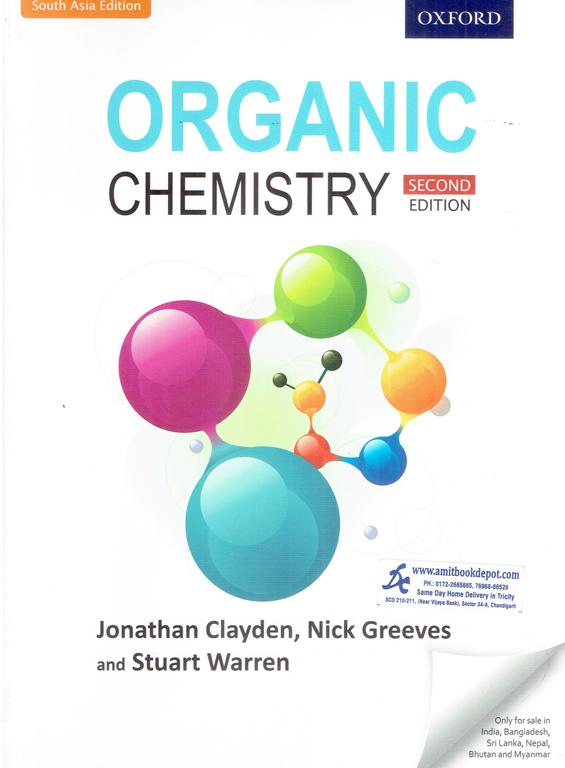
Oxford Organic Chemistry, 2nd Edition by Clayden, Greeves, and Warren (Oxford University Press) is the authoritative guide to modern organic chemistry. Covering reaction mechanisms, stereochemistry, spectroscopy, and retrosynthetic analysis, this book integrates foundational concepts with advanced topics including pericyclic reactions, organometallic chemistry, and asymmetric synthesis. Ideal for undergraduates and graduates, the book emphasises nucleophilic substitution, enolate chemistry, and carbon-carbon bond formation through clear explanations and updated examples. From aromatic heterocycles to the organic chemistry of life, this second edition provides the rigors, accessible resource needed for course success and research preparation.
It explains mechanism, regiochemistry, and stereochemistry of additions using hydride, carbon, and oxygen nucleophiles, with detailed examples and transition state illustrations.
Yes. Chapter 15 details nucleophilic substitution at saturated carbon, including kinetics, stereochemical outcomes, carbocation stability, and solvent effects on both mechanisms.
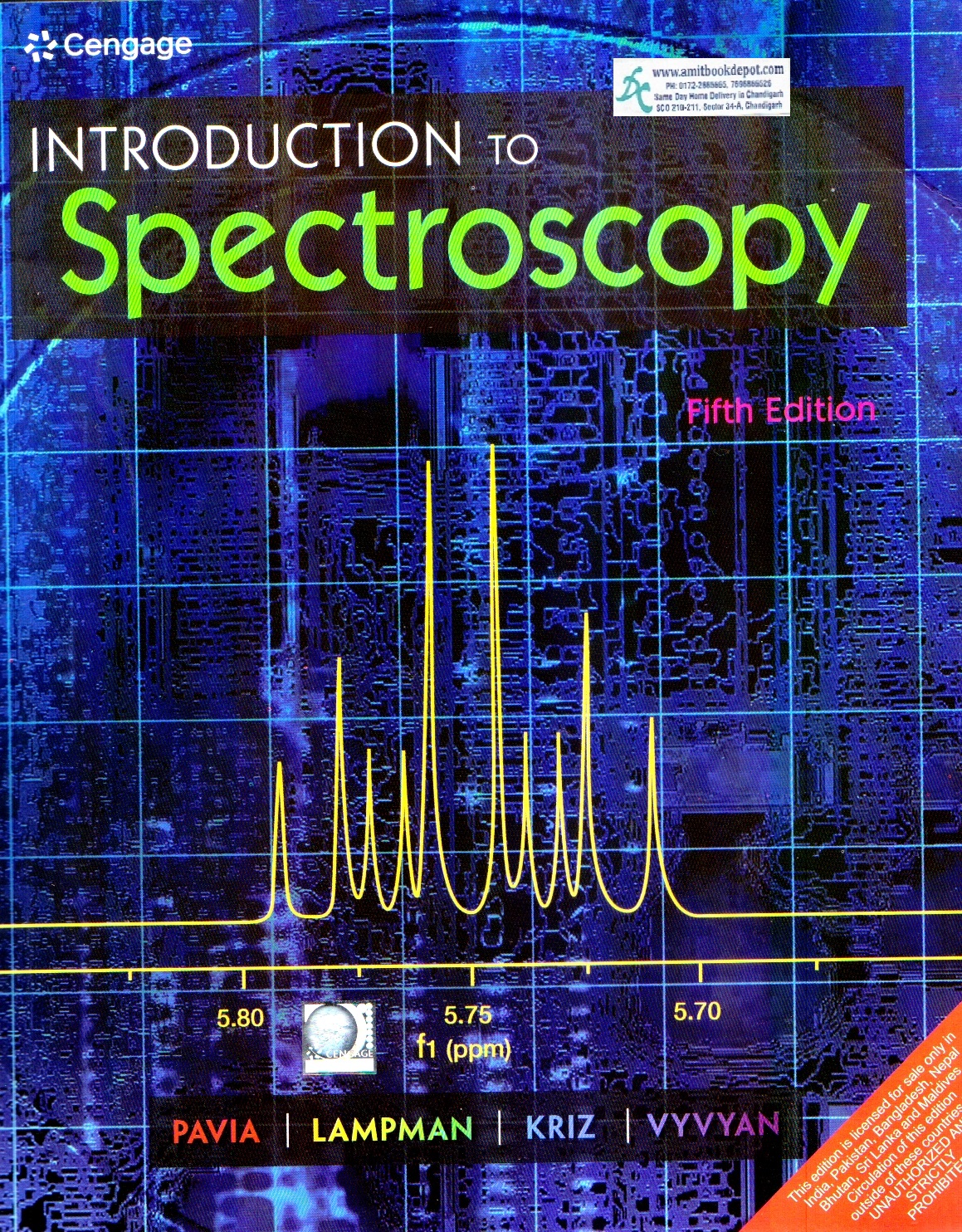
Dedicated chapters on 1H NMR and a full review of IR, UV-Vis, mass spectrometry, and 13C NMR help students correlate spectra with organic structures.
Chapter 28 provides step-by-step strategies for disconnecting target molecules, recognizing synthons, and planning multi-step syntheses with real-world examples.
Yes, Chapter 41 explains chiral auxiliaries, catalytic asymmetric methods (hydrogenation, epoxidation), and enantioselective enolate alkylation for stereocontrol.
Yes, three chapters cover aromatic heterocycles (reactions and synthesis) plus saturated heterocycles, emphasizing stereoelectronics and medicinal chemistry relevance.
Chapter 9 introduces organolithium and Grignard reagents for C–C bonds; Chapter 40 expands to transition metals in cross-coupling and catalysis.
Chapter 39 presents kinetic isotope effects, Hammett plots, activation parameters, and trapping experiments as tools to distinguish mechanistic pathways.
Chapter 14 introduces fundamentals (chirality, R/S, diastereomers), while later chapters apply these to cyclic molecules, diastereoselective reactions, and synthesis.
Chapter 37 explains radical initiation, propagation, termination, and applications including halogenation, cyclizations, and Barton decarboxylation.
It explains mechanism, regiochemistry, and stereochemistry of additions using hydride, carbon, and oxygen nucleophiles, with detailed examples and transition state illustrations.
Yes. Chapter 15 details nucleophilic substitution at saturated carbon, including kinetics, stereochemical outcomes, carbocation stability, and solvent effects on both mechanisms.
Dedicated chapters on 1H NMR and a full review of IR, UV-Vis, mass spectrometry, and 13C NMR help students correlate spectra with organic structures.
Chapter 28 provides step-by-step strategies for disconnecting target molecules, recognizing synthons, and planning multi-step syntheses with real-world examples.
Yes, Chapter 41 explains chiral auxiliaries, catalytic asymmetric methods (hydrogenation, epoxidation), and enantioselective enolate alkylation for stereocontrol.
Yes, three chapters cover aromatic heterocycles (reactions and synthesis) plus saturated heterocycles, emphasizing stereoelectronics and medicinal chemistry relevance.
Chapter 9 introduces organolithium and Grignard reagents for C–C bonds; Chapter 40 expands to transition metals in cross-coupling and catalysis.
Chapter 39 presents kinetic isotope effects, Hammett plots, activation parameters, and trapping experiments as tools to distinguish mechanistic pathways.
Chapter 14 introduces fundamentals (chirality, R/S, diastereomers), while later chapters apply these to cyclic molecules, diastereoselective reactions, and synthesis.
Chapter 37 explains radical initiation, propagation, termination, and applications including halogenation, cyclizations, and Barton decarboxylation.