-
Mon-Fri: 10AM to 8PM 01722665665
-
My Account
-
-
0
Total :
₹ 0.00

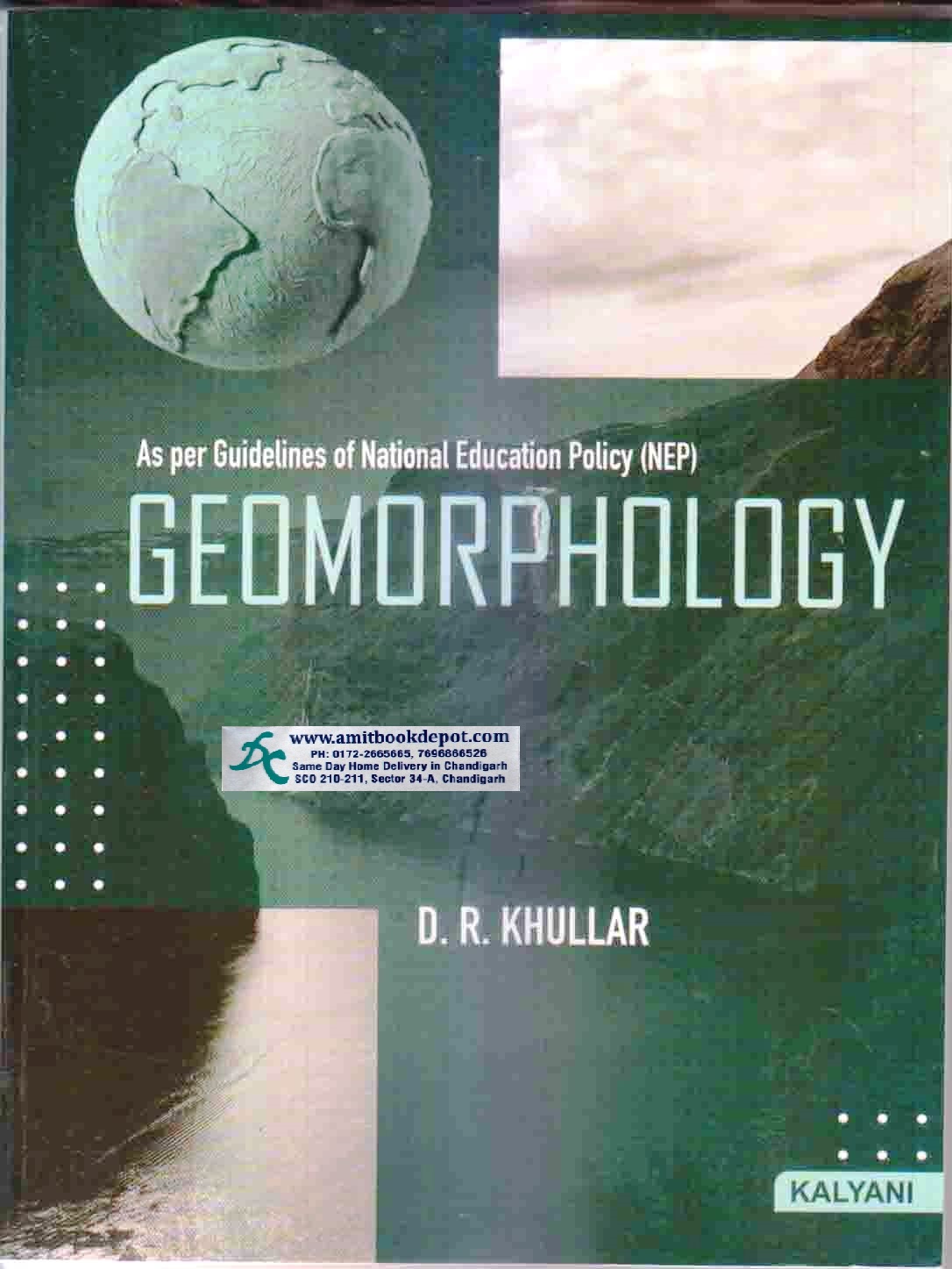

Yes, this book is specifically written and updated to match the prescribed syllabus for course code HSS-GEO-DSC2-201.
Yes, the Theory of Isostasy is covered in detail in Unit I (Foundations to Geomorphology) as per the syllabus requirements.
Absolutely. The book contains numerous diagrams, maps, and illustrations to aid in the visual understanding of geomorphic processes and landforms.
Yes, the content is structured to build from foundational concepts to more complex topics, making it accessible for beginners.
Yes, Unit II (Endogenic Processes) includes a section on the mechanisms, types, and global distribution of both volcanoes and earthquakes.
Yes, the book is divided into four clear units that directly correspond to the university's syllabus, allowing for structured and unit-wise preparation.
The language is clear, concise, and tailored for undergraduate students, making complex topics easier to understand.
This edition is published to meet the current university syllabus and includes established and fundamental principles of geomorphology that are essential for the course.
As a book tailored for an Indian university, it often incorporates relevant examples, including those from the Indian subcontinent, where applicable.
Yes, Unit II provides a detailed distinction between epeirogenic and orogenic forces and the landforms associated with each.
No Description Added
Yes, this book is specifically written and updated to match the prescribed syllabus for course code HSS-GEO-DSC2-201.
Yes, the Theory of Isostasy is covered in detail in Unit I (Foundations to Geomorphology) as per the syllabus requirements.
Absolutely. The book contains numerous diagrams, maps, and illustrations to aid in the visual understanding of geomorphic processes and landforms.
Yes, the content is structured to build from foundational concepts to more complex topics, making it accessible for beginners.
Yes, Unit II (Endogenic Processes) includes a section on the mechanisms, types, and global distribution of both volcanoes and earthquakes.
Yes, the book is divided into four clear units that directly correspond to the university's syllabus, allowing for structured and unit-wise preparation.
The language is clear, concise, and tailored for undergraduate students, making complex topics easier to understand.
This edition is published to meet the current university syllabus and includes established and fundamental principles of geomorphology that are essential for the course.
As a book tailored for an Indian university, it often incorporates relevant examples, including those from the Indian subcontinent, where applicable.
Yes, Unit II provides a detailed distinction between epeirogenic and orogenic forces and the landforms associated with each.