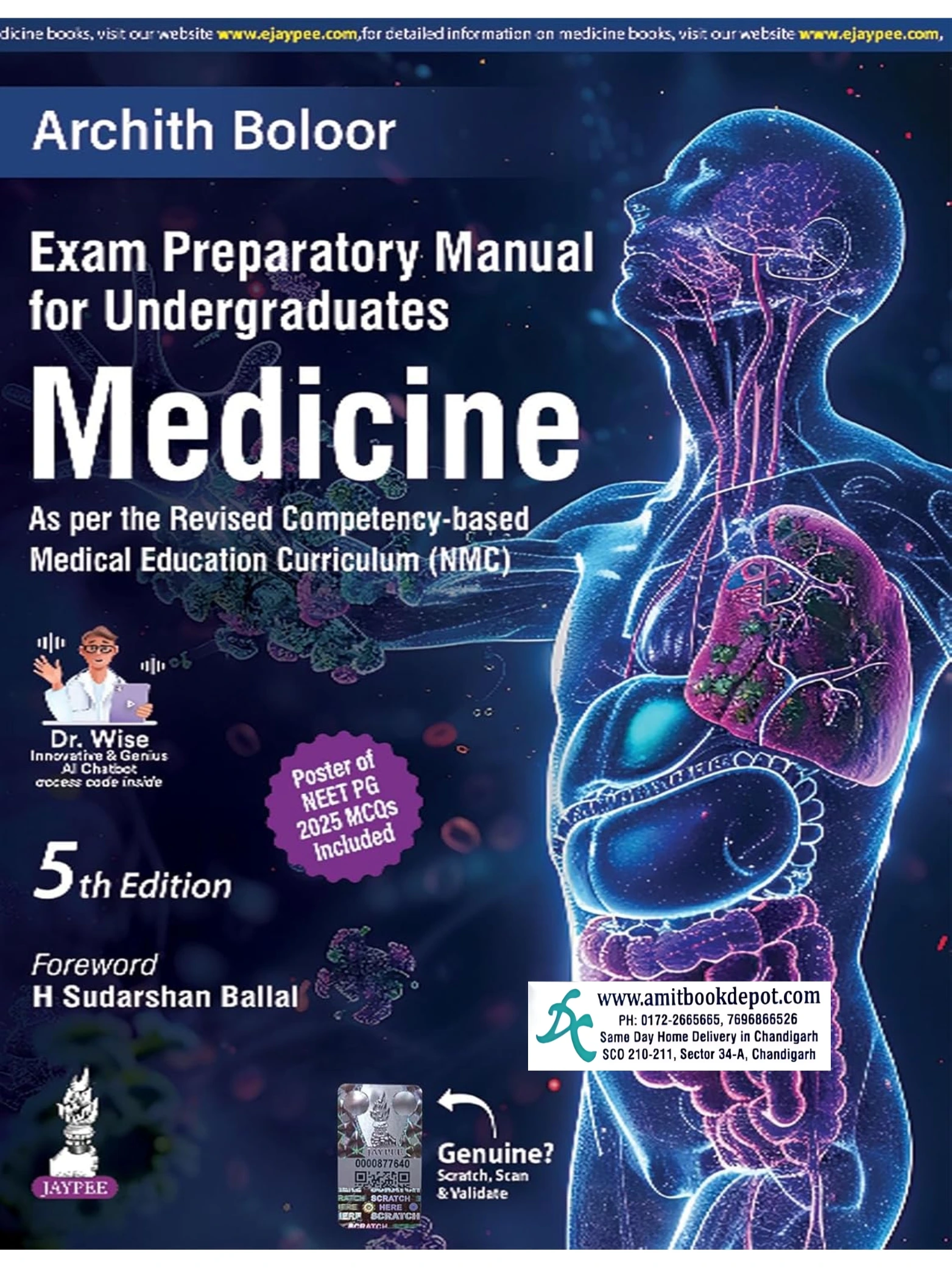
Yes, it is specifically designed as a concise revision manual, presenting high-yield topics in a point-wise format for quick recall before exams.
Absolutely. A dedicated chapter on AETCOM (Attitude, Ethics and Communication) has been added to align with the latest competency-based curriculum.
The cardiology chapter covers key conditions like heart failure, ischemic heart disease, arrhythmias, and valvular heart diseases with diagnostic and management points.
Yes, the Diabetes Mellitus chapter has been updated to reflect the latest diagnostic criteria, oral hypoglycemic agents, and insulin therapy protocols.
Yes, a comprehensive section on Infectious Diseases covers everything from common bacterial infections to tuberculosis and tropical illnesses.
Neurology is organized by common presentations like stroke, meningitis, and epilepsy, using tables and bullet points to simplify complex neurological concepts.
Yes, it includes a dedicated chapter on Fluid, Electrolyte and Acid-Base Disorders, explaining imbalances and their corrective measures in a clear, step-wise manner.
It covers anemias, leukemias, bleeding disorders, and transfusions, focusing on pathogenesis, peripheral smear findings, and management strategies.
Yes, the Toxicology and Envenomation chapter provides practical, life-saving information on managing common poisons, snake bites, and scorpion stings.
Yes, it includes focused chapters on Psychiatry and Dermatology, covering common conditions a physician should recognize and manage.
No Description Added
Yes, it is specifically designed as a concise revision manual, presenting high-yield topics in a point-wise format for quick recall before exams.
Absolutely. A dedicated chapter on AETCOM (Attitude, Ethics and Communication) has been added to align with the latest competency-based curriculum.
The cardiology chapter covers key conditions like heart failure, ischemic heart disease, arrhythmias, and valvular heart diseases with diagnostic and management points.
Yes, the Diabetes Mellitus chapter has been updated to reflect the latest diagnostic criteria, oral hypoglycemic agents, and insulin therapy protocols.
Yes, a comprehensive section on Infectious Diseases covers everything from common bacterial infections to tuberculosis and tropical illnesses.
Neurology is organized by common presentations like stroke, meningitis, and epilepsy, using tables and bullet points to simplify complex neurological concepts.
Yes, it includes a dedicated chapter on Fluid, Electrolyte and Acid-Base Disorders, explaining imbalances and their corrective measures in a clear, step-wise manner.
It covers anemias, leukemias, bleeding disorders, and transfusions, focusing on pathogenesis, peripheral smear findings, and management strategies.
Yes, the Toxicology and Envenomation chapter provides practical, life-saving information on managing common poisons, snake bites, and scorpion stings.
Yes, it includes focused chapters on Psychiatry and Dermatology, covering common conditions a physician should recognize and manage.