Categories
College Bookssss >
BA PU Chandigarh
BSC PU Chandigarh
MSC PU Chandigarh
BBA PU Chandigarh
MA PU Chandigarh
Medical Books
Engineering Books
Management Books
PGDCA Books
BCOM PU Chandigarh
MCOM PU Chandigarh
BCA PU Chandigarh
MCA PU Chandigarh
animate-books

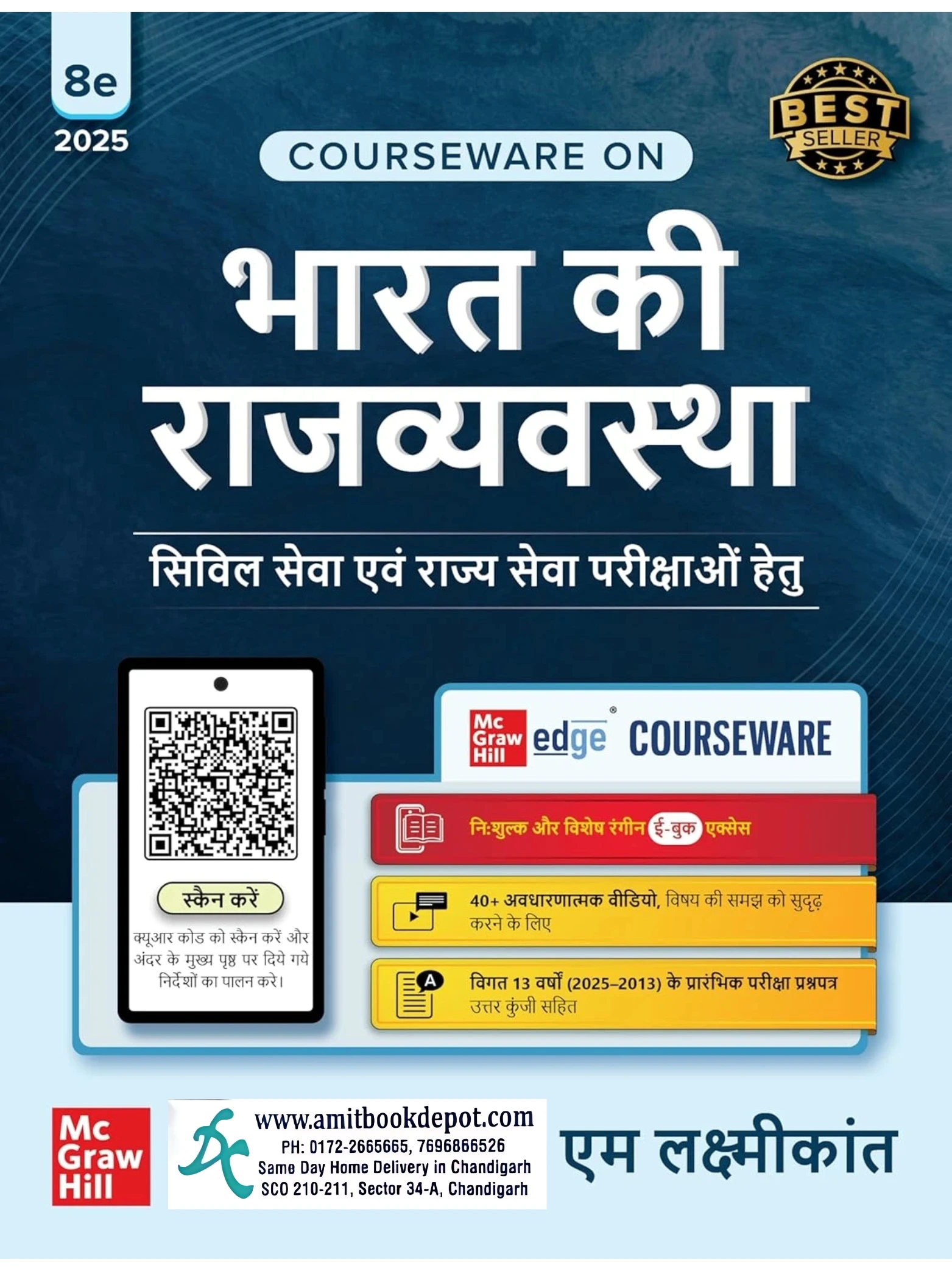
McGraw Indian Polity for Civil Services Exam (Hindi Medium)

by Madhurima
₹1075 ₹1,075.00(-/ off)

Rating & Reviews

23 Customer Review

McGraw Hill's 'Bharat Ki Rajvyavastha' by M. Laxmikanth is the most trusted and comprehensive book on Indian polity for the UPSC Civil Services and State PCS exams. This revised edition includes 95 chapters, previous years' questions, and exclusive access to the McGraw Hill Edge platform, featuring 40+ conceptual videos, an eBook, and online practice tests to provide a winning edge for aspirants.
Have Doubts Regarding This Product ? Ask Your Question

  • Q1
    Who appoints the Chief Election Commissioner of India?
    A1

    The President of India appoints the Chief Election Commissioner.

  • Q2
    The term 'Federal' first appears in which Constitutional Amendment Act?
    A2

    The term 'Federal' was introduced by the Constitution (Forty-Second Amendment) Act, 1976.

  • Q3
    How are the Fundamental Duties incorporated into the Indian Constitution?
    A3

    They were added by the 42nd Amendment Act of 1976 based on the recommendations of the Swaran Singh Committee .

  • Q4
    Under which article does the Constitution grant the right to Constitutional Remedies?
    A4

    Article 32 grants the right to Constitutional Remedies, allowing citizens to approach the Supreme Court for enforcement of Fundamental Rights .

  • Q5
    What is the term of a member of the State Public Service Commission?
    A5

    A member serves for a term of six years or until they attain the age of 62 years.

  • Q6
    Who can initiate the impeachment of the President of India?
    A6

    The impeachment can be initiated by either House of Parliament.

  • Q7
    Where is the concept of 'Public Interest Litigation' (PIL) discussed in this book?
    A7

    It is discussed in Part III, Chapter 29: Public Interest Litigation .

  • Q8
    Under which constitutional body does the Goods and Services Tax Council come?
    A8

    It is a constitutional body established under Article 279A of the Constitution .

  • Q9
    Which Chapter in the book covers the process of Electoral Reforms?
    A9

    Electoral Reforms are covered in Part X, Chapter 83 of the book .

  • Q10
    What is the basic objective of the National Commission to Review the Working of the Constitution?
    A10

    Its objective was to examine the working of the Constitution and suggest necessary changes to strengthen its institutions and provisions .


0.00

0 Overall Rating
  • 5
    0
  • 4
    0
  • 3
    0
  • 2
    0
  • 1
    0

Try this product & share your review & thoughts

PART I. CONSTITUTION AL FRAMEWORK
1. Historical Background
2. Making of the Constitution
3. Concept of the Constitution
4. Salient Features of the Constitution
5. Preamble of the Constitution
6. The Union and its Territory
7. Citizenship
8. Fundamental Rights
9. Directive Principles of State Policy
10. Fundamental Duties
11. Amendment of the Constitution
12. Basic Structure of the Constitution

PART II. SYSTEM OF GOVERNMENT
13. Parliamentary System
14. Federal System
15. Centre-State Relations
16. Inter-State Relations
17. Emergency

PART - III. CENTRAL GOVERNMENT
18. President
19. Vice-President
20. Prime Minister
21. Central Council of Ministers
22. Cabinet Committees
23. Parliament
24. Parliamentary Committees
25. Indian Parliamentary Group
26. Supreme Court
27. Judicial Review
28. Judicial Activism
29. Public Interest Litigation

PART IV. STATE GOVERNMENT
30. Governor
31. Chief Minister
32. State Council of Ministers
33. State Legislature
34. High Court
35. Subordinate Courts
36. Tribunate
37. Consumer Commissions
38. Lok Adalats and Other Courts

PART V. LOCAL GOVERNMENT
39. Panchayati Raj
40. Municipalities

PART VI. UNION TERRITORIES AND SPECIAL AREAS
41. Union Territories
42. Scheduled and Tribal Areas

PART VII. CONSTITUTIONAL BODIES
43. Election Commission
44. Union Public Service Commission
45. State Public Service Commission
46. Finance Commission
47. Goods and Services Tax Council
48. National Commission for SCs
49. National Commission for STs
50. National Commission for BCs
51. Special Officer for Linguistic Minorities
52. Comptroller and Auditor General of India
53. Attorney General of India
54. Advocate General of the State
55. Constitutional Prescriptions

PART VII. NON-CONSTITUTIONAL BODIES
56. NITI Aayog
57. National Human Rights Commission
58. State Human Rights Commission
59. National Commission for Women
60. National Commission for Protection of Child Rights
61. National Commission for Minorities
62. Central Information Commission
63. State Information Commission
64. Central Vigilance Commission
65. Central Bureau of Investigation
66. Lokpal and Lokayuktas
67. National Investigation Agency (NIA)
68. National Disaster Management Authority (NDMA)
69. Bar Council of India
70. Law Commission of India
71. Delimitation Commission of India
72. North-Eastern Council

PART IX. OTHER CONSTITUTIONAL DIMENSIONS
73. Co-operative Societies
74. Official Language
75. Public Services
76. Rights and Liabilities of the Government
77. Special Provisions Relating to Certain Classes
78. Special Provisions for Some States

PART X. POLITICAL DYNAMICS
79. Political Parties
80. Role of Regional Parties
81. Elections
82. Election Laws
83. Electoral Reforms
84. Voting Behavior
85. Coalition Government
86. Anti-Defection Law
87. Pressure Groups
88. National Integration
89. Foreign Policy

PART XI. WORKING OF THE CONSTITUTION
90. National Commission to Review the Working of the Constitution

PART XII. JUDGEMENTS & DOCTRINES
91. Landmark Judgments and Their Impact

PART XIII. Comparison of the Constitutions
95. World Constitutions

APPENDICES

Appendix I. Articles of the Constitution 
Appendix II. Subjects of Union, State, and Concurrent Lists
Appendix III. Table of Precedence
Appendix IV. Constitutional Amendments at a Glance
Appendix V. Constitutional Amendments with Reference to Articles
Appendix VI. Model Code of Conduct Relating to Elections
Appendix VII. Flag Code of India
Appendix VIII. Presidents, Vice Presidents, Prime Ministers, etc.
Appendix IX. Chairpersons of the National Commissions

McGraw Hill Education presents the latest edition of the definitive guide for Civil Services Examination aspirants, 'Bharat Ki Rajvyavastha' by M. Laxmikanth. This consistent bestseller has been meticulously revised and updated for the 2026 examinations and is now available as comprehensive courseware in the Hindi medium.

This new edition covers the entire Indian political and constitutional spectrum, equipping students with an authoritative understanding of the subject required for both UPSC Prelims and Mains. It is a one-stop solution, not only for the Civil Services Exam but also for various State PSCs and other competitive examinations.

Key Features of this Edition:

- Comprehensive Coverage: The book comprises 95 chapters that delve into every aspect of the Indian Constitution and political system, from the Historical Background and Making of the Constitution to Political Dynamics and Working of the Constitution.

- Updated Content: All chapters have been thoroughly revised to incorporate the latest developments, including new chapters on the Bar Council of India, Law Commission, Delimitation Commission, World Constitutions, and National Commissions for Women, Child Rights, and Minorities.

- Exam-Oriented Preparation: It includes previous years' questions from UPSC Preliminary and Main examinations, along with high-quality practice questions to build exam readiness and help aspirants understand the evolving trends of the questions.

- Enhanced Digital Learning with McGraw Hill Edge: This courseware provides free and exclusive access to the McGraw Hill Edge digital platform. This includes a full-color eBook, 40+ conceptual videos on complex governance topics, topic-wise segregated previous years’ questions, mock tests, and performance analytics, providing a holistic learning advantage.

- Rich Pedagogical Features: The book is equipped with 18 insightful appendices (9 in the book and 9 online) that include the Articles of the Constitution, Union, State, and Concurrent Lists; the Table of Precedence; Constitutional Amendments; Model Code of Conduct; and the Flag Code of India, serving as a quick reference guide for important facts.

Authored by M. Laxmikanth, a renowned expert in the field, this book remains an indispensable resource for aspirants. Its clear and structured approach makes complex constitutional concepts easily understandable, making it an essential read for postgraduates, research scholars, and academicians interested in India's political and constitutional framework.

PART I. CONSTITUTION AL FRAMEWORK
1. Historical Background
2. Making of the Constitution
3. Concept of the Constitution
4. Salient Features of the Constitution
5. Preamble of the Constitution
6. The Union and its Territory
7. Citizenship
8. Fundamental Rights
9. Directive Principles of State Policy
10. Fundamental Duties
11. Amendment of the Constitution
12. Basic Structure of the Constitution

PART II. SYSTEM OF GOVERNMENT
13. Parliamentary System
14. Federal System
15. Centre-State Relations
16. Inter-State Relations
17. Emergency

PART - III. CENTRAL GOVERNMENT
18. President
19. Vice-President
20. Prime Minister
21. Central Council of Ministers
22. Cabinet Committees
23. Parliament
24. Parliamentary Committees
25. Indian Parliamentary Group
26. Supreme Court
27. Judicial Review
28. Judicial Activism
29. Public Interest Litigation

PART IV. STATE GOVERNMENT
30. Governor
31. Chief Minister
32. State Council of Ministers
33. State Legislature
34. High Court
35. Subordinate Courts
36. Tribunate
37. Consumer Commissions
38. Lok Adalats and Other Courts

PART V. LOCAL GOVERNMENT
39. Panchayati Raj
40. Municipalities

PART VI. UNION TERRITORIES AND SPECIAL AREAS
41. Union Territories
42. Scheduled and Tribal Areas

PART VII. CONSTITUTIONAL BODIES
43. Election Commission
44. Union Public Service Commission
45. State Public Service Commission
46. Finance Commission
47. Goods and Services Tax Council
48. National Commission for SCs
49. National Commission for STs
50. National Commission for BCs
51. Special Officer for Linguistic Minorities
52. Comptroller and Auditor General of India
53. Attorney General of India
54. Advocate General of the State
55. Constitutional Prescriptions

PART VII. NON-CONSTITUTIONAL BODIES
56. NITI Aayog
57. National Human Rights Commission
58. State Human Rights Commission
59. National Commission for Women
60. National Commission for Protection of Child Rights
61. National Commission for Minorities
62. Central Information Commission
63. State Information Commission
64. Central Vigilance Commission
65. Central Bureau of Investigation
66. Lokpal and Lokayuktas
67. National Investigation Agency (NIA)
68. National Disaster Management Authority (NDMA)
69. Bar Council of India
70. Law Commission of India
71. Delimitation Commission of India
72. North-Eastern Council

PART IX. OTHER CONSTITUTIONAL DIMENSIONS
73. Co-operative Societies
74. Official Language
75. Public Services
76. Rights and Liabilities of the Government
77. Special Provisions Relating to Certain Classes
78. Special Provisions for Some States

PART X. POLITICAL DYNAMICS
79. Political Parties
80. Role of Regional Parties
81. Elections
82. Election Laws
83. Electoral Reforms
84. Voting Behavior
85. Coalition Government
86. Anti-Defection Law
87. Pressure Groups
88. National Integration
89. Foreign Policy

PART XI. WORKING OF THE CONSTITUTION
90. National Commission to Review the Working of the Constitution

PART XII. JUDGEMENTS & DOCTRINES
91. Landmark Judgments and Their Impact

PART XIII. Comparison of the Constitutions
95. World Constitutions

APPENDICES

Appendix I. Articles of the Constitution 
Appendix II. Subjects of Union, State, and Concurrent Lists
Appendix III. Table of Precedence
Appendix IV. Constitutional Amendments at a Glance
Appendix V. Constitutional Amendments with Reference to Articles
Appendix VI. Model Code of Conduct Relating to Elections
Appendix VII. Flag Code of India
Appendix VIII. Presidents, Vice Presidents, Prime Ministers, etc.
Appendix IX. Chairpersons of the National Commissions

Have Doubts Regarding This Product ? Ask Your Question

  • Q1
    Who appoints the Chief Election Commissioner of India?
    A1

    The President of India appoints the Chief Election Commissioner.

  • Q2
    The term 'Federal' first appears in which Constitutional Amendment Act?
    A2

    The term 'Federal' was introduced by the Constitution (Forty-Second Amendment) Act, 1976.

  • Q3
    How are the Fundamental Duties incorporated into the Indian Constitution?
    A3

    They were added by the 42nd Amendment Act of 1976 based on the recommendations of the Swaran Singh Committee .

  • Q4
    Under which article does the Constitution grant the right to Constitutional Remedies?
    A4

    Article 32 grants the right to Constitutional Remedies, allowing citizens to approach the Supreme Court for enforcement of Fundamental Rights .

  • Q5
    What is the term of a member of the State Public Service Commission?
    A5

    A member serves for a term of six years or until they attain the age of 62 years.

  • Q6
    Who can initiate the impeachment of the President of India?
    A6

    The impeachment can be initiated by either House of Parliament.

  • Q7
    Where is the concept of 'Public Interest Litigation' (PIL) discussed in this book?
    A7

    It is discussed in Part III, Chapter 29: Public Interest Litigation .

  • Q8
    Under which constitutional body does the Goods and Services Tax Council come?
    A8

    It is a constitutional body established under Article 279A of the Constitution .

  • Q9
    Which Chapter in the book covers the process of Electoral Reforms?
    A9

    Electoral Reforms are covered in Part X, Chapter 83 of the book .

  • Q10
    What is the basic objective of the National Commission to Review the Working of the Constitution?
    A10

    Its objective was to examine the working of the Constitution and suggest necessary changes to strengthen its institutions and provisions .

No Syllabus Added

0.00

0 Overall Rating
  • 5
    0
  • 4
    0
  • 3
    0
  • 2
    0
  • 1
    0

Try this product & share your review & thoughts

Top Trending Product

Related Product

Related Product

Related Blog Posts

Latest Blogs

Latest Blogs

blog-img
Classic Literature Reimagined: Discuss modern twists on classic novels.
Lorem ipsum dolor sit amet, consectetur adipiscing elit, sed do eiusmod tempor incididunt ut labore et dolore magna aliqua. Ut enim ad minim veniam, quis nostrud exercitation ullamco Lorem ipsum dolor sit amet, consectetur adipiscing elit, sed do eiusmod tempor incididunt ut labore et dolore magna aliqua. Utenim ad minim veniam, quis nostrud exercitation ullamco Lorem ipsum dolor sit amet, consecte...
Read more
Author name | 10 jan, 2025
blog-img
Classic Literature Reimagined: Discuss modern twists on classic novels.
Lorem ipsum dolor sit amet, consectetur adipiscing elit, sed do eiusmod tempor incididunt ut labore et dolore magna aliqua. Ut enim ad minim veniam, quis nostrud exercitation ullamco Lorem ipsum dolor sit amet, consectetur adipiscing elit, sed do eiusmod tempor incididunt ut labore et dolore magna aliqua. Utenim ad minim veniam, quis nostrud exercitation ullamco Lorem ipsum dolor sit amet, consecte...
Read more
Author name | 10 jan, 2025
blog-img
Classic Literature Reimagined: Discuss modern twists on classic novels.
Lorem ipsum dolor sit amet, consectetur adipiscing elit, sed do eiusmod tempor incididunt ut labore et dolore magna aliqua. Ut enim ad minim veniam, quis nostrud exercitation ullamco Lorem ipsum dolor sit amet, consectetur adipiscing elit, sed do eiusmod tempor incididunt ut labore et dolore magna aliqua. Utenim ad minim veniam, quis nostrud exercitation ullamco Lorem ipsum dolor sit amet, consecte...
Read more
Author name | 10 jan, 2025
blog-img
Classic Literature Reimagined: Discuss modern twists on classic novels.
Lorem ipsum dolor sit amet, consectetur adipiscing elit...
Read more
Author Name | 10 Jan, 2025
blog-img
Classic Literature Reimagined: Discuss modern twists on classic novels.
Lorem ipsum dolor sit amet, consectetur adipiscing elit...
Read more
Author Name | 10 Jan, 2025
blog-img
Classic Literature Reimagined: Discuss modern twists on classic novels.
Lorem ipsum dolor sit amet, consectetur adipiscing elit...
Read more
Author Name | 10 Jan, 2025
blog-img
Classic Literature Reimagined: Discuss modern twists on classic novels.
Lorem ipsum dolor sit amet, consectetur adipiscing elit...
Read more
Author Name | 10 Jan, 2025
blog-img
Classic Literature Reimagined: Discuss modern twists on classic novels.
Lorem ipsum dolor sit amet, consectetur adipiscing elit...
Read more
Author Name | 10 Jan, 2025
blog-img
Classic Literature Reimagined: Discuss modern twists on classic novels.
Lorem ipsum dolor sit amet, consectetur adipiscing elit...
Read more
Author Name | 10 Jan, 2025
blog-img
Classic Literature Reimagined: Discuss modern twists on classic novels.
Lorem ipsum dolor sit amet, consectetur adipiscing elit...
Read more
Author Name | 10 Jan, 2025
blog-img
Classic Literature Reimagined: Discuss modern twists on classic novels.
Lorem ipsum dolor sit amet, consectetur adipiscing elit...
Read more
Author Name | 10 Jan, 2025
blog-img
Classic Literature Reimagined: Discuss modern twists on classic novels.
Lorem ipsum dolor sit amet, consectetur adipiscing elit...
Read more
Author Name | 10 Jan, 2025