-
Mon-Fri: 10AM to 8PM 01722665665
-
My Account
-
-
0
Total :
₹ 0.00

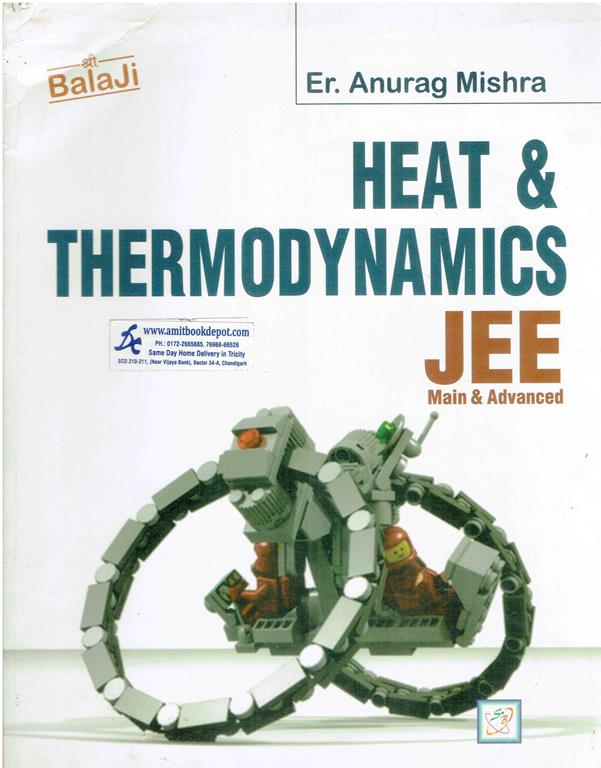


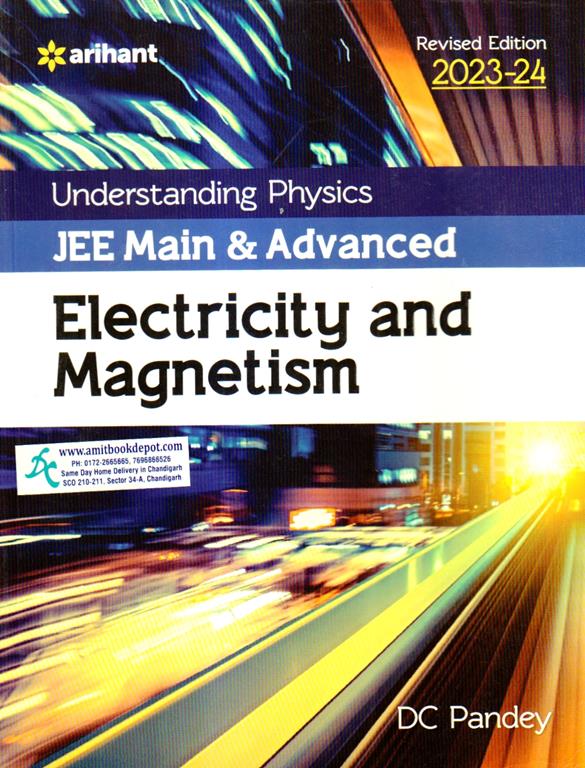
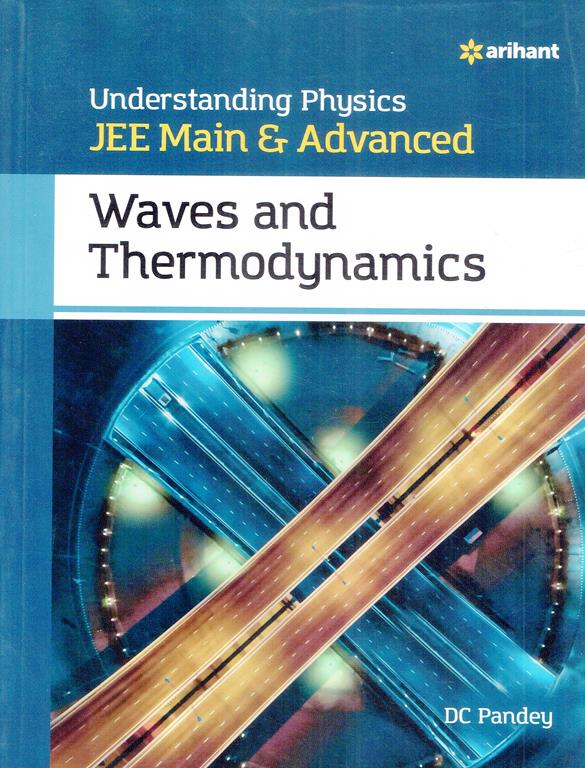
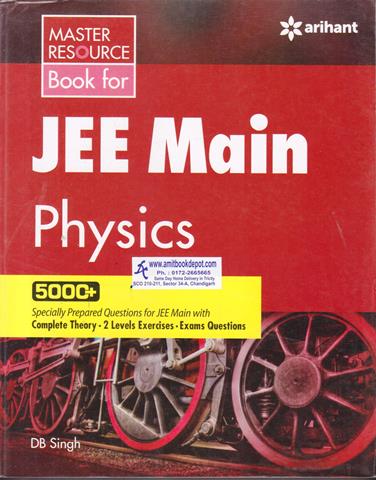
Yes, the book is specifically titled and designed for both exams. It covers the complete JEE Main syllabus with fundamental concepts and Level 1 exercises, while the Level 2 and Level 3 problems (including Multiple Correct and Comprehension-based questions) are tailored to meet the rigor of JEE Advanced.
The book provides a balanced mix of detailed theory, numerous solved examples illustrating key concepts, and a substantial number of practice problems. The problems are graded into three difficulty levels to ensure progressive learning.
The book specifically includes chapters with exercises for "More than One Alternative is/are Correct," "Comprehension-Based Problems," "Matching-Type Problems," and "Assertion and Reason," which are the staple question formats in JEE Advanced.
Absolutely. A significant portion of the first unit is dedicated to Heat Transfer, with dedicated subtopics on Conduction, Radiation, Kirchhoff’s Law, and even the calculation of the Temperature of the Sun, ensuring thorough preparation .
While the primary focus is on concept-building through graded exercises, library records indicate the contents include a section on "Previous year problems with solutions," making it valuable for understanding exam trends .
Yes, the book has a dedicated section titled "Conversion of Graphs" within the Thermodynamics chapter. This section specifically trains students to interpret and convert between P-V, V-T, and P-T diagrams, a critical skill for JEE .
Level 1 focuses on single-correct answer questions to build fundamentals. Level 2 introduces more complex, multiple-correct questions for Advanced preparation. Level 3 includes high-order skills like passage-based comprehension, matching lists, and assertion-reason questions to simulate the actual exam .
Yes, the first chapter provides a microscopic view of thermodynamics, covering the Equipartition of Energy, Ideal Monoatomic and Diatomic Gases, and Maxwell's Law of Distribution of Velocities in detail .
Definitely. The topics covered, such as Calorimetry and Kinetic Theory of Gases, are part of the class 11 curriculum, while Thermodynamics is studied in both class 11 and 12. It serves as a long-term resource for building a strong physics foundation.
The second unit of the book systematically covers these topics. It explains the Second Law, its implications for Heat Engines, and also touches upon the concept of the Absolute Zero and the Third Law of Thermodynamics, ensuring no topic is left untouched .
No Description Added
Yes, the book is specifically titled and designed for both exams. It covers the complete JEE Main syllabus with fundamental concepts and Level 1 exercises, while the Level 2 and Level 3 problems (including Multiple Correct and Comprehension-based questions) are tailored to meet the rigor of JEE Advanced.
The book provides a balanced mix of detailed theory, numerous solved examples illustrating key concepts, and a substantial number of practice problems. The problems are graded into three difficulty levels to ensure progressive learning.
The book specifically includes chapters with exercises for "More than One Alternative is/are Correct," "Comprehension-Based Problems," "Matching-Type Problems," and "Assertion and Reason," which are the staple question formats in JEE Advanced.
Absolutely. A significant portion of the first unit is dedicated to Heat Transfer, with dedicated subtopics on Conduction, Radiation, Kirchhoff’s Law, and even the calculation of the Temperature of the Sun, ensuring thorough preparation .
While the primary focus is on concept-building through graded exercises, library records indicate the contents include a section on "Previous year problems with solutions," making it valuable for understanding exam trends .
Yes, the book has a dedicated section titled "Conversion of Graphs" within the Thermodynamics chapter. This section specifically trains students to interpret and convert between P-V, V-T, and P-T diagrams, a critical skill for JEE .
Level 1 focuses on single-correct answer questions to build fundamentals. Level 2 introduces more complex, multiple-correct questions for Advanced preparation. Level 3 includes high-order skills like passage-based comprehension, matching lists, and assertion-reason questions to simulate the actual exam .
Yes, the first chapter provides a microscopic view of thermodynamics, covering the Equipartition of Energy, Ideal Monoatomic and Diatomic Gases, and Maxwell's Law of Distribution of Velocities in detail .
Definitely. The topics covered, such as Calorimetry and Kinetic Theory of Gases, are part of the class 11 curriculum, while Thermodynamics is studied in both class 11 and 12. It serves as a long-term resource for building a strong physics foundation.
The second unit of the book systematically covers these topics. It explains the Second Law, its implications for Heat Engines, and also touches upon the concept of the Absolute Zero and the Third Law of Thermodynamics, ensuring no topic is left untouched .