Categories
College Bookssss >
BA PU Chandigarh
BSC PU Chandigarh
MSC PU Chandigarh
BBA PU Chandigarh
MA PU Chandigarh
Medical Books
Engineering Books
Management Books
PGDCA Books
BCOM PU Chandigarh
MCOM PU Chandigarh
BCA PU Chandigarh
MCA PU Chandigarh
animate-books

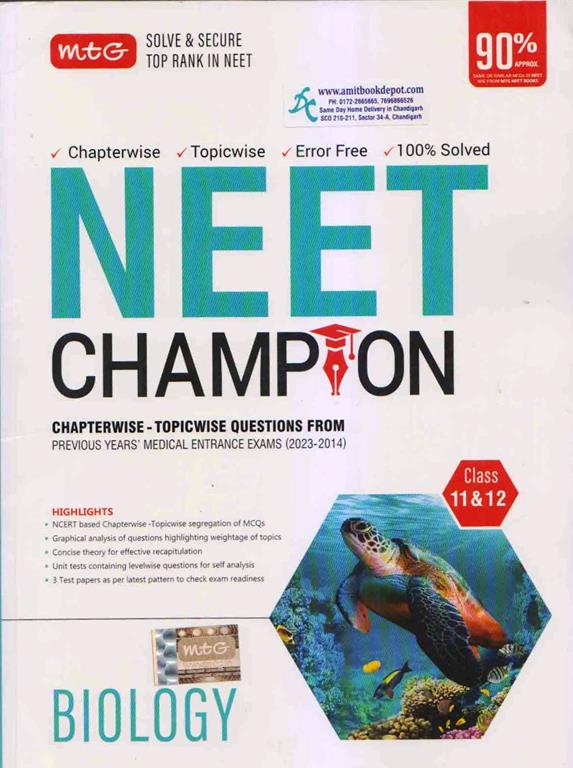
MTG 15 Years Solved Papers Chapterwise Topicewise NEET Champion Biology For Class 11 & 12

by Madhurima
₹595 ₹925.00(-/ off)

Rating & Reviews

23 Customer Review

MTG 15 Years Solved Papers Chapterwise Topicwise NEET Champion Biology for Class 11 & 12 is a comprehensive guide tailored for NEET preparation. Featuring 15 years of solved question papers, chapterwise and topicwise solutions, and practice tests, this book covers the entire NEET syllabus for Class 11 and 12 Biology. It includes recent exam questions, detailed answer keys, and full-length mock tests to enhance exam readiness. Perfect for students aiming to excel in NEET, this resource provides targeted practice, in-depth concepts, and strategic insights to boost confidence and achieve top scores in medical entrance exams.

Have Doubts Regarding This Product ? Ask Your Question

  • Q1
    Does the book include the latest NEET exam pattern?
    A1

    Absolutely. The book includes solved papers from NEET 2025 and Re-Exam 2024, reflecting the current exam pattern and question styles.

  • Q2
    How does this book help in NEET exam preparation?
    A2

    The book provides 15 years of solved papers, chapterwise and topicwise solutions, and recent exam pattern insights, enabling students to understand question trends, strengthen concepts, and practice effectively for NEET.

  • Q3
    Can this book be useful for self-study?
    A3

    Yes, with detailed solutions, answer keys, and practice tests, it is designed to assist students in self-assessment and independent preparation.

  • Q4
    Is the book suitable for both Class 11 and Class 12 students?
    A4

    Yes, it covers the entire NEET syllabus for both classes, with dedicated sections and chapters for each, making it ideal for students preparing for both years.

  • Q5
    Are there practice tests included in the book?
    A5

    Yes, the book contains multiple unit tests and three full-length mock exams to help students simulate real exam conditions and improve time management.

  • Q6
    Does the book cover recent trends in NEET questions?
    A6

    Yes, it is updated with recent question patterns and trends to ensure students are well-prepared for the evolving exam style.

  • Q7
    Is this book suitable for revision before the NEET exam?
    A7

    Definitely. The solved papers, chapterwise solutions, and mock tests make it an excellent resource for last-minute revision and exam readiness.

  • Q8
    Are the answer keys provided with detailed explanations?
    A8

    Yes, each answer key includes detailed explanations to help students understand how to approach and solve different types of questions.

  • Q9
    Does the book include tips for time management during the exam?
    A9

    While the primary focus is on practice and solutions, the mock tests help students develop effective time management strategies.

  • Q10
    Who can benefit most from this book?
    A10

    NEET aspirants, biology teachers, and students aiming for top scores in medical entrance exams will find this book highly beneficial for structured and effective preparation.

0.00

0 Overall Rating
  • 5
    0
  • 4
    0
  • 3
    0
  • 2
    0
  • 1
    0

Try this product & share your review & thoughts

Class 11
Solved Papers NEET 2025 & Re-Exam 2024
1. The Living World
2. Biological Classification
3. Plant Kingdom
4. Animal Kingdom

Unit Test - 1
5. Morphology of Flowering Plants
6. Anatomy of Flowering Plants
7. Structural Organization in Animals

Unit Test - 2 
8. Cell—The Unit of Life
9. Biomolecules
10. Cell Cycle and Cell Division

Unit Test - 3
11. Photosynthesis in Higher Plants
12. Respiration in Plants
13. Plant Growth and Development

Unit Test - 4 
14. Breathing and Exchange of Gases
15. Body Fluids and Circulation
16. Excretory Products and Their Elimination
17. Locomotion and Movement
18. Neural Control and Coordination
19. Chemical Coordination and Integration

Unit Test-5
Answer Keys of Unit Tests

Class 12
1. Sexual Reproduction in Flowering Plants
2. Human Reproduction
3. Reproductive Health

Unit Test - 1
4. Principles of Inheritance and Variation
5. Molecular Basis of Inheritance
6. Evolution

Unit Test -2
7. Human Health and Diseases
8. Microbes in Human Welfare

Unit Test - 3
9. Biotechnology: Principles and Processes
10. Biotechnology and Its Applications

Unit Test - 4
11. Organisms and Populations
12. Ecosystem
13. Biodiversity and Conservation

Unit Test-5
Answer Keys of Unit Tests

MOCK TEST PAPERS
Mock Test Paper-1
Mock Test Paper-2
Mock Test Paper-3
BIOLOGY SYLLABUS FOR (NEET)

UNIT 1: Diversity in the Living World
• What is living?; Biodiversity; Need for classification; Taxonomy & Systematics; Concept of species and taxonomic hierarchy; binomial nomenclature;
• Five kingdom classification; salient features and classification of Monera, Protista, and Fungi into major groups: lichens, viruses, and viroids.
• Salient features and classification of plants into major groups—Algae, Bryophytes, Pteridophytes, Gymnosperms (three to five salient and distinguishing features and at least two examples of each category);
• Salient features and classification of animals—nonchordate up to phyla level and chordate up to class level (three to five salient features and at least two examples).

UNIT 2: Structural Organization in Animals and Plants
• Morphology and modifications; tissues; anatomy and functions of different parts of flowering plants: root, stem, leaf, inflorescence (cymose and racemose), flower, fruit, and seed (to be dealt with along with the relevant practical of the practical syllabus); family (Malvaceae, Cruciferae, Leguminoceae, Compositae, Gramineae).
• Animal tissues: morphology, anatomy, and functions of different systems (digestive, circulatory, respiratory, nervous, and reproductive) of an insect (frog). (Brief account only)

UNIT 3: Cell Structure and Function
• Cell theory and the cell as the basic unit of life; structure of prokaryotic and eukaryotic cells; plant cells and animal cells; cell envelope, cell membrane, and cell wall; cell organelles structure and function; Endomembrane system—endoplasmic reticulum, Golgi bodies, lysosomes, vacuoles; mitochondria, ribosomes, plastids, microbodies; cytoskeleton, cilia, flagella, centrioles (ultrastructure and function); nucleus—nuclear membrane, chromatin, nucleolus.
• Chemical constituents of living cells: Biomolecules—structure and function of proteins, carbohydrates, lipids, and nucleic acids; enzymes—types, properties, enzyme action, classification, and nomenclature of enzymes
• B Cell Division: Cell cycle, mitosis, meiosis, and their significance.

UNIT 4: Plant Physiology
• Photosynthesis: Photosynthesis as a means of autotrophic nutrition; the site of photosynthesis takes place; pigments are involved in photosynthesis (elementary idea); Photochemical and biosynthetic phases of photosynthesis; cyclic and non-cyclic photophosphorylation; chemiosmotic hypothesis; photorespiration C3 and C4 pathways; factors affecting photosynthesis.
• Respiration: Exchange gases; cellular respiration—glycolysis, fermentation (anaerobic), TCA cycle, and electron transport system (aerobic); energy relations—number of ATP molecules generated; amphibolic pathways; respiratory quotient.
• Plant growth and development: Seed germination; phases of plant growth and plant growth rate; conditions of growth; differentiation, dedifferentiation, and redifferentiation; sequence of developmental processes in a plant cell; Growth regulators: auxin, gibberellin, cytokinin, ethylene, and ABA.

UNIT 5: Human Physiology
• Breathing and Respiration: Respiratory organs in animals (recall only); Respiratory system in humans: mechanism of breathing and its regulation in humans—exchange of gases, transport of gases, and regulation of respiration Respiratory volumes; disorders related to respiration: asthma, emphysema, and occupational respiratory disorders.
• Body fluids and circulation: Composition of blood, blood groups, coagulation of blood; composition of lymph and its function; human circulatory system—structure of the human heart and blood vessels; cardiac cycle, cardiac output, ECG, double circulation; regulation of cardiac activity; disorders of the circulatory system—hypertension, coronary artery disease, angina pectoris, heart failure.
• Excretory products and their elimination: Modes of excretion—ammonotelism, ureotelism, and uricotelism; human excretory system—structure and function; urine formation, osmoregulation, regulation of kidney function, renin-angiotensin, atrial natriuretic factor, ADH, and diabetes insipidus; role of other organs in excretion; Disorders: uremia, renal failure, renal calculi, and nephritis; dialysis and artificial kidney.
• Locomotion and Movement: Types of movement—ciliary, flagellar, muscular; skeletal muscle—contractile proteins and muscle contraction; skeletal system and its functions (to be dealt with in the relevant practical of the practical syllabus); joints; disorders of the muscular and skeletal system—myasthenia gravis, tetany, muscular dystrophy, arthritis, osteoporosis, gout.
• Neural control and coordination: Neurons and nerves; the nervous system in humans is central. nervous system, peripheral nervous system, and visceral nervous system; generation and conduction of nerve impulse;
• Chemical coordination and regulation: Endocrine glands and hormones; Human endocrine system—Hypothalamus, Pituitary, Pineal, Thyroid, Parathyroid, Adrenal, Pancreas, Gonads; Mechanism of hormone action (Elementary Idea); Role of hormones as messengers and regulators, hypo- and hyperactivity, and related disorders (common disorders, e.g., dwarfism, acromegaly, cretinism, goiter, exophthalmic goiter, diabetes, and Addison’s disease).

UNIT 6: Reproduction
• Sexual reproduction in flowering plants: Flower structure; development of male and female gametophytes; pollination types, agencies, and examples; outbreeding devices; Pollen-pistil interaction; double fertilization; post-fertilization events—development of endosperm and embryo, development of seed, and formation of fruit; Special modes: apomixis, parthenocarpy, polyembryony; significance of seed and fruit formation.
• Human Reproduction: Male and female reproductive systems; microscopic anatomy of testis and ovary; gametogenesis: spermatogenesis & oogenesis; menstrual cycle; fertilization, embryo development up to blastocyst formation, implantation, pregnancy, and placenta formation (elementary idea); parturition (elementary idea); lactation (an elementary idea).
• Reproductive health: Need for reproductive health and prevention of sexually transmitted diseases (STDs); birth control—need and methods, contraception, and Medical Termination of Pregnancy (MTP); amniocentesis; infertility and assisted reproductive technologies—IVF, ZIFT, GIFT (elementary idea for general awareness).

UNIT 7: Genetics and Evolution
• Heredity and variation: Mendelian inheritance; deviations from Mendelism, incomplete dominance, codominance, multiple alleles, and inheritance of blood groups; pleiotropy; Elementary idea of polygenic inheritance; Chromosome theory of inheritance; Chromosomes and genes; Sex determination: In humans, birds, and honeybees, Linkage and crossing over; Sex-linked inheritance: hemophilia, color blindness;
Mendelian disorders in humans: thalassemia; chromosomal disorders in humans: Down syndrome, Turner syndrome, and Klinefelter syndrome.
• Molecular basis of inheritance: search for genetic material and DNA as genetic material; structure of DNA and RNA; DNA packaging; DNA replication; central dogma; transcription, genetic code, translation; gene expression and regulation—Lac Operon; genome and human genome project; DNA fingerprinting; protein biosynthesis.
• Evolution: Origin of life; biological evolution and evidence for biological evolution from paleontology, comparative anatomy, embryology, and molecular evidence; Darwin’s contribution: the modern synthetic theory of evolution; the mechanism of evolution Variation (mutation and recombination) and natural selection with examples, types of natural selection, gene flow and genetic drift, Hardy-Weinberg’s principle, adaptive radiation, and human evolution.

UNIT 8: Biology and Human Welfare
• Health and Disease; Pathogens; parasites causing human diseases (malaria, filariasis, ascariasis). Typhoid, pneumonia, common cold, amoebiasis, ringworm, dengue, chikungunya; basic concepts of immunology—vaccines; cancer, HIV, and AIDS; adolescence, drugs, and alcohol abuse. Tobacco abuse 
• Microbes in human welfare: In household food processing, industrial production, sewage treatment, energy generation, and as biocontrol agents and biofertilizers.

UNIT 9: Biotechnology and Its Applications
• Principles and process of biotechnology: Genetic engineering (recombinant DNA) technology.
• Application of biotechnology in health and agriculture: human insulin and vaccine production, gene therapy, genetically modified organisms—Bt crops, transgenic
Animals: Biosafety issues—biopiracy and patents.

UNIT 10: Ecology and Environment
• Organisms and environment Population interactions—mutualism, competition, predation, Parasitism: population attributes—growth, birth rate and death rate, and age distribution.
• Ecosystem: Patterns, components; productivity and decomposition; energy flow; Pyramids of number, biomass, and energy
• Biodiversity and its conservation: Concept of biodiversity; Patterns of biodiversity; importance of biodiversity; loss of biodiversity; biodiversity conservation; hotspots, endangered organisms, extinction, Red Data Book, biosphere reserves, national parks and sanctuaries, and sacred groves.

MTG 15 Years Solved Papers Chapterwise Topicwise NEET Champion Biology For Class 11 & 12," authored by the esteemed MTG Editorial Board and published by MTG Learning Media Pvt. Ltd., is an indispensable resource for aspiring medical entrance exam candidates. Designed with meticulous care, this comprehensive guide offers a systematic approach to mastering biology for NEET and other competitive exams, ensuring students build a solid foundation and excel in their preparations.

This book features a carefully curated collection of solved papers spanning 15 years, providing students with invaluable insights into the examination pattern, frequently asked questions, and the types of questions that are most likely to appear in NEET. The inclusion of chapterwise and topicwise solutions enables students to focus on individual topics, understand their nuances, and reinforce their concepts effectively. The detailed solutions are crafted to clarify complex concepts, making it easier for students to grasp essential biological principles.

Structured Content for Effective Learning
The book is divided into two main sections corresponding to Class 11 and Class 12 syllabi, aligning perfectly with the NEET curriculum. Each section includes solved question papers from NEET 2025 and Re-Exam 2024, giving students a real-time understanding of the current examination standards. These papers are meticulously solved, providing step-by-step explanations, which help students learn how to approach and solve questions accurately within the stipulated time.

Class 11 Section

The Class 11 segment begins with foundational chapters such as "The Living World," "Biological Classification," "Plant Kingdom," and "Animal Kingdom." These chapters lay the groundwork for understanding biological diversity, taxonomy, and basic zoological and botanical concepts. The subsequent units focus on morphology, anatomy, and structural organization, which are crucial for grasping plant and animal physiology. Topics like "Cell—The Unit of Life," "Biomolecules," and "Cell Cycle and Cell Division" delve into cellular biology, emphasizing the importance of understanding cell structure and functions.

Further chapters like "Photosynthesis in Higher Plants," "Respiration in Plants," and "Plant Growth and Development" are essential for understanding plant physiology, vital for NEET. The book also covers human physiology topics such as "Breathing and Exchange of Gases," "Body Fluids and Circulation," "Excretory Products and Their Elimination," "Locomotion and Movement," and neural and chemical coordination, reflecting the comprehensive nature of NEET's syllabus.

Each chapter is paired with unit tests that assess understanding and reinforce learning. These tests include questions from previous years, ensuring students practice the latest exam trends. The detailed answer keys facilitate self-assessment, helping students identify strengths and weaknesses.

Class 12 Section

The Class 12 component covers critical topics such as "Sexual Reproduction in Flowering Plants," "Human Reproduction," and "Reproductive Health," which are fundamental for understanding human reproductive biology. The section further explores principles of inheritance, molecular genetics, evolution, and biological diversity, with chapters like "Principles of Inheritance and Variation," "Molecular Basis of Inheritance," and "Evolution."

The book emphasizes modern topics like biotechnology, its principles, processes, and applications, preparing students for both NEET and advanced studies. Chapters on "Organisms and Populations," "Ecosystems," and "Biodiversity and Conservation" provide insights into ecology and environmental biology, reflecting the breadth of NEET's syllabus.

The inclusion of multiple unit tests ensures comprehensive practice, with answer keys facilitating effective revision. The book concludes with mock test papers—three full-length simulated exams that replicate the actual NEET environment, helping students improve time management and exam strategy.

Key Features
1. 15 Years of Solved Papers: An extensive collection of previous years' question papers with detailed solutions, offering insights into exam trends and question patterns.
2. Chapterwise and Topicwise Solutions: Focused practice on individual chapters and topics, aiding in targeted revision.
3. Aligned with NEET Syllabus: Complete coverage of Class 11 and 12 Biology, including recent exam patterns.
4. Revised and Updated Content: Incorporates recent NEET question trends for effective preparation.
5. Practice Tests and Mock Exams: Multiple unit tests and full-length mock tests to simulate real exam conditions, enhancing confidence and performance.
6. Detailed Answer Keys: Step-by-step solutions for self-assessment and conceptual clarity.
7. User-Friendly Layout: Well-organized chapters and tests for seamless navigation and studying.

This book is an ideal resource for NEET aspirants, biology teachers, and students aiming for top scores in medical entrance exams. It ensures comprehensive preparation, boosts confidence, and helps students achieve their career goals in medicine and allied health sciences.

Class 11
Solved Papers NEET 2025 & Re-Exam 2024
1. The Living World
2. Biological Classification
3. Plant Kingdom
4. Animal Kingdom

Unit Test - 1
5. Morphology of Flowering Plants
6. Anatomy of Flowering Plants
7. Structural Organization in Animals

Unit Test - 2 
8. Cell—The Unit of Life
9. Biomolecules
10. Cell Cycle and Cell Division

Unit Test - 3
11. Photosynthesis in Higher Plants
12. Respiration in Plants
13. Plant Growth and Development

Unit Test - 4 
14. Breathing and Exchange of Gases
15. Body Fluids and Circulation
16. Excretory Products and Their Elimination
17. Locomotion and Movement
18. Neural Control and Coordination
19. Chemical Coordination and Integration

Unit Test-5
Answer Keys of Unit Tests

Class 12
1. Sexual Reproduction in Flowering Plants
2. Human Reproduction
3. Reproductive Health

Unit Test - 1
4. Principles of Inheritance and Variation
5. Molecular Basis of Inheritance
6. Evolution

Unit Test -2
7. Human Health and Diseases
8. Microbes in Human Welfare

Unit Test - 3
9. Biotechnology: Principles and Processes
10. Biotechnology and Its Applications

Unit Test - 4
11. Organisms and Populations
12. Ecosystem
13. Biodiversity and Conservation

Unit Test-5
Answer Keys of Unit Tests

MOCK TEST PAPERS
Mock Test Paper-1
Mock Test Paper-2
Mock Test Paper-3

Have Doubts Regarding This Product ? Ask Your Question

  • Q1
    Does the book include the latest NEET exam pattern?
    A1

    Absolutely. The book includes solved papers from NEET 2025 and Re-Exam 2024, reflecting the current exam pattern and question styles.

  • Q2
    How does this book help in NEET exam preparation?
    A2

    The book provides 15 years of solved papers, chapterwise and topicwise solutions, and recent exam pattern insights, enabling students to understand question trends, strengthen concepts, and practice effectively for NEET.

  • Q3
    Can this book be useful for self-study?
    A3

    Yes, with detailed solutions, answer keys, and practice tests, it is designed to assist students in self-assessment and independent preparation.

  • Q4
    Is the book suitable for both Class 11 and Class 12 students?
    A4

    Yes, it covers the entire NEET syllabus for both classes, with dedicated sections and chapters for each, making it ideal for students preparing for both years.

  • Q5
    Are there practice tests included in the book?
    A5

    Yes, the book contains multiple unit tests and three full-length mock exams to help students simulate real exam conditions and improve time management.

  • Q6
    Does the book cover recent trends in NEET questions?
    A6

    Yes, it is updated with recent question patterns and trends to ensure students are well-prepared for the evolving exam style.

  • Q7
    Is this book suitable for revision before the NEET exam?
    A7

    Definitely. The solved papers, chapterwise solutions, and mock tests make it an excellent resource for last-minute revision and exam readiness.

  • Q8
    Are the answer keys provided with detailed explanations?
    A8

    Yes, each answer key includes detailed explanations to help students understand how to approach and solve different types of questions.

  • Q9
    Does the book include tips for time management during the exam?
    A9

    While the primary focus is on practice and solutions, the mock tests help students develop effective time management strategies.

  • Q10
    Who can benefit most from this book?
    A10

    NEET aspirants, biology teachers, and students aiming for top scores in medical entrance exams will find this book highly beneficial for structured and effective preparation.

BIOLOGY SYLLABUS FOR (NEET)

UNIT 1: Diversity in the Living World
• What is living?; Biodiversity; Need for classification; Taxonomy & Systematics; Concept of species and taxonomic hierarchy; binomial nomenclature;
• Five kingdom classification; salient features and classification of Monera, Protista, and Fungi into major groups: lichens, viruses, and viroids.
• Salient features and classification of plants into major groups—Algae, Bryophytes, Pteridophytes, Gymnosperms (three to five salient and distinguishing features and at least two examples of each category);
• Salient features and classification of animals—nonchordate up to phyla level and chordate up to class level (three to five salient features and at least two examples).

UNIT 2: Structural Organization in Animals and Plants
• Morphology and modifications; tissues; anatomy and functions of different parts of flowering plants: root, stem, leaf, inflorescence (cymose and racemose), flower, fruit, and seed (to be dealt with along with the relevant practical of the practical syllabus); family (Malvaceae, Cruciferae, Leguminoceae, Compositae, Gramineae).
• Animal tissues: morphology, anatomy, and functions of different systems (digestive, circulatory, respiratory, nervous, and reproductive) of an insect (frog). (Brief account only)

UNIT 3: Cell Structure and Function
• Cell theory and the cell as the basic unit of life; structure of prokaryotic and eukaryotic cells; plant cells and animal cells; cell envelope, cell membrane, and cell wall; cell organelles structure and function; Endomembrane system—endoplasmic reticulum, Golgi bodies, lysosomes, vacuoles; mitochondria, ribosomes, plastids, microbodies; cytoskeleton, cilia, flagella, centrioles (ultrastructure and function); nucleus—nuclear membrane, chromatin, nucleolus.
• Chemical constituents of living cells: Biomolecules—structure and function of proteins, carbohydrates, lipids, and nucleic acids; enzymes—types, properties, enzyme action, classification, and nomenclature of enzymes
• B Cell Division: Cell cycle, mitosis, meiosis, and their significance.

UNIT 4: Plant Physiology
• Photosynthesis: Photosynthesis as a means of autotrophic nutrition; the site of photosynthesis takes place; pigments are involved in photosynthesis (elementary idea); Photochemical and biosynthetic phases of photosynthesis; cyclic and non-cyclic photophosphorylation; chemiosmotic hypothesis; photorespiration C3 and C4 pathways; factors affecting photosynthesis.
• Respiration: Exchange gases; cellular respiration—glycolysis, fermentation (anaerobic), TCA cycle, and electron transport system (aerobic); energy relations—number of ATP molecules generated; amphibolic pathways; respiratory quotient.
• Plant growth and development: Seed germination; phases of plant growth and plant growth rate; conditions of growth; differentiation, dedifferentiation, and redifferentiation; sequence of developmental processes in a plant cell; Growth regulators: auxin, gibberellin, cytokinin, ethylene, and ABA.

UNIT 5: Human Physiology
• Breathing and Respiration: Respiratory organs in animals (recall only); Respiratory system in humans: mechanism of breathing and its regulation in humans—exchange of gases, transport of gases, and regulation of respiration Respiratory volumes; disorders related to respiration: asthma, emphysema, and occupational respiratory disorders.
• Body fluids and circulation: Composition of blood, blood groups, coagulation of blood; composition of lymph and its function; human circulatory system—structure of the human heart and blood vessels; cardiac cycle, cardiac output, ECG, double circulation; regulation of cardiac activity; disorders of the circulatory system—hypertension, coronary artery disease, angina pectoris, heart failure.
• Excretory products and their elimination: Modes of excretion—ammonotelism, ureotelism, and uricotelism; human excretory system—structure and function; urine formation, osmoregulation, regulation of kidney function, renin-angiotensin, atrial natriuretic factor, ADH, and diabetes insipidus; role of other organs in excretion; Disorders: uremia, renal failure, renal calculi, and nephritis; dialysis and artificial kidney.
• Locomotion and Movement: Types of movement—ciliary, flagellar, muscular; skeletal muscle—contractile proteins and muscle contraction; skeletal system and its functions (to be dealt with in the relevant practical of the practical syllabus); joints; disorders of the muscular and skeletal system—myasthenia gravis, tetany, muscular dystrophy, arthritis, osteoporosis, gout.
• Neural control and coordination: Neurons and nerves; the nervous system in humans is central. nervous system, peripheral nervous system, and visceral nervous system; generation and conduction of nerve impulse;
• Chemical coordination and regulation: Endocrine glands and hormones; Human endocrine system—Hypothalamus, Pituitary, Pineal, Thyroid, Parathyroid, Adrenal, Pancreas, Gonads; Mechanism of hormone action (Elementary Idea); Role of hormones as messengers and regulators, hypo- and hyperactivity, and related disorders (common disorders, e.g., dwarfism, acromegaly, cretinism, goiter, exophthalmic goiter, diabetes, and Addison’s disease).

UNIT 6: Reproduction
• Sexual reproduction in flowering plants: Flower structure; development of male and female gametophytes; pollination types, agencies, and examples; outbreeding devices; Pollen-pistil interaction; double fertilization; post-fertilization events—development of endosperm and embryo, development of seed, and formation of fruit; Special modes: apomixis, parthenocarpy, polyembryony; significance of seed and fruit formation.
• Human Reproduction: Male and female reproductive systems; microscopic anatomy of testis and ovary; gametogenesis: spermatogenesis & oogenesis; menstrual cycle; fertilization, embryo development up to blastocyst formation, implantation, pregnancy, and placenta formation (elementary idea); parturition (elementary idea); lactation (an elementary idea).
• Reproductive health: Need for reproductive health and prevention of sexually transmitted diseases (STDs); birth control—need and methods, contraception, and Medical Termination of Pregnancy (MTP); amniocentesis; infertility and assisted reproductive technologies—IVF, ZIFT, GIFT (elementary idea for general awareness).

UNIT 7: Genetics and Evolution
• Heredity and variation: Mendelian inheritance; deviations from Mendelism, incomplete dominance, codominance, multiple alleles, and inheritance of blood groups; pleiotropy; Elementary idea of polygenic inheritance; Chromosome theory of inheritance; Chromosomes and genes; Sex determination: In humans, birds, and honeybees, Linkage and crossing over; Sex-linked inheritance: hemophilia, color blindness;
Mendelian disorders in humans: thalassemia; chromosomal disorders in humans: Down syndrome, Turner syndrome, and Klinefelter syndrome.
• Molecular basis of inheritance: search for genetic material and DNA as genetic material; structure of DNA and RNA; DNA packaging; DNA replication; central dogma; transcription, genetic code, translation; gene expression and regulation—Lac Operon; genome and human genome project; DNA fingerprinting; protein biosynthesis.
• Evolution: Origin of life; biological evolution and evidence for biological evolution from paleontology, comparative anatomy, embryology, and molecular evidence; Darwin’s contribution: the modern synthetic theory of evolution; the mechanism of evolution Variation (mutation and recombination) and natural selection with examples, types of natural selection, gene flow and genetic drift, Hardy-Weinberg’s principle, adaptive radiation, and human evolution.

UNIT 8: Biology and Human Welfare
• Health and Disease; Pathogens; parasites causing human diseases (malaria, filariasis, ascariasis). Typhoid, pneumonia, common cold, amoebiasis, ringworm, dengue, chikungunya; basic concepts of immunology—vaccines; cancer, HIV, and AIDS; adolescence, drugs, and alcohol abuse. Tobacco abuse 
• Microbes in human welfare: In household food processing, industrial production, sewage treatment, energy generation, and as biocontrol agents and biofertilizers.

UNIT 9: Biotechnology and Its Applications
• Principles and process of biotechnology: Genetic engineering (recombinant DNA) technology.
• Application of biotechnology in health and agriculture: human insulin and vaccine production, gene therapy, genetically modified organisms—Bt crops, transgenic
Animals: Biosafety issues—biopiracy and patents.

UNIT 10: Ecology and Environment
• Organisms and environment Population interactions—mutualism, competition, predation, Parasitism: population attributes—growth, birth rate and death rate, and age distribution.
• Ecosystem: Patterns, components; productivity and decomposition; energy flow; Pyramids of number, biomass, and energy
• Biodiversity and its conservation: Concept of biodiversity; Patterns of biodiversity; importance of biodiversity; loss of biodiversity; biodiversity conservation; hotspots, endangered organisms, extinction, Red Data Book, biosphere reserves, national parks and sanctuaries, and sacred groves.

0.00

0 Overall Rating
  • 5
    0
  • 4
    0
  • 3
    0
  • 2
    0
  • 1
    0

Try this product & share your review & thoughts

Top Trending Product

Related Product

Related Product

Related Blog Posts

Latest Blogs

Latest Blogs

blog-img
Classic Literature Reimagined: Discuss modern twists on classic novels.
Lorem ipsum dolor sit amet, consectetur adipiscing elit, sed do eiusmod tempor incididunt ut labore et dolore magna aliqua. Ut enim ad minim veniam, quis nostrud exercitation ullamco Lorem ipsum dolor sit amet, consectetur adipiscing elit, sed do eiusmod tempor incididunt ut labore et dolore magna aliqua. Utenim ad minim veniam, quis nostrud exercitation ullamco Lorem ipsum dolor sit amet, consecte...
Read more
Author name | 10 jan, 2025
blog-img
Classic Literature Reimagined: Discuss modern twists on classic novels.
Lorem ipsum dolor sit amet, consectetur adipiscing elit, sed do eiusmod tempor incididunt ut labore et dolore magna aliqua. Ut enim ad minim veniam, quis nostrud exercitation ullamco Lorem ipsum dolor sit amet, consectetur adipiscing elit, sed do eiusmod tempor incididunt ut labore et dolore magna aliqua. Utenim ad minim veniam, quis nostrud exercitation ullamco Lorem ipsum dolor sit amet, consecte...
Read more
Author name | 10 jan, 2025
blog-img
Classic Literature Reimagined: Discuss modern twists on classic novels.
Lorem ipsum dolor sit amet, consectetur adipiscing elit, sed do eiusmod tempor incididunt ut labore et dolore magna aliqua. Ut enim ad minim veniam, quis nostrud exercitation ullamco Lorem ipsum dolor sit amet, consectetur adipiscing elit, sed do eiusmod tempor incididunt ut labore et dolore magna aliqua. Utenim ad minim veniam, quis nostrud exercitation ullamco Lorem ipsum dolor sit amet, consecte...
Read more
Author name | 10 jan, 2025
blog-img
Classic Literature Reimagined: Discuss modern twists on classic novels.
Lorem ipsum dolor sit amet, consectetur adipiscing elit...
Read more
Author Name | 10 Jan, 2025
blog-img
Classic Literature Reimagined: Discuss modern twists on classic novels.
Lorem ipsum dolor sit amet, consectetur adipiscing elit...
Read more
Author Name | 10 Jan, 2025
blog-img
Classic Literature Reimagined: Discuss modern twists on classic novels.
Lorem ipsum dolor sit amet, consectetur adipiscing elit...
Read more
Author Name | 10 Jan, 2025
blog-img
Classic Literature Reimagined: Discuss modern twists on classic novels.
Lorem ipsum dolor sit amet, consectetur adipiscing elit...
Read more
Author Name | 10 Jan, 2025
blog-img
Classic Literature Reimagined: Discuss modern twists on classic novels.
Lorem ipsum dolor sit amet, consectetur adipiscing elit...
Read more
Author Name | 10 Jan, 2025
blog-img
Classic Literature Reimagined: Discuss modern twists on classic novels.
Lorem ipsum dolor sit amet, consectetur adipiscing elit...
Read more
Author Name | 10 Jan, 2025
blog-img
Classic Literature Reimagined: Discuss modern twists on classic novels.
Lorem ipsum dolor sit amet, consectetur adipiscing elit...
Read more
Author Name | 10 Jan, 2025
blog-img
Classic Literature Reimagined: Discuss modern twists on classic novels.
Lorem ipsum dolor sit amet, consectetur adipiscing elit...
Read more
Author Name | 10 Jan, 2025
blog-img
Classic Literature Reimagined: Discuss modern twists on classic novels.
Lorem ipsum dolor sit amet, consectetur adipiscing elit...
Read more
Author Name | 10 Jan, 2025