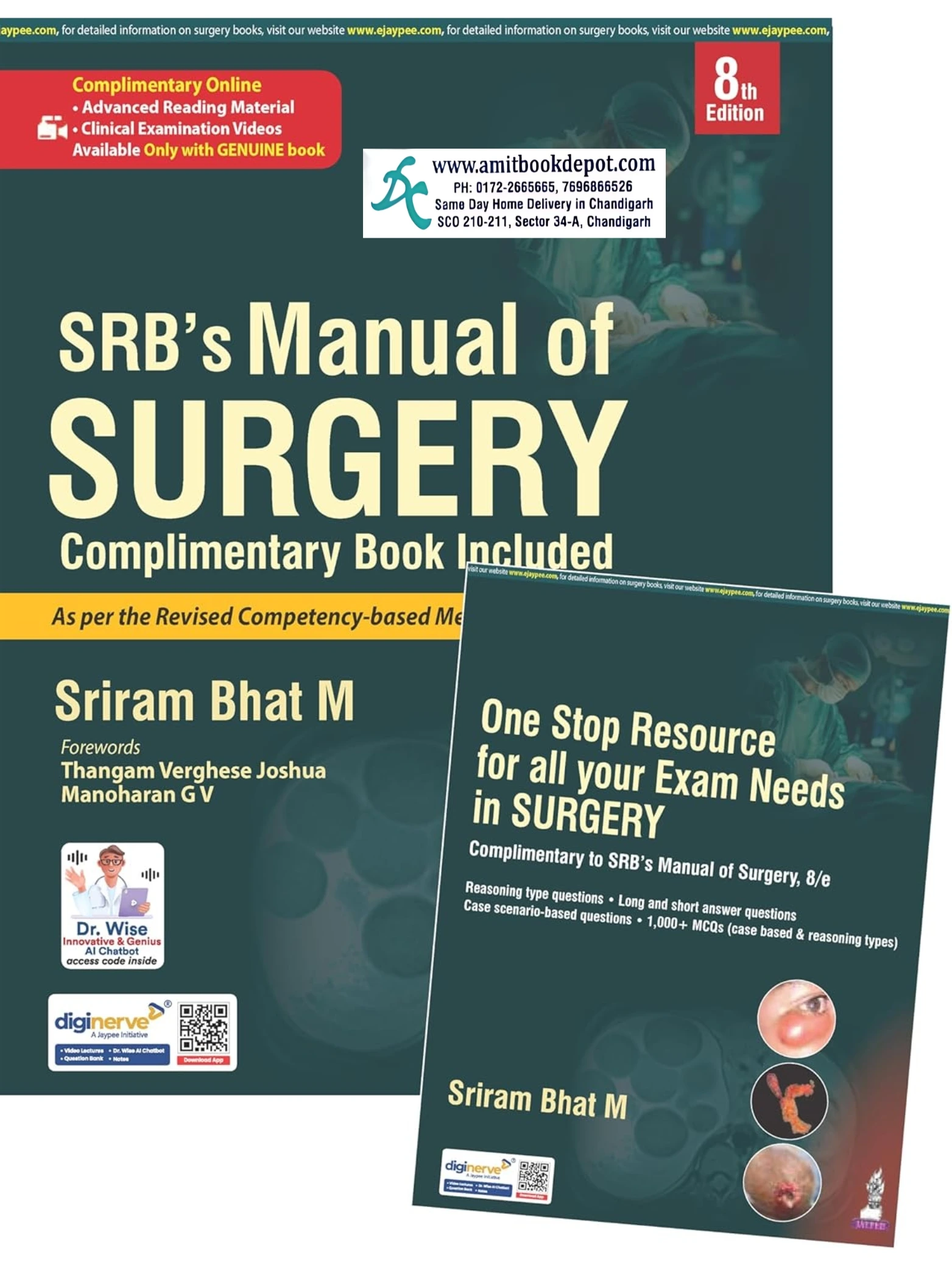
JSRB's Manual of Surgery Complimentary Book Included (8th Edition)
Author: Bhat M Sriram
Publisher: Jaypee Brothers Medical Publishers
Overview
"JSRB's Manual of Surgery, 8th Edition", is a comprehensively revised and updated resource that continues to serve as an essential reference for undergraduate medical students, postgraduate trainees, and surgical practitioners. Under the expert authorship of Bhat M Sriram, this edition delivers a thorough exploration of surgical science, bridging the gap between theoretical knowledge and clinical application. Aligned with the current Competency-Based Medical Education (CBME) syllabus, the manual ensures readers are equipped with the most relevant and up-to-date information required for academic success and effective patient care.
Key Features and Updates
This new edition is distinguished by a wealth of enhancements designed to facilitate learning and reinforce key surgical concepts:
1. Syllabus-Oriented Content: The text is meticulously structured to cover all aspects of the surgery syllabus. It includes newer topics such as metabolic response to injury and tissue engineering, ensuring complete curriculum coverage.
2. Latest Staging and Guidelines: The book integrates the AJCC 8th edition staging system for malignant conditions, along with the latest trends in therapeutic modalities, keeping readers at the forefront of current medical practices.
3. Rich Visual Aids: Learning is enhanced by over 3,000 self-explanatory clinical photographs, high-quality illustrations, and detailed line diagrams. These visuals are strategically placed to help students better imagine and understand clinical entities, promoting an analytical approach to surgery.
4. Structured Learning Approach: Each chapter is organised to provide a logical flow of information, typically beginning with surgical anatomy and physiology, moving through pathophysiology, clinical features, and investigation methods, and finally, treatment strategies.
5. Exam-Focused Tools: To aid in exam preparation, the book includes:
- Online MCQs: Chapter-wise multiple-choice questions help students familiarise themselves with the pattern and type of questions asked in university and entrance exams.
- Clinical Case Scenarios: Presented with clinical photographs and imaging, these scenarios encourage analytical thinking and provide concise management conclusions, mimicking real-world clinical problem-solving.
6. Brief Operative Techniques: Where relevant, concise descriptions of operative techniques are provided, offering practical insights into surgical procedures.
Comprehensive Coverage Across Three Sections
The manual is logically divided into three main sections, covering the entire spectrum of surgical disorders:
- SECTION 1: GENERAL SURGERY - This section lays the foundation, covering basic principles, wound healing, shock, haemorrhages, and fluid balance. It delves into specific conditions like burns, ulcers, and swellings, and provides detailed coverage of arterial, venous, and lymphatic diseases. Comprehensive chapters on neoplasms, skin and soft tissue tumours, and amputations are included. It also systematically covers regional surgery, including the oral cavity, neck, salivary glands, thyroid, and breast.
- SECTION 2: GASTROINTESTINAL SURGERY - A dedicated and extensive section focused on the abdominal cavity. It covers the peritoneum, liver, gallbladder, spleen, and pancreas in detail. Hernia, a common surgical condition, is thoroughly explained. The section then provides a systematic walkthrough of the entire gastrointestinal tract, from the oesophagus and stomach to the small and large intestines, including the rectum and anal canal. Topics like abdominal tuberculosis and intestinal obstruction are given special attention.
- SECTION 3: SPECIALITIES AND OTHER SURGERIES - This section broadens the scope to include essential surgical specialities. It features in-depth chapters on urology (covering kidney, bladder, prostate, urethra, penis, scrotum, and testis), neurosurgery, and thoracic surgery. It also includes vital topics like anaesthesia, adjuvant therapy, and advanced imaging methods.
- CHAPTER 55: OPERATIVE SURGERY - A practical chapter covering sterilisation, surgical instruments, suture materials, diathermy, laparoscopic surgery, dressings, and bandages.
- CHAPTER 56: MISCELLANEOUS - A unique and valuable compilation of fascinating signs, surgical triads, misnomers, and triangles in surgery, ideal for quick revision.
Conclusion
The 8th Edition of JSRB's Manual of Surgery is more than just a book; it is a complete learning package. Its student-friendly approach, characterised by a lucid writing style, structured content, and a focus on analytical learning, makes it an indispensable resource for mastering the vast subject of surgery.




.jpg)