-
Mon-Fri: 10AM to 8PM 01722665665
-
My Account
-
-
0
Total :
₹ 0.00

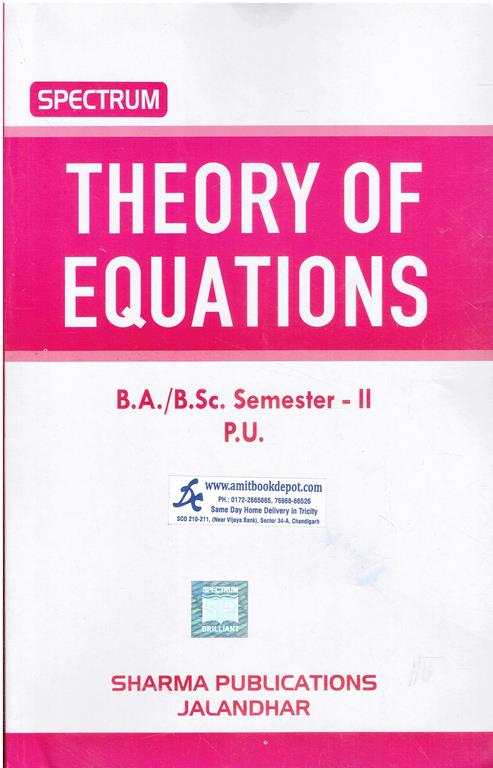
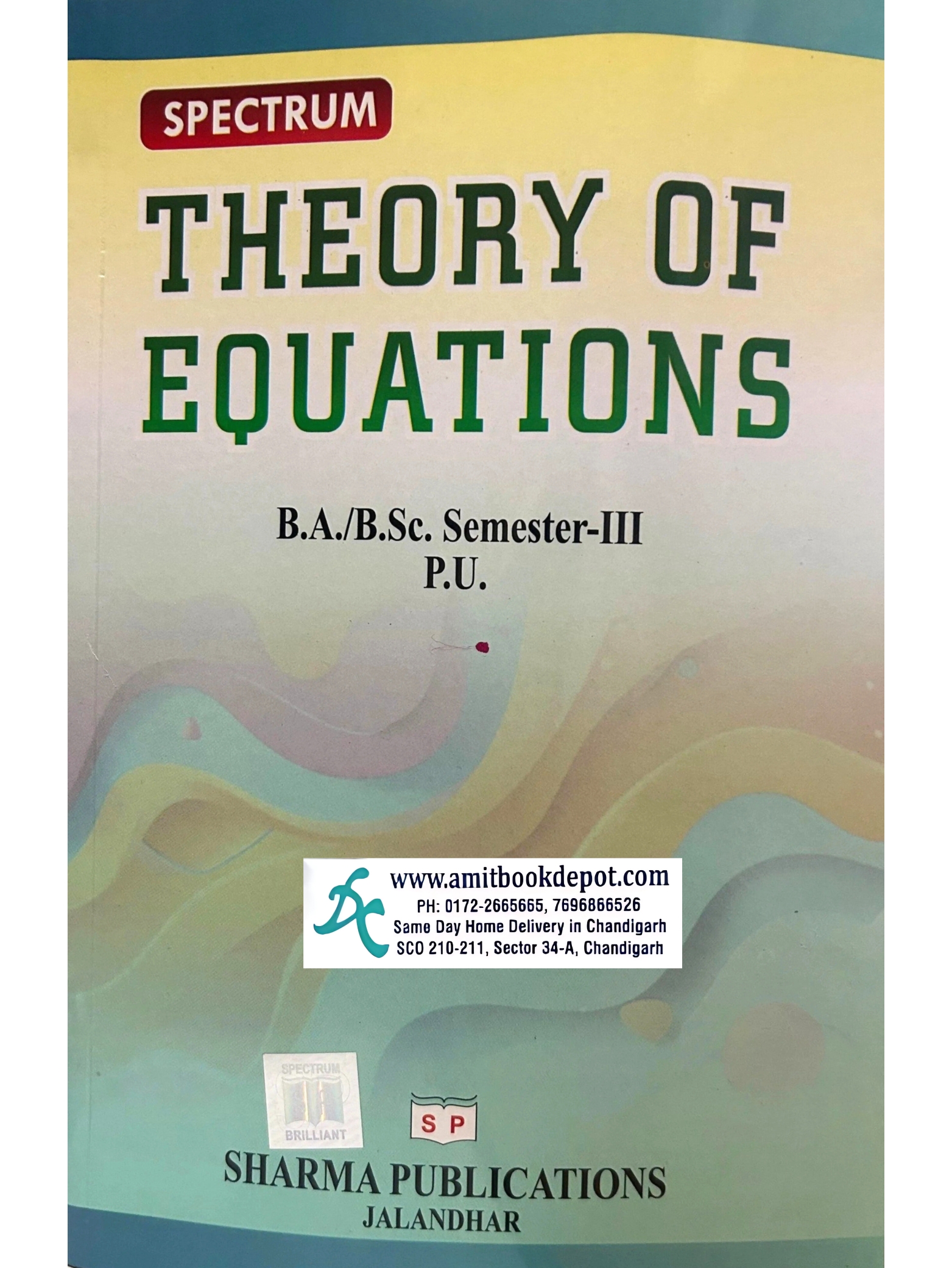
Yes, it follows the MAT-DSC3 (MAJ/MIN)-301: Theory of Equations syllabus prescribed by Panjab University (PU), Chandigarh.
Absolutely, it includes detailed explanations of all four units with solved examples.
While it doesn’t have past papers, it provides exam-oriented questions following the PU question pattern.
Yes, Chapter 7 covers these topics with step-by-step examples.
Yes, Unit IV (Chapter 6) explains Ferrari’s method comprehensively.
Chapter 1 (Polynomials) includes Euclid’s algorithm, synthetic division, and GCD concepts.
Yes, it includes guidelines for mid-semester exams, assignments, projects, and attendance criteria.
Yes, the concepts and problem-solving techniques are beneficial for higher studies and competitive exams.
Yes, the book uses simple and structured explanations for better comprehension.
Chapter 4 provides clear methods for transforming polynomial equations.
No Description Added
Yes, it follows the MAT-DSC3 (MAJ/MIN)-301: Theory of Equations syllabus prescribed by Panjab University (PU), Chandigarh.
Absolutely, it includes detailed explanations of all four units with solved examples.
While it doesn’t have past papers, it provides exam-oriented questions following the PU question pattern.
Yes, Chapter 7 covers these topics with step-by-step examples.
Yes, Unit IV (Chapter 6) explains Ferrari’s method comprehensively.
Chapter 1 (Polynomials) includes Euclid’s algorithm, synthetic division, and GCD concepts.
Yes, it includes guidelines for mid-semester exams, assignments, projects, and attendance criteria.
Yes, the concepts and problem-solving techniques are beneficial for higher studies and competitive exams.
Yes, the book uses simple and structured explanations for better comprehension.
Chapter 4 provides clear methods for transforming polynomial equations.