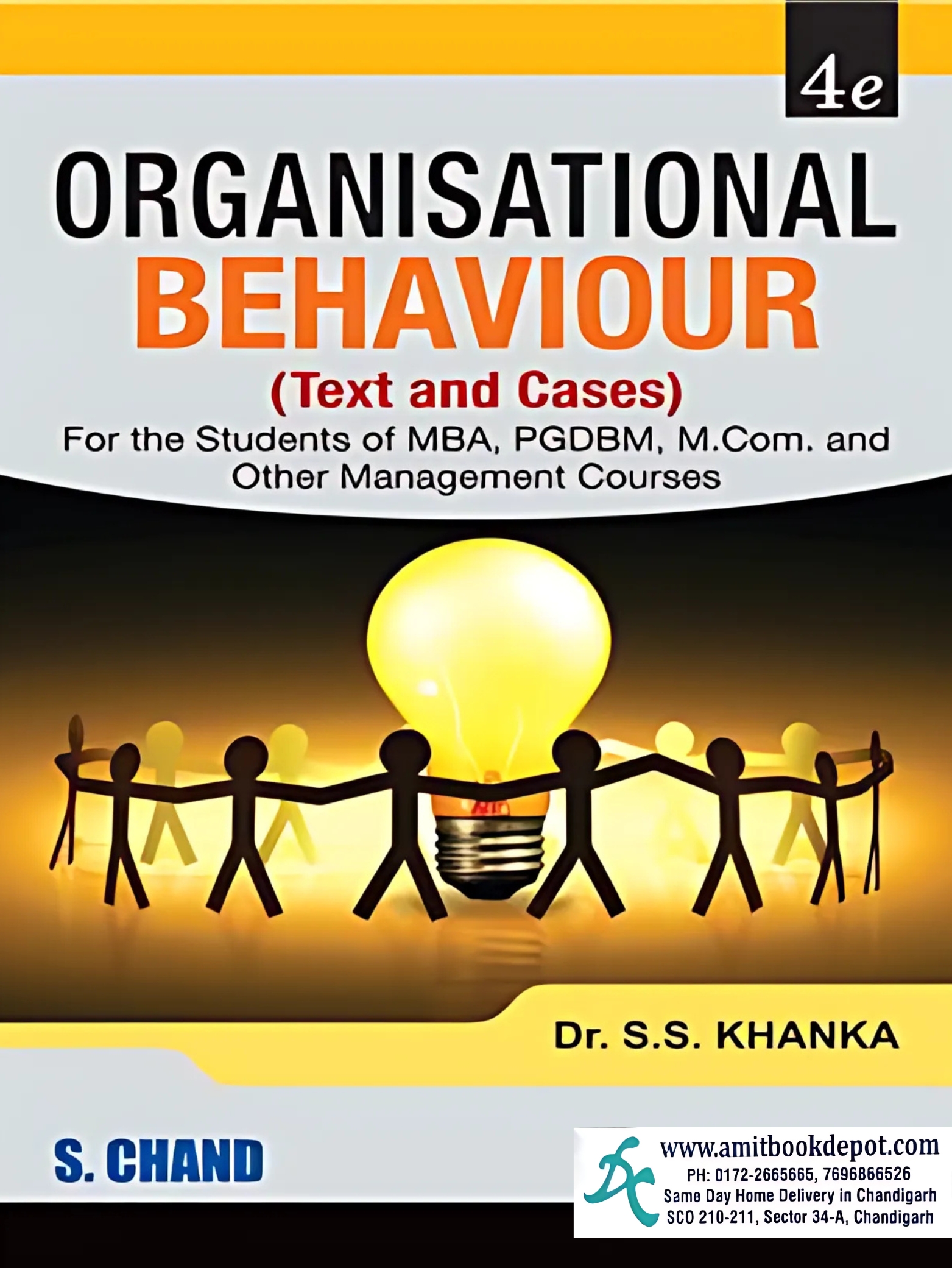
Yes, this book by S.S. Khanka is meticulously crafted to cover the complete Organizational Behavior syllabus for MBA and MCom programs offered by major Indian universities and business schools.
Absolutely. The book features numerous Indian Case Studies, such as examples from BHEL, the Dabbawalas of Mumbai, and Essar, which help contextualize theoretical concepts within the Indian organizational context.
Yes, the book has dedicated chapters on modern and critical topics like Emotional Intelligence, Organizational Citizenship Behavior (OCB), Transactional Analysis, and Quality of Work Life (QWL).
The book is divided into four logical parts (Foundation, Individual, Group, Organization). Each chapter includes a clear summary, review questions, and references, making it ideal for systematic study and exam preparation.
Yes, motivation is covered in two comprehensive chapters: "Motivation: Concepts" (theories like Maslow, Herzberg) and "Motivation: Application" (tools like Job Design, Job Enrichment, MBO, and incentives).
Yes, the final chapter on International Organizational Behavior addresses cultural differences and their impact on individual, group, and organizational behavior in a global context.
Yes, separate in-depth chapters are devoted to Power and Politics, as well as Communication, including barriers and networks, which are crucial for understanding organizational dynamics.
Chapter 28 on Organizational Change and Development (OD) comprehensively covers the need for change, resistance to change, OD interventions, and models, which is vital for modern change management.
Yes, Chapter 2, "Organizational Behavior in Historical Perspective," details the evolution from the Industrial Revolution and Scientific Management to the Human Relations Movement and Hawthorne Studies.
Yes, Part Four delves into Organizational Dynamics, covering Structure, Theory, Climate, Culture, Effectiveness, and Change, explaining how broader systems influence and are influenced by behavior.
No Description Added
Yes, this book by S.S. Khanka is meticulously crafted to cover the complete Organizational Behavior syllabus for MBA and MCom programs offered by major Indian universities and business schools.
Absolutely. The book features numerous Indian Case Studies, such as examples from BHEL, the Dabbawalas of Mumbai, and Essar, which help contextualize theoretical concepts within the Indian organizational context.
Yes, the book has dedicated chapters on modern and critical topics like Emotional Intelligence, Organizational Citizenship Behavior (OCB), Transactional Analysis, and Quality of Work Life (QWL).
The book is divided into four logical parts (Foundation, Individual, Group, Organization). Each chapter includes a clear summary, review questions, and references, making it ideal for systematic study and exam preparation.
Yes, motivation is covered in two comprehensive chapters: "Motivation: Concepts" (theories like Maslow, Herzberg) and "Motivation: Application" (tools like Job Design, Job Enrichment, MBO, and incentives).
Yes, the final chapter on International Organizational Behavior addresses cultural differences and their impact on individual, group, and organizational behavior in a global context.
Yes, separate in-depth chapters are devoted to Power and Politics, as well as Communication, including barriers and networks, which are crucial for understanding organizational dynamics.
Chapter 28 on Organizational Change and Development (OD) comprehensively covers the need for change, resistance to change, OD interventions, and models, which is vital for modern change management.
Yes, Chapter 2, "Organizational Behavior in Historical Perspective," details the evolution from the Industrial Revolution and Scientific Management to the Human Relations Movement and Hawthorne Studies.
Yes, Part Four delves into Organizational Dynamics, covering Structure, Theory, Climate, Culture, Effectiveness, and Change, explaining how broader systems influence and are influenced by behavior.