-
Mon-Fri: 10AM to 8PM 01722665665
-
My Account
-
-
0
Total :
₹ 0.00



 (Size 2x1 Feet appx)_1.jpg,photos/uploads/Wooden Study Table (Fixed Legs) (Size 2x1 Feet appx)_2.jpg,photos/uploads/Wooden Study Table (Fixed Legs) (Size 2x1 Feet appx)_3.jpg,photos/uploads/Wooden Study Table (Fixed Legs) (Size 2x1 Feet appx)_4.jpg)

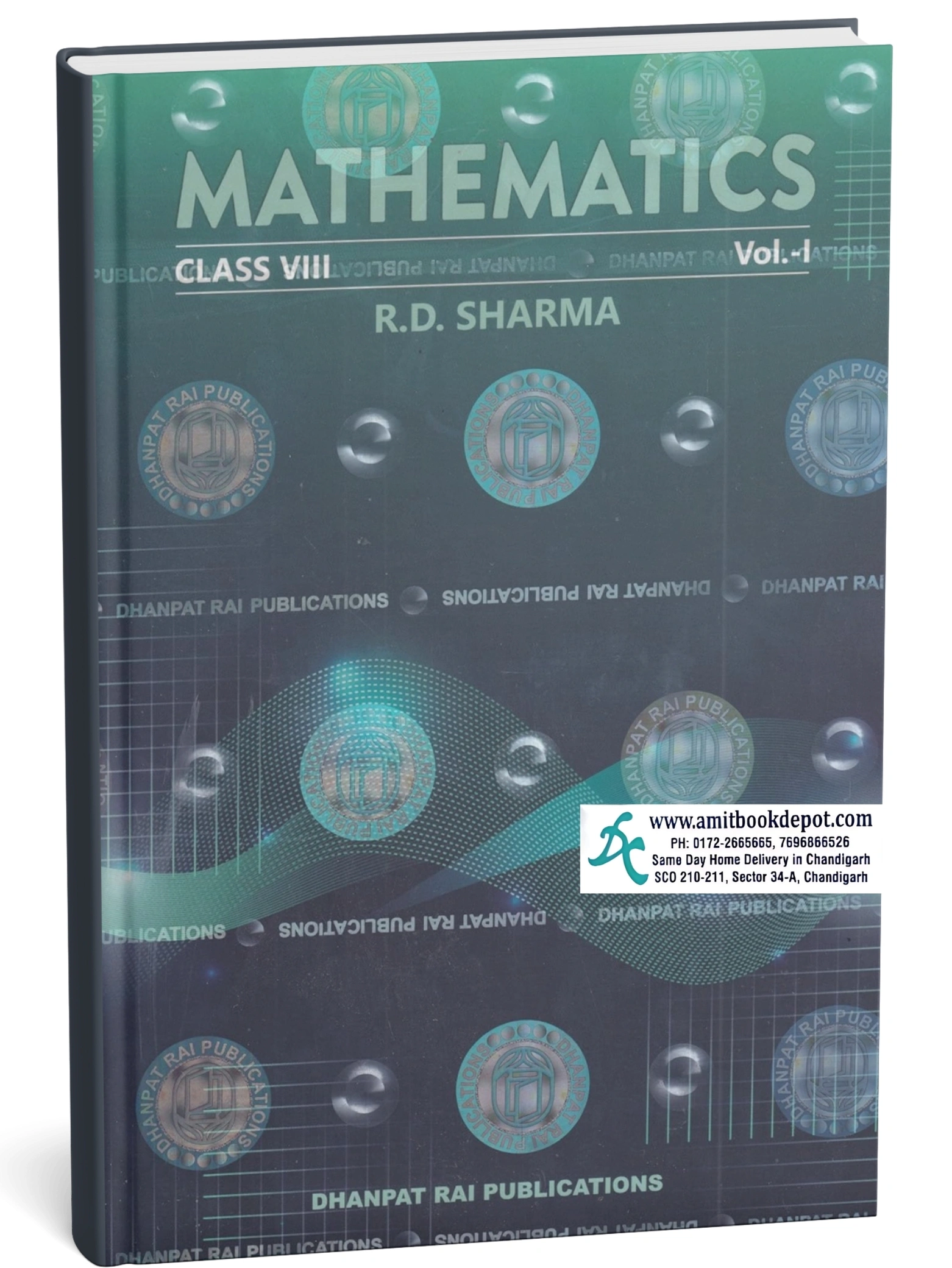
Volume 1 focuses on foundational topics like Squares, Cubes, Exponents, Quadrilaterals, and Proportional Reasoning, while Volume 2 covers advanced topics like Linear Equations, Mensuration, and Probability.
Yes, the book includes dedicated sections like "Some Shortcuts to Find Squares" and "Fast Multiplications Using the Distributivity" to help students calculate quickly and accurately .
Chapter 3, "Power Play," specifically covers the use of exponents and powers of 10 to express large numbers in standard form and small numbers concisely.
The book provides a thorough analysis of special quadrilaterals including Parallelograms, Rhombuses, Rectangles, Squares, Trapeziums, and Kites, detailing their unique properties.
Absolutely. "Proportional Reasoning - II" is exclusively dedicated to explaining the differences and applications of direct variation and inverse variation.
It is a specific technique explained in the book for finding the cube of a two-digit number quickly without direct multiplication.
This is Volume 1 of a two-volume set. It covers half the syllabus; for complete coverage of the Class 8 curriculum, Volume 2 is also required .
Chapter 6 introduces multiplication of algebraic expressions step-by-step, starting with monomials and binomials, and then explains standard identities to simplify complex problems.
A digital root is the single-digit value obtained by repeatedly summing the digits of a number, a concept used to verify the results of arithmetic operations.
It includes a section on the "Relation Between the Digits of a Perfect Square and its Square Root," helping students identify patterns and verify their answers.
Volume 1 focuses on foundational topics like Squares, Cubes, Exponents, Quadrilaterals, and Proportional Reasoning, while Volume 2 covers advanced topics like Linear Equations, Mensuration, and Probability.
Yes, the book includes dedicated sections like "Some Shortcuts to Find Squares" and "Fast Multiplications Using the Distributivity" to help students calculate quickly and accurately .
Chapter 3, "Power Play," specifically covers the use of exponents and powers of 10 to express large numbers in standard form and small numbers concisely.
The book provides a thorough analysis of special quadrilaterals including Parallelograms, Rhombuses, Rectangles, Squares, Trapeziums, and Kites, detailing their unique properties.
Absolutely. "Proportional Reasoning - II" is exclusively dedicated to explaining the differences and applications of direct variation and inverse variation.
It is a specific technique explained in the book for finding the cube of a two-digit number quickly without direct multiplication.
This is Volume 1 of a two-volume set. It covers half the syllabus; for complete coverage of the Class 8 curriculum, Volume 2 is also required .
Chapter 6 introduces multiplication of algebraic expressions step-by-step, starting with monomials and binomials, and then explains standard identities to simplify complex problems.
A digital root is the single-digit value obtained by repeatedly summing the digits of a number, a concept used to verify the results of arithmetic operations.
It includes a section on the "Relation Between the Digits of a Perfect Square and its Square Root," helping students identify patterns and verify their answers.