Categories
College Bookssss >
BA PU Chandigarh
BSC PU Chandigarh
MSC PU Chandigarh
BBA PU Chandigarh
MA PU Chandigarh
Medical Books
Engineering Books
Management Books
PGDCA Books
BCOM PU Chandigarh
MCOM PU Chandigarh
BCA PU Chandigarh
MCA PU Chandigarh
animate-books

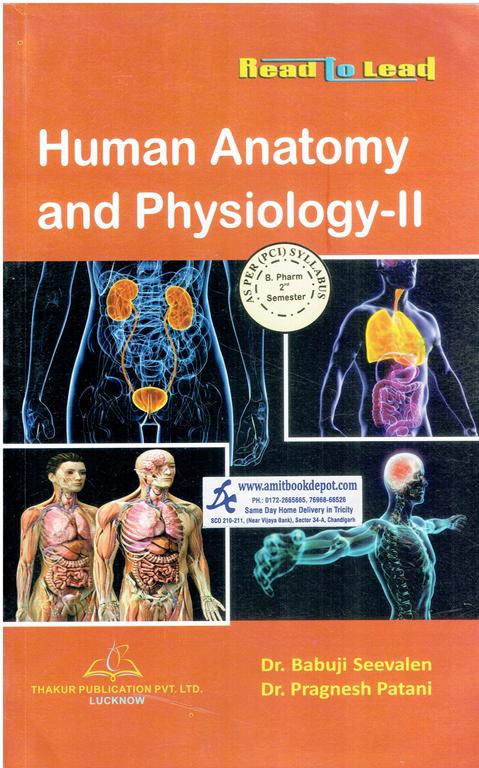
Human Anatomy and Physiology 2 For B Pharma 2nd Semester PTU

by Madhurima
₹200 ₹200.00(-/ off)

Rating & Reviews

23 Customer Review

Human Anatomy and Physiology 2 for B.Pharma 2nd Semester PTU by Dr. Pragnesh Patani and Dr. Babuji Sheevalen (Thakur Publishers) is the definitive book aligned with the BP201T syllabus. It provides complete coverage of vital systems, including the nervous system, digestive system, respiratory system, urinary system, and endocrine system, with added chapters on energetics, the reproductive system, and genetics. Designed for PTU students, it emphasizes homeostatic mechanisms, includes disorders of each system, and features chapter summaries and exercises for exam preparation. This book is an essential resource for mastering the core concepts of human anatomy and physiology for pharmacy studies.


Have Doubts Regarding This Product ? Ask Your Question

  • Q1
    Is this book strictly according to the latest PTU syllabus for B.Pharma 2nd Semester?
    A1

    Yes, this book, Human Anatomy and Physiology 2, is meticulously crafted to cover 100% of the latest prescribed syllabus for BP201T under Punjab Technical University (PTU). The table of contents is structured to follow the syllabus units directly.

  • Q2
    Does it cover both theory and practical aspects of the subject?
    A2

    This book is primarily focused on the theoretical aspects as per the BP201T theory course. It provides the foundational knowledge required to understand practical applications. For specific practical lab manuals, a separate text may be recommended.

  • Q3
    Are there diagrams and illustrations to help understand complex systems like the nervous system?
    A3

    Absolutely. The book includes clear, labeled diagrams and illustrations, especially for complex structures like the brain, nephron, digestive tract, and endocrine glands, to aid in visual learning and better retention.

  • Q4
    Does the book explain the link between physiology and common disorders?
    A4

    Yes, a key feature of this textbook is the dedicated section on disorders within chapters for the Digestive, Urinary, and Endocrine systems (e.g., Gastric Ulcer, Diabetes, Renal Calculi), helping students connect normal function with pathology.

  • Q5
    Is the chapter on Energetics included, and does it explain ATP and BMR clearly?
    A5

    Yes, Chapter 4 on Energetics is included as per the syllabus. It provides a clear explanation of ATP formation from different metabolites, the role of creatine phosphate, and the factors affecting Basal Metabolic Rate (BMR).

  • Q6
    How detailed is the coverage of the Renin-Angiotensin System (RAS)?
    A6

    The book includes a specific section on the Role of the Renin-Angiotensin System (RAS) in Kidneys within the Urinary System chapter, explaining its physiology and importance in regulation, which is a highlighted part of the PTU syllabus.

  • Q7
    Are neurotransmitters and synaptic transmission explained well for the Nervous System unit?
    A7

    Yes, the book provides a detailed sub-chapter on Neurotransmitters, covering neurotransmission, information transfer across chemical synapses, and termination of neurotransmitter effects, which are core to understanding nervous system physiology.

  • Q8
    Are artificial respiration methods covered in the Respiratory System chapter?
    A8

    Yes, the book covers various artificial respiration and resuscitation methods (e.g., Schafer's, Sylvester's, Mouth-to-Mouth) in detail, as specified in the PTU syllabus.

  • Q9
    Is genetics part of this book, as per the PTU syllabus?
    A9

    Yes, the final chapter (Chapter 9) is an Introduction to Genetics, covering chromosomes, genes, DNA, protein synthesis, and patterns of inheritance as outlined in the PTU syllabus for Unit V.

  • Q10
    Is this book useful for other pharmacy universities or only PTU?
    A10

    While it is specifically optimized for the PTU syllabus, the core content on Human Anatomy and Physiology is universal. Students from other universities with similar syllabi may also find it highly beneficial.


0.00

0 Overall Rating
  • 5
    0
  • 4
    0
  • 3
    0
  • 2
    0
  • 1
    0

Try this product & share your review & thoughts

 Chapter 1: Nervous System

1.1. Nervous System

1.1.1. Introduction
1.1.2. Organization of the Nervous System
1.1.3. Functions of the Nervous System
1.1.4. Structure of Nerve Tissue
1.1.4.1. Neurons
1.1.4.2. Neuroglia/Neuroglial Cells
1.1.5. Classification of Nerve Fiber
1.1.6. Properties of Nerve Fiber

1.2. Electrophysiology of Neurons

1.2.1. Introduction
1.2.2. Nerve Impulse (Electrical Signals in Neuron)
1.2.2.1. Ion Channels
1.2.2.2. Resting Membrane Potential (RMP)
1.2.2.3. Graded Potential
1.2.2.4. Action Potential
1.2.2.5. Propagation of Nerve Impulse
1.2.3. Receptors
1.2.3.1. Classification of Receptors
1.2.3.2. Physiology of Receptors
1.2.4. Synapses
1.2.4.1. Synaptic Transmission
1.2.4.2. Types of Synapses
1.2.5. Neurotransmitters
1.2.5.1. Transmission of Impulses (Neurotransmission)
1.2.5.2. Information Transfer Across Chemical Synapses
1.2.5.3. Termination of Neurotransmitter Effects

1.3. Summary

1.4. Exercise


Chapter 2: Central Nervous System

2.1. Central Nervous System

2.1.1. Introduction
2.1.2. Meninges of Brain
2.1.3. Ventricles of Brain
2.1.4. Cerebrospinal Fluid (CSF)

2.2. Brain

2.2.1. Introduction
2.2.2. Structure of Brain
2.2.3.1. Cerebral Cortex
2.2.3.2. Interior of the Cerebrum
2.2.3.3. Lobes of Cerebrum
2.2.3.4. Basal Ganglia
2.2.3.5. Limbic System
2.2.3.6. Functional Areas
2.2.3.7. Functions of Cerebrum
2.2.4. Brain Stem
2.2.4.1. Medulla Oblongata
2.2.4.2. Pons
2.2.4.3. Midbrain
2.2.4.4. Reticular Formation
2.2.5. Cerebellum
2.2.5.1. Structure
2.2.5.2. Functions
2.2.6. Diencephalon
2.2.6.1. Thalamus
2.2.6.2. Hypothalamus
2.2.6.3 Epithalamus
2.2.6.4. Subthalamus
2.2.7. Functions of Brain 
2.2.8. Blood-Brain Barrier (BBB)

2.3. Spinal Cord 

2.3.1. Introduction 
2.3.2. Gross Structure 
2.3.2.1. External Structure
2.3.2.2. Internal Structure
2.3.3. Functions
2.3.4. Spinal Tracts
2.3.4.1. Afferent or Ascending Nerve Tracts and Their Functions
2.3.4.2. Efferent or Descending Nerve Tracts and Their Functions
2.3.5. Reflex Activity
2.3.5.1. Reflex Arc
2.3.5.2. Types of Reflexes
2.3.5.3. Significance of Reflex Action

2.4. Summary

2.5. Exercise


Chapter 3: Digestive System

3.1. Digestive System

3.1.1. Introduction
3.1.2. Histology of GI Tract

3.2. Anatomy of GI Tract

3.2.1. Introduction
3.2.2. Oral Cavity (Mouth)
3.2.2.1. Teeth
3.2.2.2. Tongue
3.2.2.3. Functions of the Oral Cavity
3.2.3. Pharynx
3.2.3.1. Anatomy
3.2.3.2. Functions
3.2.4. Esophagus
3.2.4.1. Anatomy
3.2.4.2. Functions
3.2.5. Stomach
3.2.5.1. Anatomy
3.2.5.2. Acid Production in the Stomach
3.2.5.3. Regulation of Acid Production through the Parasympathetic Nervous System
3.2.5.4. Pepsin's Role in Protein Digestion
3.2.5.5. Functions
3.2.6. Small Intestine
3.2.6.1. Anatomy
3.2.6.2. Secretions
3.2.6.3. Functions
3.2.7. Large Intestine
3.2.7.1. Anatomy
3.2.7.2. Secretions
3.2.7.3. Functions
3.2.8. Salivary Glands
3.2.8.1. Anatomy
3.2.8.2. Functions
3.2.9. Pancreas
3.2.9.1. Anatomy
3.2.9.2. Secretions
3.2.9.3. Functions
3.2.10. Liver
3.2.10.1. Anatomy
3.2.10.2. Secretions
3.2.10.3. Functions
3.2.11. Gall Bladder
3.2.11.1. Anatomy
3.2.11.2. Functions
3.2.12. Movements of GIT (Gastrointestinal Motility)
3.2.12.1. Mastication
3.2.12.2. Swallowing or Deglutition
3.2.12.3. Movement of Stomach
3.2.12.4. Movement of Small Intestine
3.2.12.5. Movement of Large Intestine
3.2.13. Digestion and Absorption of Nutrients
3.2.13.1. Carbohydrates
3.2.13.2. Lipids
3.2.13.3. Proteins
3.2.13.4. Water
3.2.13.5. Ions
3.2.14. Summary of Digestive Functions of Different Organs 3.2.14.
3.2.15. Phases of Digestion

3.3. Disorders of the Gastrointestinal Tract

3.3.1. Introduction
3.3.2. Disorders of the Mouth
3.3.2.1. Mouth Ulcers
3.3.2.2. Acute Gingivitis (Vincent's Infection)
3.3.3. Disorders of the Salivary Glands
3.3.3.1. Mumps
3.3.3.2. Sialolithiasis (Salivary Calculi)
3.3.4. Disorders of the Pharynx
3.3.4.1. Pharyngitis
3.3.4.2. Tonsillitis
3.3.5. Disorders of the Esophagus
3.3.5.1. Gastroesophageal Reflux Disease (GERD)
3.3.5.2. Achalasia
3.3.6. Disorders of the Stomach
3.3.6.1. Gastritis
3.3.6.2. Gastric Ulcer
3.3.7. Disorders of the Intestines
3.3.7.1. Appendicitis
3.3.7.2. Crohn's Disease
3.3.8. Disorders of the Pancreas
3.3.8.1. Pancreatitis
3.3.8.2. Zollinger-Ellison Syndrome
3.3.9. Disorders of the Liver
3.3.9.1. Liver Cirrhosis
3.3.9.2. Hepatitis
3.3.10. Disorders of the Gall Bladder
3.3.10.1. Gallstones (Cholelithiasis)
3.3.10.2. Cholecystitis

3.4. Summary

3.5. Exercise


Chapter 4: Energetics

4.1. Energetics

4.1.1. Introduction
4.1.2. Energy
4.1.2.1. Energy Transfer
4.1.2.2. Oxidation-Reduction Reactions 
4.1.3. Metabolism 
4.1.4. Formation of ATP 
4.1.4.1. From Carbohydrate Metabolism
4.1.4.2. From Lipid Metabolism
4.1.4.3. From Protein Metabolism
4.1.4.4. Role of ATP
4.1.4.5. Summary of Metabolic Pathways
4.1.5. Formation and Role of Creatinine Phosphate 
4.1.6. Basal Metabolic Rate (BMR) 
4.1.6.1. Factors Affecting BMR
4.1.6.2. Energy Cost of Physical Activities
4.1.6.3. BMR Unit

4.2. Summary

4.3. Exercise


Chapter 5: Respiratory System

5.1. Respiratory System

5.1.1. Introduction
5.1.2. Anatomy of Respiratory System
5.1.3. Nose
5.1.3.1. Anatomy
5.1.3.2. Functions
5.1.4. Pharynx
5.1.4.1. Anatomy
5.1.4.2. Functions
5.1.5. Larynx
5.1.5.1. Anatomy
5.1.5.2. Functions
5.1.6. Trachea
5.1.6.1. Anatomy
5.1.6.2. Functions
5.1.7. Bronchi and Bronchioles
5.1.7.1. Anatomy
5.1.7.2. Functions
5.1.8. Lungs
5.1.8.1. Anatomy
5.1.8.2. Functions
5.1.9. Alveoli
5.1.9.1. Anatomy
5.1.9.2. Functions
5.1.10. Mechanism of Respiration
5.1.11. Regulation of Respiration
5.1.11.1. Nervous Control
5.1.11.2. Chemical Control
5.1.12. Lung Volumes and Capacities
5.1.13. Transport of Respiratory Gases
5.1.14. Artificial Respiration
5.1.15. Resuscitation Methods
5.1.15.1. Mouth-to-Mouth Respiration Method
5.1.15.2. Prone Pressure Method (Schafer's Method)
5.1.15.3. Arm-Lift Chest Pressure Method (Sylvester's Method)
5.1.15.4. Arm-Lift Back-Pressure Method (Holger-Nielsen Method)
5.1.15.5. Tilting or Eve's Rocking Method
5.1.15.6. Drinker's Method (Iron Lung Chamber Method)
5.1.15.7. Bragg Paul's Method
5.1.15.8. Continuous Insufflation Method
5.1.15.9. Tank Respirator
5.1.15.10. Resuscitator

5.2. Summary

5.3. Exercise


Chapter 6: Urinary System

6.1. Urinary System

6.1.1. Introduction
6.1.2. Anatomy of Urinary Tract
6.1.3. Kidneys
6.1.3.1. Anatomy
6.1.3.2. Functions
6.1.4. Nephrons
6.1.4.1. Anatomy
6.1.4.2. Functions
6.1.5. Ureters
6.1.5.1. Anatomy
6.1.5.2. Functions
6.1.6. Urinary Bladder
6.1.6.1. Anatomy
6.1.6.2. Functions
6.1.7. Urethra
6.1.7.1. Anatomy
6.1.7.2. Functions
6.1.8. Functions of Urinary Tract
6.1.9. Physiology of Urine Formation
6.1.9.1. Ultrafiltration/Glomerular Filtration
6.1.9.2. Tubular Reabsorption
6.1.9.3. Tubular Secretion
6.1.10. Role of the Renin-Angiotensin System (RAS) in Kidneys
6.1.11. Micturition Reflex
6.1.12. Role of Kidneys in Acid-Base Balance
6.1.12.2. Effects of Acid-Base Balance in Renal Physiology
6.1.12.1. Types of Acid-Base Balance
6.1.12.3. Factors Affecting Acid-Base Balance Processes
6.1.12.4. Regulation of Acid-Base Balance
6.1.12.5. Imbalance in Acid-Base Balance
6.1.13. Disorders of Kidney  
6.1.13.1. Renal Calculi (Kidney Stones)
6.1.13.2. Urinary Tract Infections (UTIs)
6.1.13.3. Glomerulonephritis
6.1.13.4. Diabetic Nephropathy
6.1.13.5. Renal Failure
6.1.13.6. Polycystic Kidney Disease (PKD)
6.1.13.7. Nephroblastoma (Wilm's Tumor)
6.1.13.8. Hydronephrosis
6.1.13.9. Urethritis
6.1.13.10. Urinary Bladder Cancer

6.2. Summary

6.3. Exercise

Chapter 7: Endocrine System

7.1. Endocrine System

7.1.1. Introduction
7.1.2. Classification of Hormones
7.1.3. Mechanism of Hormone Action
7.1.3.1. Action of Lipid-Soluble Hormones
7.1.3.2. Action of Water-Soluble Hormones
7.1.4. Endocrine Glands and Their Secretions

7.2. Hypothalamus

7.2.1. Introduction
7.2.2. Structure
7.2.3. Hormones
7.2.4. Functions

7.3. Pituitary Gland

7.3.1. Introduction
7.3.2. Structure
7.3.3. Hormones
7.3.3.1. Growth Hormone (GH)
7.3.3.2. Thyroid Stimulating Hormone (TSH)
7.3.3.3. Adrenocorticotropic Hormone (ATCH)
7.3.3.4. Prolactin (PRL)
7.3.3.5. Gonadotropins (FSH and LH)
7.3.3.6. Melanocyte Stimulating Hormone (MSH)
7.3.3.7. Antidiuretic Hormone (ADH) 
7.3.3.8. Oxytocin 
7.3.4. Functions

7.4. Thyroid Gland

7.4.1. Introduction
7.4.2. Structure
7.4.3. Hormones
7.4.3.1. Thyroxine
7.4.3.2. Thyrocalcitonin (TCT)
7.4.4. Functions

7.5. Parathyroid Gland

7.5.1. Introduction
7.5.2. Structure
7.5.3. Hormone
7.5.4. Functions

7.6. Adrenal Gland

7.6.1. Introduction
7.6.2. Structure
7.6.3. Hormones
7.6.4. Functions

7.7. Pancreas

7.7.1. Introduction
7.7.2. Structure
7.7.3. Hormones
7.7.4. Functions

7.8. Pineal Gland

7.8.1. Introduction
7.8.2. Structure
7.8.3. Hormone
7.8.4. Functions

7.9. Thymus

7.9.1. Introduction
7.9.2. Structure
7.9.3. Hormone
7.9.4. Functions

7.10. Disorders of Endocrine Glands

7.10.1. Introduction
7.10.2. Hyposecretion of Endocrine Glands
7.10.3. Hypersecretion of Endocrine Glands

7.11. Summary

7.12. Exercise


Chapter 8: Reproductive System

8.1. Reproductive System

8.1.1. Introduction
8.1.2. Anatomy and Functions of the Male Reproductive System
8.1.3. Anatomy and Functions of the Female Reproductive System
8.1.4. Sex Hormones
8.1.5. Physiology of Menstruation
8.1.6. Gametogenesis
8.1.7. Fertilization
8.1.8. Cleavage of the Zygote
8.1.9. Blastocyst Formation
8.1.10. Implantation
8.1.11. Pregnancy

8.2. Summary

8.3. Exercise


Chapter 9: Genetics

9.1. Introduction to Genetics

9.1.1. Introduction
9.1.2. Chromosomes
9.1.3. Genes
9.1.4. DNA (Deoxyribonucleic Acid)
9.1.5. Protein Synthesis

9.2. Genetic Pattern of Inheritance

9.2.1. Introduction
9.2.2. Pedigree Analysis
9.2.3. Mendelian Inheritance Patterns
9.2.4. Non-Mendelian Inheritance Patterns
9.3. Summary
9.4. Exercise

Latest Syllabus of Human Anatomy and Physiology 2 For B. Pharma 2nd Semester PTU


BP 201T. HUMAN ANATOMY AND PHYSIOLOGY-II (Theory) (45 Hours)

Scope: This subject is designed to impart fundamental knowledge on the structure and functions of the various systems of the human body. It also helps in understanding both homeostatic mechanisms. The subject provides the basic knowledge required to understand the various disciplines of pharmacy.

Objectives: Upon completion of this course the student should be able to:

1. Explain the gross morphology, structure, and functions of various organs of the human body. 
2. Describe the various homeostatic mechanisms and their imbalances.
3. Identify the various tissues and organs of different systems of the human body. 
4. Perform the hematological tests like blood cell counts, hemoglobin estimation, bleeding/clotting time, etc., and also record blood pressure, heart rate, pulse, and respiratory volume. 
5. Appreciate the coordinated working pattern of different organs of each system.
6. Appreciate the interlinked mechanisms in the maintenance of normal functioning (homeostasis) of the human body.

Course Content:
Unit I (10 hours)

- Nervous system
Organization of the nervous system, neurons, neuroglia, classification and properties of nerve fibers, electrophysiology, action potential, nerve impulse, receptors, synapses, and neurotransmitters. Central nervous system: Meninges, ventricles of the brain, and cerebrospinal fluid. structure and functions of the brain (cerebrum, brain stem, cerebellum), spinal cord (gross structure, functions of afferent and efferent nerve tracts, reflex activity)

Unit II (06 hours) 

- Digestive system
Anatomy of the GI tract with special reference to the anatomy and functions of the stomach (acid production in the stomach, regulation of acid production through the parasympathetic nervous system, pepsin's role in protein digestion), small intestine, and large intestine; anatomy and functions of the salivary glands, pancreas, and liver; movements of GIT, digestion and absorption of nutrients, and disorders of GIT. 

- Energetics
Formation and role of ATP, creatinine phosphate, and BMR.

Unit III (10 hours)

- Respiratory system 
Anatomy of the respiratory system with special reference to the anatomy of the lungs, the mechanism of respiration, and the regulation of respiration Lung volumes and capacities, transport of respiratory gases, artificial respiration, and resuscitation methods.

- Urinary system
Anatomy of the urinary tract with special reference to the anatomy of the kidney and nephrons, functions of the kidney and urinary tract, physiology of urine formation, micturition reflex and role of kidneys in acid-base balance, role of RAS in the kidney, and disorders of the kidney. 

Unit IV (10 hours)

- Endocrine system
Classification of hormones, mechanism of hormone action, structure and functions of the pituitary gland, thyroid gland, parathyroid gland, adrenal gland, pancreas, pineal gland, thymus, and their disorders.

Unit V (09 hours)

- Reproductive system
Anatomy of the male and female reproductive systems, Functions of the male and female reproductive systems, sex hormones, physiology of menstruation, fertilization, spermatogenesis, oogenesis, pregnancy, and parturition

- Introduction to genetics
Chromosomes, genes and DNA, protein synthesis, genetic pattern of inheritance

Product Title: Human Anatomy and Physiology 2 for B.Pharma Second Semester PTU | BP201T
Author: Dr. Pragnesh Patani, Dr. Babuji Sheevalen
Publisher: Thakur Publishers

Master the Core Concepts of Human Physiology with this PTU-Specific Book.

Human Anatomy and Physiology 2 for B.Pharma Second Semester PTU is an authoritative and comprehensive book meticulously crafted to align perfectly with the latest PTU syllabus for the BP201T course. Authored by the esteemed Dr. Pragnesh Patani and Dr. Babuji Sheevalen and published by Thakur Publishers, this book serves as an indispensable resource for second-semester Bachelor of Pharmacy students. It is designed to build a robust foundation in the structure and function of vital bodily systems, emphasizing the homeostatic mechanisms essential for understanding pharmacy disciplines.

Complete Coverage of the Prescribed PTU Syllabus

This book is structured to follow the official PTU B.Pharma 2nd Semester syllabus unit by unit, ensuring no topic is left unaddressed. It provides detailed, system-wise explanations that seamlessly integrate anatomy and physiology, moving from foundational concepts to complex integrated functions. The content is organized to facilitate progressive learning, making it an ideal companion for both classroom instruction and self-study.

In-Depth Exploration of Key Physiological Systems

The book begins with a thorough dissection of the nervous system, covering neurons, neuroglia, action potentials, synapses, neurotransmitters, and the detailed anatomy of the central nervous system (brain and spinal cord). It then proceeds to the digestive system, offering special insights into acid production in the stomach, protein digestion, and gastrointestinal motility, alongside the anatomy of accessory organs like the liver and pancreas. A dedicated chapter on energetics clarifies ATP formation, creatine phosphate, and basal metabolic rate (BMR).

The Respiratory System section elaborates on lung anatomy, the mechanism of respiration, lung volumes and capacities, and various artificial respiration methods. The Urinary System chapter meticulously explains nephron physiology, urine formation, the renin-angiotensin system (RAS), and the kidney's role in acid-base balance. The endocrine system is covered with a focus on the mechanism of hormone action and the structure, function, and disorders of all major glands. Finally, the Reproductive System and an Introduction to Genetics provide essential knowledge on gametogenesis, fertilization, chromosomes, genes, and inheritance patterns.

Pedagogical Features for Enhanced Learning and Exam Preparation

Beyond mere theory, this book is packed with pedagogical tools to reinforce understanding and aid in exam preparation for PTU. Each chapter concludes with a concise summary that highlights key takeaways and a set of exercises to test comprehension. The inclusion of a dedicated section on disorders of each system (e.g., GERD, hepatitis, renal calculi, diabetes mellitus) helps students connect physiological principles with pathological conditions, a crucial skill for pharmacy professionals. Clear, labeled diagrams and structured content enhance the retention of complex information.

Why This Book is Essential for PTU B.Pharma Students:

1. PTU Syllabus-Centric: Tailored 100% to the BP201T Human Anatomy and Physiology-II syllabus, ensuring efficient and focused study.
2. Conceptual Clarity: Written in a lucid style by experienced academicians, it breaks down complex topics like nerve impulse propagation, synaptic transmission, and hormone action mechanisms.
3. Applied Approach: Links normal physiology to common disorders of the gastrointestinal tract, kidney, and endocrine glands, fostering an applied understanding.
4. Comprehensive Content: Covers all units from the nervous system and digestive system to the reproductive system and genetics.
5. Exam-Oriented: Chapter-end exercises and summaries are designed to help students prepare effectively for PTU university exams.
6. Trusted Authorship: Developed by Dr. Pragnesh Patani and Dr. Babuji Sheevalen, ensuring academic rigor and reliability.
7. Quality Publication: Published by Thakur Publishers, known for quality educational resources in pharmaceutical sciences.

Target Audience:

This book is primarily intended for B.Pharma second-semester students of Punjab Technical University (PTU). It is also a valuable reference for D.Pharma students, nursing students, and anyone seeking a clear and concise book on human anatomy and physiology.

Equip yourself with the definitive guide to Human Anatomy and Physiology 2. Order your copy today to build a strong academic foundation for your pharmacy career.

 Chapter 1: Nervous System

1.1. Nervous System

1.1.1. Introduction
1.1.2. Organization of the Nervous System
1.1.3. Functions of the Nervous System
1.1.4. Structure of Nerve Tissue
1.1.4.1. Neurons
1.1.4.2. Neuroglia/Neuroglial Cells
1.1.5. Classification of Nerve Fiber
1.1.6. Properties of Nerve Fiber

1.2. Electrophysiology of Neurons

1.2.1. Introduction
1.2.2. Nerve Impulse (Electrical Signals in Neuron)
1.2.2.1. Ion Channels
1.2.2.2. Resting Membrane Potential (RMP)
1.2.2.3. Graded Potential
1.2.2.4. Action Potential
1.2.2.5. Propagation of Nerve Impulse
1.2.3. Receptors
1.2.3.1. Classification of Receptors
1.2.3.2. Physiology of Receptors
1.2.4. Synapses
1.2.4.1. Synaptic Transmission
1.2.4.2. Types of Synapses
1.2.5. Neurotransmitters
1.2.5.1. Transmission of Impulses (Neurotransmission)
1.2.5.2. Information Transfer Across Chemical Synapses
1.2.5.3. Termination of Neurotransmitter Effects

1.3. Summary

1.4. Exercise


Chapter 2: Central Nervous System

2.1. Central Nervous System

2.1.1. Introduction
2.1.2. Meninges of Brain
2.1.3. Ventricles of Brain
2.1.4. Cerebrospinal Fluid (CSF)

2.2. Brain

2.2.1. Introduction
2.2.2. Structure of Brain
2.2.3.1. Cerebral Cortex
2.2.3.2. Interior of the Cerebrum
2.2.3.3. Lobes of Cerebrum
2.2.3.4. Basal Ganglia
2.2.3.5. Limbic System
2.2.3.6. Functional Areas
2.2.3.7. Functions of Cerebrum
2.2.4. Brain Stem
2.2.4.1. Medulla Oblongata
2.2.4.2. Pons
2.2.4.3. Midbrain
2.2.4.4. Reticular Formation
2.2.5. Cerebellum
2.2.5.1. Structure
2.2.5.2. Functions
2.2.6. Diencephalon
2.2.6.1. Thalamus
2.2.6.2. Hypothalamus
2.2.6.3 Epithalamus
2.2.6.4. Subthalamus
2.2.7. Functions of Brain 
2.2.8. Blood-Brain Barrier (BBB)

2.3. Spinal Cord 

2.3.1. Introduction 
2.3.2. Gross Structure 
2.3.2.1. External Structure
2.3.2.2. Internal Structure
2.3.3. Functions
2.3.4. Spinal Tracts
2.3.4.1. Afferent or Ascending Nerve Tracts and Their Functions
2.3.4.2. Efferent or Descending Nerve Tracts and Their Functions
2.3.5. Reflex Activity
2.3.5.1. Reflex Arc
2.3.5.2. Types of Reflexes
2.3.5.3. Significance of Reflex Action

2.4. Summary

2.5. Exercise


Chapter 3: Digestive System

3.1. Digestive System

3.1.1. Introduction
3.1.2. Histology of GI Tract

3.2. Anatomy of GI Tract

3.2.1. Introduction
3.2.2. Oral Cavity (Mouth)
3.2.2.1. Teeth
3.2.2.2. Tongue
3.2.2.3. Functions of the Oral Cavity
3.2.3. Pharynx
3.2.3.1. Anatomy
3.2.3.2. Functions
3.2.4. Esophagus
3.2.4.1. Anatomy
3.2.4.2. Functions
3.2.5. Stomach
3.2.5.1. Anatomy
3.2.5.2. Acid Production in the Stomach
3.2.5.3. Regulation of Acid Production through the Parasympathetic Nervous System
3.2.5.4. Pepsin's Role in Protein Digestion
3.2.5.5. Functions
3.2.6. Small Intestine
3.2.6.1. Anatomy
3.2.6.2. Secretions
3.2.6.3. Functions
3.2.7. Large Intestine
3.2.7.1. Anatomy
3.2.7.2. Secretions
3.2.7.3. Functions
3.2.8. Salivary Glands
3.2.8.1. Anatomy
3.2.8.2. Functions
3.2.9. Pancreas
3.2.9.1. Anatomy
3.2.9.2. Secretions
3.2.9.3. Functions
3.2.10. Liver
3.2.10.1. Anatomy
3.2.10.2. Secretions
3.2.10.3. Functions
3.2.11. Gall Bladder
3.2.11.1. Anatomy
3.2.11.2. Functions
3.2.12. Movements of GIT (Gastrointestinal Motility)
3.2.12.1. Mastication
3.2.12.2. Swallowing or Deglutition
3.2.12.3. Movement of Stomach
3.2.12.4. Movement of Small Intestine
3.2.12.5. Movement of Large Intestine
3.2.13. Digestion and Absorption of Nutrients
3.2.13.1. Carbohydrates
3.2.13.2. Lipids
3.2.13.3. Proteins
3.2.13.4. Water
3.2.13.5. Ions
3.2.14. Summary of Digestive Functions of Different Organs 3.2.14.
3.2.15. Phases of Digestion

3.3. Disorders of the Gastrointestinal Tract

3.3.1. Introduction
3.3.2. Disorders of the Mouth
3.3.2.1. Mouth Ulcers
3.3.2.2. Acute Gingivitis (Vincent's Infection)
3.3.3. Disorders of the Salivary Glands
3.3.3.1. Mumps
3.3.3.2. Sialolithiasis (Salivary Calculi)
3.3.4. Disorders of the Pharynx
3.3.4.1. Pharyngitis
3.3.4.2. Tonsillitis
3.3.5. Disorders of the Esophagus
3.3.5.1. Gastroesophageal Reflux Disease (GERD)
3.3.5.2. Achalasia
3.3.6. Disorders of the Stomach
3.3.6.1. Gastritis
3.3.6.2. Gastric Ulcer
3.3.7. Disorders of the Intestines
3.3.7.1. Appendicitis
3.3.7.2. Crohn's Disease
3.3.8. Disorders of the Pancreas
3.3.8.1. Pancreatitis
3.3.8.2. Zollinger-Ellison Syndrome
3.3.9. Disorders of the Liver
3.3.9.1. Liver Cirrhosis
3.3.9.2. Hepatitis
3.3.10. Disorders of the Gall Bladder
3.3.10.1. Gallstones (Cholelithiasis)
3.3.10.2. Cholecystitis

3.4. Summary

3.5. Exercise


Chapter 4: Energetics

4.1. Energetics

4.1.1. Introduction
4.1.2. Energy
4.1.2.1. Energy Transfer
4.1.2.2. Oxidation-Reduction Reactions 
4.1.3. Metabolism 
4.1.4. Formation of ATP 
4.1.4.1. From Carbohydrate Metabolism
4.1.4.2. From Lipid Metabolism
4.1.4.3. From Protein Metabolism
4.1.4.4. Role of ATP
4.1.4.5. Summary of Metabolic Pathways
4.1.5. Formation and Role of Creatinine Phosphate 
4.1.6. Basal Metabolic Rate (BMR) 
4.1.6.1. Factors Affecting BMR
4.1.6.2. Energy Cost of Physical Activities
4.1.6.3. BMR Unit

4.2. Summary

4.3. Exercise


Chapter 5: Respiratory System

5.1. Respiratory System

5.1.1. Introduction
5.1.2. Anatomy of Respiratory System
5.1.3. Nose
5.1.3.1. Anatomy
5.1.3.2. Functions
5.1.4. Pharynx
5.1.4.1. Anatomy
5.1.4.2. Functions
5.1.5. Larynx
5.1.5.1. Anatomy
5.1.5.2. Functions
5.1.6. Trachea
5.1.6.1. Anatomy
5.1.6.2. Functions
5.1.7. Bronchi and Bronchioles
5.1.7.1. Anatomy
5.1.7.2. Functions
5.1.8. Lungs
5.1.8.1. Anatomy
5.1.8.2. Functions
5.1.9. Alveoli
5.1.9.1. Anatomy
5.1.9.2. Functions
5.1.10. Mechanism of Respiration
5.1.11. Regulation of Respiration
5.1.11.1. Nervous Control
5.1.11.2. Chemical Control
5.1.12. Lung Volumes and Capacities
5.1.13. Transport of Respiratory Gases
5.1.14. Artificial Respiration
5.1.15. Resuscitation Methods
5.1.15.1. Mouth-to-Mouth Respiration Method
5.1.15.2. Prone Pressure Method (Schafer's Method)
5.1.15.3. Arm-Lift Chest Pressure Method (Sylvester's Method)
5.1.15.4. Arm-Lift Back-Pressure Method (Holger-Nielsen Method)
5.1.15.5. Tilting or Eve's Rocking Method
5.1.15.6. Drinker's Method (Iron Lung Chamber Method)
5.1.15.7. Bragg Paul's Method
5.1.15.8. Continuous Insufflation Method
5.1.15.9. Tank Respirator
5.1.15.10. Resuscitator

5.2. Summary

5.3. Exercise


Chapter 6: Urinary System

6.1. Urinary System

6.1.1. Introduction
6.1.2. Anatomy of Urinary Tract
6.1.3. Kidneys
6.1.3.1. Anatomy
6.1.3.2. Functions
6.1.4. Nephrons
6.1.4.1. Anatomy
6.1.4.2. Functions
6.1.5. Ureters
6.1.5.1. Anatomy
6.1.5.2. Functions
6.1.6. Urinary Bladder
6.1.6.1. Anatomy
6.1.6.2. Functions
6.1.7. Urethra
6.1.7.1. Anatomy
6.1.7.2. Functions
6.1.8. Functions of Urinary Tract
6.1.9. Physiology of Urine Formation
6.1.9.1. Ultrafiltration/Glomerular Filtration
6.1.9.2. Tubular Reabsorption
6.1.9.3. Tubular Secretion
6.1.10. Role of the Renin-Angiotensin System (RAS) in Kidneys
6.1.11. Micturition Reflex
6.1.12. Role of Kidneys in Acid-Base Balance
6.1.12.2. Effects of Acid-Base Balance in Renal Physiology
6.1.12.1. Types of Acid-Base Balance
6.1.12.3. Factors Affecting Acid-Base Balance Processes
6.1.12.4. Regulation of Acid-Base Balance
6.1.12.5. Imbalance in Acid-Base Balance
6.1.13. Disorders of Kidney  
6.1.13.1. Renal Calculi (Kidney Stones)
6.1.13.2. Urinary Tract Infections (UTIs)
6.1.13.3. Glomerulonephritis
6.1.13.4. Diabetic Nephropathy
6.1.13.5. Renal Failure
6.1.13.6. Polycystic Kidney Disease (PKD)
6.1.13.7. Nephroblastoma (Wilm's Tumor)
6.1.13.8. Hydronephrosis
6.1.13.9. Urethritis
6.1.13.10. Urinary Bladder Cancer

6.2. Summary

6.3. Exercise

Chapter 7: Endocrine System

7.1. Endocrine System

7.1.1. Introduction
7.1.2. Classification of Hormones
7.1.3. Mechanism of Hormone Action
7.1.3.1. Action of Lipid-Soluble Hormones
7.1.3.2. Action of Water-Soluble Hormones
7.1.4. Endocrine Glands and Their Secretions

7.2. Hypothalamus

7.2.1. Introduction
7.2.2. Structure
7.2.3. Hormones
7.2.4. Functions

7.3. Pituitary Gland

7.3.1. Introduction
7.3.2. Structure
7.3.3. Hormones
7.3.3.1. Growth Hormone (GH)
7.3.3.2. Thyroid Stimulating Hormone (TSH)
7.3.3.3. Adrenocorticotropic Hormone (ATCH)
7.3.3.4. Prolactin (PRL)
7.3.3.5. Gonadotropins (FSH and LH)
7.3.3.6. Melanocyte Stimulating Hormone (MSH)
7.3.3.7. Antidiuretic Hormone (ADH) 
7.3.3.8. Oxytocin 
7.3.4. Functions

7.4. Thyroid Gland

7.4.1. Introduction
7.4.2. Structure
7.4.3. Hormones
7.4.3.1. Thyroxine
7.4.3.2. Thyrocalcitonin (TCT)
7.4.4. Functions

7.5. Parathyroid Gland

7.5.1. Introduction
7.5.2. Structure
7.5.3. Hormone
7.5.4. Functions

7.6. Adrenal Gland

7.6.1. Introduction
7.6.2. Structure
7.6.3. Hormones
7.6.4. Functions

7.7. Pancreas

7.7.1. Introduction
7.7.2. Structure
7.7.3. Hormones
7.7.4. Functions

7.8. Pineal Gland

7.8.1. Introduction
7.8.2. Structure
7.8.3. Hormone
7.8.4. Functions

7.9. Thymus

7.9.1. Introduction
7.9.2. Structure
7.9.3. Hormone
7.9.4. Functions

7.10. Disorders of Endocrine Glands

7.10.1. Introduction
7.10.2. Hyposecretion of Endocrine Glands
7.10.3. Hypersecretion of Endocrine Glands

7.11. Summary

7.12. Exercise


Chapter 8: Reproductive System

8.1. Reproductive System

8.1.1. Introduction
8.1.2. Anatomy and Functions of the Male Reproductive System
8.1.3. Anatomy and Functions of the Female Reproductive System
8.1.4. Sex Hormones
8.1.5. Physiology of Menstruation
8.1.6. Gametogenesis
8.1.7. Fertilization
8.1.8. Cleavage of the Zygote
8.1.9. Blastocyst Formation
8.1.10. Implantation
8.1.11. Pregnancy

8.2. Summary

8.3. Exercise


Chapter 9: Genetics

9.1. Introduction to Genetics

9.1.1. Introduction
9.1.2. Chromosomes
9.1.3. Genes
9.1.4. DNA (Deoxyribonucleic Acid)
9.1.5. Protein Synthesis

9.2. Genetic Pattern of Inheritance

9.2.1. Introduction
9.2.2. Pedigree Analysis
9.2.3. Mendelian Inheritance Patterns
9.2.4. Non-Mendelian Inheritance Patterns
9.3. Summary
9.4. Exercise

Have Doubts Regarding This Product ? Ask Your Question

  • Q1
    Is this book strictly according to the latest PTU syllabus for B.Pharma 2nd Semester?
    A1

    Yes, this book, Human Anatomy and Physiology 2, is meticulously crafted to cover 100% of the latest prescribed syllabus for BP201T under Punjab Technical University (PTU). The table of contents is structured to follow the syllabus units directly.

  • Q2
    Does it cover both theory and practical aspects of the subject?
    A2

    This book is primarily focused on the theoretical aspects as per the BP201T theory course. It provides the foundational knowledge required to understand practical applications. For specific practical lab manuals, a separate text may be recommended.

  • Q3
    Are there diagrams and illustrations to help understand complex systems like the nervous system?
    A3

    Absolutely. The book includes clear, labeled diagrams and illustrations, especially for complex structures like the brain, nephron, digestive tract, and endocrine glands, to aid in visual learning and better retention.

  • Q4
    Does the book explain the link between physiology and common disorders?
    A4

    Yes, a key feature of this textbook is the dedicated section on disorders within chapters for the Digestive, Urinary, and Endocrine systems (e.g., Gastric Ulcer, Diabetes, Renal Calculi), helping students connect normal function with pathology.

  • Q5
    Is the chapter on Energetics included, and does it explain ATP and BMR clearly?
    A5

    Yes, Chapter 4 on Energetics is included as per the syllabus. It provides a clear explanation of ATP formation from different metabolites, the role of creatine phosphate, and the factors affecting Basal Metabolic Rate (BMR).

  • Q6
    How detailed is the coverage of the Renin-Angiotensin System (RAS)?
    A6

    The book includes a specific section on the Role of the Renin-Angiotensin System (RAS) in Kidneys within the Urinary System chapter, explaining its physiology and importance in regulation, which is a highlighted part of the PTU syllabus.

  • Q7
    Are neurotransmitters and synaptic transmission explained well for the Nervous System unit?
    A7

    Yes, the book provides a detailed sub-chapter on Neurotransmitters, covering neurotransmission, information transfer across chemical synapses, and termination of neurotransmitter effects, which are core to understanding nervous system physiology.

  • Q8
    Are artificial respiration methods covered in the Respiratory System chapter?
    A8

    Yes, the book covers various artificial respiration and resuscitation methods (e.g., Schafer's, Sylvester's, Mouth-to-Mouth) in detail, as specified in the PTU syllabus.

  • Q9
    Is genetics part of this book, as per the PTU syllabus?
    A9

    Yes, the final chapter (Chapter 9) is an Introduction to Genetics, covering chromosomes, genes, DNA, protein synthesis, and patterns of inheritance as outlined in the PTU syllabus for Unit V.

  • Q10
    Is this book useful for other pharmacy universities or only PTU?
    A10

    While it is specifically optimized for the PTU syllabus, the core content on Human Anatomy and Physiology is universal. Students from other universities with similar syllabi may also find it highly beneficial.

Latest Syllabus of Human Anatomy and Physiology 2 For B. Pharma 2nd Semester PTU


BP 201T. HUMAN ANATOMY AND PHYSIOLOGY-II (Theory) (45 Hours)

Scope: This subject is designed to impart fundamental knowledge on the structure and functions of the various systems of the human body. It also helps in understanding both homeostatic mechanisms. The subject provides the basic knowledge required to understand the various disciplines of pharmacy.

Objectives: Upon completion of this course the student should be able to:

1. Explain the gross morphology, structure, and functions of various organs of the human body. 
2. Describe the various homeostatic mechanisms and their imbalances.
3. Identify the various tissues and organs of different systems of the human body. 
4. Perform the hematological tests like blood cell counts, hemoglobin estimation, bleeding/clotting time, etc., and also record blood pressure, heart rate, pulse, and respiratory volume. 
5. Appreciate the coordinated working pattern of different organs of each system.
6. Appreciate the interlinked mechanisms in the maintenance of normal functioning (homeostasis) of the human body.

Course Content:
Unit I (10 hours)

- Nervous system
Organization of the nervous system, neurons, neuroglia, classification and properties of nerve fibers, electrophysiology, action potential, nerve impulse, receptors, synapses, and neurotransmitters. Central nervous system: Meninges, ventricles of the brain, and cerebrospinal fluid. structure and functions of the brain (cerebrum, brain stem, cerebellum), spinal cord (gross structure, functions of afferent and efferent nerve tracts, reflex activity)

Unit II (06 hours) 

- Digestive system
Anatomy of the GI tract with special reference to the anatomy and functions of the stomach (acid production in the stomach, regulation of acid production through the parasympathetic nervous system, pepsin's role in protein digestion), small intestine, and large intestine; anatomy and functions of the salivary glands, pancreas, and liver; movements of GIT, digestion and absorption of nutrients, and disorders of GIT. 

- Energetics
Formation and role of ATP, creatinine phosphate, and BMR.

Unit III (10 hours)

- Respiratory system 
Anatomy of the respiratory system with special reference to the anatomy of the lungs, the mechanism of respiration, and the regulation of respiration Lung volumes and capacities, transport of respiratory gases, artificial respiration, and resuscitation methods.

- Urinary system
Anatomy of the urinary tract with special reference to the anatomy of the kidney and nephrons, functions of the kidney and urinary tract, physiology of urine formation, micturition reflex and role of kidneys in acid-base balance, role of RAS in the kidney, and disorders of the kidney. 

Unit IV (10 hours)

- Endocrine system
Classification of hormones, mechanism of hormone action, structure and functions of the pituitary gland, thyroid gland, parathyroid gland, adrenal gland, pancreas, pineal gland, thymus, and their disorders.

Unit V (09 hours)

- Reproductive system
Anatomy of the male and female reproductive systems, Functions of the male and female reproductive systems, sex hormones, physiology of menstruation, fertilization, spermatogenesis, oogenesis, pregnancy, and parturition

- Introduction to genetics
Chromosomes, genes and DNA, protein synthesis, genetic pattern of inheritance

0.00

0 Overall Rating
  • 5
    0
  • 4
    0
  • 3
    0
  • 2
    0
  • 1
    0

Try this product & share your review & thoughts

Top Trending Product

Related Product

Related Product

Related Blog Posts

Latest Blogs

Latest Blogs

blog-img
Classic Literature Reimagined: Discuss modern twists on classic novels.
Lorem ipsum dolor sit amet, consectetur adipiscing elit, sed do eiusmod tempor incididunt ut labore et dolore magna aliqua. Ut enim ad minim veniam, quis nostrud exercitation ullamco Lorem ipsum dolor sit amet, consectetur adipiscing elit, sed do eiusmod tempor incididunt ut labore et dolore magna aliqua. Utenim ad minim veniam, quis nostrud exercitation ullamco Lorem ipsum dolor sit amet, consecte...
Read more
Author name | 10 jan, 2025
blog-img
Classic Literature Reimagined: Discuss modern twists on classic novels.
Lorem ipsum dolor sit amet, consectetur adipiscing elit, sed do eiusmod tempor incididunt ut labore et dolore magna aliqua. Ut enim ad minim veniam, quis nostrud exercitation ullamco Lorem ipsum dolor sit amet, consectetur adipiscing elit, sed do eiusmod tempor incididunt ut labore et dolore magna aliqua. Utenim ad minim veniam, quis nostrud exercitation ullamco Lorem ipsum dolor sit amet, consecte...
Read more
Author name | 10 jan, 2025
blog-img
Classic Literature Reimagined: Discuss modern twists on classic novels.
Lorem ipsum dolor sit amet, consectetur adipiscing elit, sed do eiusmod tempor incididunt ut labore et dolore magna aliqua. Ut enim ad minim veniam, quis nostrud exercitation ullamco Lorem ipsum dolor sit amet, consectetur adipiscing elit, sed do eiusmod tempor incididunt ut labore et dolore magna aliqua. Utenim ad minim veniam, quis nostrud exercitation ullamco Lorem ipsum dolor sit amet, consecte...
Read more
Author name | 10 jan, 2025
blog-img
Classic Literature Reimagined: Discuss modern twists on classic novels.
Lorem ipsum dolor sit amet, consectetur adipiscing elit...
Read more
Author Name | 10 Jan, 2025
blog-img
Classic Literature Reimagined: Discuss modern twists on classic novels.
Lorem ipsum dolor sit amet, consectetur adipiscing elit...
Read more
Author Name | 10 Jan, 2025
blog-img
Classic Literature Reimagined: Discuss modern twists on classic novels.
Lorem ipsum dolor sit amet, consectetur adipiscing elit...
Read more
Author Name | 10 Jan, 2025
blog-img
Classic Literature Reimagined: Discuss modern twists on classic novels.
Lorem ipsum dolor sit amet, consectetur adipiscing elit...
Read more
Author Name | 10 Jan, 2025
blog-img
Classic Literature Reimagined: Discuss modern twists on classic novels.
Lorem ipsum dolor sit amet, consectetur adipiscing elit...
Read more
Author Name | 10 Jan, 2025
blog-img
Classic Literature Reimagined: Discuss modern twists on classic novels.
Lorem ipsum dolor sit amet, consectetur adipiscing elit...
Read more
Author Name | 10 Jan, 2025
blog-img
Classic Literature Reimagined: Discuss modern twists on classic novels.
Lorem ipsum dolor sit amet, consectetur adipiscing elit...
Read more
Author Name | 10 Jan, 2025
blog-img
Classic Literature Reimagined: Discuss modern twists on classic novels.
Lorem ipsum dolor sit amet, consectetur adipiscing elit...
Read more
Author Name | 10 Jan, 2025
blog-img
Classic Literature Reimagined: Discuss modern twists on classic novels.
Lorem ipsum dolor sit amet, consectetur adipiscing elit...
Read more
Author Name | 10 Jan, 2025