-
Mon-Fri: 10AM to 8PM 01722665665
-
My Account
-
-
0
Total :
₹ 0.00

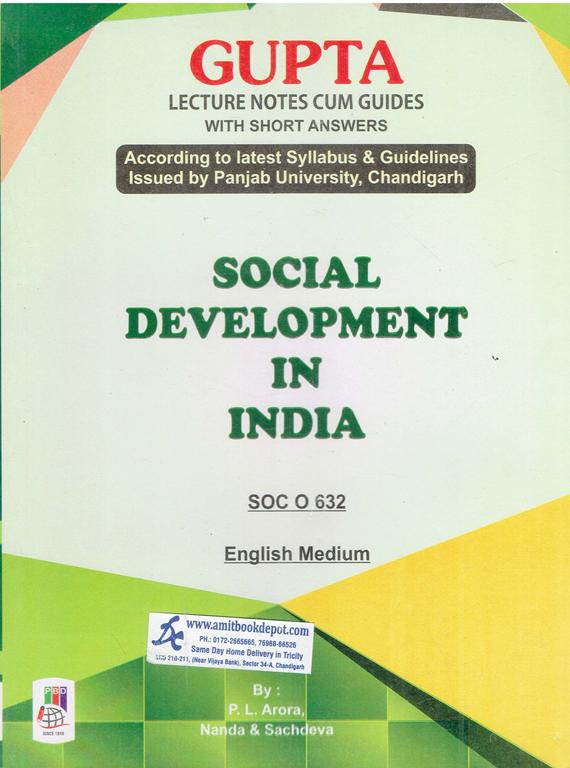
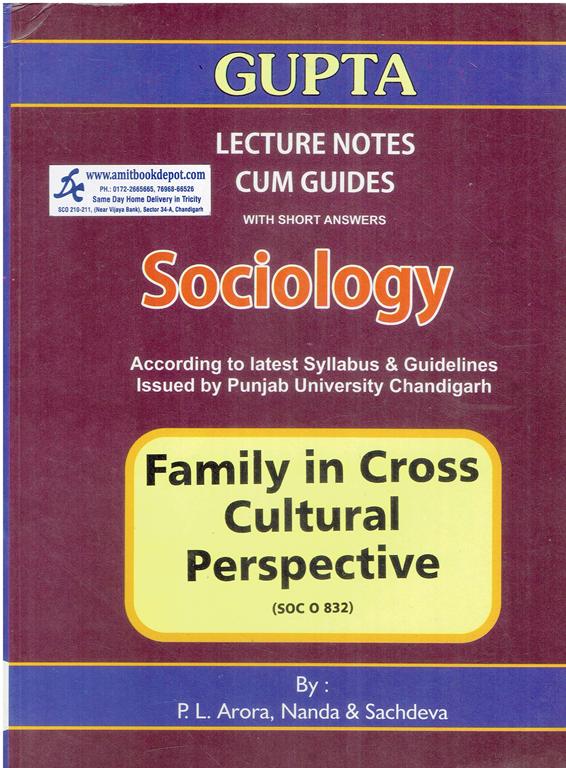
Yes, this book is meticulously designed to cover the latest syllabus and course outline prescribed for SOC O 632 at Panjab University, Chandigarh.
Absolutely. Unit I includes a dedicated section analyzing the historical overview of development planning and the contemporary role of Niti Aayog.
Unit III provides a detailed analysis of the Mandal Commission, the constitutional and legal measures for compensatory discrimination, and the ongoing sociological debate on reservation policies.
Yes, Unit IV is structured to separately analyze the social implications of globalization on agriculture, labor, women, and youth in India, as per the syllabus.
Yes, it is equally suitable for regular and private candidates. It covers the entire theory syllabus comprehensively, which is essential for private candidates whose marks are proportionately adjusted in lieu of internal assessment.
Yes, Unit III concludes with a critical sociological appraisal of the development policies implemented for Scheduled Castes, Scheduled Tribes, and Backward Classes.
The content is written in clear, academic English suitable for postgraduate-level study, explaining complex sociological concepts in an accessible manner.
This book is a comprehensive textbook covering all theoretical concepts as per the syllabus. It includes short answer questions for practice but does not typically compile previous years' papers.
Yes, Unit III includes a specific chapter detailing and discussing various development schemes implemented for the welfare and advancement of SCs, STs, and BCs.
This book is the primary prescribed textbook covering the entire syllabus exhaustively. It is designed to be a self-sufficient core resource for exam preparation.
No Description Added
Yes, this book is meticulously designed to cover the latest syllabus and course outline prescribed for SOC O 632 at Panjab University, Chandigarh.
Absolutely. Unit I includes a dedicated section analyzing the historical overview of development planning and the contemporary role of Niti Aayog.
Unit III provides a detailed analysis of the Mandal Commission, the constitutional and legal measures for compensatory discrimination, and the ongoing sociological debate on reservation policies.
Yes, Unit IV is structured to separately analyze the social implications of globalization on agriculture, labor, women, and youth in India, as per the syllabus.
Yes, it is equally suitable for regular and private candidates. It covers the entire theory syllabus comprehensively, which is essential for private candidates whose marks are proportionately adjusted in lieu of internal assessment.
Yes, Unit III concludes with a critical sociological appraisal of the development policies implemented for Scheduled Castes, Scheduled Tribes, and Backward Classes.
The content is written in clear, academic English suitable for postgraduate-level study, explaining complex sociological concepts in an accessible manner.
This book is a comprehensive textbook covering all theoretical concepts as per the syllabus. It includes short answer questions for practice but does not typically compile previous years' papers.
Yes, Unit III includes a specific chapter detailing and discussing various development schemes implemented for the welfare and advancement of SCs, STs, and BCs.
This book is the primary prescribed textbook covering the entire syllabus exhaustively. It is designed to be a self-sufficient core resource for exam preparation.