Categories
College Bookssss >
BA PU Chandigarh
BSC PU Chandigarh
MSC PU Chandigarh
BBA PU Chandigarh
MA PU Chandigarh
Medical Books
Engineering Books
Management Books
PGDCA Books
BCOM PU Chandigarh
MCOM PU Chandigarh
BCA PU Chandigarh
MCA PU Chandigarh
animate-books

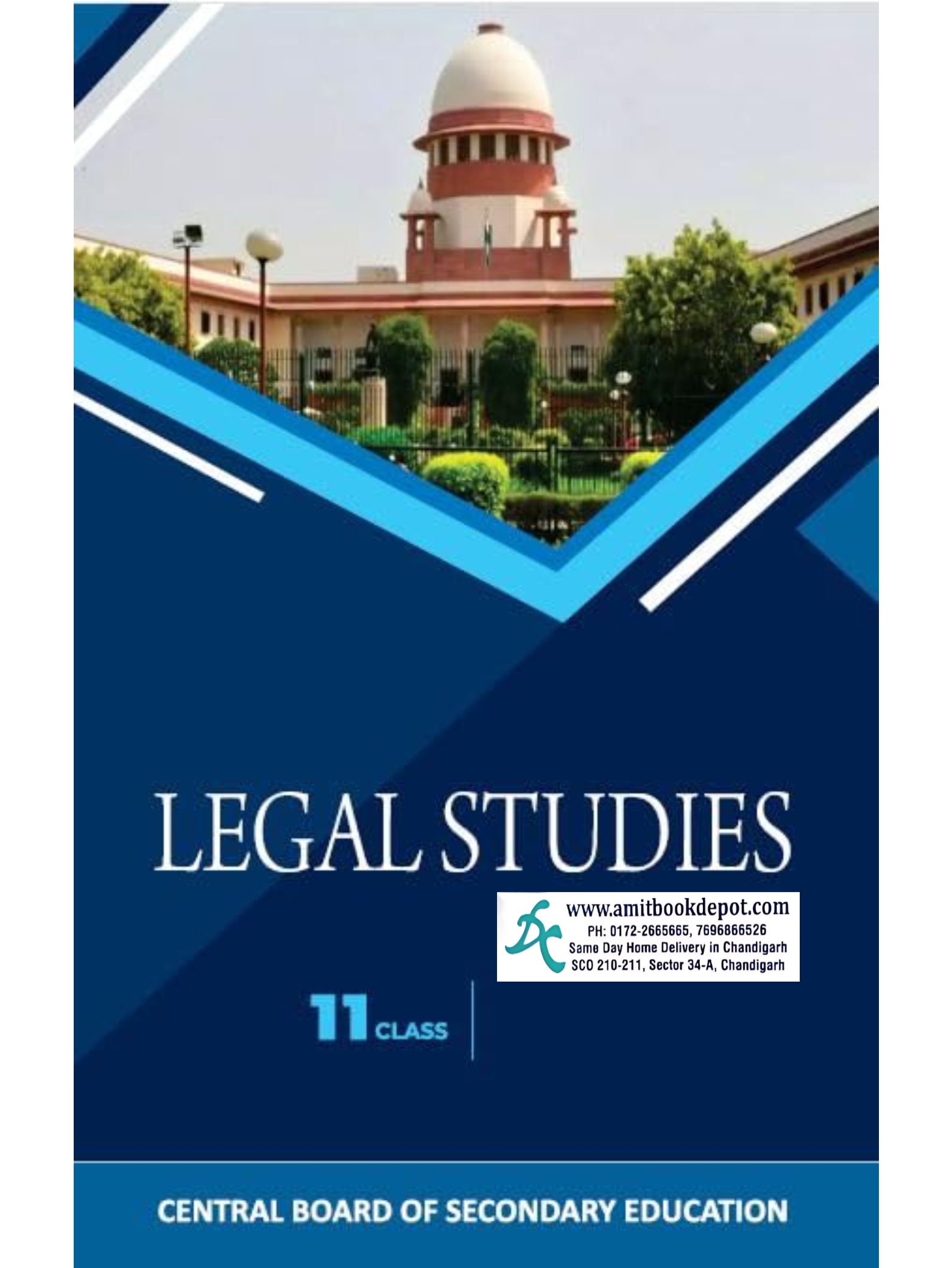
CBSE Legal Studies for Class 11th

by Madhurima
₹275 ₹275.00(-/ off)

Rating & Reviews

23 Customer Review

The official CBSE Legal Studies for Class 11th book is a complete, curriculum-mandated resource for understanding the Indian legal system. Published by CBSE, this book covers the concept of state, separation of powers, and salient features of the Constitution of India. It explains administrative law, jurisprudence, classification of laws, and modern topics like cyber laws, safety and security in India. Detailed chapters on the judiciary: constitutional, civil and criminal courts and processes are followed by the family justice system, including marriage, divorce, child rights, adoption, property, succession and inheritance, and prevention of violence against women. Ideal for exam preparation and legal awareness.

Have Doubts Regarding This Product ? Ask Your Question

  • Q1
    What is the ‘Concept of State’ as per Legal Studies?
    A1

    It refers to an organised political community living under a single system of government with sovereignty over a defined territory.

  • Q2
    Why is ‘Separation of Powers’ essential in a democracy?
    A2

    It prevents absolute power by dividing governance amongst legislature, executive, and judiciary, ensuring checks and balances.

  • Q3
    Name three salient features of the Constitution of India.
    A3

    Lengthiest written constitution, parliamentary sovereignty with judicial review, and fundamental rights for citizens.

  • Q4
    How does ‘Administrative Law’ control government power?
    A4

    It regulates decision-making of administrative agencies and provides remedies against arbitrary or unfair state actions.

  • Q5
    Differentiate between civil and criminal law.
    A5

    Civil law settles private disputes (e.g., contracts), while criminal law punishes offences against the state (e.g., theft).

  • Q6
    Why are ‘Law Reforms’ necessary in a changing society?
    A6

    They update outdated laws, remove anomalies, and align legal provisions with current social, economic, and technological realities.

  • Q7
    What do ‘Cyber Laws’ in India primarily address?
    A7

    They regulate online activities, digital contracts, data protection, and punish cybercrimes like hacking and identity theft.

  • Q8
    What is the hierarchy of criminal courts in India?
    A8

    Supreme Court at top, followed by High Courts, Sessions Courts, and then Magistrates / Judicial Magistrates at district level.

  • Q9
    Under the Family Justice System, what grounds exist for divorce?
    A9

    Cruelty, adultery, desertion, conversion, mental disorder, and mutual consent under personal laws like Hindu Marriage Act.

  • Q10
    How does adoption law differ from guardianship?
    A10

    Adoption permanently transfers all parental rights, while guardianship only provides temporary care without severing biological ties.
0.00

0 Overall Rating
  • 5
    0
  • 4
    0
  • 3
    0
  • 2
    0
  • 1
    0

Try this product & share your review & thoughts

UNIT 1: INTRODUCTION TO POLITICAL INSTITUTIONS

Chapter 1: Concept of State
Chapter 2: Forms and Organs of Government
Chapter 3: Separation of Powers

UNIT 2: BASIC FEATURES OF THE CONSTITUTION OF INDIA

Chapter 1: Salient Features of the Constitution of India
Chapter 2: Administrative Law

UNIT 3: JURISPRUDENCE, NATURE AND SOURCES OF LAW

Chapter 1. Jurisprudence, Nature and Meaning of Law
Chapter 2. Classification of Laws
Chapter 3. Sources of Laws
Chapter 4. Law Reforms
Chapter 5. Cyber Laws, Safety and Security in India

UNIT 4: JUDICIARY: CONSTITUTIONAL, CIVIL AND CRIMINAL COURTS AND PROCESSES

Chapter 1: Judiciary: Constitutional, Civil and Criminal Courts and Processes

UNIT 5: FAMILY JUSTICE SYSTEM

Chapter 1: Institutional Framework – Marriage and Divorce
Chapter 2. Child Rights
Chapter 3. Adoption
Chapter 4. Property, Succession and Inheritance
Chapter 5. Prevention of Violence against Women

The CBSE Legal Studies for Class 11 is an authoritative book prescribed by the Central Board of Secondary Education for students pursuing the Legal Studies elective at the senior secondary level. This curriculum-aligned resource serves as a foundational gateway into the Indian legal system, political institutions, and jurisprudence. Published directly by the CBSE, this book ensures absolute syllabus fidelity and academic rigour. It is an essential resource for learners aiming to understand the concept of state, separation of powers, and the salient features of the Constitution of India.

Comprehensive Coverage of Core Legal Concepts

The book is systematically divided into five units that progressively build legal literacy. Unit 1 introduces students to political institutions by explaining the forms and organs of government. Unit 2 delves deep into the basic features of the Constitution of India, including a dedicated chapter on administrative law, enabling students to comprehend the framework of governance and citizen-administration relationships.

Unit 3 provides a thorough grounding in jurisprudence, nature and sources of law. Learners explore the classification of laws, law reforms, and contemporary issues such as cyber laws, safety and security in India. This unit bridges classical legal theory with modern digital challenges. Unit 4 offers a consolidated view of the judiciary: constitutional, civil and criminal courts and processes, clarifying the hierarchy and jurisdiction of courts. Finally, Unit 5 addresses the family justice system, covering institutional frameworks for marriage and divorce, child rights, adoption, property, succession and inheritance, and prevention of violence against women.

Key Features and Keyword Focus

- Syllabus Alignment: 100% mapped to the CBSE Class 11th Legal Studies curriculum.
- Exam-Oriented: Chapters designed to prepare students for both theoretical questions and application-based assessments.
- Contemporary Relevance: Includes dedicated discussions on cyber laws and prevention of violence against women.
- Conceptual Clarity: Explains complex topics like separation of powers and classification of laws in student-friendly language.
- Holistic Approach: Covers public law, private law, criminal processes, and family justice within a single volume.

Why Choose This Book?

Unlike generic reference guides, this publication from CBSE ensures authenticity. It builds a strong foundation for students who may pursue law (CLAT and AILET) or humanities in higher education. The chapters on law reforms and child rights foster critical thinking about social justice. The unit on property, succession and inheritance equips learners with practical legal knowledge applicable to daily life.

Target Audience

- Class 11 students enrolled in CBSE-affiliated schools offering Legal Studies.
- Aspirants of law entrance exams needing a concise introduction to sources of laws and judiciary structure.
- General readers seeking structured knowledge of the forms and organs of government and the Indian legal framework.

Product Specifications

- Format: Paperback
- Language: English
- Subject: Legal Studies
-Level: Senior Secondary (Class 11)

UNIT 1: INTRODUCTION TO POLITICAL INSTITUTIONS

Chapter 1: Concept of State
Chapter 2: Forms and Organs of Government
Chapter 3: Separation of Powers

UNIT 2: BASIC FEATURES OF THE CONSTITUTION OF INDIA

Chapter 1: Salient Features of the Constitution of India
Chapter 2: Administrative Law

UNIT 3: JURISPRUDENCE, NATURE AND SOURCES OF LAW

Chapter 1. Jurisprudence, Nature and Meaning of Law
Chapter 2. Classification of Laws
Chapter 3. Sources of Laws
Chapter 4. Law Reforms
Chapter 5. Cyber Laws, Safety and Security in India

UNIT 4: JUDICIARY: CONSTITUTIONAL, CIVIL AND CRIMINAL COURTS AND PROCESSES

Chapter 1: Judiciary: Constitutional, Civil and Criminal Courts and Processes

UNIT 5: FAMILY JUSTICE SYSTEM

Chapter 1: Institutional Framework – Marriage and Divorce
Chapter 2. Child Rights
Chapter 3. Adoption
Chapter 4. Property, Succession and Inheritance
Chapter 5. Prevention of Violence against Women

Have Doubts Regarding This Product ? Ask Your Question

  • Q1
    What is the ‘Concept of State’ as per Legal Studies?
    A1

    It refers to an organised political community living under a single system of government with sovereignty over a defined territory.

  • Q2
    Why is ‘Separation of Powers’ essential in a democracy?
    A2

    It prevents absolute power by dividing governance amongst legislature, executive, and judiciary, ensuring checks and balances.

  • Q3
    Name three salient features of the Constitution of India.
    A3

    Lengthiest written constitution, parliamentary sovereignty with judicial review, and fundamental rights for citizens.

  • Q4
    How does ‘Administrative Law’ control government power?
    A4

    It regulates decision-making of administrative agencies and provides remedies against arbitrary or unfair state actions.

  • Q5
    Differentiate between civil and criminal law.
    A5

    Civil law settles private disputes (e.g., contracts), while criminal law punishes offences against the state (e.g., theft).

  • Q6
    Why are ‘Law Reforms’ necessary in a changing society?
    A6

    They update outdated laws, remove anomalies, and align legal provisions with current social, economic, and technological realities.

  • Q7
    What do ‘Cyber Laws’ in India primarily address?
    A7

    They regulate online activities, digital contracts, data protection, and punish cybercrimes like hacking and identity theft.

  • Q8
    What is the hierarchy of criminal courts in India?
    A8

    Supreme Court at top, followed by High Courts, Sessions Courts, and then Magistrates / Judicial Magistrates at district level.

  • Q9
    Under the Family Justice System, what grounds exist for divorce?
    A9

    Cruelty, adultery, desertion, conversion, mental disorder, and mutual consent under personal laws like Hindu Marriage Act.

  • Q10
    How does adoption law differ from guardianship?
    A10

    Adoption permanently transfers all parental rights, while guardianship only provides temporary care without severing biological ties.

No Syllabus Added

0.00

0 Overall Rating
  • 5
    0
  • 4
    0
  • 3
    0
  • 2
    0
  • 1
    0

Try this product & share your review & thoughts

Top Trending Product

Related Product

Related Product

Related Blog Posts

Latest Blogs

Latest Blogs

blog-img
Classic Literature Reimagined: Discuss modern twists on classic novels.
Lorem ipsum dolor sit amet, consectetur adipiscing elit, sed do eiusmod tempor incididunt ut labore et dolore magna aliqua. Ut enim ad minim veniam, quis nostrud exercitation ullamco Lorem ipsum dolor sit amet, consectetur adipiscing elit, sed do eiusmod tempor incididunt ut labore et dolore magna aliqua. Utenim ad minim veniam, quis nostrud exercitation ullamco Lorem ipsum dolor sit amet, consecte...
Read more
Author name | 10 jan, 2025
blog-img
Classic Literature Reimagined: Discuss modern twists on classic novels.
Lorem ipsum dolor sit amet, consectetur adipiscing elit, sed do eiusmod tempor incididunt ut labore et dolore magna aliqua. Ut enim ad minim veniam, quis nostrud exercitation ullamco Lorem ipsum dolor sit amet, consectetur adipiscing elit, sed do eiusmod tempor incididunt ut labore et dolore magna aliqua. Utenim ad minim veniam, quis nostrud exercitation ullamco Lorem ipsum dolor sit amet, consecte...
Read more
Author name | 10 jan, 2025
blog-img
Classic Literature Reimagined: Discuss modern twists on classic novels.
Lorem ipsum dolor sit amet, consectetur adipiscing elit, sed do eiusmod tempor incididunt ut labore et dolore magna aliqua. Ut enim ad minim veniam, quis nostrud exercitation ullamco Lorem ipsum dolor sit amet, consectetur adipiscing elit, sed do eiusmod tempor incididunt ut labore et dolore magna aliqua. Utenim ad minim veniam, quis nostrud exercitation ullamco Lorem ipsum dolor sit amet, consecte...
Read more
Author name | 10 jan, 2025
blog-img
Classic Literature Reimagined: Discuss modern twists on classic novels.
Lorem ipsum dolor sit amet, consectetur adipiscing elit...
Read more
Author Name | 10 Jan, 2025
blog-img
Classic Literature Reimagined: Discuss modern twists on classic novels.
Lorem ipsum dolor sit amet, consectetur adipiscing elit...
Read more
Author Name | 10 Jan, 2025
blog-img
Classic Literature Reimagined: Discuss modern twists on classic novels.
Lorem ipsum dolor sit amet, consectetur adipiscing elit...
Read more
Author Name | 10 Jan, 2025
blog-img
Classic Literature Reimagined: Discuss modern twists on classic novels.
Lorem ipsum dolor sit amet, consectetur adipiscing elit...
Read more
Author Name | 10 Jan, 2025
blog-img
Classic Literature Reimagined: Discuss modern twists on classic novels.
Lorem ipsum dolor sit amet, consectetur adipiscing elit...
Read more
Author Name | 10 Jan, 2025
blog-img
Classic Literature Reimagined: Discuss modern twists on classic novels.
Lorem ipsum dolor sit amet, consectetur adipiscing elit...
Read more
Author Name | 10 Jan, 2025
blog-img
Classic Literature Reimagined: Discuss modern twists on classic novels.
Lorem ipsum dolor sit amet, consectetur adipiscing elit...
Read more
Author Name | 10 Jan, 2025
blog-img
Classic Literature Reimagined: Discuss modern twists on classic novels.
Lorem ipsum dolor sit amet, consectetur adipiscing elit...
Read more
Author Name | 10 Jan, 2025
blog-img
Classic Literature Reimagined: Discuss modern twists on classic novels.
Lorem ipsum dolor sit amet, consectetur adipiscing elit...
Read more
Author Name | 10 Jan, 2025