-
Mon-Fri: 10AM to 8PM 01722665665
-
My Account
-
-
0
Total :
₹ 0.00

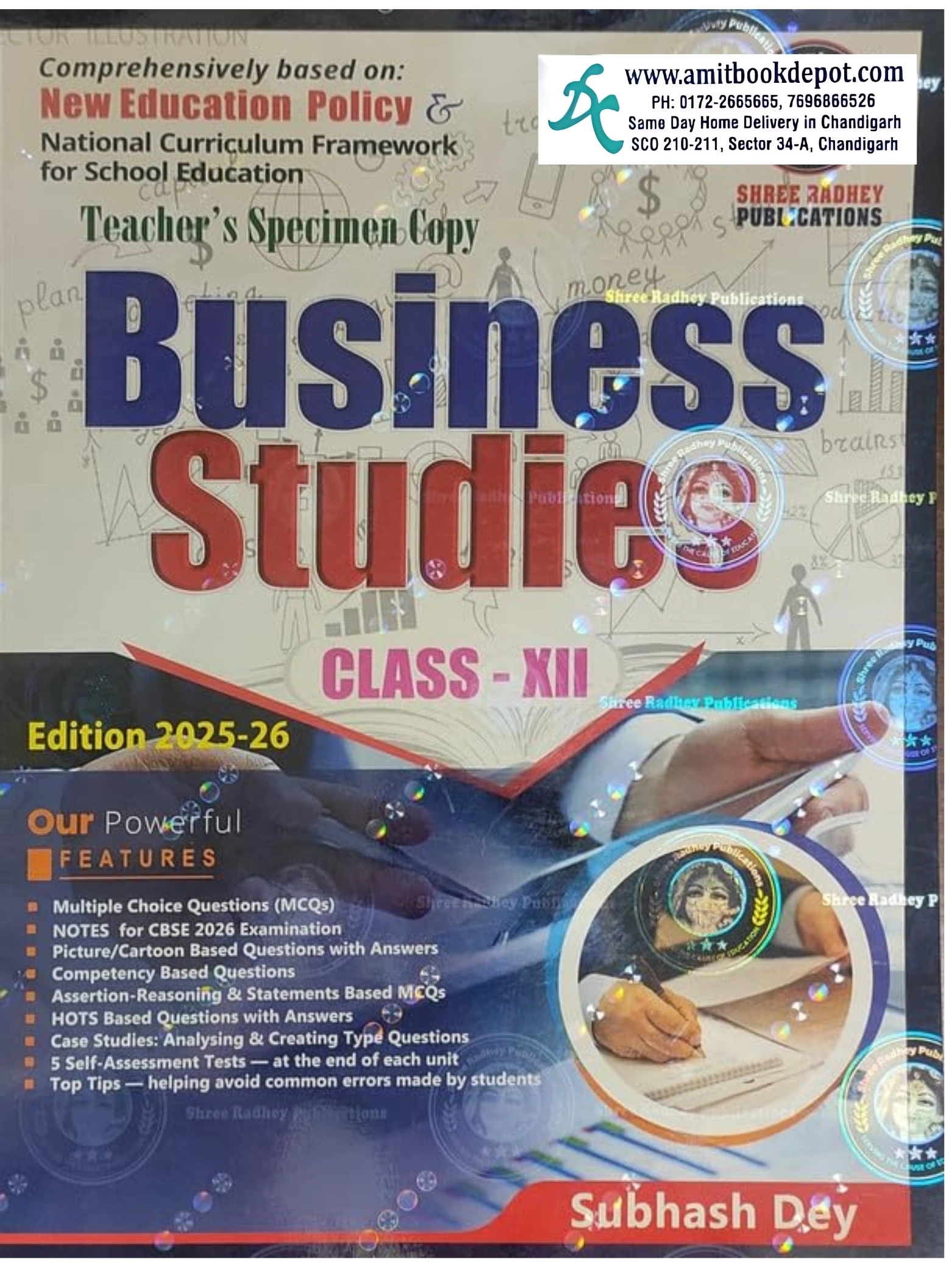
Business Studies for Class 11 (2025-26) by Subhash Dey | Shree Radhey Publications | NEP/NCFSE Aligned. Excel in your CBSE Class 11 Business Studies with this comprehensively updated book for the 2025-26 academic session. Authored by Subhash Dey, this edition is meticulously crafted to align with the National Education Policy (NEP 2020) and NCFSE guidelines. It provides complete coverage of the syllabus, from business fundamentals and forms of organizations to entrepreneurship, GST, and international trade. With clear explanations, real-world examples, and a focus on e-business and the Start-up India Scheme, this book is the perfect resource to build a strong conceptual foundation and develop critical thinking skills for academic success.


The book incorporates a competency-based learning approach, focuses on critical thinking and analytical skills, and includes contemporary topics like entrepreneurship and ethical business practices as advocated by the NEP 2020 framework.
Yes, this 2025-26 edition is thoroughly updated to include the complete and latest CBSE syllabus for Class 11 Business Studies without any omissions.
Absolutely. Chapter 8, "Small Business and Entrepreneurship Development," provides dedicated coverage of the Start-up India Scheme, funding for start-ups, and the importance of Intellectual Property Rights (IPR).
Chapter 2, under "Forms of Business Organizations," breaks down the entire formation process of a company into stages and explains the important documents required.
Yes, Unit 10 on "International Business" clearly explains key documents involved in export and import trade, such as the indent, letter of credit, shipping order, and shipping bills.
Chapter 6, "Social Responsibility of Business and Business Ethics," is entirely dedicated to this topic, discussing a business's responsibilities towards various stakeholders and its specific role in environmental protection.
Yes, the concept of a One-Person Company (OPC) is included in the chapter on "Forms of Business Organizations" (Unit 2), alongside private and public companies.
Yes, the book begins with a detailed section on the "History of Trade and Commerce in India," covering the indigenous banking system, trading communities, and India's position in the historical world economy.
The MSMED Act 2006's definition of Micro, Small, and Medium Enterprises is covered in Unit 8, along with the role of small businesses in India and related government schemes.
Definitely. The book is written with a focus on conceptual clarity, using simple language and a structured approach to make complex topics easy to grasp for beginners, building a strong foundation for Class 12 and beyond.
The book incorporates a competency-based learning approach, focuses on critical thinking and analytical skills, and includes contemporary topics like entrepreneurship and ethical business practices as advocated by the NEP 2020 framework.
Yes, this 2025-26 edition is thoroughly updated to include the complete and latest CBSE syllabus for Class 11 Business Studies without any omissions.
Absolutely. Chapter 8, "Small Business and Entrepreneurship Development," provides dedicated coverage of the Start-up India Scheme, funding for start-ups, and the importance of Intellectual Property Rights (IPR).
Chapter 2, under "Forms of Business Organizations," breaks down the entire formation process of a company into stages and explains the important documents required.
Yes, Unit 10 on "International Business" clearly explains key documents involved in export and import trade, such as the indent, letter of credit, shipping order, and shipping bills.
Chapter 6, "Social Responsibility of Business and Business Ethics," is entirely dedicated to this topic, discussing a business's responsibilities towards various stakeholders and its specific role in environmental protection.
Yes, the concept of a One-Person Company (OPC) is included in the chapter on "Forms of Business Organizations" (Unit 2), alongside private and public companies.
Yes, the book begins with a detailed section on the "History of Trade and Commerce in India," covering the indigenous banking system, trading communities, and India's position in the historical world economy.
The MSMED Act 2006's definition of Micro, Small, and Medium Enterprises is covered in Unit 8, along with the role of small businesses in India and related government schemes.
Definitely. The book is written with a focus on conceptual clarity, using simple language and a structured approach to make complex topics easy to grasp for beginners, building a strong foundation for Class 12 and beyond.